
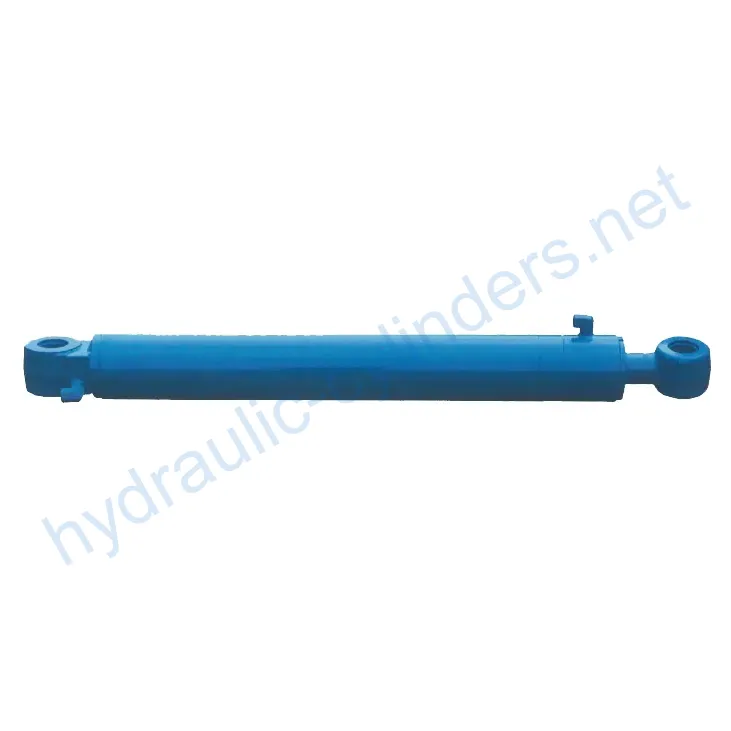
Cylindre de bras pour Xiniu XN80-L
En tant que fabricant, fournisseur et exportateur de produits mécaniques, nous proposons des vérins hydrauliques et de nombreux autres produits.
N'hésitez pas à nous contacter pour plus de détails.
Courrier :sales@hydraulic-cylinders.net
Fabricant fournisseur exportateur de vérins hydrauliques.
Cylindre de bras pour Xiniu XN80-L
Définition du produit
The Arm Cylinder for Xiniu XN80-L is a specially designed hydraulic cylinder that provides linear motion and power to the arm of various types of machinery, such as excavators, cranes, and robotic arms. The arm cylinder plays a crucial role in hydraulic systems, allowing for the efficient movement and control of additional tools or attachments. These cylinders not only provide smooth motion but also have the capacity to withstand heavy loads, ensuring the high efficiency and reliability of the machinery under various operating conditions.
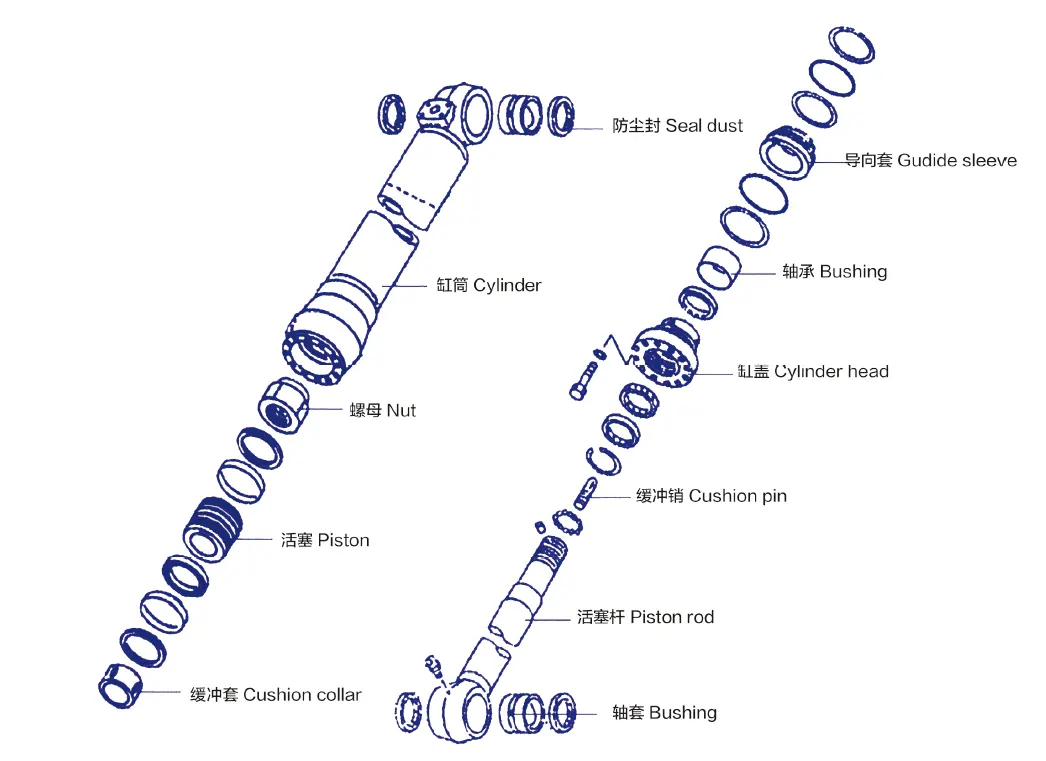
Caractéristiques du produit
- Transmission d'énergie efficace : Le vérin du bras assure un mouvement linéaire et une force puissants, garantissant ainsi des performances élevées du bras robotisé dans diverses opérations.
- Contrôle précis : Grâce au système hydraulique, le vérin du bras permet un contrôle précis du mouvement, rendant le fonctionnement des outils fixés plus flexible et précis.
- Durabilité: Arm cylinders are typically made with high-strength materials, offering excellent resistance to wear and corrosion, making them suitable for long-term use in harsh environments.
- Adaptabilité multifonctionnelle : Ces cylindres peuvent être largement utilisés dans diverses machines telles que les excavatrices, les grues et les bras robotisés, s'adaptant ainsi à différentes exigences de travail.
- Entretien facile : The design incorporates ease of maintenance and replacement, making regular inspections and upkeep convenient, reducing equipment downtime.

Applications
Le vérin à bras trouve des applications dans diverses industries :
- Génie civil : Dans les excavatrices et les grues, le vérin du bras contrôle le mouvement des godets ou des flèches pour les travaux de terrassement, la manutention de matériaux et l'installation de structures.
- Fabrication: In automated production lines, the arm cylinder enables the movement of robotic arms for assembly, welding, and handling processes, enhancing production efficiency and accuracy.
- Machines agricoles : Dans les équipements agricoles tels que les moissonneuses-batteuses et les semoirs, le vérin du bras contrôle le mouvement des bras moteurs pour des tâches comme la plantation, la fertilisation et la récolte.
- Exploitation minière: Dans les équipements miniers, le vérin de bras contrôle le mouvement des bras des machines d'extraction et de transport du minerai.
- Logistique et transport : Dans les chariots élévateurs et les robots de manutention, le vérin du bras contrôle le levage et le mouvement des fourches, facilitant ainsi la manutention et l'empilage des matériaux.
Considérations de conception et critères de sélection
- Capacité de charge : The arm cylinder is designed to withstand specific loads, ensuring safe and efficient operation under varying conditions.
- Scellage: Various sealing components, such as piston seals and rod seals made of wear-resistant materials like polyurethane and nitrile rubber, are used to maintain effective sealing. The cylinder body and threaded ends undergo precise treatments to improve wear resistance.
- Durabilité: The arm cylinder is engineered with materials and construction techniques that enhance durability, allowing it to withstand harsh operating environments.
- Sécurité: Safety considerations are incorporated into the design to prevent accidents and ensure the protection of operators and surrounding equipment.
- Maintenabilité : The design of the arm cylinder takes into account easy maintenance and replacement, enabling convenient periodic inspections and reducing downtime.

Étanchéité et lubrification
The arm cylinder uses various sealing components, including piston seals, rod seals, etc. These seals are made of wear-resistant materials such as polyurethane and nitrile rubber. The cylinder body and threaded ends are finely treated to improve wear resistance. Regular lubrication with an appropriate amount of hydraulic oil is necessary to ensure smooth operation.
Mesures d'inspection régulière et de maintenance préventive
- Perform regular inspections to check for any signs of leakage, wear, or damage.
- Surveillez la pression et la température du système hydraulique pour garantir des performances optimales.
- Keep the cylinder and its surrounding area clean to prevent the accumulation of dirt and debris.
- Replace worn-out seals and components promptly to maintain the cylinder’s efficiency.
- Respectez les consignes du fabricant concernant les intervalles et les procédures d'entretien.
Guide d'installation du produit
Suivez ces étapes pour installer le cylindre du bras :
- Ensure the equipment is turned off and the hydraulic system is depressurized.
- Position the cylinder in the desired location and align the mounting points.
- Securely attach the cylinder using appropriate bolts or mounting brackets.
- Connect the hydraulic hoses to the cylinder’s inlet and outlet ports, ensuring proper sealing.
- Double-check all connections and fittings for tightness.
- Once installation is complete, slowly pressurize the hydraulic system and test the cylinder’s movement.

Considérations de sécurité et facteurs environnementaux
When using the Arm Cylinder for Xiniu XN80-L, it is important to prioritize safety measures. Proper training, following safety guidelines, and using appropriate personal protective equipment are essential for preventing accidents and ensuring the well-being of operators and others. Environmental factors should also be considered to minimize the impact on the surrounding ecosystem and comply with relevant regulations and standards.
Dépannage et problèmes courants
Some common issues that may occur with the arm cylinder include:
- Fuite des joints ou des connexions
- Bruit anormal pendant le fonctionnement
- Mouvement lent ou saccadé
- Weakening of lifting or pushing force
- Inconsistent or unresponsive control
To address these issues, consider the following tips:
- Inspect and replace worn or damaged seals or components.
- Check hydraulic fluid levels and quality, and refill or replace if necessary.
- Inspect hydraulic hoses and connections for leaks, and tighten or replace as needed.
- Check for any mechanical obstructions or misalignments that may impede smooth operation.
- If the problem persists, consult the manufacturer’s troubleshooting guide or seek professional assistance.

N'oubliez pas d'organiser l'article de manière logique, d'utiliser des sous-titres pour faciliter la navigation, d'intégrer des images ou des graphiques pertinents pour améliorer la compréhension et de veiller à ce que le contenu soit clair, concis et adapté aux lecteurs ayant différents niveaux de connaissances techniques.
À propos de notre entreprise
We are a professional manufacturer of replacement hydraulic cylinders, offering a wide range of products. We have become one of the leading manufacturers and wholesale distributors of hydraulic cylinders in the domestic and international markets. Our commitment to excellence, industrialized production management strategies, and continuous improvement of technological capabilities and production efficiency set us apart. With state-of-the-art digital manufacturing equipment and professional testing systems, we optimize our manufacturing platform and refine our product quality control processes, demonstrating strong innovative capabilities. Our goal is to meet the diverse needs of our customers with principles of efficiency, precision, and high quality.

Vérin hydraulique Application :

 FR
FR  EN
EN  PT
PT  ES
ES  DE
DE  IT
IT  AR
AR  ZH
ZH  RU
RU  KO
KO  KA
KA  BG
BG  CS
CS  DA
DA  EL
EL  ET
ET  FI
FI  HU
HU  ID
ID  LT
LT  LV
LV  NB
NB  NL
NL  PL
PL  RO
RO  SK
SK  SL
SL  SV
SV  TR
TR  UK
UK