


Arm Cylinder For Caterpillar Wheel Excavator M320DZ
The Arm Cylinder for Caterpillar Wheel Excavator M320DZ is a specialized hydraulic cylinder designed to provide linear motion and power to the arm of various machinery, such as excavators, cranes, and mechanical arms. The arm cylinder plays a crucial role in hydraulic systems, enabling efficient movement and control of additional tools or attachments. These cylinders not only achieve smooth motion but also withstand heavy loads, ensuring high operational efficiency and reliability of the machinery in various working conditions.
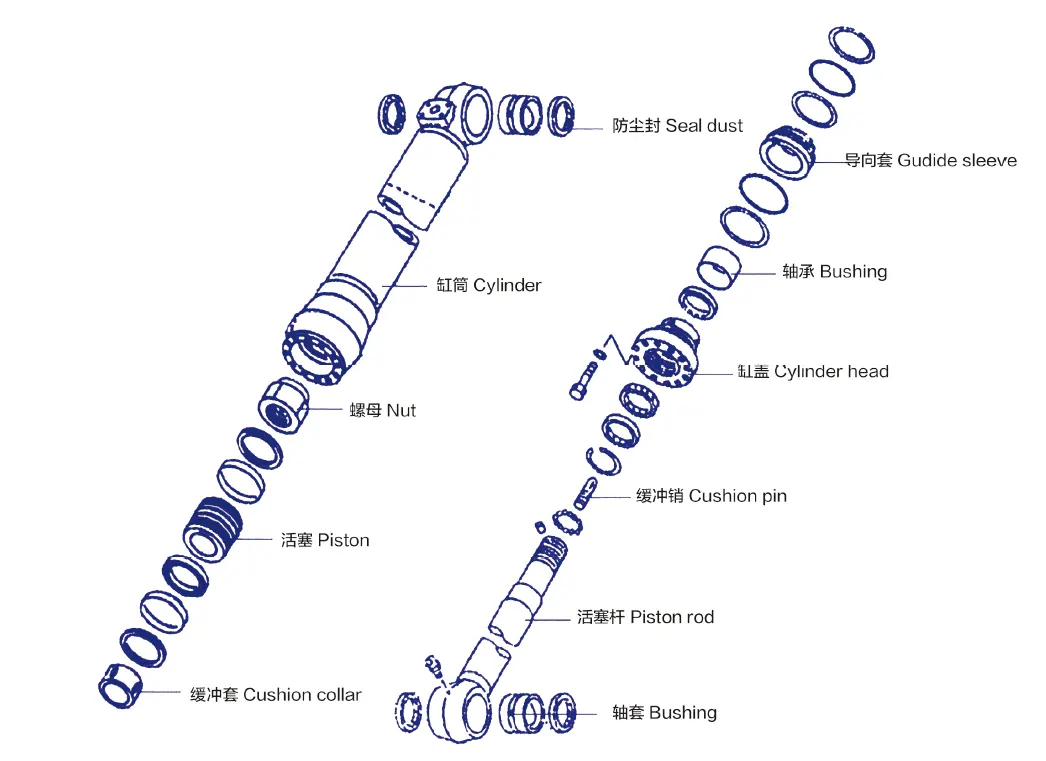

Caractéristiques du cylindre de bras
- High-Efficiency Transmission: The arm cylinder provides powerful linear motion and force, ensuring high performance of the mechanical arm in various operations.
- Precise Control: Through hydraulic systems, the arm cylinder enables precise motion control, making the operation of additional tools more flexible and accurate.
- Grande durabilité : les vérins de bras sont généralement fabriqués à partir de matériaux à haute résistance, offrant une excellente résistance à l'usure et à la corrosion, adaptés à une utilisation à long terme dans des environnements difficiles.
- Multi-Functional Adaptability: These cylinders can be widely applied to various machinery equipment such as excavators, cranes, and mechanical arms, adapting to different working requirements.
- Easy Maintenance: Designed with easy maintenance and replacement in mind, arm cylinders facilitate convenient periodic inspections and maintenance, reducing equipment downtime.


Applications du cylindre de bras
The Arm Cylinder for Caterpillar Wheel Excavator M320DZ finds its applications in various industries:
- Construction Engineering: In excavators and cranes, the arm cylinder controls the movement of the bucket or boom, facilitating earthworks, material handling, and structural installations.
- Manufacturing Industry: In automated production lines, the arm cylinder is used for the movement of mechanical arms, enabling processes such as assembly, welding, and material handling, thereby improving production efficiency and precision.
- Agricultural Machinery: In agricultural machinery such as harvesters and seeders, the arm cylinder controls the movement of the operating arm, executing tasks like planting, fertilizing, and harvesting.
- Mining: In mining equipment, the arm cylinder controls the arm movement of mining machinery, enabling ore extraction and transportation.
- Logistique et transport : Dans les chariots élévateurs et les robots de manutention, le vérin du bras contrôle le levage et le déplacement des fourches, facilitant ainsi la manutention et l'empilage des matériaux.
Considérations de conception et critères de sélection
En ce qui concerne les considérations de conception et les critères de sélection des vérins de bras, plusieurs facteurs clés doivent être pris en compte :
- Load-Bearing Capacity: The arm cylinder should be designed to withstand the specific load requirements of the machinery and working conditions.
- Sealing: Various sealing components, such as piston seals and rod seals, should be used to ensure effective sealing. These seals are often made of wear-resistant materials like polyurethane and nitrile rubber.
- Durability: The cylinder body and threaded ends should undergo meticulous treatment to enhance wear resistance, ensuring long-lasting performance.
- Safety: The design should prioritize safety features such as pressure relief valves and anti-cavitation devices to prevent accidents and protect the machinery.
- Maintainability: Easy maintenance and repair should be considered in the design, allowing for regular inspections and minimizing downtime.


Étanchéité et lubrification du vérin de bras
The Arm Cylinder for Caterpillar Wheel Excavator M320DZ incorporates various sealing components to ensure optimal performance:
- Usage of Various Seals: Piston seals, rod seals, and other sealing elements are used to provide effective sealing, with materials like polyurethane and nitrile rubber chosen for their wear resistance.
- Fine Treatment of Cylinder Body and Threaded Ends: The cylinder body and threaded ends undergo meticulous processing to enhance wear resistance and overall performance.
- Regular Lubrication: The arm cylinder requires periodic lubrication with an appropriate amount of hydraulic oil to ensure smooth operation.
Inspection régulière et maintenance préventive
To ensure the longevity and optimal performance of the Arm Cylinder for Caterpillar Wheel Excavator M320DZ, regular inspections and preventive maintenance measures should be implemented:
- Inspecting and Replacing Seals: Regularly inspecting and replacing worn or damaged seals can prevent oil leakage and maintain efficient operation.
- Checking for Damaged Components: Carefully examining the cylinder body, piston, and other components for damage or wear can identify potential issues before they escalate.
- Inspecting Hydraulic Connections: Checking for loose or damaged hydraulic connections and tightening or replacing them as necessary can prevent leaks and ensure proper functionality.
- Monitoring Oil Levels: Regularly checking and maintaining the appropriate oil level in the hydraulic system is crucial for optimal performance.
- Keeping the Cylinder Clean: Ensuring the arm cylinder is kept clean and free from debris or contaminants can prevent damage and maintain smooth operation.


Guide d'installation du produit
Proper installation of the Arm Cylinder for Caterpillar Wheel Excavator M320DZ is vital for its performance and longevity. Follow these steps for correct installation:
- Prepare the Mounting Surface: Ensure the mounting surface is clean, level, and free from any obstructions.
- Align the Cylinder: Align the arm cylinder with the mounting surface and secure it using appropriate bolts or fasteners.
- Connect Hydraulic Hoses: Connect the hydraulic hoses to the designated ports on the cylinder, ensuring proper sealing and tight connections.
- Test for Leaks: After installation, conduct a thorough leak test by pressurizing the hydraulic system and inspecting for any signs of leakage.
- Check for Proper Operation: Verify that the arm cylinder moves smoothly and responds correctly to hydraulic commands.


Considérations de sécurité et facteurs environnementaux
When utilizing the Arm Cylinder for Caterpillar Wheel Excavator M320DZ, safety measures are of utmost importance. Keywords such as safety precautions play a vital role:
Adhering to safety precautions is crucial to prevent accidents and ensure the well-being of operators and bystanders. It is essential to follow all relevant safety guidelines and regulations during the operation and maintenance of the machinery.
Diagnostic des pannes et problèmes courants
The following are common faults and issues that may arise with the Arm Cylinder for Caterpillar Wheel Excavator M320DZ:
- Oil Leakage: Oil leakage can occur due to worn seals or damaged components. Regular inspection and prompt replacement of faulty seals can resolve this issue.
- Slow or Inconsistent Movement: This problem may be caused by insufficient hydraulic pressure or a blockage in the hydraulic system. Checking the pressure and ensuring proper system operation can address this issue.
- Abnormal Noise: Unusual noises during operation may indicate loose components, damaged seals, or worn parts. Careful inspection and appropriate repairs can rectify this problem.
It is recommended to consult the manufacturer’s manual or seek professional assistance when diagnosing and resolving these issues.
Conseils et solutions de dépannage
To assist readers in effectively diagn