

Cylindre de bras pour Dasin DS60-7
En tant que fabricant, fournisseur et exportateur de produits mécaniques, nous proposons des vérins hydrauliques et de nombreux autres produits.
N'hésitez pas à nous contacter pour plus de détails.
Courrier :sales@hydraulic-cylinders.net
Fabricant fournisseur exportateur de vérins hydrauliques.
Cylindre de bras pour Dasin DS60-7
Introduction
The arm cylinder is a specially designed hydraulic cylinder that provides linear motion and power to the arm of various machinery, such as excavators, cranes, and robotic arms. It plays a crucial role in hydraulic systems, allowing for the effective movement and control of additional tools or attachments. These cylinders not only enable smooth motion but also withstand heavy loads, ensuring efficient operation and reliability of the machinery under various working conditions.
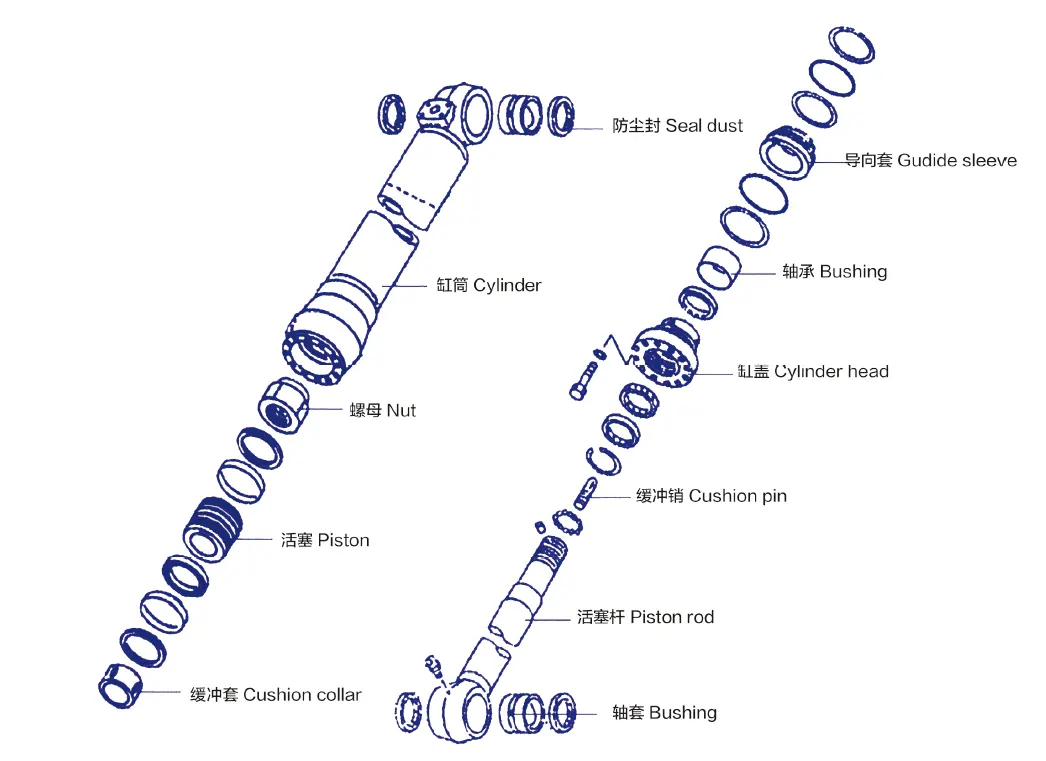
Caractéristiques
-
Transmission à haut rendement
Le vérin du bras assure un mouvement linéaire et une force puissants, garantissant des performances élevées au bras mécanique dans diverses opérations.
-
Contrôle précis
Grâce au système hydraulique, le vérin du bras permet un contrôle précis du mouvement, rendant le fonctionnement des outils fixés plus flexible et précis.
-
Durabilité
Le cylindre du bras est généralement fabriqué à partir de matériaux à haute résistance, offrant une excellente résistance à l'usure et à la corrosion, ce qui le rend adapté à une utilisation à long terme dans des environnements difficiles.
-
Adaptabilité multifonctionnelle
Ces vérins peuvent être largement utilisés dans diverses machines, telles que les excavatrices, les grues et les bras robotisés, s'adaptant ainsi à différentes exigences de travail.
-
Entretien facile
The design takes into consideration ease of maintenance and replacement, making regular inspections and servicing more convenient and reducing equipment downtime.

Applications
Le vérin à bras trouve des applications dans diverses industries :
1. Ingénierie de la construction
In excavators and cranes, the arm cylinder controls the movement of buckets or booms, facilitating earthmoving, material handling, and structural installations.
2. Fabrication
Dans les lignes de production automatisées, le vérin de bras permet le mouvement des bras robotisés pour des processus tels que l'assemblage, le soudage et la manutention des matériaux, améliorant ainsi l'efficacité et la précision de la production.
3. Machines agricoles
In agricultural machinery like harvesters and seeders, the arm cylinder controls the movement of operational arms for tasks such as seeding, fertilizing, and harvesting.
4. Exploitation minière
Dans les équipements miniers, le vérin de bras est utilisé pour contrôler le mouvement du bras des machines minières pour l'extraction et le transport du minerai.
5. Logistique et transport
Dans les chariots élévateurs et les robots de manutention, le vérin du bras sert à contrôler le levage et le mouvement des fourches, permettant ainsi la manutention et l'empilage des matériaux.

Considérations de conception et critères de sélection
-
Capacité de charge
The arm cylinder is designed to withstand specific loads to ensure safe and efficient operation.
-
Scellage
Various sealing elements such as piston seals and rod seals are used. These seals are made of wear-resistant materials like polyurethane and nitrile rubber. The cylinder head and threaded end surface are finely processed to enhance wear resistance.
-
Durabilité
The arm cylinder is manufactured using high-quality materials and undergoes rigorous quality control to ensure durability and longevity.
-
Sécurité
Strict safety standards are followed during the design and production of the arm cylinder to prevent accidents and ensure operator safety.
-
Maintenabilité
The design of the arm cylinder takes into account easy maintenance and replacement, allowing for convenient periodic inspections and reducing downtime.

Étanchéité et lubrification
The arm cylinder utilizes various seals, such as piston seals and rod seals, which are made of wear-resistant materials like polyurethane and nitrile rubber. The cylinder body and threaded end surface undergo fine processing to enhance wear resistance. Regular lubrication with an appropriate amount of hydraulic oil is necessary to ensure proper operation.
Inspection régulière et maintenance préventive
-
Inspectez régulièrement le cylindre du bras pour détecter tout signe d'usure, de dommage ou de fuite.
-
Check and maintain the hydraulic oil level and quality according to the manufacturer’s recommendations.
-
Assurez-vous que toutes les connexions et fixations sont sécurisées.
-
Clean the external surfaces of the arm cylinder to prevent debris accumulation.
-
Follow the recommended maintenance schedule and perform necessary repairs or replacements.
Guide d'installation du produit
Suivez ces étapes pour installer le cylindre du bras :
-
Ensure power to the machinery is safely turned off.
-
Position the arm cylinder in its designated location.
-
Securely fasten the arm cylinder using appropriate bolts or mounting brackets.
-
Connect the hydraulic hoses or pipes according to the provided instructions.
-
Ensure all connections are tight and free from leaks.
-
Test the arm cylinder’s operation to ensure proper functionality.

Considérations de sécurité et facteurs environnementaux
When using the arm cylinder, it is essential to follow proper safety measures to prevent accidents and ensure operator well-being. Safety precautions include:
-
Wearing appropriate personal protective equipment, such as safety goggles and gloves.
-
Following all safety guidelines and operating instructions provided by the machinery manufacturer.
-
Regularly inspecting the arm cylinder for any signs of wear or damage that may affect safety.
-
Properly disposing of any hydraulic fluids or materials in an environmentally responsible manner.
Dépannage et problèmes courants
Les problèmes courants pouvant survenir avec le cylindre du bras comprennent :
-
Fuite des joints ou des connexions
-
Bruits anormaux pendant le fonctionnement
-
Mouvement irrégulier ou saccadé
-
Lack of power or force
-
Excessive wear on components
To address these issues, consider the following tips and solutions:
-
Inspectez et remplacez les joints ou les connexions défectueux.
-
Check for any foreign objects or debris causing the abnormal noises and remove them.
-
Ensure proper lubrication and clean any dirt or debris that may hinder smooth motion.
-
Check hydraulic pressure and fluid levels to ensure adequate power.
-
Replace worn components with new ones to restore proper functionality.
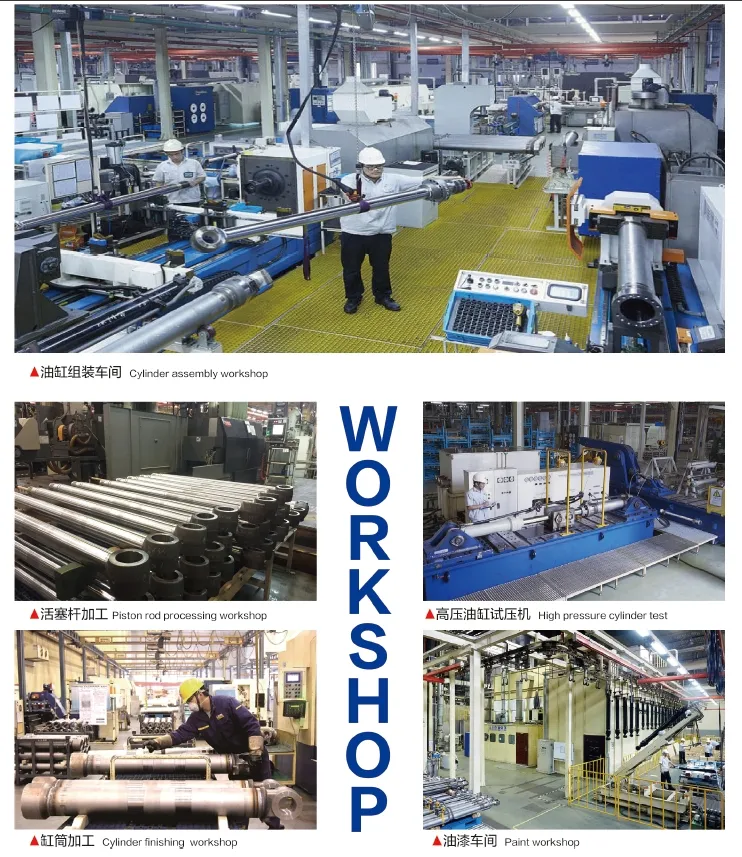
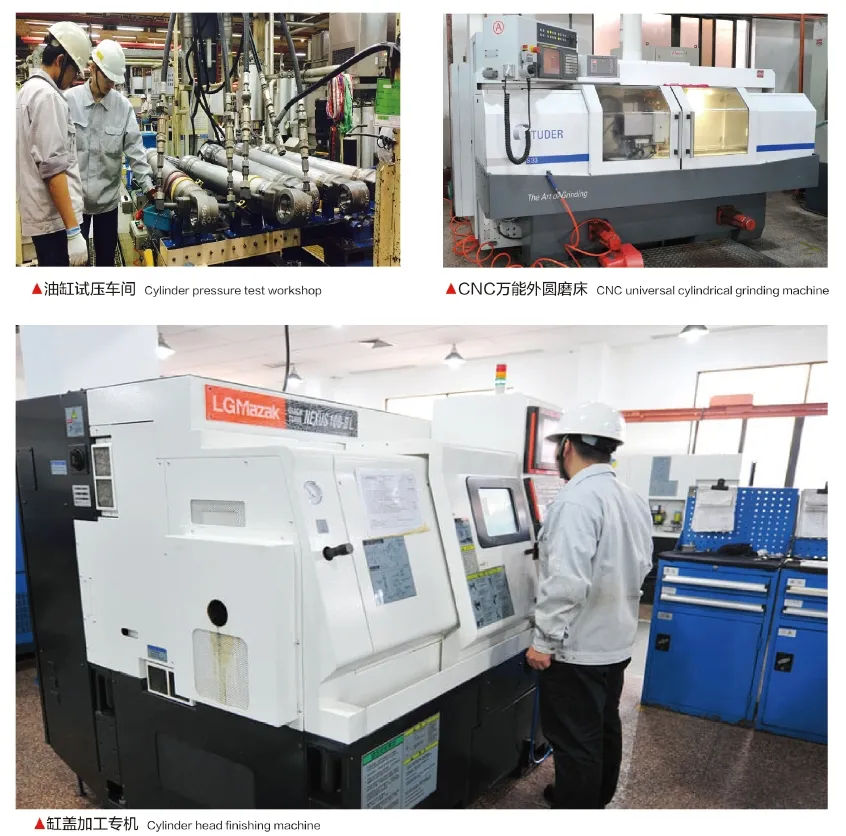
À propos de notre entreprise
We
Vérin hydraulique Application :

 FR
FR  EN
EN  PT
PT  ES
ES  DE
DE  IT
IT  AR
AR  ZH
ZH  RU
RU  KO
KO  KA
KA  BG
BG  CS
CS  DA
DA  EL
EL  ET
ET  FI
FI  HU
HU  ID
ID  LT
LT  LV
LV  NB
NB  NL
NL  PL
PL  RO
RO  SK
SK  SL
SL  SV
SV  TR
TR  UK
UK