
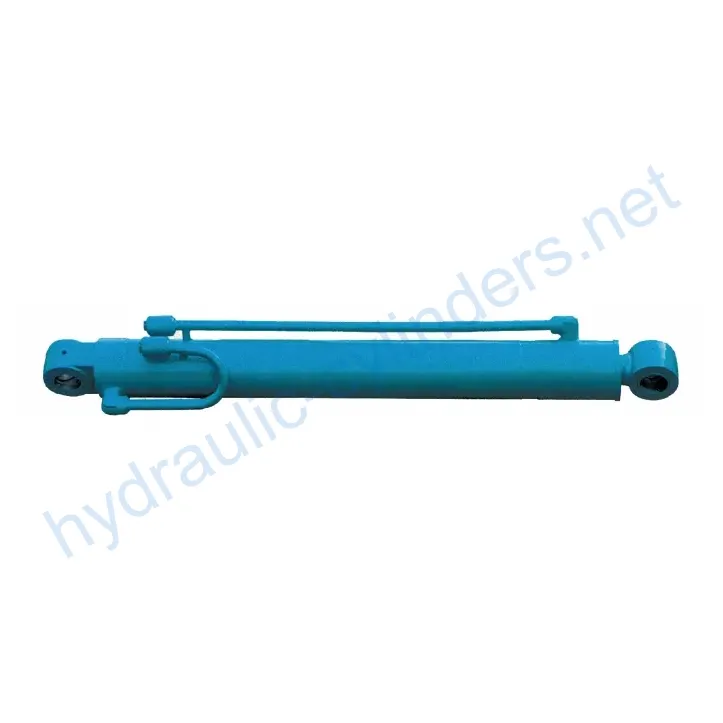
Vérin de bras pour pelle intermédiaire JCM 922D
En tant que fabricant, fournisseur et exportateur de produits mécaniques, nous proposons des vérins hydrauliques et de nombreux autres produits.
N'hésitez pas à nous contacter pour plus de détails.
Courrier :sales@hydraulic-cylinders.net
Fabricant fournisseur exportateur de vérins hydrauliques.
Vérin de bras pour pelle intermédiaire JCM 922D
Introduction
Définition
Arm cylinder is a specialized hydraulic cylinder that is mainly used to provide linear motion and power for the arms of various machinery such as excavators, cranes, and robotic arms. The arm cylinder plays a critical role in the hydraulic system, enabling the effective movement and control of additional tools or attachments. These cylinders not only provide smooth and efficient motion but also withstand heavy loads, ensuring efficient operation and reliability of the machinery in various operating conditions.
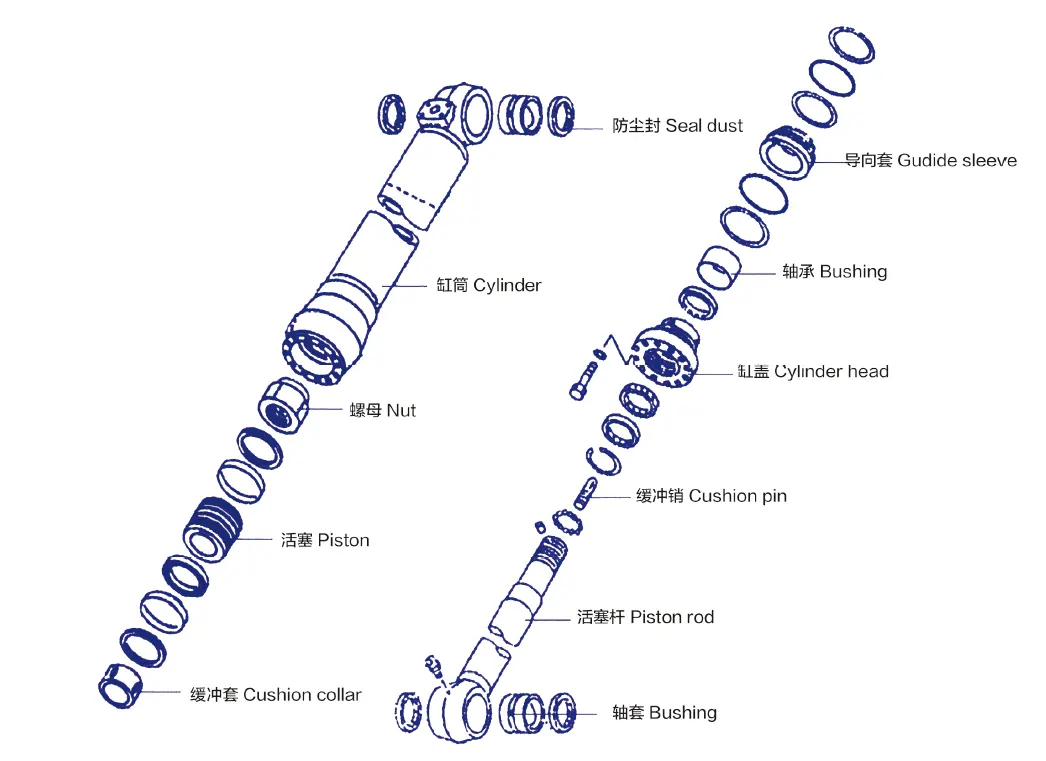
Caractéristiques
-
Transmission de puissance efficace
Le vérin du bras assure un mouvement linéaire et une force puissants, garantissant ainsi des performances élevées du bras robotisé dans diverses opérations.
-
Contrôle précis
Le vérin du bras permet un contrôle précis du mouvement grâce au système hydraulique, rendant l'utilisation d'outils supplémentaires plus flexible et précise.
-
Grande durabilité
The arm cylinder is usually made of high-strength materials and has good wear and corrosion resistance, suitable for long-term use in harsh environments.
-
Adaptabilité multifonctionnelle
These cylinders can be widely used in various machinery equipment such as excavators, cranes, and robotic arms, adapting to different working needs.
-
Entretien facile
The design considers easy maintenance and replacement, making regular inspections and maintenance more convenient and reducing equipment downtime.
Nous pouvons fabriquer ce produit, et notre produit peut parfaitement remplacer ces vérins hydrauliques.

Applications
-
Ingénierie de la construction
Arm cylinders are used to control the movement of buckets or booms in excavators and cranes, performing earthmoving tasks, material handling, and structural installation.
-
Industrie manufacturière
Arm cylinders are used in the movement of robotic arms in automated production lines, performing assembly, welding, and handling processes, improving production efficiency, and accuracy.
-
machines agricoles
Arm cylinders control the movement of operating arms in agricultural machinery such as harvesters and seeders, performing tasks such as sowing, fertilizing, and harvesting.
-
Exploitation minière
Arm cylinders are used to control the arm movement of mining equipment, performing mining and ore transportation tasks.
-
Logistique et transport
Les vérins de bras servent à contrôler le levage et le déplacement des fourches des chariots élévateurs et des robots de manutention, permettant ainsi la manutention et l'empilage des matériaux.
Considérations de conception et critères de sélection
-
Capacité de charge
The arm cylinder must have a suitable bearing capacity, which should be determined based on the requirements of the machinery equipment to which it is fitted.
-
Scellage
The choice of piston and rod sealing elements is critical to ensure the proper functioning and long service life of the arm cylinder. Polyurethane and nitrile rubber materials are commonly used due to their excellent wear resistance and sealing performance.
-
Durabilité
The arm cylinder must be made of high-strength materials with good wear and corrosion resistance to ensure long-term use in harsh environments.
-
Sécurité
The arm cylinder must be designed to prevent accidents, such as overload protection devices and safety valves.
-
Maintenabilité
The design of the arm cylinder should consider easy maintenance and replacement to reduce equipment downtime. The use of quality spare parts can also prolong the service life of the cylinder.

Étanchéité et lubrification
The arm cylinder uses various sealing elements, such as piston sealing rings and rod sealing rings, which are made of wear-resistant materials such as polyurethane and nitrile rubber. The cylinder body and threaded end surface are precisely treated to improve wear resistance. Regularly adding appropriate hydraulic oil for lubrication can ensure the cylinder’s smooth movement and prolong its service life.

Inspection et entretien
-
Inspection régulière
The arm cylinder should be inspected regularly to ensure proper functioning and detect any defects or wear in time, which can avoid accidents and reduce maintenance costs.
-
Maintenance préventive
Preventive maintenance should be carried out regularly to replace the worn or damaged parts in time and ensure the arm cylinder’s optimal performance and service life.
Guide d'installation
Before installation, check the suitability of the arm cylinder for the machinery equipment and the correct installation position. Remove the protective cover and apply a suitable amount of lubricating oil to the piston rod and the cylinder body. Install the cylinder and connect it to the hydraulic system. Slowly test the arm cylinder to ensure that it is functioning correctly.

Considérations de sécurité et facteurs environnementaux
When using the arm cylinder, safety precautions must be taken to prevent accidents. Overload protection devices and safety valves can be installed to ensure safe and reliable operation. Environmental factors, such as temperature and humidity, should also be considered when selecting the arm cylinder to ensure optimal performance and longevity.
Pannes courantes et dépannage
-
Fuite du cylindre
This is a common fault caused by damage to the sealing elements. Replace the damaged seals in time to avoid further leakage.
-
Cylinder bending
This fault is usually caused by excessive load or collision. Check the load and operating conditions, and replace the damaged cylinder in time.
-
Cylinder noise
This fault is usually caused by air in the hydraulic system or insufficient lubrication. Check the hydraulic system and add lubricating oil to eliminate the noise.
To diagnose and solve these problems effectively, refer to the manufacturer’s instructions or consult a professional technician.
À propos de nous
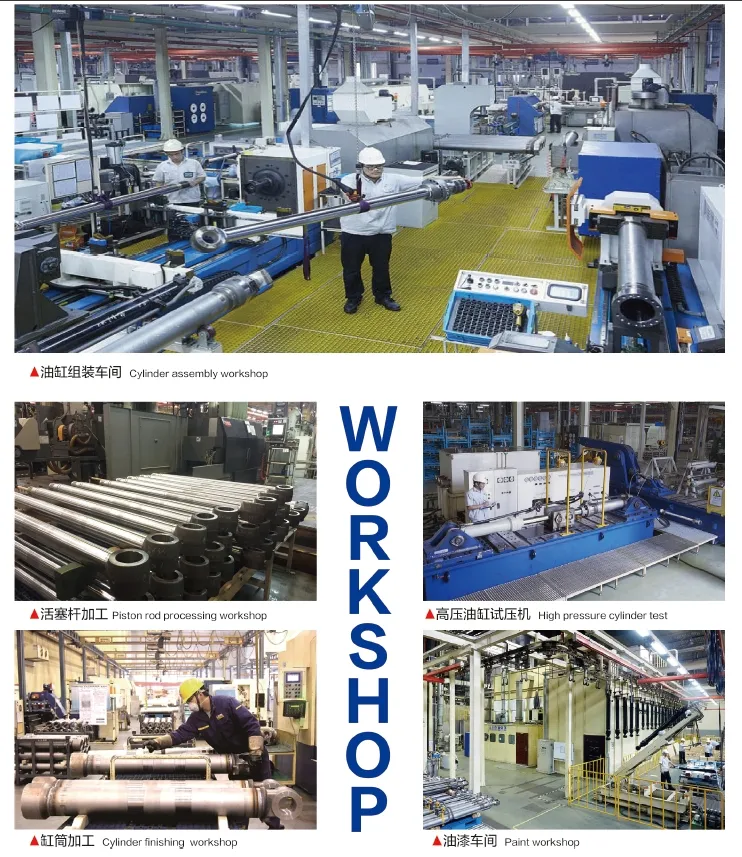
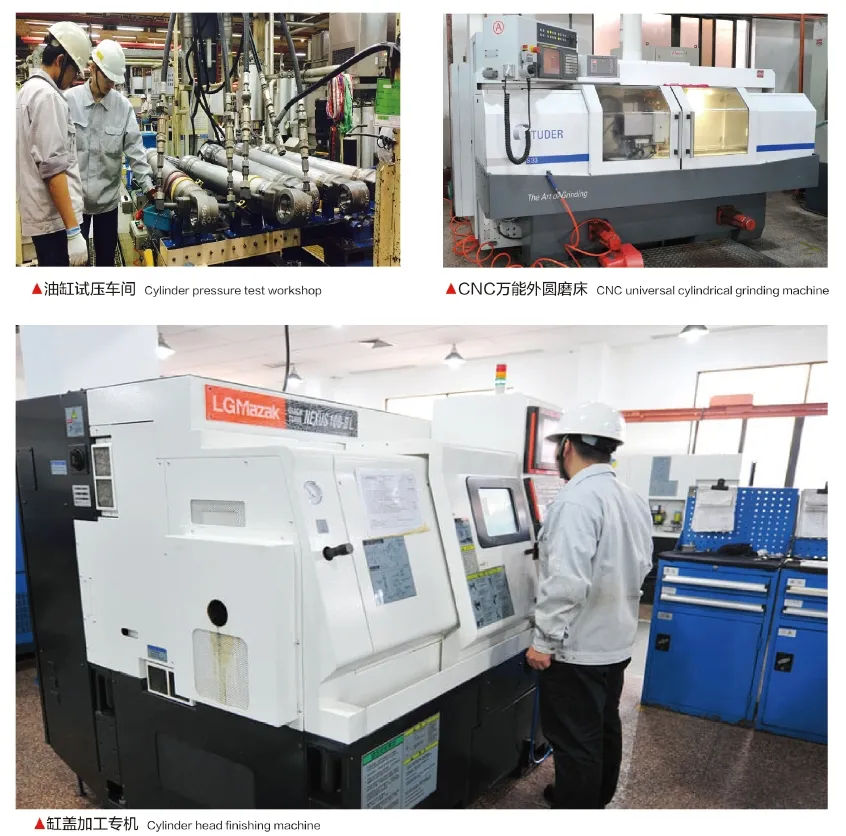
We are a professional manufacturer of replacement hydraulic cylinders with a rich variety of products and have become one of the leading hydraulic cylinder manufacturers and wholesale distributors in the domestic and international markets. We always adhere to the principle of excellent quality, relying on the industrialized production management strategy of the refining workshop, constantly improving our technical level and production efficiency. By introducing high-end digital manufacturing equipment and professional testing systems, we optimize the manufacturing platform and improve the product quality control process, possessing strong innovation capabilities. Our goal is to satisfy customers’ diverse needs with high efficiency, precision, and high quality.
-
Professionnalisme
We have professional technical personnel and advanced production equipment to ensure the quality and performance of our products.
-
Certification internationale
Our products have passed international certifications such as ISO9001, CE, and SGS, ensuring their quality and reliability.
-
Service personnalisé
We provide customized services to meet the diverse needs of our customers.
-
Équipement de production
We use advanced digital manufacturing equipment to ensure the accuracy and efficiency of our products.
-
Service après-vente
We provide comprehensive after-sales service, including technical support, spare parts supply, and maintenance.
Auteur : lyl
Vérin hydraulique Application :

 FR
FR  EN
EN  PT
PT  ES
ES  DE
DE  IT
IT  AR
AR  ZH
ZH  RU
RU  KO
KO  KA
KA  BG
BG  CS
CS  DA
DA  EL
EL  ET
ET  FI
FI  HU
HU  ID
ID  LT
LT  LV
LV  NB
NB  NL
NL  PL
PL  RO
RO  SK
SK  SL
SL  SV
SV  TR
TR  UK
UK