
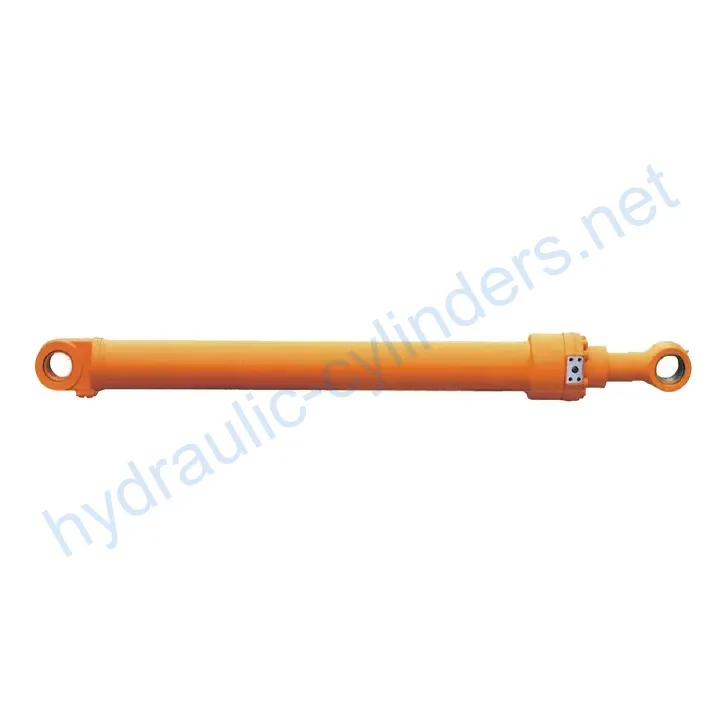
Arm Cylinder For Liebherr Small Excavator R906L
En tant que fabricant, fournisseur et exportateur de produits mécaniques, nous proposons des vérins hydrauliques et de nombreux autres produits.
N'hésitez pas à nous contacter pour plus de détails.
Courrier :sales@hydraulic-cylinders.net
Fabricant fournisseur exportateur de vérins hydrauliques.
Arm Cylinder For Liebherr Small Excavator R906L
Introduction
The arm cylinder is a specially designed hydraulic cylinder used to provide linear motion and power to the arm of various types of machinery, such as excavators, cranes, and robotic arms. The arm cylinders play a crucial role in hydraulic systems, enabling the effective movement and control of additional tools or attachments. These cylinders not only achieve smooth motion but also withstand heavy loads, ensuring efficient operation and reliability of the machinery under various working conditions.
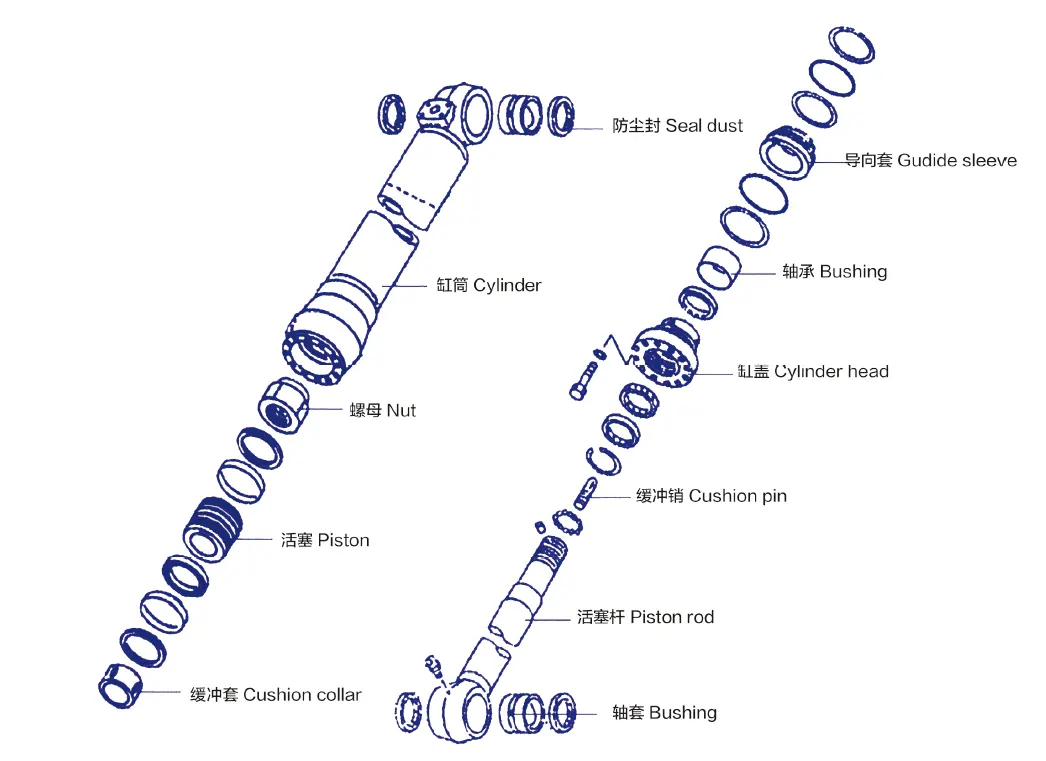
Caractéristiques
- Transmission à haut rendement : Le vérin du bras assure un mouvement linéaire et une force puissants, garantissant des performances élevées au bras mécanique dans diverses opérations.
- Contrôle de précision : Grâce au système hydraulique, le vérin du bras permet un contrôle précis du mouvement, rendant le fonctionnement des outils fixés plus flexible et précis.
- Durabilité: Les vérins de bras sont généralement fabriqués à partir de matériaux à haute résistance, offrant une excellente résistance à l'usure et à la corrosion, ce qui les rend adaptés à une utilisation à long terme dans des environnements difficiles.
- Adaptabilité multifonctionnelle : These cylinders can be widely applied to various types of machinery, including excavators, cranes, and robotic arms, catering to different working requirements.
- Entretien facile : The design of these cylinders takes into consideration ease of maintenance and replacement, making regular inspection and upkeep convenient and reducing equipment downtime.

Applications
Le vérin à bras trouve son application dans diverses industries :
- Génie civil : Dans les excavatrices et les grues, le vérin du bras contrôle le mouvement des godets ou des flèches pour les travaux de terrassement, la manutention de matériaux et les installations de structures.
- Industrie manufacturière : In automated production lines, the arm cylinder is used for the motion of robotic arms, facilitating assembly, welding, and material handling processes to improve production efficiency and accuracy.
- Machines agricoles : In agricultural machinery such as harvesters and seeders, the arm cylinder controls the movement of operating arms to perform tasks such as seeding, fertilizing, and harvesting.
- Exploitation minière: In mining equipment, the arm cylinder controls the arm movement of mining machinery, enabling the extraction and transport of minerals.
- Logistique et transport : Dans les chariots élévateurs et les robots de manutention, le vérin du bras contrôle le levage et le mouvement des fourches, facilitant ainsi la manutention et l'empilage des matériaux.
Considérations de conception et critères de sélection
When designing arm cylinders, several key factors are taken into consideration:
- Capacité de charge : The arm cylinder should be designed to withstand the specific load requirements of the machinery it will be used in.
- Scellage: Various sealing components, such as piston seals and rod seals, are used, typically made of wear-resistant materials like polyurethane and nitrile rubber. The cylinder body and threaded ends undergo fine processing to enhance wear resistance.
- Durabilité: Arm cylinders are built to be highly durable and resistant to wear and tear, ensuring their longevity in demanding working environments.
- Sécurité: Safety features are integrated into the design to prevent accidents and ensure operator protection during operation.
- Maintenabilité : The design allows for easy maintenance and replacement of components, reducing downtime and facilitating regular inspections.

Étanchéité et lubrification
Arm cylinders utilize various sealing components, such as piston seals and rod seals, made of wear-resistant materials like polyurethane and nitrile rubber. The cylinder body and threaded ends undergo fine processing to enhance wear resistance. Regular lubrication with the appropriate amount of hydraulic oil is necessary to ensure smooth operation and prevent damage caused by friction.
Inspection régulière et maintenance préventive
To maintain optimal performance and prolong the lifespan of the arm cylinder, regular inspections and preventive maintenance are essential. Key measures include:
- Checking for any signs of wear, leakage, or damage to the cylinder and its components.
- Inspecting and replacing worn-out seals and other key components.
- Cleaning and lubricating the cylinder to ensure smooth operation.
- Tightening any loose connections or fasteners.
- Following the manufacturer’s guidelines for maintenance intervals and procedures.
Guide d'installation du produit
Proper installation of the arm cylinder is crucial for its performance and longevity. Please follow these steps:
- Ensure the excavator or machinery is powered off and in a stable position.
- Carefully remove the old arm cylinder, taking note of its orientation and connections.
- Thoroughly clean the mounting area and inspect it for any damage.
- Install the new arm cylinder, aligning it with the mounting points and connecting the hydraulic lines.
- Double-check all connections to ensure proper fit and tightness.
- Test the arm cylinder’s functionality and check for any leaks.

Considérations de sécurité et facteurs environnementaux
When working with arm cylinders, prioritizing safety precautions is essential to prevent accidents and ensure the well-being of operators. It is crucial to follow safety guidelines, such as wearing appropriate personal protective equipment and operating machinery within specified limits. Additionally, considering environmental factors, such as proper waste management and compliance with environmental regulations, is vital to minimize negative impacts.
Dépannage et problèmes courants
Arm cylinders may encounter some common problems, including:
- Fuite de fluide hydraulique.
- Perte de puissance ou force insuffisante.
- Uneven or jerky motion.
- Bruit anormal pendant le fonctionnement.
- Lack of response or unresponsiveness.
Pour remédier à ces problèmes, suivez ces conseils et solutions :
- Inspectez et remplacez les joints usés ou les composants endommagés.
- Check the hydraulic fluid level and refill if necessary.
- Ensure there are no blockages or restrictions in the hydraulic lines.
- Inspect the hydraulic pump and valves for any malfunctions or damage.
- If the problem persists, consult a professional for further diagnosis and repair.

N'oubliez pas d'organiser l'article de manière logique, d'utiliser des sous-titres pour faciliter la navigation, d'intégrer des images ou des schémas pertinents pour améliorer la compréhension et de veiller à ce que le contenu soit clair, concis et adapté aux lecteurs ayant différents niveaux de connaissances techniques.
Auteur : lyl
À propos de notre entreprise
We are a professional manufacturer of replacement hydraulic cylinders, offering a wide range of products. We have become one of the leading manufacturers and wholesale distributors of hydraulic cylinders in domestic and international markets. Upholding the principle of excellence in quality, we continuously improve our technical expertise and production efficiency. By introducing high-end digital manufacturing equipment and professional testing systems, we optimize our manufacturing platform and enhance our product quality control processes. We are committed to meeting diverse customer needs with principles of efficiency, accuracy
Vérin hydraulique Application :

 FR
FR  EN
EN  PT
PT  ES
ES  DE
DE  IT
IT  AR
AR  ZH
ZH  RU
RU  KO
KO  KA
KA  BG
BG  CS
CS  DA
DA  EL
EL  ET
ET  FI
FI  HU
HU  ID
ID  LT
LT  LV
LV  NB
NB  NL
NL  PL
PL  RO
RO  SK
SK  SL
SL  SV
SV  TR
TR  UK
UK