Arm Cylinder For SGZG SD15B
Introduction
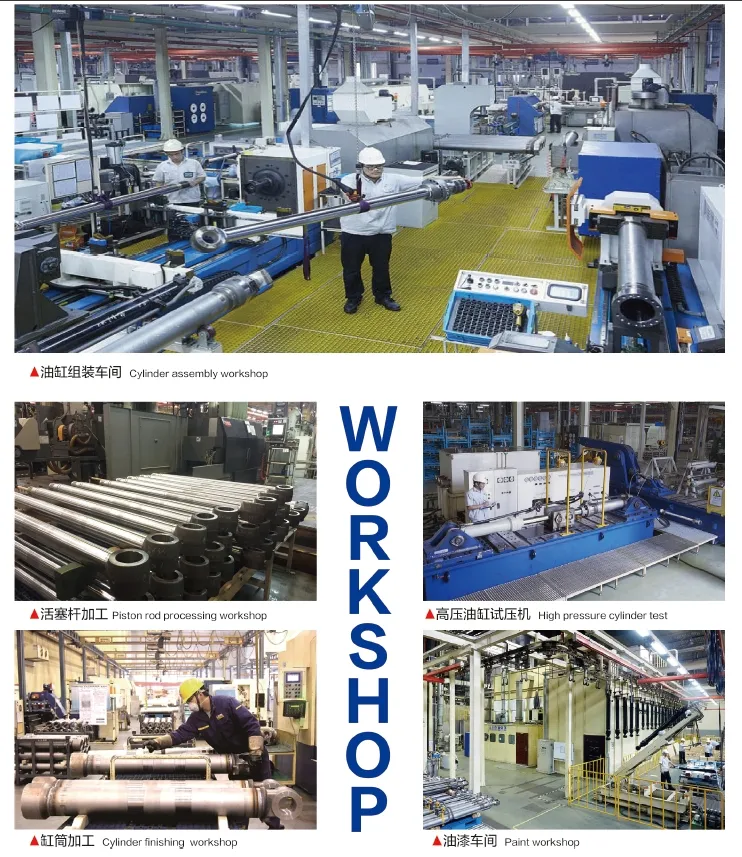
The Arm Cylinder for SGZG SD15B is a specialized hydraulic cylinder designed to provide linear motion and power to the arm of various machines, such as excavators, cranes, and robotic arms. The arm cylinder plays a crucial role in hydraulic systems, allowing for efficient movement and control of attached tools or accessories. These cylinders not only enable smooth motion but also withstand heavy loads, ensuring high performance and reliability of the machinery in various operating conditions.

Caractéristiques
- Transmission à haut rendement : The arm cylinder provides powerful linear motion and force, ensuring efficient performance of the machinery in various operations.
- Contrôle précis : Grâce au système hydraulique, le vérin du bras permet un contrôle précis du mouvement, rendant les opérations avec les outils fixés plus flexibles et plus précises.
- Durabilité: The arm cylinder is typically made of high-strength materials, offering excellent wear and corrosion resistance, suitable for prolonged use in harsh environments.
- Adaptabilité multifonctionnelle : Ces vérins peuvent être largement utilisés dans diverses machines, telles que les excavatrices, les grues et les bras robotisés, s'adaptant ainsi aux différentes exigences de travail.
- Entretien facile : The design considers ease of maintenance and replacement, making regular inspection and upkeep convenient, thereby reducing equipment downtime.


Applications
Le vérin à bras trouve des applications dans diverses industries :
- Génie civil : Dans les excavatrices et les grues, le vérin de bras est utilisé pour contrôler le mouvement des godets ou des flèches pour les travaux de terrassement, la manutention des matériaux et l'installation structurelle.
- Fabrication: In automated production lines, the arm cylinder is used for the motion of robotic arms, enabling processes like assembly, welding, and material handling, improving production efficiency and precision.
- Machines agricoles : Dans les équipements agricoles tels que les moissonneuses-batteuses et les semoirs, le vérin du bras contrôle le mouvement des bras moteurs pour effectuer des tâches comme le semis, la fertilisation et la récolte.
- Exploitation minière: In mining equipment, the arm cylinder is used to control the arm movement of mining machinery, facilitating ore extraction and transport.
- Logistique et transport : Dans les chariots élévateurs et les robots de manutention, le vérin du bras contrôle le levage et le mouvement des fourches, permettant la manutention et l'empilage des matériaux.
Considérations de conception et critères de sélection
When designing the arm cylinder, several factors and selection criteria are taken into account:
- Capacité de charge : The arm cylinder is designed to withstand specific loads and forces to ensure safe and efficient operation.
- Sealing Ability: Various sealing elements, such as piston seals and rod seals, are chosen to provide effective sealing, using materials like polyurethane and nitrile rubber for wear resistance.
- Durabilité: The cylinder body and threaded ends undergo precise treatment to enhance wear resistance, ensuring prolonged service life.
- Sécurité: Safety considerations are integrated into the design to prevent accidents and ensure operator well-being during cylinder operation.
- Maintenabilité : The arm cylinder is designed for easy maintenance and regular lubrication with hydraulic oil to optimize performance and extend its lifespan.


Étanchéité et lubrification
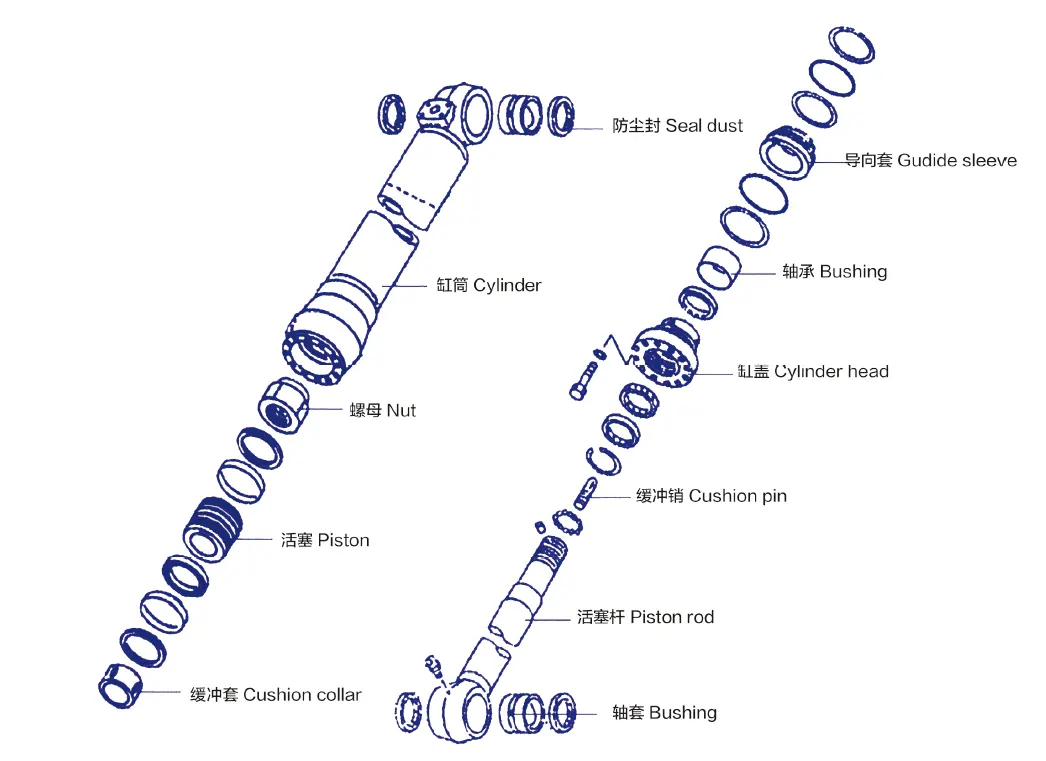
The arm cylinder utilizes various sealing components, such as piston seals and rod seals, made of wear-resistant materials like polyurethane and nitrile rubber. The cylinder body and threaded ends are finely treated to improve wear resistance. Regular lubrication with the appropriate amount of hydraulic oil is necessary to ensure smooth operation.
Inspection régulière et maintenance préventive
- Perform regular inspections of the arm cylinder to check for any signs of wear, leakage, or damage.
- Ensure proper lubrication of the cylinder and replace any worn-out or damaged seals.
- Tighten all connections and fittings to prevent leaks and ensure the cylinder’s stability.
- Keep the cylinder clean and free from debris or contaminants that can affect its performance.
- Follow the manufacturer’s recommendations for maintenance intervals and procedures.
Guide d'installation
Suivez ces étapes pour installer correctement le cylindre du bras :
- Ensure the machine is turned off and the hydraulic system is depressurized.
- Positionnez le vérin du bras à l'endroit souhaité, en alignant les trous de fixation.
- Securely attach the cylinder using appropriate bolts and connectors.
- Connect the hydraulic hoses to the cylinder following the recommended connections.
- Vérifiez l'étanchéité de tous les raccords et resserrez-les si nécessaire.


Considérations de sécurité et facteurs environnementaux
When using the arm cylinder, it is essential to prioritize safety measures to prevent accidents and ensure operator protection. Compliance with safety guidelines and the use of appropriate safety equipment are crucial. Additionally, considering environmental factors during operation helps minimize the impact on the surroundings.
Dépannage et problèmes courants
Voici quelques problèmes courants pouvant survenir avec le cylindre du bras :
- Fuite de fluide hydraulique du cylindre
- Bruits inhabituels pendant le fonctionnement
- Mouvement lent ou irrégulier du bras
- Inconsistent performance or loss of power
- Cylinder not responding to control commands
Pour résoudre ces problèmes, tenez compte des conseils et solutions de dépannage suivants :
- Vérifiez et resserrez tous les raccords pour éviter les fuites.
- Inspect the seals and replace any worn-out or damaged ones.
- Ensure the hydraulic system has sufficient fluid and proper pressure.
- Clean the cylinder and remove any debris or obstructions.
- If issues persist, consult the manufacturer or a qualified technician.


N'oubliez pas d'organiser l'article de manière logique, d'utiliser des sous-titres pour faciliter la navigation, d'intégrer des images ou des graphiques pertinents pour une meilleure compréhension et de veiller à ce que le contenu soit clair, concis et adapté aux lecteurs ayant différents niveaux de connaissances techniques.
Auteur : lyl