


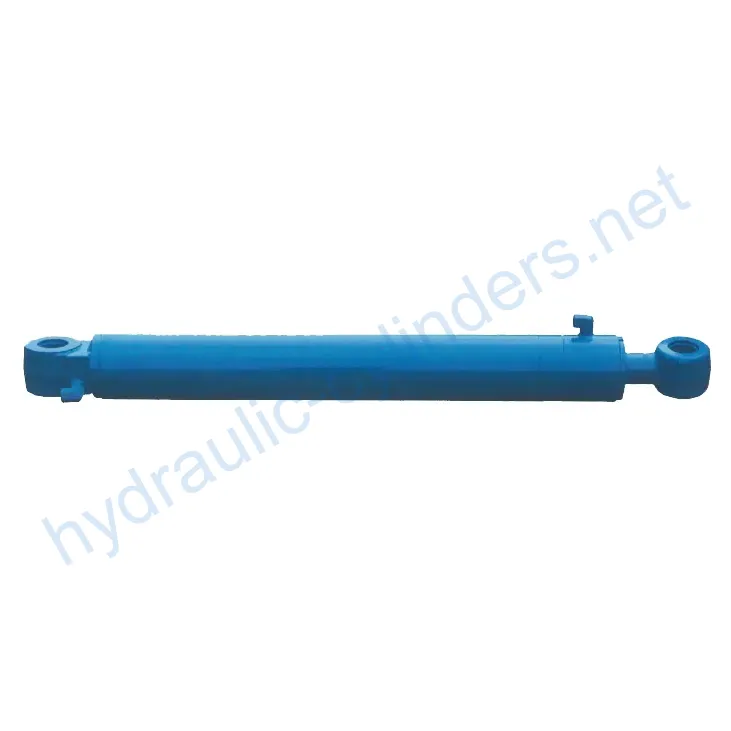
Arm CylinderFor Doosan Small Excavator DH130-5-7
Introduction
The Arm Cylinder is a specially designed hydraulic cylinder that provides linear motion and power to the arm of various machinery such as excavators, cranes, and mechanical arms. It plays a critical role in hydraulic systems, allowing for efficient movement and control of attachments or accessories. These cylinders not only ensure smooth motion, but also withstand heavy loads, ensuring efficient operation and reliability of the machinery under various working conditions.

Caractéristiques
-
Transmission à haut rendement
The Arm Cylinder provides powerful linear motion and force, ensuring high efficiency performance of the mechanical arm in various operations.
-
Contrôle de précision
Grâce au système hydraulique, le vérin de bras permet un contrôle précis du mouvement, rendant le fonctionnement des outils fixés plus flexible et précis.
-
Durabilité
The Arm Cylinder is typically made of high-strength materials, offering good wear resistance and corrosion resistance, making it suitable for long-term use in harsh environments.
-
Adaptabilité polyvalente
Ces vérins peuvent être largement utilisés dans diverses machines telles que les excavatrices, les grues et les bras mécaniques, s'adaptant ainsi à différentes exigences de travail.
-
Entretien facile
The design takes into consideration ease of maintenance and replacement, making regular inspection and upkeep more convenient and reducing equipment downtime.


Applications
-
Ingénierie de la construction
In excavators and cranes, the Arm Cylinder is used to control the movement of buckets or booms for earthwork, material handling, and structural installation.
-
Industrie manufacturière
Dans les lignes de production automatisées, le vérin de bras est utilisé pour le mouvement des bras mécaniques dans des processus tels que l'assemblage, le soudage et la manutention, améliorant ainsi l'efficacité et la précision de la production.
-
machines agricoles
In agricultural equipment such as harvesters and seeders, the Arm Cylinder controls the movement of operating arms for tasks such as seeding, fertilizing, and harvesting.
-
Exploitation minière
In mining equipment, the Arm Cylinder is used to control the movement of mining equipment arms for ore extraction and transportation.
-
Logistique et transport
Dans les chariots élévateurs et les robots de manutention, le vérin de bras est utilisé pour contrôler le levage et le mouvement des fourches, permettant ainsi la manutention et l'empilage des matériaux.
Considérations de conception et critères de sélection
-
Capacité de charge
The Arm Cylinder should be designed to withstand the intended load requirements to ensure safe and efficient operation.
-
Scellage
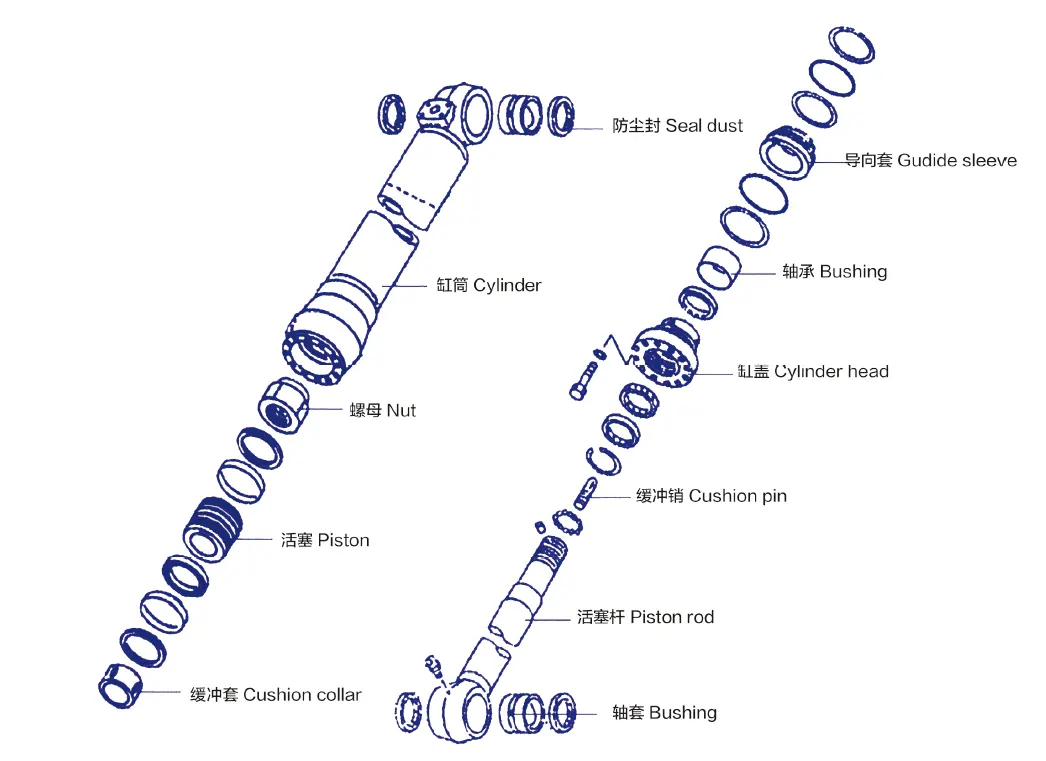
Various sealing components such as piston seals and rod seals are used, typically made of wear-resistant materials such as polyurethane or nitrile rubber. The cylinder body and threaded end surfaces are finely treated to improve wear resistance. Regular lubrication with hydraulic oil is necessary for proper lubrication.
-
Durabilité
Considerations should be given to the material selection and manufacturing processes to ensure the Arm Cylinder’s durability in challenging operating conditions.
-
Sécurité
Proper safety measures and features should be incorporated into the design to prevent accidents and ensure operator protection during operation.
-
Maintenabilité
The design should facilitate easy maintenance and repair, allowing for quick inspections, replacements, and minimizing equipment downtime.


Inspection régulière et maintenance préventive
- Regularly inspect the Arm Cylinder for any signs of damage, leaks, or abnormal wear.
- Assurez une lubrification adéquate en ajoutant régulièrement la quantité appropriée d'huile hydraulique.
- Check and tighten any loose connections or fasteners.
- Remplacez rapidement les joints ou composants usés afin d'éviter d'autres dommages.
- Follow the manufacturer’s guidelines for recommended maintenance intervals and procedures.
Guide d'installation du produit
Here are the steps for correctly installing the Arm Cylinder:
- Ensure the equipment is properly supported and stabilized.
- Carefully align the Arm Cylinder with the designated mounting points.
- Securely attach the cylinder using appropriate bolts or fasteners.
- Raccordez les flexibles ou les tuyaux hydrauliques conformément aux spécifications du système.
- Perform a thorough inspection of the installation to ensure proper alignment and connections.


Considérations de sécurité et facteurs environnementaux
When using the Arm Cylinder, it is essential to prioritize safety measures to prevent accidents and ensure the well-being of operators and surrounding personnel. Adequate training on equipment operation and safety protocols is crucial. Additionally, considering environmental factors such as noise reduction, energy efficiency, and waste management can contribute to sustainable and responsible use of the Arm Cylinder.
Dépannage et problèmes courants
Here are some common issues that may arise with the Arm Cylinder:
- Fuite de fluide hydraulique
- Bruits anormaux pendant le fonctionnement
- Insufficient or unresponsive movement
- Vibrations excessives
- Mouvement irrégulier ou saccadé
Pour résoudre ces problèmes, veuillez considérer les solutions et le dépannage suivants :
- Inspect and tighten any loose connections or fittings.
- Replace damaged or worn-out seals or components.
- Check the hydraulic fluid level and refill if necessary.
- Ensure proper alignment and mounting of the cylinder.
- Consult the manufacturer’s guidelines or seek professional assistance if the issue persists.


N'oubliez pas d'organiser l'article de manière logique, d'utiliser des sous-titres pour faciliter la navigation, d'intégrer des images ou des graphiques pertinents pour améliorer la compréhension et de veiller à ce que le contenu soit clair, concis et adapté aux lecteurs ayant différents niveaux de connaissances techniques.
Auteur : lyl
À propos de nous
We are a professional manufacturer of replacement hydraulic cylinders, offering a wide range of products. We have become one of the leading manufacturers and wholesale distributors of hydraulic cylinders in domestic and international markets. We always uphold the principle of excellent quality and rely on industrialized production management strategies in our sophisticated manufacturing workshops to continuously improve our technical expertise and production efficiency. By introducing high-end digital manufacturing equipment and professional testing systems, we optimize our manufacturing platform and enhance our product quality control processes, demonstrating