
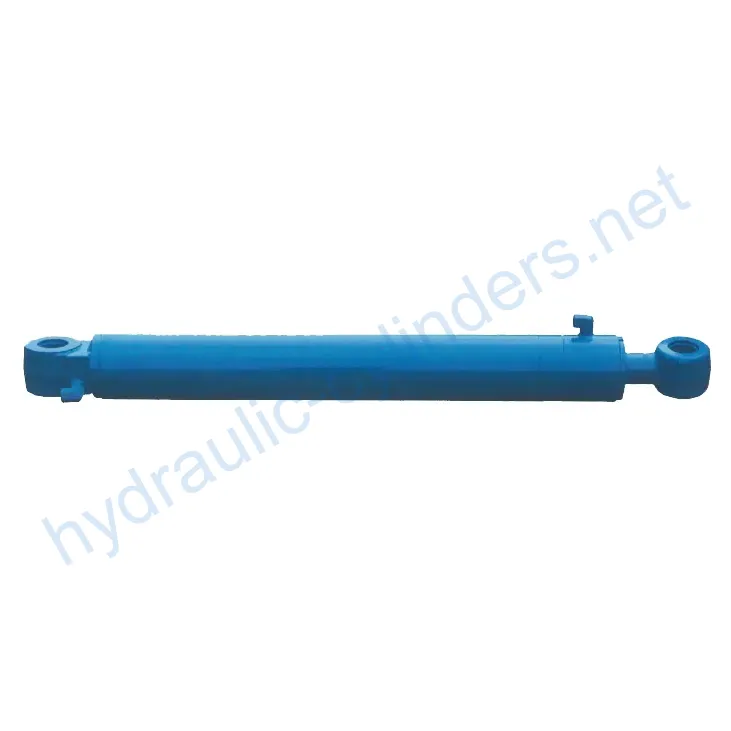
Arm CylinderFor Kobelco Middle Excavator SK220-3-5
En tant que fabricant, fournisseur et exportateur de produits mécaniques, nous proposons des vérins hydrauliques et de nombreux autres produits.
N'hésitez pas à nous contacter pour plus de détails.
Courrier :sales@hydraulic-cylinders.net
Fabricant fournisseur exportateur de vérins hydrauliques.
Arm Cylinder For Kobelco Middle Excavator SK220-3-5
Introduction
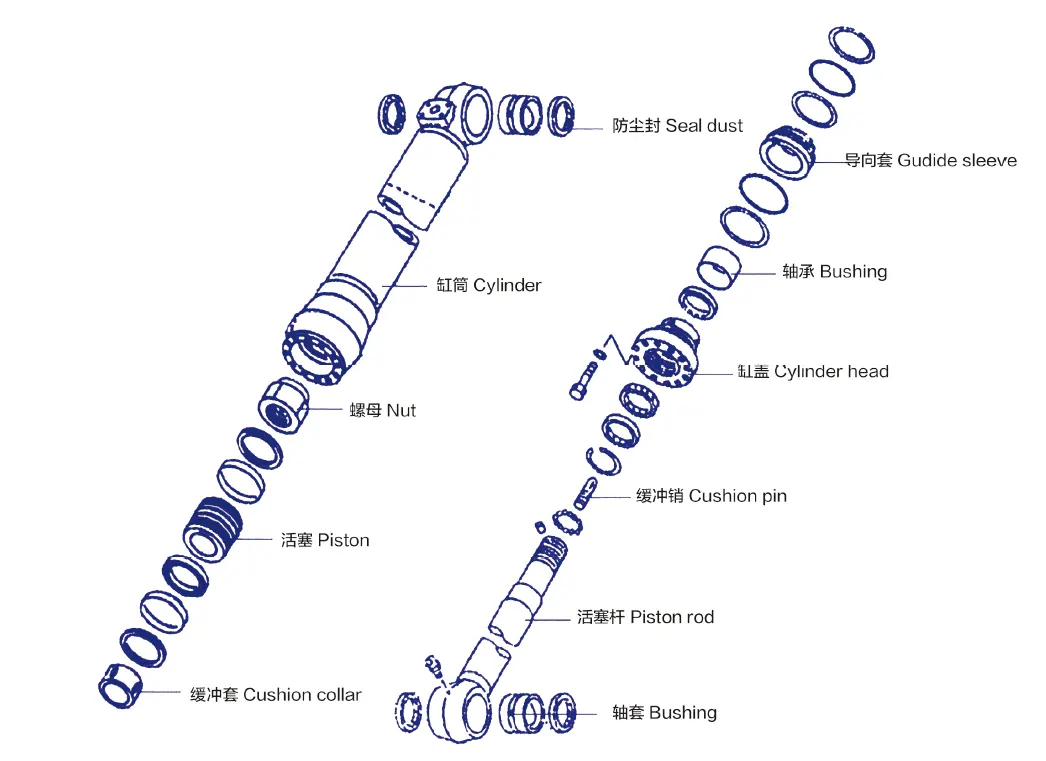
The Arm Cylinder for Kobelco Middle Excavator SK220-3-5 is a specially designed hydraulic cylinder that provides linear motion and power to the arm of various types of machinery such as excavators, cranes, and robotic arms. The arm cylinder plays a crucial role in hydraulic systems, allowing for efficient movement and control of additional tools or attachments. These cylinders not only enable smooth motion, but also withstand heavy loads, ensuring high operational efficiency and reliability of the machinery in various working conditions.
Caractéristiques
- Transmission à haut rendement : Le vérin du bras assure un mouvement linéaire et une force puissants, garantissant une efficacité de haute performance dans diverses opérations.
- Contrôle précis : Grâce au système hydraulique, le vérin du bras permet un contrôle précis du mouvement, rendant le fonctionnement des outils fixés plus flexible et précis.
- Durabilité: Arm cylinders are typically made of high-strength materials with excellent wear resistance and corrosion resistance, making them suitable for long-term use in harsh environments.
- Adaptabilité multifonctionnelle : Ces cylindres peuvent être largement utilisés dans divers types de machines telles que les excavatrices, les grues et les bras robotisés, s'adaptant à différentes exigences de travail.
- Entretien facile : La conception du vérin de bras prend en compte la facilité d'entretien et de remplacement, ce qui rend les inspections et la maintenance régulières plus pratiques et réduit les temps d'arrêt des équipements.

Applications
Le vérin à bras trouve ses applications dans diverses industries :
1. Ingénierie de la construction
Dans les excavatrices et les grues, le vérin du bras contrôle le mouvement du godet ou de la flèche, facilitant ainsi les travaux de terrassement, la manutention des matériaux et l'installation de structures.
2. Fabrication
Dans les lignes de production automatisées, le vérin de bras est utilisé pour le mouvement des bras robotisés, permettant des processus tels que l'assemblage, le soudage et la manutention des matériaux, améliorant ainsi l'efficacité et la précision de la production.
3. Machines agricoles
Dans les machines agricoles telles que les moissonneuses-batteuses et les semoirs, le vérin du bras contrôle le mouvement des bras moteurs, effectuant des tâches telles que le semis, la fertilisation et la récolte.
4. Exploitation minière
In mining equipment, the arm cylinder controls the arm movement of mining equipment, facilitating ore extraction and transportation.
5. Logistique et transport
Dans les chariots élévateurs et les robots de manutention, le vérin du bras sert à contrôler le levage et le mouvement des fourches, permettant ainsi la manutention et l'empilage des matériaux.

Considérations de conception et critères de sélection
When designing arm cylinders, several important factors are considered:
1. Capacité de charge
The arm cylinder must be designed to withstand the maximum load it will encounter in its intended application.
2. Sealing Properties
Various sealing components, such as piston seals and rod seals, are used to ensure effective sealing. These seals are made of wear-resistant materials such as polyurethane and nitrile rubber. The cylinder body and threaded ends are finely processed to enhance wear resistance. Regular lubrication with the appropriate amount of hydraulic oil is necessary to ensure proper operation.

3. Durabilité
To ensure durability, arm cylinders are manufactured using high-quality materials and undergo rigorous testing to withstand challenging environments and sustained use.
4. Sécurité
Arm cylinders are designed with safety in mind, incorporating features such as pressure relief valves and safety locks to prevent accidents and ensure operator protection.
5. Maintenance
Proper maintenance is essential for the longevity and optimal performance of arm cylinders. Regular inspections, cleaning, and lubrication are recommended to identify and address any potential issues early on.
Guide d'installation
Suivez ces étapes pour installer correctement le cylindre du bras :
- Préparez la zone de montage et assurez-vous qu'elle soit propre et exempte de tout débris.
- Carefully align the arm cylinder with the mounting brackets or connections.
- Secure the arm cylinder in place using appropriate mounting bolts or fasteners.
- Vérifiez l'absence de fuites ou d'anomalies dans le système hydraulique.
- Test the functionality of the arm cylinder by operating the machinery.

Considérations de sécurité et facteurs environnementaux
When using arm cylinders, safety measures are of utmost importance to prevent accidents and injuries. Proper training and adherence to safety protocols are essential for operators. Additionally, considering environmental factors helps ensure the longevity and optimal performance of the arm cylinder.
Dépannage et problèmes courants
Certains problèmes courants qui peuvent survenir avec les vérins de bras incluent :
- Fuite de fluide hydraulique
- Perte de puissance ou performances réduites
- Vibrations ou bruits excessifs
- Mouvements irréguliers ou saccadés
- Défaut d'extension ou de rétraction
To address these issues, follow these tips:
- Inspect and replace damaged seals or components.
- Check the hydraulic fluid levels and refill if necessary.
- Assurez-vous que tous les raccords et fixations sont bien serrés et sécurisés.
- Clean and lubricate the arm cylinder regularly.
- Seek professional assistance if the problem persists or if further troubleshooting is required.
À propos de nous
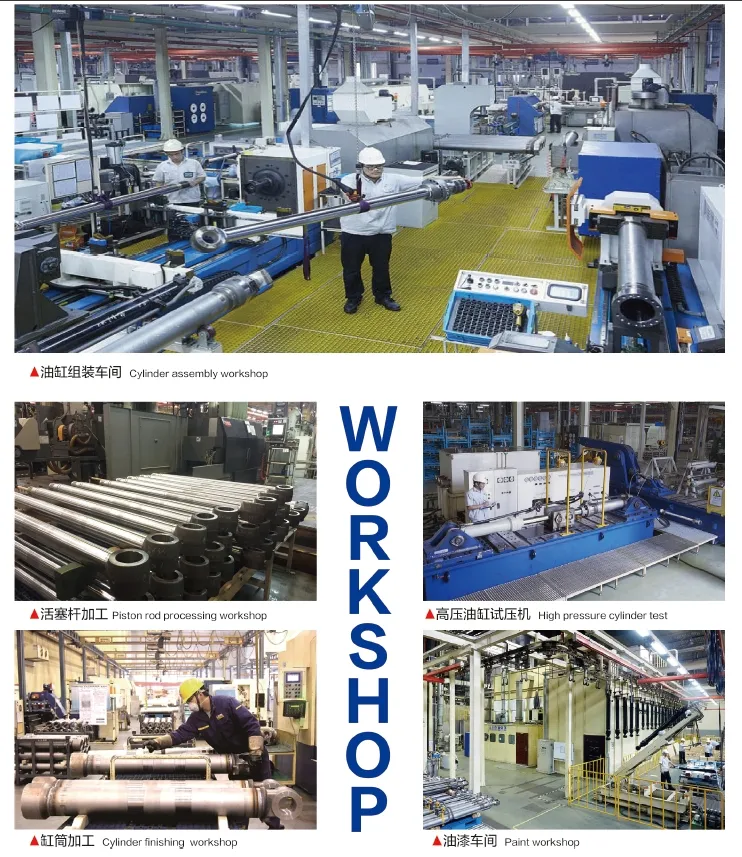
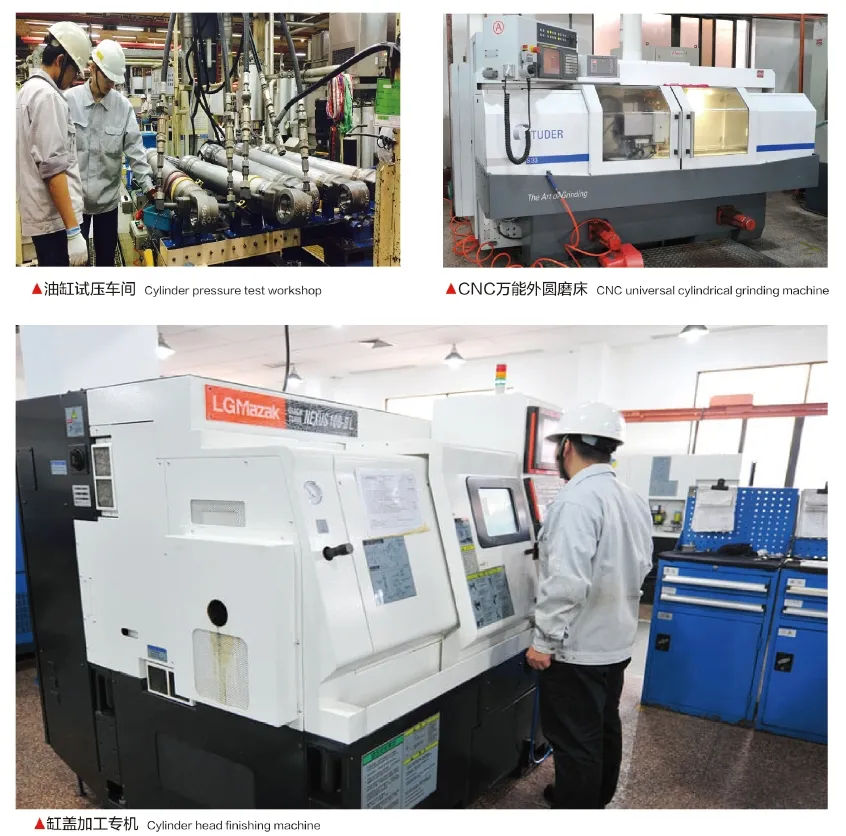
We are a professional manufacturer of replacement hydraulic cylinders with a wide range of products. We have become one of the leading manufacturers and wholesale distributors of hydraulic cylinders in domestic and international markets. Our commitment to excellence is supported by our industrialized production management strategy in our advanced manufacturing workshop, continuously improving our technical expertise and production efficiency. By introducing high-end digital manufacturing equipment and professional testing systems, we optimize our manufacturing platform and enhance our product quality control processes. We have a strong focus on innovation, aiming to meet diverse customer needs with principles of efficiency, precision, and high quality.
Nos principaux atouts :
- Expertise professionnelle
- Certifications internationales
- Services de personnalisation
- Équipements de production avancés
- Service après-vente
Auteur : lyl
Vérin hydraulique Application :

 FR
FR  EN
EN  PT
PT  ES
ES  DE
DE  IT
IT  AR
AR  ZH
ZH  RU
RU  KO
KO  KA
KA  BG
BG  CS
CS  DA
DA  EL
EL  ET
ET  FI
FI  HU
HU  ID
ID  LT
LT  LV
LV  NB
NB  NL
NL  PL
PL  RO
RO  SK
SK  SL
SL  SV
SV  TR
TR  UK
UK