
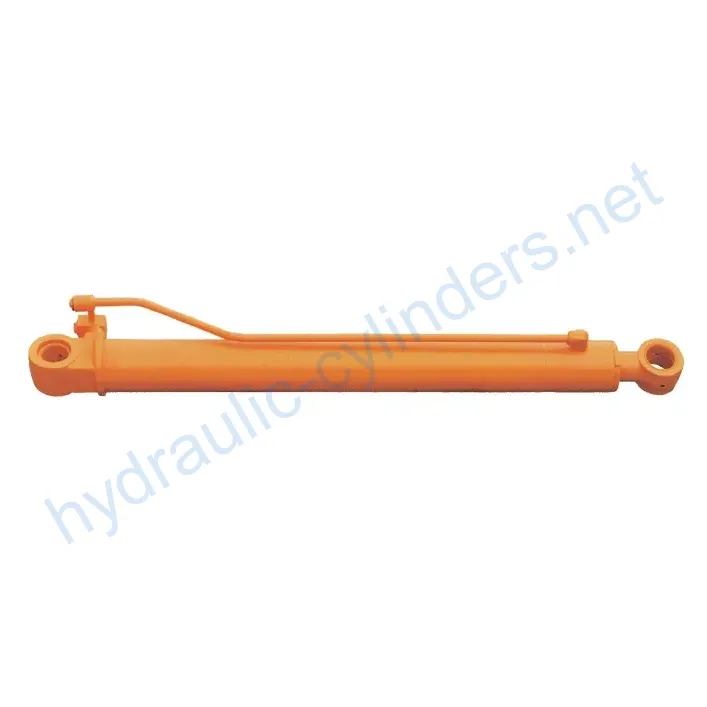
Vérin de bras pour mini-pelle Komatsu PC40
En tant que fabricant, fournisseur et exportateur de produits mécaniques, nous proposons des vérins hydrauliques et de nombreux autres produits.
N'hésitez pas à nous contacter pour plus de détails.
Courrier :sales@hydraulic-cylinders.net
Fabricant fournisseur exportateur de vérins hydrauliques.
Arm Cylinder For Komatsu Small Excavator PC40
Introduction
The Arm Cylinder for Komatsu Small Excavator PC40 is a specially designed hydraulic cylinder that provides linear motion and power to the arm of various machinery, such as excavators, cranes, and robotic arms. The arm cylinder plays a crucial role in hydraulic systems, allowing for efficient movement and control of attachments and accessories. These cylinders not only enable smooth operation but also withstand heavy loads, ensuring high efficiency and reliability of the machinery in various working conditions.
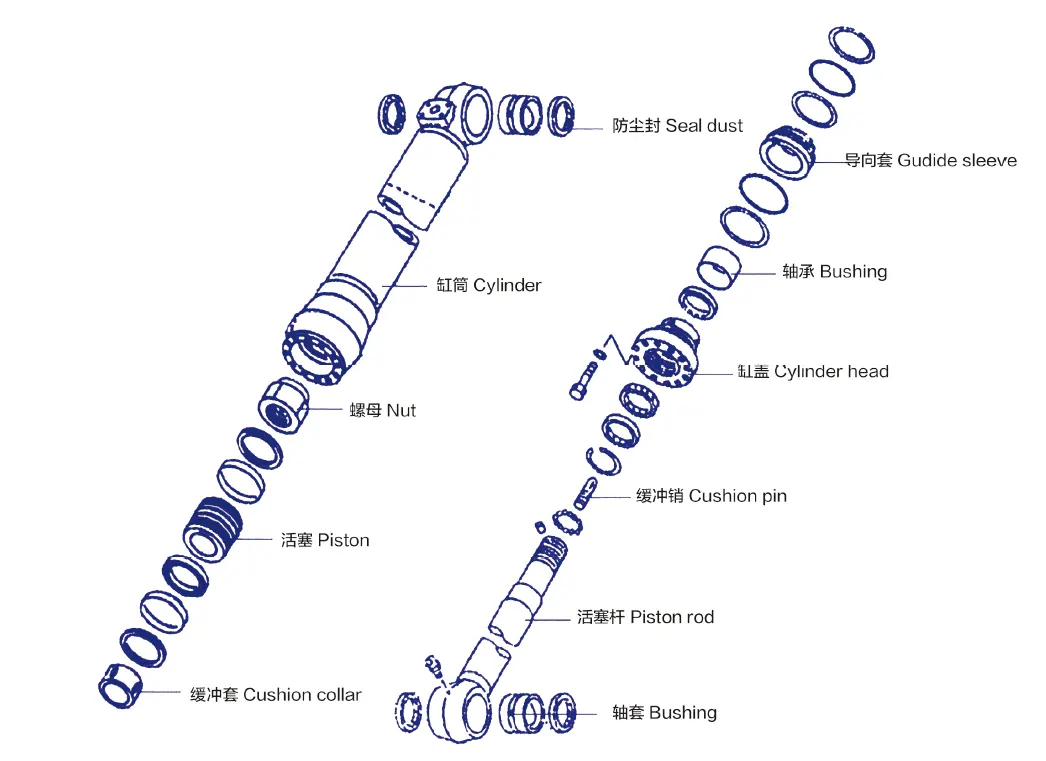
Caractéristiques
- Transmission à haut rendement : Le vérin du bras assure un mouvement linéaire et une force puissants, garantissant ainsi des performances élevées du bras robotisé dans diverses opérations.
- Contrôle précis : Grâce au système hydraulique, le vérin du bras permet un contrôle précis du mouvement, rendant le fonctionnement des outils fixés plus flexible et précis.
- Grande durabilité : Arm cylinders are typically made of high-strength materials with good wear and corrosion resistance, making them suitable for long-term use in harsh environments.
- Adaptabilité multifonctionnelle : These cylinders can be widely used in various machinery, such as excavators, cranes, and robotic arms, adapting to different working requirements.
- Entretien facile : Designed with ease of maintenance and replacement in mind, the arm cylinders facilitate convenient regular inspections and upkeep, reducing equipment downtime.

Applications
The Arm Cylinder for Komatsu Small Excavator PC40 finds applications in various industries and scenarios:
- Génie civil : Dans les excavatrices et les grues, le vérin du bras contrôle le mouvement du godet ou de la flèche pour les travaux de terrassement, la manutention de matériaux et l'installation de structures.
- Industrie manufacturière : In automated production lines, the arm cylinder facilitates the motion of robotic arms for assembly, welding, and material handling processes, enhancing production efficiency and accuracy.
- Machines agricoles : Dans les équipements agricoles tels que les moissonneuses-batteuses et les semoirs, le vérin du bras contrôle le mouvement du bras opérateur pour des tâches comme la plantation, la fertilisation et la récolte.
- Opérations minières : Dans les équipements miniers, le vérin du bras contrôle le mouvement du bras à des fins d'extraction minière et de transport de matériaux.
- Logistique et transport : Dans les chariots élévateurs et les robots de manutention, le vérin du bras contrôle le levage et le mouvement des fourches pour faciliter la manutention et l'empilage des matériaux.
Considérations de conception et critères de sélection
When considering the design and selection of the arm cylinder, several factors come into play:
- Capacité de charge : The arm cylinder should be able to handle the expected loads and forces in the intended applications.
- Scellage: Various sealing components, such as piston seals and rod seals, should be used to ensure proper sealing performance. Materials like polyurethane and nitrile rubber are commonly chosen for their wear resistance.
- Durabilité: The cylinder body and threaded ends undergo precise processing to improve wear resistance and durability.
- Sécurité: Safety considerations should be taken into account, such as pressure relief valves or limit switches to prevent excessive forces or movements.
- Entretien: Regular lubrication with appropriate hydraulic oil and periodic inspections are necessary to ensure the smooth operation and longevity of the arm cylinder.

Étanchéité et lubrification
The arm cylinder utilizes various sealing components, such as piston seals and rod seals, which are made of wear-resistant materials like polyurethane and nitrile rubber. The cylinder body and threaded ends undergo precise processing to improve wear resistance. Regular lubrication with the appropriate amount of hydraulic oil is required to ensure proper lubrication and smooth operation of the cylinder.
Inspection régulière et maintenance préventive
- Inspectez régulièrement le cylindre du bras pour détecter tout signe de fuite, de dommage ou d'usure.
- Vérifier et remplacer les joints et autres composants usés ou endommagés, selon les besoins.
- Nettoyez le cylindre et éliminez tous les débris ou contaminants.
- Ensure proper lubrication and maintain the hydraulic oil at the recommended level.
- Respectez les consignes du fabricant concernant les intervalles et les procédures d'entretien.
Guide d'installation
Proper installation of the arm cylinder is crucial for its performance and longevity. Follow the steps below for correct installation:
- Ensure the hydraulic system is depressurized before installation.
- Clean the mounting surfaces and remove any dirt or debris.
- Attach the arm cylinder to the designated mounting points, following the provided specifications.
- Tighten the mounting bolts to the recommended torque.
- Connect the hydraulic hoses or pipes to the cylinder, ensuring proper connections and sealing.
- Test the arm cylinder for proper operation and any potential leaks.

Considérations de sécurité et facteurs environnementaux
When using the arm cylinder, safety measures are of utmost importance to prevent accidents and ensure operator well-being. It is essential to follow all relevant safety guidelines and regulations while operating the machinery.
Dépannage et problèmes courants
Problems may occasionally arise with the arm cylinder. Here are some common issues and possible solutions:
- Fuite: Check for damaged seals or loose connections. Replace or tighten as necessary.
- Puissance insuffisante : Inspect the hydraulic system for low fluid levels or pump malfunctions. Address any issues accordingly.
- Sticky or Inconsistent Movement: Check for debris or contamination in the cylinder. Clean or replace affected components as needed.
By following these troubleshooting tips and implementing preventive measures, you can effectively diagnose and resolve issues, minimizing potential problems.

Remember to organize the article in a logical manner, use subheadings for easy navigation, incorporate relevant images or charts for enhanced understanding, and ensure the content is clear, concise, and suitable for readers with varying levels of technical knowledge.
Auteur : lyl
Vérin hydraulique Application :

 FR
FR  EN
EN  PT
PT  ES
ES  DE
DE  IT
IT  AR
AR  ZH
ZH  RU
RU  KO
KO  KA
KA  BG
BG  CS
CS  DA
DA  EL
EL  ET
ET  FI
FI  HU
HU  ID
ID  LT
LT  LV
LV  NB
NB  NL
NL  PL
PL  RO
RO  SK
SK  SL
SL  SV
SV  TR
TR  UK
UK