
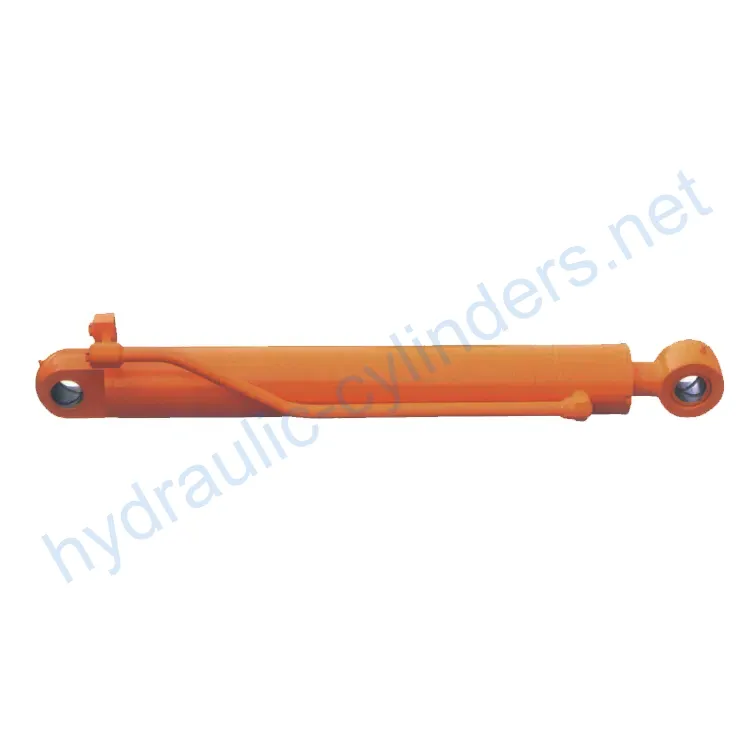
Arm CylinderFor Sany Large Excavator SY700H-8
En tant que fabricant, fournisseur et exportateur de produits mécaniques, nous proposons des vérins hydrauliques et de nombreux autres produits.
N'hésitez pas à nous contacter pour plus de détails.
Courrier :sales@hydraulic-cylinders.net
Fabricant fournisseur exportateur de vérins hydrauliques.
Arm Cylinder for Sany Large Excavator SY700H-8
Définition et explication
An arm cylinder is a specially designed hydraulic cylinder that provides linear motion and power to the arm of various machinery, such as excavators, cranes, and robotic arms. It plays a critical role in hydraulic systems, allowing for efficient movement and control of additional tools or attachments. These cylinders not only enable smooth motion but also withstand heavy loads, ensuring high operational efficiency and reliability of the machinery in various working conditions.
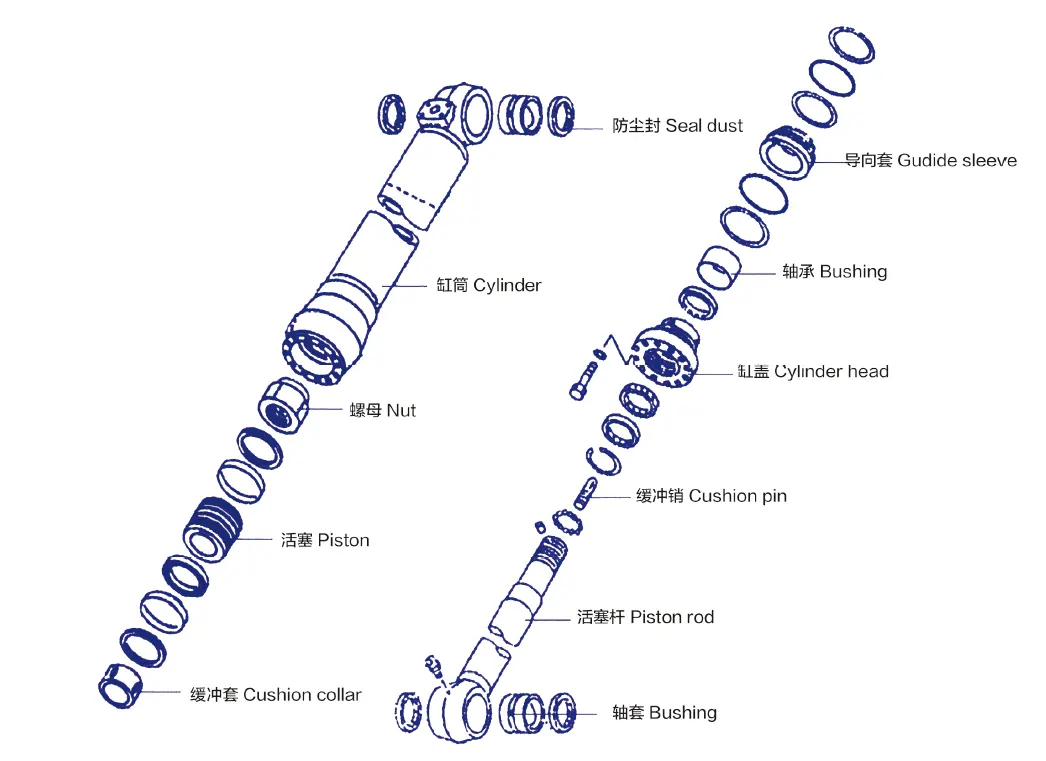
Caractéristiques
-
Transmission à haut rendement
Le vérin du bras assure un mouvement linéaire et une force puissants, garantissant des performances élevées au bras mécanique dans diverses opérations.
-
Contrôle précis
Through hydraulic systems, the arm cylinder allows for precise motion control, making the operation of attached tools more flexible and accurate.
-
Durabilité
The arm cylinder is typically manufactured using high-strength materials, offering excellent wear resistance and corrosion resistance, making it suitable for long-term use in harsh environments.
-
Adaptabilité multifonctionnelle
These cylinders can be widely applied to various machinery such as excavators, cranes, and robotic arms, adapting to different working needs.
-
Entretien facile
The design of arm cylinders takes into consideration easy maintenance and replacement, making regular inspection and maintenance convenient and reducing equipment downtime.

Applications
Le vérin à bras trouve des applications dans diverses industries :
-
Ingénierie de la construction
Dans les excavatrices et les grues, le vérin de bras sert à contrôler le mouvement des godets ou des flèches pour les travaux de terrassement, la manutention de matériaux et l'installation de structures.
-
Fabrication
In automated production lines, the arm cylinder enables the movement of robotic arms for processes such as assembly, welding, and handling, enhancing production efficiency and precision.
-
machines agricoles
In agricultural equipment such as harvesters and seeders, the arm cylinder controls the motion of operating arms for tasks like seeding, fertilizing, and harvesting.
-
Exploitation minière
Dans les équipements miniers, le vérin de bras est utilisé pour contrôler le mouvement du bras des machines minières pour l'extraction et le transport du minerai.
-
Logistique et transport
Dans les chariots élévateurs et les robots de manutention, le vérin du bras contrôle le levage et le mouvement des fourches, permettant la manutention et l'empilage des matériaux.
Considérations de conception et critères de sélection
Lors de la conception de vérins de bras, plusieurs facteurs doivent être pris en compte :
-
Capacité de charge
The arm cylinder should be designed to withstand the maximum loads it will be subjected to during operation, ensuring safe and reliable performance.
-
Scellage
Various sealing components such as piston seals and rod seals should be used, made of wear-resistant materials like polyurethane and nitrile rubber. The cylinder body and threaded ends should undergo fine surface treatment to enhance wear resistance.
-
Durabilité
The arm cylinder should be constructed with high-strength materials and undergo appropriate surface treatments to withstand harsh operating conditions and ensure a long service life.
-
Sécurité
Design considerations should include safety features to prevent accidents, such as pressure relief valves and overload protection mechanisms.
-
Maintenabilité
The design should facilitate easy maintenance and repair, with accessible components and clear instructions, minimizing downtime for inspections and service.

Étanchéité et lubrification
Arm cylinders utilize various sealing elements, such as piston seals and rod seals, which are made of wear-resistant materials like polyurethane and nitrile rubber. The cylinder body and threaded ends undergo fine surface treatment to improve wear resistance. Regular lubrication with the appropriate amount of hydraulic oil is necessary to ensure smooth operation and extend the life of the seals and other components.
Inspection régulière et maintenance préventive
-
L'inspection
Regularly inspect the arm cylinder for signs of wear, leaks, or damage. Pay attention to the condition of sealing elements, piston rods, mounting points, and other critical components.
-
Maintenance préventive
Implement preventive measures such as regular lubrication, cleaning, and tightening of connections. Follow the manufacturer’s maintenance guidelines and schedule to ensure optimal performance and minimize the risk of failures.
Guide d'installation du produit
Proper installation of the arm cylinder is essential to ensure its functionality and longevity. Follow these steps:
- Préparez la zone de montage et assurez-vous qu'elle soit propre et exempte de débris.
- Positionnez le vérin du bras à l'endroit souhaité, en alignant les trous de fixation.
- Securely fasten the arm cylinder using appropriate bolts and nuts, following the manufacturer’s specifications.
- Connect the hydraulic hoses or pipes to the cylinder fittings, ensuring proper sealing.
- Test the arm cylinder for proper operation, checking for any leaks, abnormal noises, or irregular movements.

Considérations de sécurité et facteurs environnementaux
When working with arm cylinders, safety measures are critical to prevent accidents and injuries. It is essential to follow all relevant safety guidelines, such as wearing appropriate personal protective equipment and operating the machinery within specified limits. Additionally, considering the environmental impact, proper disposal of hydraulic fluids and adhering to environmental regulations is crucial.
Dépannage et problèmes courants
When encountering problems with the arm cylinder, the following steps can help diagnose and resolve issues:
-
Diagnostic des pannes
Thoroughly inspect the cylinder and related components for any visible damage or abnormalities. Check for leaks, loose connections, or signs of wear.
-
Problèmes courants
Some common issues include leakage, inadequate force or movement, erratic motion, or unusual noises. Determine the root cause by examining the affected components.
For troubleshooting guidance, refer to the manufacturer’s documentation or consult a professional technician. Implement preventive measures to minimize potential issues and ensure optimal performance.

Remember to organize the article logically, use subheadings for easy navigation, incorporate relevant images or charts to enhance understanding, and ensure content clarity and conciseness for readers with varying levels of technical knowledge.
À propos de notre entreprise
We are a professional manufacturer of replacement hydraulic cylinders, offering a wide range of products. We have become one of the leading manufacturers and wholesale distributors of hydraulic cylinders in domestic and international markets. Upholding the principle of excellence, we continuously improve our technological capabilities and production efficiency, relying on industrialized production management strategies in our sophisticated manufacturing workshop. By introducing high-end digital manufacturing equipment and professional testing systems, we optimize our manufacturing platform and enhance product quality control processes, enabling us to have strong innovation capabilities. Our goal is to meet diverse customer needs with principles of high efficiency, precision, and high quality.
Vérin hydraulique Application :

 FR
FR  EN
EN  PT
PT  ES
ES  DE
DE  IT
IT  AR
AR  ZH
ZH  RU
RU  KO
KO  KA
KA  BG
BG  CS
CS  DA
DA  EL
EL  ET
ET  FI
FI  HU
HU  ID
ID  LT
LT  LV
LV  NB
NB  NL
NL  PL
PL  RO
RO  SK
SK  SL
SL  SV
SV  TR
TR  UK
UK