
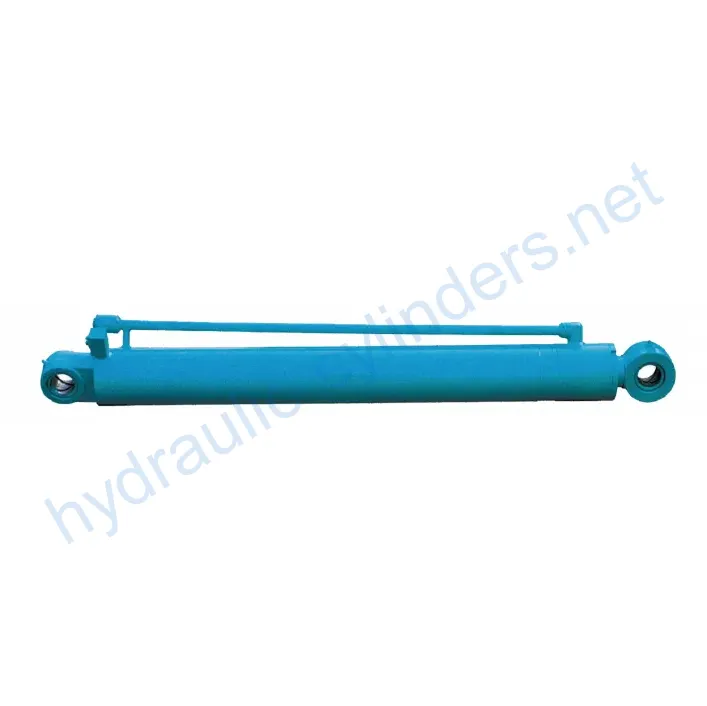
Vérin de bras pour pelle hydraulique Volvo EC460BP
En tant que fabricant, fournisseur et exportateur de produits mécaniques, nous proposons des vérins hydrauliques et de nombreux autres produits.
N'hésitez pas à nous contacter pour plus de détails.
Courrier :sales@hydraulic-cylinders.net
Fabricant fournisseur exportateur de vérins hydrauliques.
Arm Cylinder For Volvo Large Excavator EC460BP
Définition et explication
An arm cylinder, also known as an hydraulic cylinder, is a specialized hydraulic cylinder designed to provide linear motion and power to the arm of various machinery, such as excavators, cranes, and robotic arms. The arm cylinder plays a crucial role in hydraulic systems, enabling efficient movement and control of additional tools or attachments. These cylinders not only ensure smooth motion but also withstand heavy loads, ensuring high operational efficiency and reliability of the machinery in various working conditions.
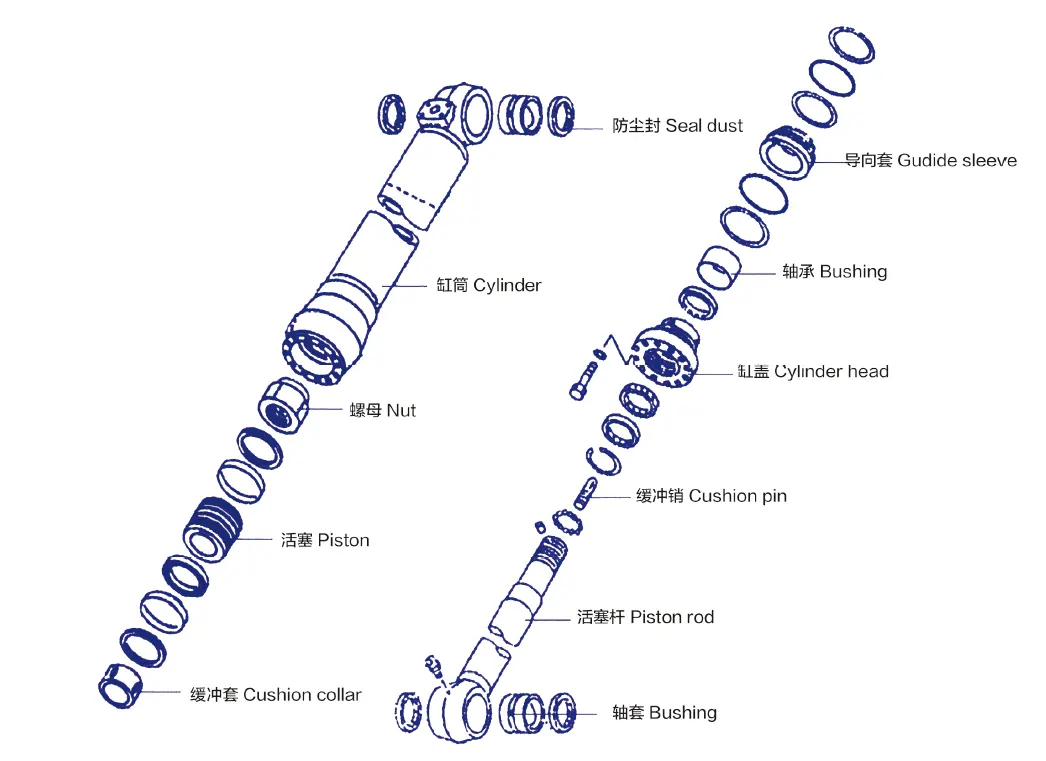
Features of Arm Cylinder For Volvo Large Excavator EC460BP
- Transmission à haut rendement : The arm cylinder provides powerful linear motion and force, ensuring high efficiency performance of the excavator arm in various operations.
- Contrôle précis : Grâce au système hydraulique, le vérin du bras permet un contrôle précis du mouvement, rendant l'utilisation d'outils supplémentaires plus flexible et précise.
- Durabilité: Les vérins de bras sont généralement fabriqués à partir de matériaux à haute résistance, offrant une excellente résistance à l'usure et à la corrosion, ce qui les rend adaptés à une utilisation à long terme dans des environnements difficiles.
- Adaptabilité multifonctionnelle : Ces vérins peuvent être largement utilisés dans divers équipements de machines tels que les excavatrices, les grues et les bras robotisés, s'adaptant ainsi à différentes exigences de travail.
- Entretien facile : La conception du vérin de bras prend en compte la facilité d'entretien et de remplacement, ce qui rend l'inspection et la maintenance régulières plus pratiques et réduit les temps d'arrêt des équipements.

Applications du cylindre de bras
Les vérins à bras trouvent des applications dans divers secteurs et industries :
- Génie civil : Dans les excavatrices et les grues, les vérins de bras servent à contrôler le mouvement des godets ou des flèches pour les travaux de terrassement, la manutention de matériaux et l'installation de structures.
- Industrie manufacturière : In automated production lines, arm cylinders are used for the motion of robotic arms, enabling assembly, welding, and material handling processes, thereby improving production efficiency and precision.
- Machines agricoles : In agricultural machinery such as harvesters and seeders, arm cylinders control the movement of operating arms, performing tasks like sowing, fertilizing, and harvesting.
- Industrie minière : In mining equipment, arm cylinders are used to control the movement of mining arms for ore extraction and transportation.
- Logistique et transport : Dans les chariots élévateurs et les robots de manutention, les vérins des bras contrôlent le levage et le mouvement des fourches, permettant ainsi la manutention et l'empilage des matériaux.
Considérations de conception et critères de sélection
- Capacité portante : The arm cylinder should be designed to withstand the required load capacity to ensure safe and efficient operation.
- Scellage: Various sealing elements such as piston seals and rod seals are used to ensure proper sealing and prevent leakage.
- Durabilité: The arm cylinder should be manufactured using durable materials to withstand wear and corrosion, ensuring long-term performance.
- Sécurité: Des dispositifs de sécurité tels que des soupapes de décharge de pression et des mécanismes d'arrêt d'urgence doivent être intégrés afin de prévenir les accidents pendant le fonctionnement.
- Maintenabilité : Design considerations should include easy maintenance and repair, allowing for quick inspection and replacement of components.

Étanchéité et lubrification
The arm cylinder utilizes various sealing elements such as piston seals and rod seals. These seals are made of wear-resistant materials like polyurethane and nitrile rubber. The cylinder body and threaded ends are finely treated to enhance wear resistance. Regular lubrication with appropriate hydraulic oil is required to ensure smooth operation.
Inspection régulière et maintenance préventive
- Regularly check for any signs of leaks, cracks, or unusual noises.
- Vérifiez l'état des joints et remplacez-les si nécessaire.
- Monitor the hydraulic fluid level and top up as required.
- Check the cylinder’s mounting and connections for any looseness or damage.
- Clean the cylinder regularly to prevent buildup of dirt and debris.
Guide d'installation du produit
1. Begin by ensuring the machinery is turned off and safely secured.
2. Identify the mounting points for the arm cylinder on the machinery.
3. Carefully align the arm cylinder with the mounting points and attach securely using appropriate fasteners.
4. Check the alignment of the cylinder to ensure proper movement and clearance.
5. Connect the hydraulic hoses and fittings to the corresponding ports on the cylinder.
6. Double-check all connections for proper tightness and secure any loose components.
7. Test the arm cylinder’s movement through the hydraulic controls to ensure smooth operation.

Considérations de sécurité et facteurs environnementaux
When using arm cylinders, it is essential to follow proper safety measures to prevent accidents and ensure operator well-being. This includes wearing appropriate personal protective equipment, adhering to operating guidelines, and conducting regular safety inspections. Additionally, environmental factors such as temperature, humidity, and exposure to corrosive substances should be considered to ensure optimal performance and longevity of the arm cylinder.
Dépannage et problèmes courants
Certains problèmes courants qui peuvent survenir avec les vérins de bras incluent :
- Fuite des joints ou des connexions
- Mouvement lent ou saccadé
- Bruit pendant le fonctionnement
- Perte de puissance ou de force
Pour remédier à ces problèmes :
- Check and replace any damaged seals or connections.
- Inspect the hydraulic fluid level and quality, and refill or replace if necessary.
- Clean the cylinder and lubricate moving parts to ensure smooth operation.
- Check the hydraulic system for any potential issues and consult a professional if needed.

Remember to organize the article logically, use subheadings for easy navigation, incorporate relevant images or diagrams to enhance understanding, and ensure the content is clear, concise, and suitable for readers with varying levels of technical knowledge.
Auteur : lyl
Vérin hydraulique Application :

 FR
FR  EN
EN  PT
PT  ES
ES  DE
DE  IT
IT  AR
AR  ZH
ZH  RU
RU  KO
KO  KA
KA  BG
BG  CS
CS  DA
DA  EL
EL  ET
ET  FI
FI  HU
HU  ID
ID  LT
LT  LV
LV  NB
NB  NL
NL  PL
PL  RO
RO  SK
SK  SL
SL  SV
SV  TR
TR  UK
UK