
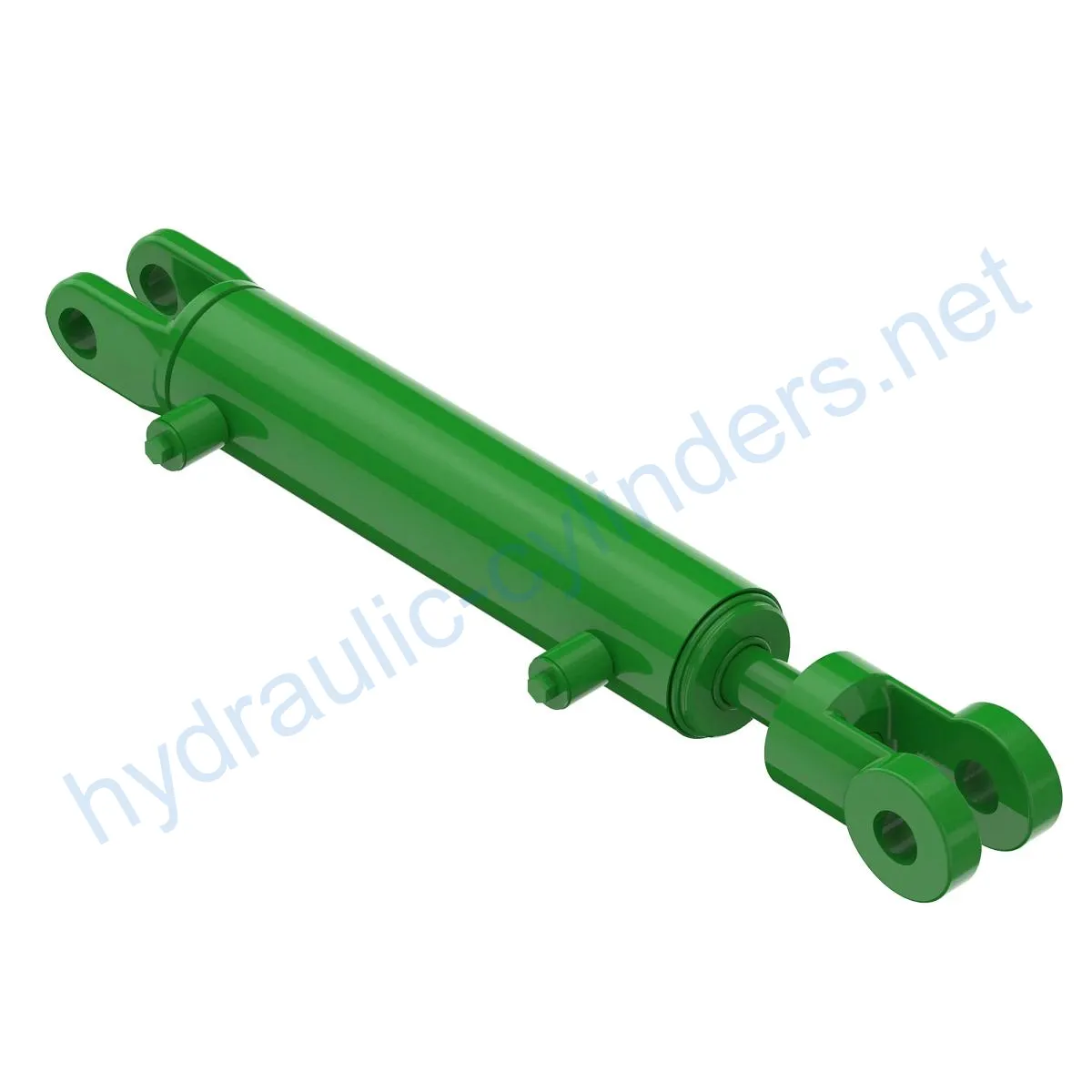
Remplacement du vérin hydraulique de levage d'aile AH176605
Replacement Of AH176605 Wing Lift Hydraulic Cylinder
This product is a replacement hydraulic cylinder for the AH176605 wing lift system. It is designed to provide the necessary lift and support for wing components in various agricultural equipment models, including the 1690, 1720, 1720 CCS, 1725, 1725 CCS, 1770, 1780, 1835, 1890, 1895, 1990, 2810, H550F, N530F, N536, N540F, N542, N542C, and N543F.
Caractéristiques
- Weight: 19.62 lb
- Hauteur : 3,5 pouces
- Largeur : 4,5 pouces
- Longueur : 22,5 pouces
Caractéristiques
1. Amélioration des performances des équipements :
Le remplacement des vérins hydrauliques endommagés ou usés permet de rétablir le fonctionnement normal des équipements, garantissant ainsi des performances optimales dans diverses applications.
2. Sécurité renforcée :
Le remplacement régulier des vérins hydrauliques permet de réduire les risques pour la sécurité liés aux défaillances des vérins, garantissant ainsi la sécurité des opérateurs et des équipements.
3. Protection contre les surcharges :
Les nouveaux modèles de cylindres intègrent souvent de meilleurs mécanismes de protection contre les surcharges, améliorant ainsi la sécurité globale.
4. Installation rapide :
Les vérins hydrauliques modernes sont conçus pour une installation et un remplacement faciles, minimisant ainsi les temps d'arrêt.
5. Composants normalisés :
De nombreux vérins hydrauliques sont des produits standardisés, ce qui facilite l'approvisionnement en pièces de rechange sur le marché.
Applications
This hydraulic cylinder can be used in various equipment and machinery, including but not limited to:
- Excavateurs:
- Grues:
- Tracteurs:
- Moissonneuses:
- Lignes de production automatisées :
- Machines de moulage sous pression :
- Équipement minier :
- Bulldozers :
Replacing hydraulic cylinders on excavator booms or buckets can restore their normal operation, ensuring efficient digging and lifting.
The hydraulic cylinders in crane booms are subject to wear and tear during frequent lifting and lowering operations. Regular replacement is necessary to ensure safety.
The front-end loader hydraulic cylinders on tractors may develop leaks or experience performance degradation due to continuous lifting and tilting operations. Replacing them is essential for optimal functionality.
During the harvesting process, hydraulic systems endure high pressures, and fatigue can lead to cylinder damage. Timely replacement is crucial to maintain operational efficiency.
Hydraulic cylinders are used to control robotic arms and other automated equipment. Cylinder failure can significantly impact production efficiency and should be promptly addressed.
Dans les environnements à haute pression et haute température, les vérins hydrauliques des machines de fonderie sous pression peuvent subir une dégradation de leurs performances. Un remplacement régulier garantit la qualité du produit.
Hydraulic cylinders are used for lifting and moving heavy loads in mining equipment. Due to the harsh working conditions, regular inspection and replacement are necessary to prevent equipment failures.
Wear of hydraulic cylinders on bulldozer blades can lead to a decrease in pushing power. Timely replacement is essential to maintain operational efficiency.
Tâches de maintenance
Regular maintenance is important to ensure the longevity and performance of the hydraulic cylinder. Some common maintenance tasks include:
- Inspection régulière :
- Lubrification adéquate :
- Remplacement des joints et vérifications d'étalonnage :
Inspect the cylinder for any signs of damage or leaks. Check for proper alignment and ensure all connections are secure.
Apply the appropriate amount of hydraulic oil to ensure smooth operation. Follow the manufacturer’s guidelines for lubrication intervals.
Periodically replace seals to prevent leaks and ensure proper sealing. Check and calibrate the cylinder to maintain optimal performance.
During installation, provide proper guidance on aligning the cylinder correctly. It is recommended to use suitable installation brackets for securing the cylinder. Additionally, offer recommended inspection, repair, and replacement procedures, along with parts replacement and rebuilding services to extend the lifespan of the hydraulic cylinder.
Considérations de sécurité et facteurs environnementaux
When using hydraulic cylinders, it is important to prioritize safety measures. Proper handling, maintenance, and disposal of hydraulic components are crucial to prevent accidents and minimize environmental impact.
Dépannage et problèmes courants
Here are some common troubleshooting tips and solutions for potential issues:
- Issue: Cylinder not extending or retracting.
- Problème : Mouvement du cylindre lent ou saccadé.
- Issue: Cylinder drifts or fails to hold position.
- Issue: Excessive noise or vibrations from the cylinder.
- Issue: Cylinder leaks.
Solution: Check for hydraulic fluid leaks, inspect the control valves, and ensure proper hydraulic pressure.
Solution: Check for insufficient or contaminated hydraulic fluid, inspect the hydraulic pump, and ensure proper lubrication.
Solution: Check for worn-out seals, inspect the control valves, and adjust the pressure settings.
Solution: Inspect for loose or damaged components, check the alignment, and ensure proper mounting.
Solution: Replace worn-out seals, inspect all connections for leaks, and ensure proper sealing.
Providing troubleshooting tips and problem-solving methods helps readers effectively diagnose and resolve issues. Additionally, suggesting preventive measures can minimize potential problems.

Considérations de conception et critères de sélection
Lors du choix d'un vérin hydraulique, plusieurs considérations de conception et critères de sélection doivent être pris en compte :
- Capacité de charge :
- Scellage:
- Durabilité:
- Sécurité:
- Maintenabilité :
Determine the required load-bearing capacity of the cylinder to ensure optimal performance and safety.
Choose appropriate sealing components, such as piston seals and rod seals, made from durable materials like polyurethane or nitrile rubber.
Ensure the cylinder is constructed with durable materials and features fine surface treatments on the cylinder body and threaded ends to enhance wear resistance.
Consider safety features, such as overload protection mechanisms, to prevent accidents and ensure operator safety.
Opt for cylinders designed for easy maintenance, with accessible components and clear instructions for inspection, repair, and replacement procedures.


 FR
FR  EN
EN  PT
PT  ES
ES  DE
DE  IT
IT  AR
AR  ZH
ZH  RU
RU  KO
KO  KA
KA  BG
BG  CS
CS  DA
DA  EL
EL  ET
ET  FI
FI  HU
HU  ID
ID  LT
LT  LV
LV  NB
NB  NL
NL  PL
PL  RO
RO  SK
SK  SL
SL  SV
SV  TR
TR  UK
UK