
Infrastructure Fluid Power Engineering
Bridge Launching Cylinders: The Driving Force Behind Megaprojects
An authoritative engineering analysis of incremental launching methods, synchronized hydraulic pushing, and heavy duty fluid power dynamics in modern bridge construction.

Revolutionizing Heavy Infrastructure Construction
In the realm of global civil engineering, constructing massive steel box girder bridges across deep valleys, turbulent rivers, or environmentally sensitive ecological zones presents extraordinary challenges. Traditional crane lifting methods are frequently rendered impossible due to high winds, deep water currents, or restricted airspace. To overcome these formidable geographical barriers, the Incremental Launching Method has become the gold standard. This sophisticated construction technique allows engineers to prefabricate bridge segments on stable ground behind the abutment and progressively slide the entire continuous bridge deck across the piers. The colossal mechanical force required to move tens of thousands of tons of steel and concrete is delivered exclusively by bridge launching equipment cylinders.
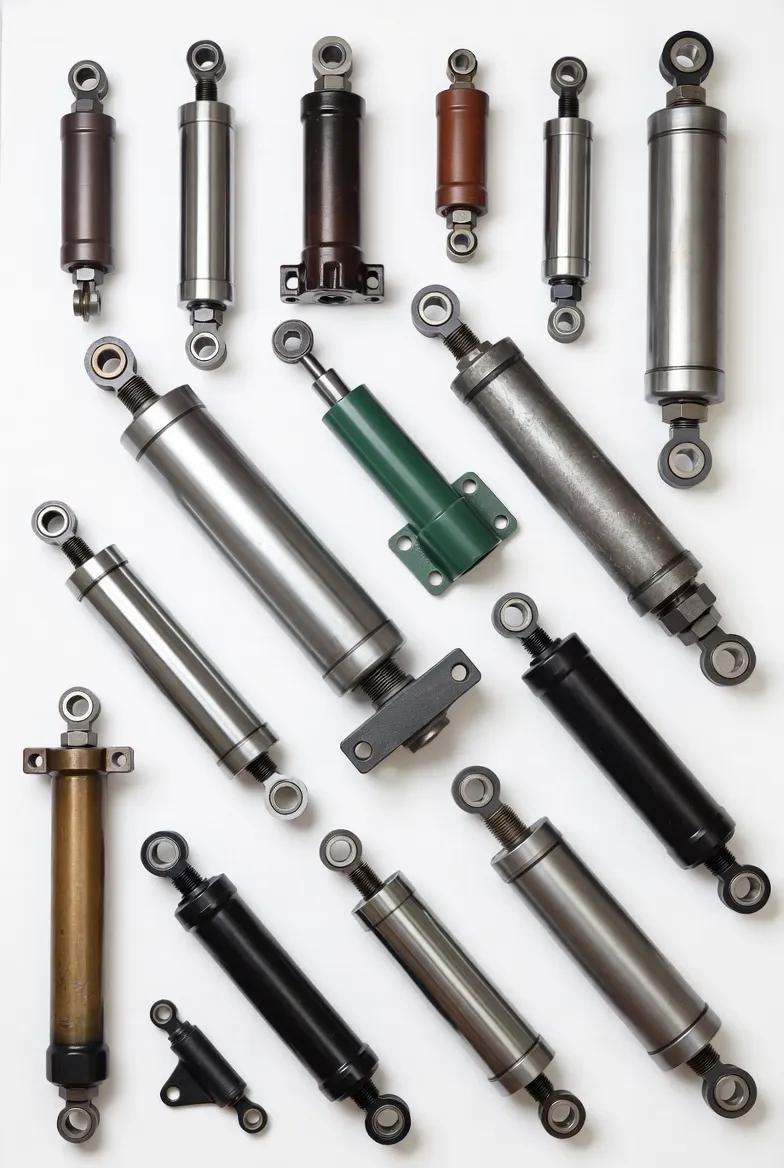
Bridge launching cylinders, often integrated into walking beam pushing systems, must provide not only tremendous linear thrust but also microscopic precision. During the launching phase, the massive bridge deck is suspended between piers. Even the slightest uneven application of force or a discrepancy in pushing speed can induce devastating torsional stress. In a worst case scenario, asynchronous pushing could cause the entire superstructure to buckle or collapse. Therefore, modern bridge construction relies heavily on highly integrated three dimensional hydraulic control systems. Through the flawless coordination of vertical lifting cylinders, horizontal pushing cylinders, and lateral correction actuators, these systems ensure the bridge glides across the void with absolute stability.
From a rigorous engineering perspective, designing and manufacturing these heavy duty hydraulic actuators is a monumental task. They must operate continuously for months in harsh outdoor environments, enduring abrasive dust, high humidity, and severe thermal fluctuations. For civil engineering contractors, project managers, and heavy equipment maintenance teams, a profound understanding of fluid dynamics, extreme high pressure sealing architectures, and redundant safety mechanisms is vital. This comprehensive guide explores the technical core and operational practices of bridge launching fluid power systems.
Mechanical Architecture of the Walking Beam System
Modern incremental launching equipment has largely replaced traditional wire rope pulling methods with fully integrated hydraulic drive systems. This complex motion relies on specialized cylinder groups working in perfect concert.
Vertical Lifting Dynamics
The vertical lifting cylinders act as the primary load bearing foundation. Before any horizontal movement can occur, these high pressure actuators must overcome the immense static gravity of the bridge section, elevating it slightly off the temporary support blocks. These cylinders are engineered for ultra high pressures, frequently operating up to 700 Bar. The cylinder barrels are forged from high yield strength seamless alloy steel to prevent dangerous radial expansion during prolonged holding cycles.
Horizontal Thrust Generation
Once the bridge structure is securely elevated, the horizontal pushing cylinders activate, driving the massive load forward by a precisely calculated stroke length. Following this forward thrust, the lifting cylinders retract to place the bridge back onto the sliding pads. The horizontal cylinders then retract without load to reset for the next stepping cycle. Simultaneously, lateral correction cylinders apply exact side thrust to counteract wind loads or assembly deviations, ensuring the bridge alignment remains accurate to within millimeters.

Combatting Extreme Environmental Degradation
Bridge construction sites present severe environmental challenges for precision fluid power equipment. Launching systems are typically exposed to the elements, enduring intense ultraviolet radiation, torrential rainfall, and constant bombardment from airborne concrete dust, sand, and abrasive grit. If the hydraulic cylinders lack elite protective engineering, the high frequency, ultra heavy duty push pull cycles will rapidly cause premature wear and catastrophic fluid leaks.
To guarantee absolute zero leakage performance over tens of thousands of incremental stepping cycles, manufacturers heavily optimize material science. The piston rod, being the most exposed component, must possess exceptional surface hardness and unparalleled corrosion resistance.

Laser Cladding and Composite Sealing Architecture
Traditional industrial hard chrome plating struggles to resist the intense salt fog corrosion found in coastal bridge construction projects. Modern premium launching cylinders utilize advanced laser cladding technology or thermal sprayed ceramic coatings. These metallurgical processes bond highly resistant nickel chromium alloys directly to the steel substrate, forging an impenetrable, micro crack free armor. Simultaneously, the cylinder head is fitted with a tandem sealing system composed of wear resistant PTFE and high pressure polyurethane. This is paired with an aggressive double lip wiper seal that completely shears away hardened concrete dust before the rod retracts, perfectly protecting the internal pressure seals from abrasive destruction.
Absolute Fluid Safety and Multi Point Synchronization
From an engineering safety perspective evaluated by E-E-A-T standards, elevating tens of thousands of tons of steel high above the ground leaves absolutely no room for error. Should a hydraulic hose burst or a power station fail, the bridge launching equipment cylinders must self lock instantaneously to ensure absolute structural safety.
Mechanical Lock via Load Holding Valves
To completely eliminate the risk of a load freefall, all vertical lifting cylinders feature highly reliable load holding counterbalance valves flange mounted directly to the cylinder inlet port. During a controlled descent, pilot pressure opens the valve spool. If the system experiences an unexpected pressure loss, heavy internal springs instantly snap the valve shut in milliseconds. This locks the high pressure hydraulic fluid entirely within the cylinder chamber, keeping the massive bridge securely suspended in mid air until engineers can safely intervene.
Proportional Servo Closed Loop Synchronization
Pushing a megastructure requires dozens of launching cylinders working simultaneously across multiple bridge piers. Any delay in a single cylinder will induce structural torsion. Modern electro hydraulic synchronization systems utilize high precision magnetostrictive linear displacement sensors integrated inside the cylinders. These sensors feed real time positional data to a central PLC at high frequencies. The PLC uses error correction algorithms to dynamically adjust high response proportional servo valves, altering the fluid flow to each individual cylinder. This closed loop technology ensures synchronization errors remain within a fraction of a millimeter.
Preventative Maintenance Strategies to Guarantee Project Continuity
In mega infrastructure projects costing hundreds of millions of dollars, construction delays translate into astronomical financial penalties. Should a pushing equipment failure occur during a critical river crossing phase, the consequences are disastrous. Therefore, executing a rigid preventative maintenance strategy for the bridge launching equipment cylinders is a top priority for equipment management teams.
- ✔️
Absolute Fluid Cleanliness Management: Servo control systems are extraordinarily sensitive to hydraulic fluid contamination. Site dust easily enters the system via damaged wiper seals or reservoir breathers. Maintenance personnel must conduct routine fluid particle counting tests, utilizing high efficiency offline filtration carts to purify the hydraulic oil to strict ISO 4406 standards. This prevents extremely expensive proportional servo valves from jamming during a launch operation.
- ✔️
Visual Monitoring and Rod Preservation: Prior to any pushing operation, all exposed piston rods must be meticulously inspected visually. Even a micro weep of hydraulic fluid indicates primary seal damage. During extended standby periods, rods should be fully retracted to avoid environmental exposure. If exposure is unavoidable, application of specialized marine grade preservation grease is mandatory to halt oxidation pitting.
- ✔️
Spherical Bearing Lubrication: Pushing cylinders inevitably encounter lateral forces during the launch sequence. The heavy duty spherical plain bearings at both ends of the actuator are crucial for absorbing this off center loading. Regularly injecting extreme pressure lithium grease prevents the bearings from seizing, which would otherwise inflict fatal bending stress on the cylinder barrel and piston rod.

Digital Construction: Deep Integration of Smart Hydraulics and IoT
As the concept of smart construction rapidly expands across infrastructure development, traditional hydraulic launching technologies are experiencing a profound digital transformation. Bridge launching cylinders are evolving from simple actuation components into highly intelligent, multi dimensional sensing nodes within the Industrial Internet of Things.
Next generation smart pushing cylinders are internally embedded with high frequency pressure transmitters, precision displacement sensors, and even thermal monitoring probes. Throughout the incremental launching cycle, these sensors stream massive volumes of dynamic telemetry to the construction command center digital twin platform. Artificial intelligence algorithms analyze the real time pressure escalation curves of each cylinder, instantly detecting abnormal increases in friction on the sliding pads. This triggers an early warning alert, preventing the sliding track from jamming and damaging the bridge girder. Furthermore, through continuous deep learning of the data, the system can predict the fatigue life of internal seals with exceptional accuracy, guiding maintenance teams to perform preventative replacements during optimal downtime windows. This data driven predictive maintenance model is fundamentally revolutionizing the safety and efficiency management of mega bridge construction.

Conclusion: Forging the Steel Spine of Global Infrastructure
Bridge launching cylinders are indisputably the most critical hydraulic driving force behind the construction of modern large span steel structure bridges. By perfectly combining extreme heavy duty anti corrosion metallurgy, uncompromising mechanical fail safe load holding technologies, and high precision electro hydraulic closed loop synchronization based on the Industrial Internet of Things, these technologically advanced heavy actuators ensure that tens of thousands of tons of bridge girders can fly across rivers and oceans with absolute precision and safety. For global heavy construction machinery manufacturers and civil engineering enterprises, mastering top tier fluid power and smart hydraulic synchronization systems is the fundamental cornerstone to establishing engineering excellence, ensuring absolute construction safety, and securing a leading position in the industry.