
Fluid Power Safety Engineering
Essential Safety Guidelines for Working with High-Pressure Hydraulic Cylinders
An authoritative and comprehensive technical blueprint detailing fluid injection hazards, absolute depressurization protocols, mechanical load blocking, and the strict engineering mandates required to protect human life in fluid power environments.

The Invisible Danger of High-Pressure Fluid Power
In the highly rigorous disciplines of commercial construction, deep underground mining, marine engineering, and automated heavy manufacturing, fluid power systems represent the absolute pinnacle of controlled kinetic force. Hydraulic cylinders are the mechanical muscles that convert the immense hydrostatic pressure of synthetic fluid into unrelenting physical motion. These robust steel pressure vessels allow humanity to literally move the earth, erect towering skyscrapers, and manipulate payloads weighing hundreds of tons with millimeter precision. However, this magnificent display of mechanical leverage comes with an inherent, uncompromising level of danger. Working around high-pressure fluid power systems demands a level of respect and strict protocol adherence that supersedes almost all other industrial disciplines. To explore the highest industry standards for fluid power components, visiting our premium hydraulic cylinders platform provides a critical baseline for engineering quality and safety.
A typical industrial hydraulic system operates at pressures ranging from two thousand to over five thousand pounds per square inch. Specialized heavy machinery can utilize operating pressures exceeding ten thousand pounds per square inch. At these extreme thermodynamic and hydrostatic levels, hydraulic fluid ceases to behave like a benign liquid. It becomes a highly volatile energy transfer medium. A catastrophic structural failure of a cylinder barrel, a ruptured high-pressure hose, or even a microscopic pinhole leak in a fitting can release this trapped energy with explosive, lethal violence. The dangers are not always visible. Trapped potential energy, silent fluid injection hazards, and sudden load descents are the silent assassins of the maintenance bay.
From an authoritative engineering perspective evaluated against international occupational health and safety standards, the protocols for interacting with fluid power actuators must be executed flawlessly. There is absolutely zero margin for error when dismantling, diagnosing, or repairing these components. This comprehensive technical guide will meticulously dissect the essential safety guidelines for working with high-pressure hydraulic cylinders. We will explore the devastating pathology of fluid injection injuries, outline the absolute mandates of complete depressurization, detail the physics of mechanical load blocking, and provide the definitive engineering protocols required to ensure every maintenance technician returns home safely.
Hazard 1: The Devastation of High-Pressure Fluid Injection
Of all the hazards associated with fluid power, high-pressure fluid injection is perhaps the most insidious, the most misunderstood, and the most medically devastating.
The Invisible Needle
When a microscopic pinhole develops in a high-pressure hydraulic hose, an O-ring seal, or a steel fitting, the escaping fluid is forced through an incredibly tiny orifice. This creates a hyper-velocity jet of synthetic oil that is frequently invisible to the naked eye. This jet acts as a fluid scalpel, capable of easily slicing through heavy leather work gloves and human skin. If a technician runs their hand along a pressurized hose to feel for a leak, this invisible needle will instantly penetrate the flesh, injecting highly toxic, hot synthetic hydraulic oil deep into the muscle tissue and bloodstream.
A Severe Medical Emergency
A fluid injection injury initially presents as a tiny, painless pinprick, resembling a minor bee sting. Because the initial pain is negligible, technicians often ignore it. This is a fatal mistake. The synthetic oil rapidly destroys tissue, causes massive compartment syndrome, and induces severe blood poisoning. If surgical intervention is not initiated within hours to physically excise the contaminated tissue, the result is almost universally gangrene, amputation of the affected limb, or death. Immediate hospitalization at a trauma center equipped for industrial chemical injections is absolutely mandatory.
Safe Leak Detection Protocols
The cardinal rule of fluid power safety is: Never use your hands to search for a hydraulic leak. Even while wearing heavy reinforced safety gloves, the risk of injection is severe. To safely locate a microscopic high-pressure leak, technicians must utilize a piece of cardboard, a wooden block, or a specialized diagnostic mirror attached to a long handle. By sweeping the cardboard around the suspected cylinder gland or hose fitting, the invisible fluid jet will impact and stain the cardboard, safely revealing the exact location of the breach without endangering human flesh.

Absolute Depressurization and LOTO Execution
Before a single wrench is applied to a hydraulic fitting, the entire fluid power network must be rendered into a state of zero energy. This is achieved through strict adherence to Lockout/Tagout (LOTO) and absolute depressurization procedures.
Beyond the Off Switch
Turning off the main diesel engine or the electrical power unit is merely the first step; it does not render the system safe. Hydraulic systems are specifically designed to trap and store massive amounts of pressurized fluid even when the pump is disabled. If a technician mistakenly unthreads a head gland on a cylinder that still contains trapped fluid at 3000 PSI, the cast iron end cap will launch off the barrel like an artillery shell, causing catastrophic destruction and lethal blunt force trauma. You must systematically neutralize all stored energy.
Bleeding Accumulators and Cylinders
After locking out the primary power source, the operator must cycle all directional control valves through their full range of motion multiple times. This action bleeds any residual pressure trapped in the working lines back into the main atmospheric reservoir. Furthermore, modern heavy machinery frequently utilizes hydraulic accumulators nitrogen charged pressure vessels that store reserve fluid power. These accumulators must be manually discharged using their designated bleed valves. Finally, always utilize an in-line pressure gauge to empirically verify that the system pressure reads exactly zero PSI before initiating any disassembly. This protocol is incredibly critical for complex circuitry found in Excavator Hydraulic Cylinders where pilot pressure can remain trapped for days.

The Physics of Gravity: Mechanical Load Blocking
Hydraulic fluid is an exceptional medium for transferring power, but it is a terrible medium for permanent structural support. Never trust trapped fluid pressure to protect your life.
The Fallacy of Fluid Support
When repairing a machine with a suspended payload, technicians frequently leave the cylinder extended, relying on the closed directional valve to hold the weight. This is a lethal violation of safety protocols. Spool valves are machined with microscopic clearance gaps; they are not absolute seals. Over time, fluid will inevitably bleed past the spool, causing the cylinder to drift downward silently. Furthermore, if an O-ring suddenly fails or a deteriorated hydraulic hose bursts, the entire payload will free-fall to the earth in a fraction of a second, crushing anyone positioned beneath it.
Absolute Mechanical Blocking
Before performing any diagnostics or part extraction, the suspended load must be physically neutralized. This requires lowering the implements completely to the ground to establish a zero-energy state. If the repair mandates that the payload remains elevated, the machine must be supported by certified mechanical blocking. Heavy-duty steel cribbing, engineered jack stands, or built-in mechanical safety props must be deployed. For massive operations, such as servicing Dump Truck Hydraulic Cylinders, the heavy cargo bed must be firmly resting on solid steel body props before a technician ever steps within the crush zone.
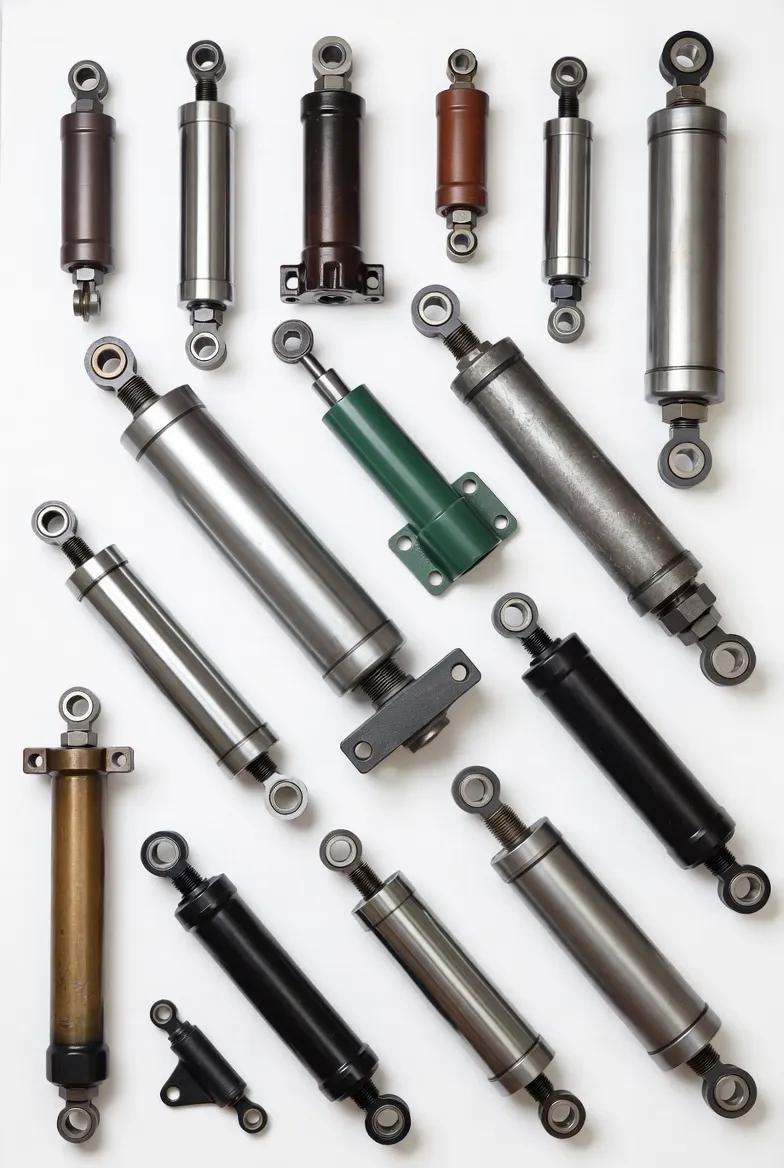
Safe Dismantling and Repair Procedures
Extracting and rebuilding a massive steel actuator involves handling components that can weigh hundreds or even thousands of pounds. Precision, patience, and the correct tooling are required to prevent structural damage and physical injury.
- ✔️
Handling Heavy Metallurgy: Never attempt to manually lift or position a heavy industrial cylinder. Always utilize certified overhead gantry cranes, nylon lifting slings, and designated lifting eyes. When securing the cylinder for disassembly, use a specialized heavy-duty chain vise. Crucially, clamp the vise only over the solid, reinforced end caps or the base weldments. Clamping directly in the center of the hollow barrel will crush the tube, permanently warping the micro-honed interior and ruining the component.
- ✔️
The Danger of Spring-Return Cylinders: Standard double-acting cylinders use fluid to retract, but many single-acting cylinders utilize a massive, heavy-duty internal steel spring to force the rod back into the housing. When dismantling a spring-return cylinder, removing the head gland releases the immense kinetic energy trapped within that compressed coil. If not systematically released using a threaded mechanical press or specialized extraction tooling, the spring will violently eject the rod and gland across the workshop. Ensure you verify the exact kinematic architecture before unthreading the caps.
- ✔️
Proper Tooling for Gland Extraction: Never use a pipe wrench, a chisel, or a hammer to remove the head gland. These blunt force methods will score the delicate chrome rod, damage the threads, and potentially shatter the cast iron cap. Always utilize the exact specialized adjustable pin spanner wrench designated by the manufacturer to safely apply massive rotational torque without compromising the metallurgy.

Specialized Hazards Across the Industrial Spectrum
While the core laws of physics govern all fluid power, different industries present unique environmental challenges that require specialized safety adaptations during maintenance procedures.
In the high-stakes realm of aerial equipment, a sudden loss of pressure means a lethal fall. Aerial Work Vehicle Hydraulic Cylinders are uniquely engineered with dual-redundant, pilot-operated check valves fused directly into the barrel. These safety valves mechanically lock the cylinder in place even if the primary hoses are severed. Technicians must be exceptionally trained to properly override these safety locks before attempting to lower a stranded boom. Similarly, Agricultural Hydraulic Cylinders operate in environments saturated with highly toxic liquid fertilizers and pesticides. Maintenance personnel must wear full chemical-resistant PPE to protect against severe dermal exposure when opening these systems, as the hydraulic fluid is often deeply contaminated with agricultural chemicals. Meanwhile, Forklift Hydraulic Cylinders operate in high-traffic logistics environments; establishing a strict, barricaded perimeter during mast repairs is essential to protect oblivious warehouse personnel from sudden load shifts.

Conclusion: Building an Uncompromising Safety Culture
The sheer mechanical capability of modern fluid power systems is awe-inspiring, but that power demands absolute, unwavering respect. Understanding the essential safety guidelines for working with high-pressure hydraulic cylinders is the fundamental barrier between routine, successful maintenance and a catastrophic, life-altering tragedy. By acknowledging the lethal threat of invisible fluid injection jets, strictly enforcing rigorous Lockout/Tagout depressurization protocols, and relentlessly deploying certified mechanical blocking to support heavy payloads, engineering professionals can eradicate the dangers inherent in the workshop. A safe maintenance environment is a productive one. Never compromise on safety tooling, PPE, or procedural checklists. Ensuring your personnel are equipped with the highest quality knowledge and components guarantees that your machinery will continue to conquer the industrial landscape without sacrificing human life. If your organization requires access to inherently safe, advanced fluid power components, our engineering team is standing by to deliver the ultimate solution.