
Rehabilitation Fluid Power Engineering
High End Wheelchair Adjustment Cylinders: Engineering Mobility and Dignity
An authoritative engineering analysis of ultra compact fluid power actuation, ergonomic biomechanics, zero drift load holding, and smart IoT integration in advanced rehabilitation and nursing equipment.

The Invisible Engine of Independence and Rehabilitation
In the highly specialized field of clinical rehabilitation and advanced nursing care, mobility aids have evolved far beyond their traditional roots. Modern high end wheelchairs are no longer merely transport devices; they are highly sophisticated, multi functional biomechanical platforms designed to prevent secondary complications, facilitate physical therapy, and restore autonomy to patients with severe mobility impairments. These premium devices feature complex spatial capabilities such as tilt in space seating, infinitely variable backrest reclining, dynamic leg rest elevation, and even full vertical standing functionalities. Achieving these intricate, load bearing postural adjustments requires a flawless combination of immense mechanical force and absolute spatial precision. The unsung hero driving these complex kinematic movements is the high end wheelchair adjustment cylinder.
Hydraulic actuators deployed in premium rehabilitation equipment represent a masterclass in fluid power miniaturization. Unlike massive industrial cylinders that have the luxury of boundless installation space, wheelchair adjustment cylinders must deliver hundreds of kilograms of lifting force from within exceptionally confined envelopes. Furthermore, these clinical actuators cannot afford the operational quirks acceptable in construction machinery. In a therapeutic environment, particularly for patients with severe spinal cord injuries, muscular dystrophy, or neuromuscular disorders, any mechanical vibration, sudden hydraulic jerk, or acoustic whine can trigger painful muscle spasms or severe psychological distress. Therefore, wheelchair hydraulic systems must translate high pressure fluid dynamics into completely silent, buttery smooth, and meticulously controlled linear motion.
From a rigorous engineering perspective evaluated against stringent international medical device standards such as FDA and CE MDR protocols, designing these compact fluid power components demands absolute perfection. They must operate flawlessly on battery power, minimize weight to maximize wheelchair range, endure aggressive clinical sterilization procedures, and integrate uncompromising fail safe mechanisms to protect vulnerable users. This comprehensive technical analysis explores the sophisticated kinematic architecture, the pursuit of extreme power density, the advanced biocompatible metallurgy, and the smart electronic integration that define elite wheelchair adjustment cylinders.
Kinematic Architecture of Biomechanical Posture Control
Driving the complex articulation of a therapeutic wheelchair requires a highly refined interplay of hydraulic geometry and micro flow proportional control. The cylinders must provide robust torque while ensuring absolute smoothness during the transition of the user center of gravity.
Tilt in Space and Standing Dynamics
The tilt in space function is critical for pressure relief and respiratory management. It rotates the entire seat frame backwards without changing the hip, knee, or ankle angles. This mechanism is typically controlled by dual synchronized adjustment cylinders located beneath the seat pan. When the user initiates a tilt command via a joystick, high precision electro hydraulic servo valves inject fluid into the cylinders in precise microliter increments. To completely eliminate the static friction spike that occurs at the exact moment of piston startup, medical grade cylinder barrels undergo micron level ultra fine cross hatching. They are equipped with specialized Polytetrafluoroethylene composite low friction guide rings, ensuring zero hesitation and delivering a silky smooth posture transition for the patient.
Acoustic Suppression Technology
In daily life, the mechanical noise of personal mobility equipment must be strictly limited to preserve the user dignity and prevent auditory fatigue. Standard hydraulic systems often emit high pitched squeals due to fluid turbulence or micro pump cavitation. Adjustment cylinders dedicated to premium wheelchairs possess internal fluid pathways deeply optimized using Computational Fluid Dynamics. This completely eliminates turbulent noise when hydraulic fluid flows through miniature valve ports at varying speeds. Furthermore, progressive hydraulic cushioning integrated into the cylinder ends entirely absorbs hard impact sounds when reaching mechanical limits, ensuring the entire adjustment process remains virtually silent.

Miniaturization and Extreme Power Density
One of the most profound engineering hurdles in designing high end wheelchair adjustment cylinders is the strict limitation on physical space and overall vehicle weight. A power wheelchair must remain narrow enough to navigate standard residential doorways and light enough to ensure the onboard battery banks can provide an acceptable daily driving range. Every gram of weight and every millimeter of length is fiercely negotiated during the chassis design phase. This forces fluid power engineers to push the boundaries of extreme power density, creating actuators that are astonishingly compact yet capable of lifting adult patients repeatedly throughout the day.
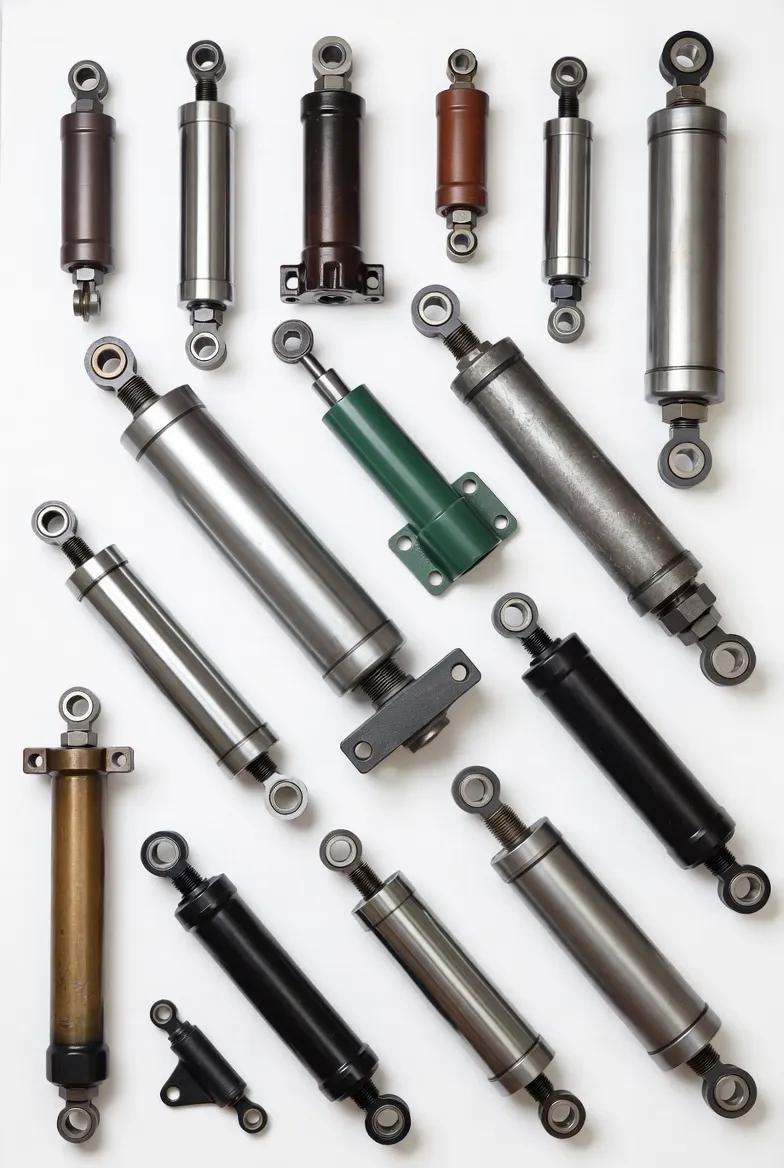
To achieve this remarkable power to weight ratio, elite wheelchair hydraulic cylinders abandon traditional bulky cast iron construction. Instead, engineers turn to aerospace grade metallurgy. The cylinder barrels are precision machined from high strength aluminum alloys or lightweight titanium. These advanced materials provide exceptional burst strength to handle high internal hydraulic pressures while drastically reducing the unsprung mass of the wheelchair chassis. The miniaturized power units, often integrating the pump, reservoir, and valve block directly onto the base of the cylinder, form a completely sealed, ultra compact electro hydraulic actuator that maximizes efficiency without sacrificing lifting capability.

Micro Hydraulics and High Efficiency Sealing Architecture
In micro hydraulic systems, even a microscopic drop of internal fluid bypass can result in noticeable load shifting. To maintain absolute rigidity within a miniature barrel, the sealing technology must be flawless. Premium wheelchair cylinders utilize highly specialized, low friction energized U cup seals and custom engineered Polytetrafluoroethylene glide rings. These seals are designed to operate perfectly under the high pressure generated by the miniaturized pump, ensuring that the fluid power is translated entirely into mechanical lift with zero energy wasted on internal friction. This high efficiency directly translates to lower electrical current draw from the wheelchair batteries, significantly extending the user mobility range between charges.
Absolute Failsafe Mechanisms and Patient Security
From an extremely rigorous clinical medical engineering safety perspective, elevating or tilting a disabled patient leaves absolutely no room for mechanical failure. The hydraulic system must possess the absolute capability to instantaneously lock dead and maintain the current posture during emergencies such as complete battery depletion or severed control cables.
Zero Drift Load Holding Check Valves
During a standing therapy session or while navigating an inclined ramp, the wheelchair seat must remain absolutely motionless at the set angle, without even a fraction of a degree of slow downward drift. To completely eradicate the inherent micro leakage flaws of standard solenoid directional valves, high quality adjustment cylinders directly integrate high pressure pilot operated check valves. Once the motion ceases, these check valves undergo a rigid mechanical closure driven by powerful return springs, sealing the high pressure fluid tightly within the cylinder chamber. This achieves true zero drift load holding, ensuring the patient remains entirely secure and stable.
Emergency Manual Override Descent
If a user is elevated in a standing position and the wheelchair experiences a sudden total power failure, caregivers must be able to return the patient to a seated, secure posture immediately. Advanced wheelchair lift cylinders are equipped with purely physically driven manual override bypass releases. A caregiver simply pulls a prominent mechanical release ring to bypass all electronic components, safely venting the locked hydraulic fluid within the cylinder. This relies entirely on gravity to smoothly and swiftly lower the seat to a horizontal state. This emergency channel, completely independent of electricity, is the most critical underlying defense line for user safety.
Hygiene Compliance and Clinical Environment Endurance
High end wheelchairs frequently operate within clinical settings, rehabilitation centers, and assisted living facilities. These environments mandate rigorous hygiene standards. Rehabilitation equipment must endure high intensity cleaning operations on a daily basis. This means that adjustment cylinders are repeatedly exposed to medical grade disinfectants, sterilizing foams, and potentially biological fluids. If the cylinder lacks top tier anti corrosion surface treatment engineering, its exposed metal piston rod will develop electrochemical corrosion and pitting in an extremely short period.
- ✔️
Corrosion Resistant Metallurgy: The piston rods of high end wheelchair adjustment cylinders are often precision machined from 316L surgical grade stainless steel, or they employ cutting edge plasma thermal spray technology to fuse a dense ceramic anti corrosion coating onto the rod surface. This superior metallurgical process creates an indestructible chemical protection barrier, preventing rust from forming and subsequently tearing the internal seals.
- ✔️
Biocompatible and Aggressive Wiper Seals: To handle daily chemical exposure, traditional industrial rubbers are eliminated. Medical grade fluorocarbon elastomers that resist chemical corrosion are utilized for internal sealing. Coupled with specialized polyurethane wiper seals boasting extreme scraping efficiency, the system guarantees that all moisture and disinfectant residues are completely blocked outside before the piston rod retracts, maintaining absolute sterility and preventing fluid contamination.
- ✔️
Lubrication Free Articulation Joints: To fully comply with the stringent dust free and sterile regulations of clinical environments, the upper and lower connecting trunnions of advanced adjustment cylinders completely discard traditional steel bearings that require regular messy grease injection. Instead, heavy duty composite self lubricating spherical bearings made of special polymer materials are adopted. This ensures the wheelchair maintains a perfectly silent and smooth adjustment angle throughout its lifecycle without attracting dirt or bacteria.

The Era of Smart Rehabilitation: Deep Integration of IoT and Smart Hydraulics
With the rapid development of connected healthcare ecosystems, traditional mechanical hydraulic control in mobility aids is undergoing an unprecedented digital technological revolution. High end wheelchair adjustment cylinders are evolving comprehensively from simple fluid power execution muscles into highly intelligent data terminals equipped with multi dimensional precision sensing capabilities within the medical Internet of Things.
Next generation smart adjustment cylinders highly integrate micron level precision magnetostrictive displacement sensors and high resolution pressure transmitters within their compact bodies. When executing automated postural changes to prevent pressure ulcers, these sensors can instantly capture the patient weight distribution status and the current tilt angle, transmitting massive telemetry data via internal high speed buses to the central microprocessor of the wheelchair in real time. Built in Artificial Intelligence algorithms process this data in milliseconds, dynamically adjusting the output current of the proportional valve to accurately customize the most flexible elevation curve suited to the specific user profile, ensuring ultimate comfort. Even more disruptive is that the big data deep learning model can accurately monitor and project the performance decay trajectory of internal core seals. Before any visible physical leakage occurs, the system will automatically alert the user or service provider via an integrated mobile app for preventative maintenance. This paradigm shift to AI driven predictive maintenance is fundamentally reshaping the safety assurance standards and lifespan of premium mobility devices.

Conclusion: Forging the Foundation of Dignified Mobility
High end wheelchair adjustment cylinders are undoubtedly the most core fluid power components determining the spatial positioning accuracy, patient therapeutic efficacy, and absolute operational safety of modern premium mobility aids and critical care rehabilitation equipment. By perfectly integrating corrosion resistant surgical grade metallurgy capable of withstanding the harshest clinical decontamination, foolproof and absolute zero drift mechanical anti drop load holding valves, and high precision electro hydraulic flexible proportional control based on the medical Internet of Things, these cutting edge actuators ensure that users can navigate their world with absolute confidence, independence, and dignity. For global excellent medical device manufacturers, investing in and commanding top tier fluid power and smart hydraulic adjustment systems is the fundamental cornerstone to establishing top notch rehabilitation engineering quality, defending patient well being, and shaping a global leading position in the mobility industry.