
Renewable Energy Fluid Power
Yaw Brake Cylinders: Precision Control in Wind Power Generation
An authoritative engineering analysis of hydraulic braking mechanisms, nacelle alignment dynamics, and extreme environment performance in modern wind turbines.

The Cornerstone of Wind Energy Optimization
As the global transition toward renewable energy accelerates, wind power stands at the forefront of sustainable electricity generation. Modern wind turbines are colossal feats of engineering, with rotor diameters exceeding two hundred meters and nacelles weighing hundreds of tons. To maximize energy capture, the rotor must constantly face directly into the wind. This critical orientation process is managed by the wind turbine yaw system. At the very heart of this system, ensuring absolute stability and precise alignment, are the yaw brake cylinders. These highly specialized hydraulic actuators are the silent guardians of turbine efficiency and structural integrity.
Unlike standard industrial hydraulic pistons that perform continuous extending and retracting motions, yaw brake cylinders operate under a uniquely demanding paradigm. Their primary function is to apply immense clamping force to the yaw brake disc, locking the massive nacelle in place once the optimal wind direction is achieved. When the wind direction shifts, the hydraulic pressure is modulated, allowing the yaw motors to rotate the nacelle against a controlled residual friction. This dampening effect prevents violent, uncontrolled rotation caused by turbulent wind gusts, thereby protecting the delicate gearbox and structural tower components from catastrophic fatigue.
Understanding the fluid dynamics, material science, and intelligent control algorithms behind wind power hydraulics is absolutely essential for wind farm operators, turbine manufacturers, and renewable energy engineers. A failure in the hydraulic braking system can lead to severe misalignment, drastically reduced power output, or even total turbine destruction during gale-force events. This comprehensive engineering analysis delves deep into the operational imperatives, extreme environmental durability, and predictive maintenance strategies associated with yaw brake cylinders.
Mechanical Architecture of Nacelle Alignment Dynamics
The operation of a yaw brake system represents a sophisticated interplay of active fluid power and passive frictional resistance. The cylinders must execute commands with millimeter precision while holding back hundreds of thousands of Newton-meters of rotational torque.
Active Clamping Force
During normal power generation, the yaw brake cylinders are fully pressurized. Dozens of these compact, high-pressure hydraulic actuators are distributed evenly around the yaw ring. They press high-friction brake pads against the steel yaw disc with extraordinary force. This completely immobilizes the nacelle, ensuring the rotor blades remain perpendicular to the wind vector, thus maximizing aerodynamic lift and electrical output.
Dynamic Dampening
When the anemometer detects a change in wind direction, the system does not simply release the brakes. Instead, proportional hydraulic valves reduce the pressure to a specific setpoint. This allows the yaw drive motors to overcome the friction and rotate the nacelle. The cylinders act as dynamic dampeners, absorbing turbulent wind shocks and preventing gear backlash that would otherwise destroy the yaw planetary drives.

Surviving the Extreme Offshore Environment
The push for higher megawatt outputs has driven the wind energy sector offshore. Offshore wind turbine brakes operate in an environment that is uncompromisingly hostile to mechanical systems. Elevated high above the turbulent ocean, these components face continuous exposure to highly corrosive salt spray, extreme humidity, and massive temperature fluctuations. A standard industrial hydraulic cylinder would succumb to rust and seal failure within months in such an environment.
To guarantee the twenty-year design life expected of modern offshore turbines, yaw brake cylinders are manufactured using cutting-edge material science. The integrity of the fluid power system is entirely dependent on its ability to repel environmental contamination while maintaining ultra-high internal pressures.
Advanced Metallurgy and Micro-Movement Resistance
The pistons and rods of offshore yaw cylinders undergo highly specialized surface treatments. Standard chrome plating is insufficient due to micro-cracking which allows salt ingress. Instead, manufacturers utilize advanced laser cladding, ceramic coatings, or nitrocarburizing to create an impenetrable, corrosion-proof barrier. Furthermore, because these cylinders spend the majority of their life applying static pressure with only microscopic movements (due to wind vibrations), the internal seals must be specially formulated. Standard polyurethane seals would suffer from stick-slip friction or dry out. Proprietary energized PTFE sealing profiles are utilized to ensure zero-leakage performance during continuous micro-vibrations.

Failsafe Mechanisms and Grid Security
From an authoritative EEAT engineering perspective, the safety of the wind turbine and the surrounding electrical grid takes absolute precedence. High-velocity storm winds can generate catastrophic forces. The hydraulic braking system must default to a state of absolute security in the event of power loss or component failure.
Active vs. Passive Spring Applied Brakes
Many modern yaw brake cylinders are designed as failsafe, spring-applied, hydraulically-released (SAHR) mechanisms. In this configuration, massive internal disc springs constantly push the brake pad against the yaw ring. Hydraulic fluid is pumped into the cylinder to compress the springs and release the brake. If the turbine loses electrical power or a hydraulic hose bursts, the fluid pressure drops, and the mechanical springs instantly clamp the nacelle tight, preventing runaway rotation during a storm.
Accumulator Integration
For active hydraulic braking systems, hydraulic accumulators are integrated directly into the yaw circuit. These act as high-pressure energy storage devices. During a sudden grid failure, the accumulators release stored hydraulic fluid to immediately pressurize the yaw brake cylinders, locking the nacelle safely even in a total blackout scenario. This redundancy is a critical standard in renewable energy fluid power design.
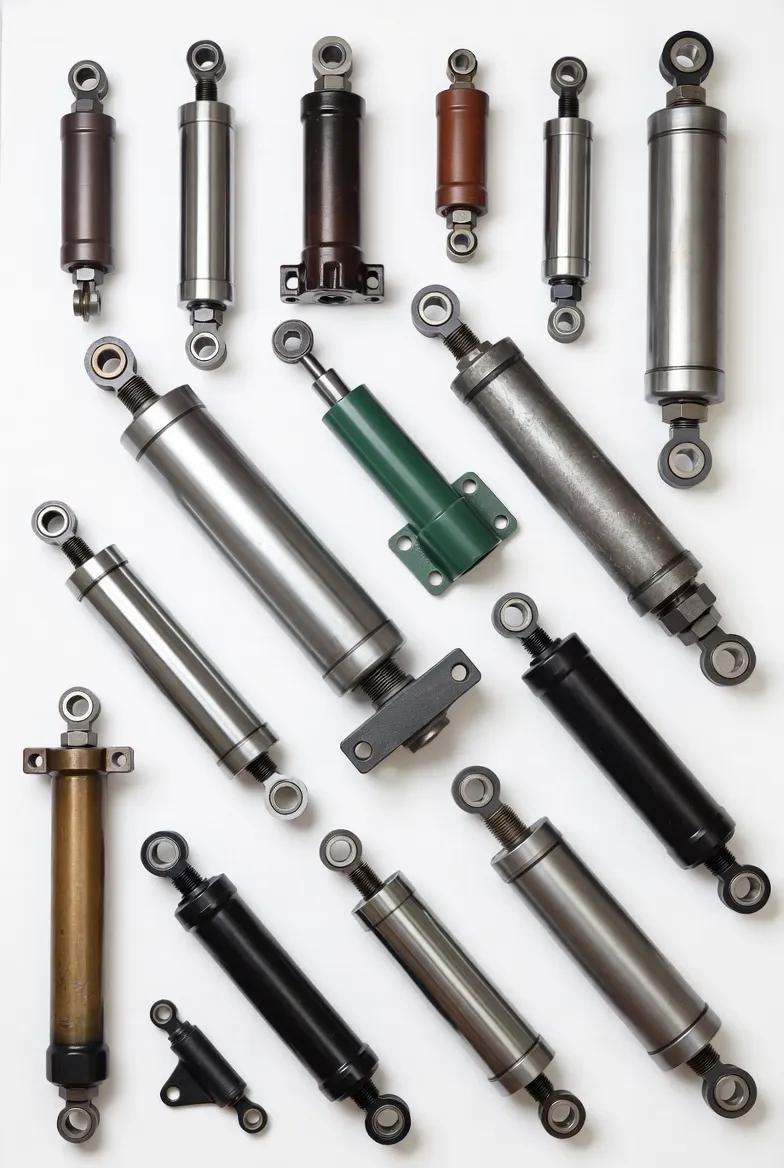
Maintenance Strategies for Maximizing Wind Farm Uptime
The financial viability of a wind farm relies entirely on maximizing operational uptime. Performing maintenance a hundred meters in the air, particularly in offshore installations, is extraordinarily expensive and logistically complex. Therefore, preventative maintenance of the wind turbine yaw system is paramount.
- ✔️
Rigorous Fluid Contamination Control: Hydraulic fluid is the lifeblood of the braking system. In high-altitude nacelles, condensation can introduce water into the reservoir. Milky or aerated hydraulic fluid compromises lubricity and introduces compressibility, which ruins the dampening effect during nacelle rotation. Absolute filtration down to 3 microns and strict desiccant breather maintenance are required.
- ✔️
Brake Pad Clearance Calibration: Yaw brake cylinders must retract precisely to a designated clearance when releasing the brake. If a cylinder hangs up due to internal seal friction or external corrosion, the brake pad will drag against the yaw disc. This constant friction causes intense overheating, rapid pad wear, and acoustic noise issues. Routine calibration of the hydraulic proportional valves is essential.
- ✔️
Visual Seal and Gland Inspections: Service technicians must perform strict visual checks of all cylinder glands during scheduled tower climbs. Weeping fluid not only degrades braking force but poses a severe fire hazard inside the nacelle. Catching micro-leaks early prevents catastrophic environmental spills and total system failure.

The Digital Transition: Smart Hydraulics and IoT Integration
The renewable energy sector is rapidly embracing the digital age. The yaw brake cylinder is evolving from a passive mechanical component into a highly intelligent, sensor-driven node within the Industrial Internet of Things (IIoT).
Next-generation wind power hydraulics are being equipped with embedded pressure transducers, temperature probes, and linear position sensors. These smart cylinders continuously feed real-time telemetry directly to the wind farm’s central SCADA system. By analyzing the pressure decay curves during a braking sequence, artificial intelligence algorithms can accurately predict internal seal wear or spring fatigue months before a physical failure occurs. This transition from reactive emergency repairs to predictive AI-driven maintenance dramatically lowers the Levelized Cost of Energy (LCOE) for global wind farm operators.

Conclusion: Engineering the Future of Sustainable Energy
Yaw brake cylinders are the unsung foundation of wind turbine efficiency and longevity. By seamlessly integrating advanced metallurgical corrosion resistance, uncompromising failsafe mechanisms, and cutting-edge IoT smart technology, these hydraulic actuators ensure that wind farms operate with maximum aerodynamic productivity and structural safety. For turbine manufacturers and renewable energy developers, investing in superior hydraulic braking systems is a foundational strategy for securing a highly reliable, safe, and immensely profitable clean energy grid for the future.