
Fluid Power Engineering Mastery
How to Measure a Hydraulic Cylinder: The Definitive Engineering Guide
An authoritative technical analysis detailing the precision measurement of bore diameters, stroke lengths, retracted pin centers, and rod dimensions for accurate fluid power actuator replacement and system design.

The Critical Importance of Dimensional Accuracy
In the highly demanding sectors of heavy construction, industrial manufacturing, and agricultural automation, fluid power systems represent the undisputed pinnacle of mechanical force generation. When a hydraulic cylinder reaches the end of its operational lifespan due to seal degradation, rod scoring, or catastrophic barrel failure, securing an exact replacement is absolutely paramount. Knowing precisely how to measure a hydraulic cylinder is the most critical initial step in this replacement process. A single millimeter or fraction of an inch error during the measurement phase will inevitably lead to disastrous consequences on the factory floor or the job site. If a replacement cylinder is improperly sized, the machinery will suffer from severe kinematic binding, catastrophic pressure spikes, or a complete inability to mount the actuator to the equipment chassis.
Hydraulic cylinder measurement is not a process that tolerates estimations or guesswork. It is a rigorous scientific procedure requiring specific tools such as digital calipers, precision micrometers, and heavy duty industrial tape measures. Every dimension serves a critical fluid dynamic or structural purpose. The internal bore diameter dictates the absolute maximum pushing and pulling force the actuator can generate based on the system operating pressure. The rod diameter dictates the column strength and the resistance to physical buckling under extreme compressive loads. The stroke length defines the total geometric travel of the machine, while the retracted length ensures the cylinder physically fits between the designated mounting points when fully collapsed.
From a highly authoritative engineering perspective, obtaining the correct specifications for a fluid power linear actuator requires a methodical, step by step process. You must accurately identify the mounting style, calculate the exact stroke, and determine the precise pin hole diameters to ensure perfect mechanical articulation. This comprehensive, highly detailed technical guide will break down the exact methodologies, the necessary instrumentation, and the practical application formulas required to master the process of measuring a hydraulic cylinder for flawless replacement or custom engineering design.
Step 1: Measuring the Bore Diameter
The bore diameter is arguably the most critical fluid power measurement. It is the internal diameter of the main cylinder barrel, which directly determines the surface area of the piston and the resulting force output of the machine.
Direct Internal Measurement
If the hydraulic cylinder is already disassembled for maintenance, determining the bore size is a straightforward procedure. You simply utilize a set of precision digital calipers or an internal micrometer to measure the inside diameter of the seamless steel barrel. It is highly recommended to take this measurement at multiple points along the circumference to account for any potential ovalling or asymmetrical wear that may have occurred over millions of high pressure operational cycles. The measurement should perfectly match standard industry bore sizes, typically ranging from 1.5 inches to 6 inches in standard mobile equipment, or corresponding metric equivalents.
External Estimation Techniques
In many instances, engineers must identify a replacement cylinder while the original unit is still fully assembled and installed on the machinery. In this scenario, you must measure the Outside Diameter (OD) of the main cylinder barrel using large calipers. Once you have the OD, you must subtract the estimated wall thickness of the steel tube on both sides. For standard pressure applications (2500 to 3000 PSI), the steel wall is typically 0.125 to 0.25 inches thick. Therefore, subtracting approximately 0.375 to 0.5 inches from your total OD measurement will give you a highly accurate estimation of the internal bore diameter. Always round to the nearest standard industry bore size.

Step 2: Measuring the Rod Diameter
After determining the bore size, the next crucial dimension is the hydraulic cylinder rod diameter. The piston rod is the highly polished, chrome plated steel shaft that protrudes from the cylinder barrel and connects directly to the machinery payload. Accurately sizing the rod is absolutely critical for two fundamental engineering reasons: column strength to prevent structural buckling and retraction force calculation.
During the extension stroke, the piston rod acts as a slender column subjected to massive compressive forces. If the rod diameter is too small for the specified stroke length and load weight, it will bow and catastrophically snap under pressure a phenomenon known as Euler buckling. Furthermore, during the retraction stroke, the physical volume of the rod occupies space within the cylinder chamber, reducing the effective surface area that the hydraulic fluid can push against (the annular area). Measuring the rod dictates exactly how much pulling force the cylinder can generate.
Execution of the Rod Measurement
- ✔️
Instrument Selection: Measuring the rod requires high precision. A standard tape measure is insufficient. You must utilize a digital vernier caliper or a machinist micrometer. The measurement must be taken across the polished chrome surface of the rod, not on the threaded end or the mounting clevis.
- ✔️
Standardization: Like bore sizes, rod diameters are heavily standardized in fluid power engineering. Common Imperial sizes include 1.00″, 1.25″, 1.50″, 2.00″, and so forth. If your digital caliper reads 1.495 inches, the correct specification is a 1.50 inch rod.
- ✔️
Surface Inspection: While taking the measurement, visually inspect the chrome plating. Any deep scoring, pitting, or flaking of the chrome indicates severe seal damage and dictates that the entire actuator, or at least the rod assembly, must be entirely replaced to prevent immediate fluid leakage upon reinstallation.

Step 3: Calculating the Stroke Length
The stroke length represents the maximum geometric travel of the linear actuator. It is the exact distance the piston rod can travel from its fully retracted resting position to its maximum extended limit.
The Subtraction Method
The most foolproof method for determining the stroke of a hydraulic cylinder is the mathematical subtraction method. You must first extend the cylinder rod to its absolute physical limit and measure the total overall length from the center of the base pin to the center of the rod pin. Record this number. Next, you must push the rod all the way back into the barrel until it bottoms out completely. Measure the overall length again from pin center to pin center. Finally, subtract the fully retracted length from the fully extended length. The resulting number is your exact stroke length. This method guarantees absolute precision and eliminates errors caused by internal stop tubes or thick end caps.
The Danger of Visual Estimation
A highly common and incredibly dangerous mistake made by novice technicians is attempting to measure the stroke simply by measuring the exposed chrome rod while the cylinder is installed on the machine. This is an incorrect procedure. The exposed rod you see does not account for the portion of the rod that remains hidden inside the cylinder gland and piston assembly. Furthermore, the machine itself may have mechanical stops that prevent the cylinder from fully extending or retracting during normal operation. Always measure the cylinder while it is disconnected from the payload to ensure you capture its true, unhindered geometric capability.
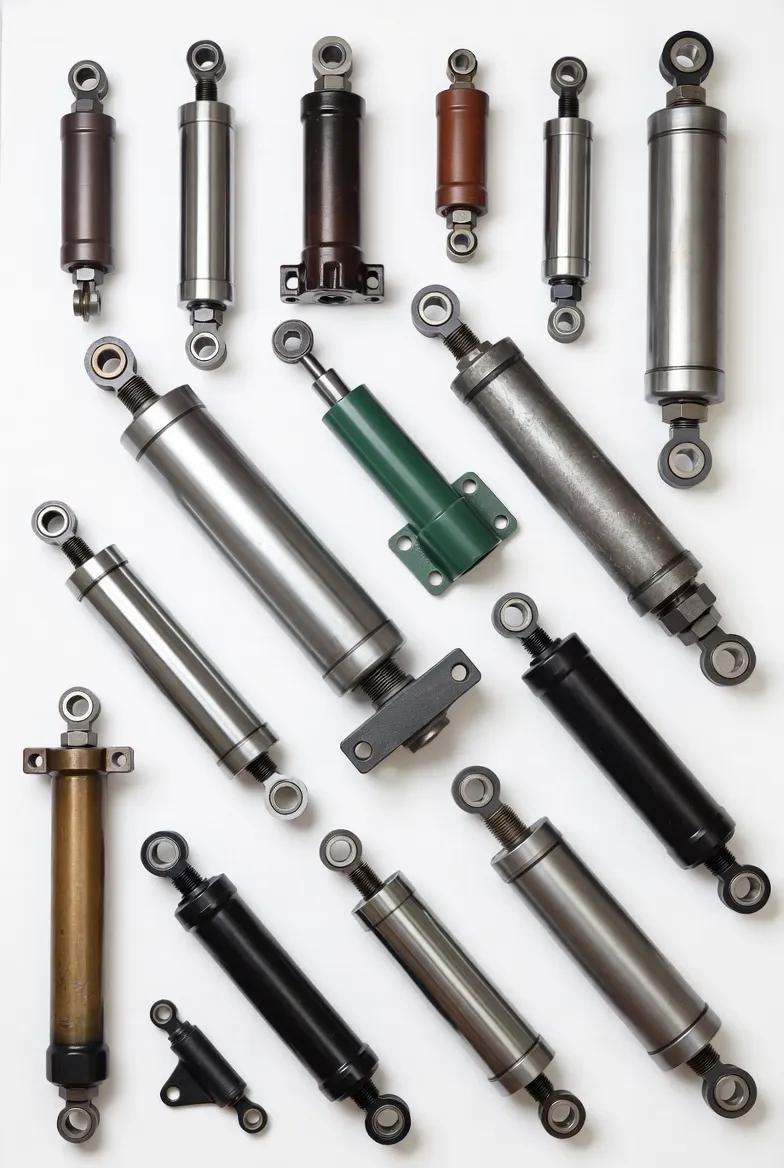
Step 4: The Retracted Length and Pin Dimensions
Even if you have perfectly measured the bore, rod, and stroke, a replacement hydraulic cylinder will be completely useless if it cannot physically mount onto your heavy machinery. The spatial envelope designated for the actuator is strict. The most vital measurement for ensuring proper installation fitment is the retracted length, also frequently referred to as the dead length or the pin to pin center distance.
- ✔️
Measuring Center to Center: With the hydraulic cylinder completely collapsed the rod pushed entirely into the barrel you must measure the distance from the absolute center of the rear mounting pin hole to the absolute center of the front rod mounting pin hole. This measurement guarantees that the new cylinder will fit between the welded steel brackets on your equipment chassis without binding or requiring structural modification.
- ✔️
Pin Hole Diameters: The steel pins that secure the cylinder to the machine endure massive shear forces during operation. You must use digital calipers to measure the inside diameter of the mounting holes on both the base and the rod end. Common pin sizes range from 1.0 inch to 3.0 inches depending on the tonnage of the equipment. A replacement cylinder with pin holes that are too small will obviously not install, while holes that are too large will cause severe mechanical slop, leading to rapid bearing destruction and erratic machine movement.
- ✔️
Mounting Widths: Do not forget to measure the physical width of the mounting clevis or crosstube. If the mounting bracket on your cylinder is 3 inches wide, but the receiving bracket on your tractor is only 2.5 inches wide, the cylinder will not slide into position. Measure the overall width of both ends to ensure seamless integration.

Step 5: Identifying Port Sizes and Orientations
The final stage in mastering how to measure a hydraulic cylinder involves the fluid connectivity architecture. Even if the physical dimensions of the cylinder are perfect, it is useless if you cannot connect the high pressure hydraulic hoses from your power unit.
You must identify the thread type and size of the hydraulic ports located on the cylinder barrel. Common port thread standards include SAE O-Ring Boss (ORB), National Pipe Thread (NPT), and various metric specifications. Utilizing a thread pitch gauge is highly recommended to ensure absolute accuracy, as forcing a mismatched hydraulic fitting into a cylinder port will instantly strip the threads and create a lethal high pressure leak. Furthermore, you must note the port orientation relative to the mounting pins. In many cramped machine compartments, if the ports are facing ninety degrees in the wrong direction, the hydraulic hoses will crimp against the chassis and fail. Specifying inline ports versus 90-degree offset ports is critical for a clean, professional installation.

Conclusion: The Foundation of Fluid Power Success
Measuring a hydraulic cylinder is the critical first step in maintaining the productivity and safety of heavy machinery. By mastering the use of precision calipers, understanding the profound mathematical differences between bore, rod, and stroke dimensions, and accurately identifying mounting architectures, engineering professionals can specify exact replacement actuators with absolute confidence. A meticulously measured and properly sized hydraulic cylinder guarantees seamless installation, prevents catastrophic structural buckling under load, maximizes the efficiency of the hydraulic pump, and ensures that the world’s most powerful industrial equipment continues to operate at peak performance for years to come.