
Fluid Power System Components
What Accessories Are Commonly Used with Hydraulic Cylinders?
A comprehensive technical survey of hydraulic cylinder accessories including mounting attachments, rod end fittings, sensors, valves, and protective components that enhance actuator functionality and reliability.

The Essential Role of Accessories in Hydraulic Cylinder Performance
In the sophisticated domain of fluid power system design and integration, the question of what accessories are commonly used with hydraulic cylinders reveals a vast ecosystem of complementary components that dramatically extend actuator functionality, enhance reliability, simplify installation and maintenance, and enable precise control and monitoring capabilities. While the hydraulic cylinder itself serves as the primary linear force generator, it is the careful selection and integration of appropriate accessories mounting attachments, rod end fittings, alignment couplers, position sensors, flow control valves, and protective devices that transforms a basic actuator into a fully functional, reliable, and controllable machine element optimized for its specific application.
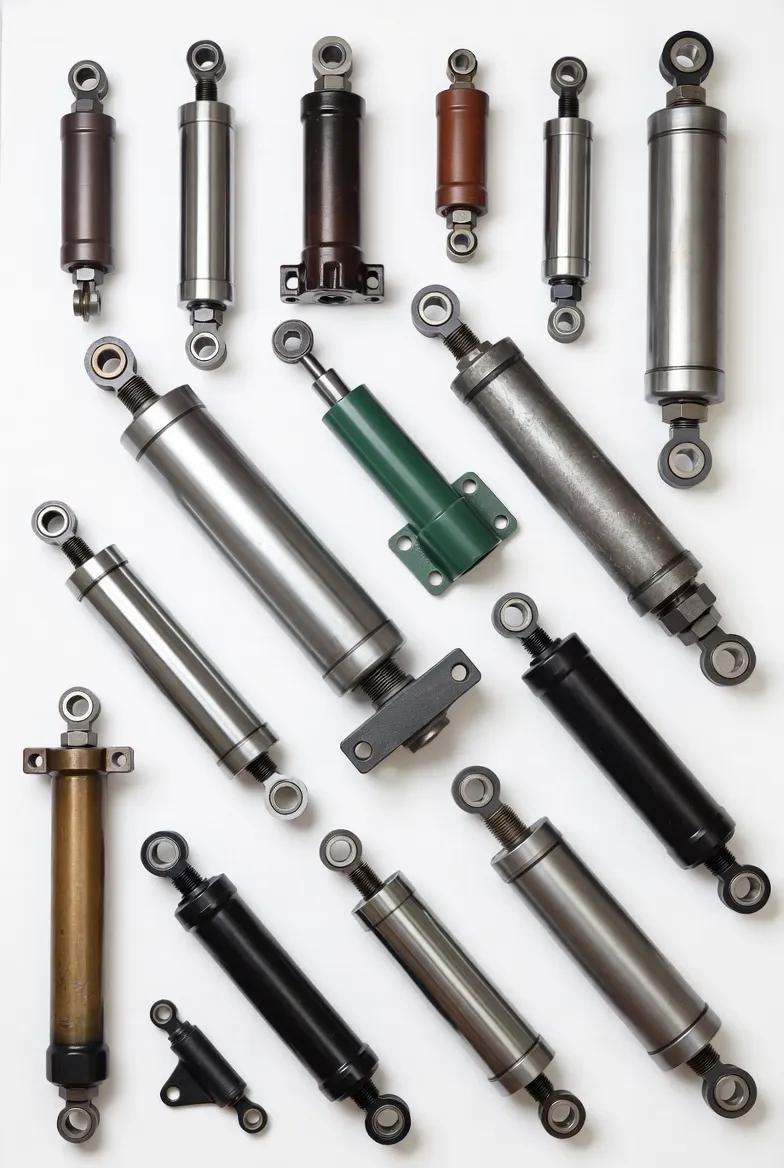
Hydraulic cylinder accessories span a remarkably diverse range of component categories, each addressing specific functional requirements or operational challenges. Mounting accessories including clevis brackets, trunnion mounts, flange adapters, and spherical bearings enable the cylinder to be properly integrated into the machine structure while accommodating the degrees of freedom required by the application kinematics. Rod end accessories such as spherical rod eyes, clevis ends, and alignment couplers provide the critical mechanical interface between the moving piston rod and the driven load, transmitting forces while compensating for misalignment and preventing the transmission of damaging bending moments to the rod and seals. Fluid control accessories including counterbalance valves, flow control valves, and pilot operated check valves mounted directly to the cylinder ports provide critical load holding, speed regulation, and safety functions that are essential for many lifting and positioning applications.
This comprehensive technical guide provides an authoritative survey of the hydraulic cylinder accessories most commonly employed across industrial and mobile equipment applications. We will explore the design features, selection criteria, and installation considerations for each accessory category, examining how these components contribute to overall system performance, reliability, and safety. From the robust mounting hardware that anchors massive construction cylinders to the precision sensors enabling closed loop position control in automated manufacturing, this exhaustive examination equips engineers, system designers, and maintenance professionals with the knowledge necessary to specify and integrate hydraulic cylinder accessories that optimize actuator performance and machine productivity.
Mounting Accessories: The Foundation of Cylinder Installation
Proper mounting accessories ensure secure cylinder attachment, accommodate necessary degrees of freedom, and prevent the transmission of damaging side loads to the actuator.
Clevis Mounts and Clevis Brackets
Clevis mounts represent the most widely used pivoting attachment for hydraulic cylinders, providing a simple, robust connection that permits angular movement in a single plane. The clevis bracket, typically fabricated from steel plate or forged construction, features a U-shaped yoke with precision machined pin holes that accept a hardened steel clevis pin. Clevis mounts are available in both fixed and removable configurations, with fixed clevises welded or bolted to the cylinder and removable clevises threaded onto the rod end to facilitate disassembly and field replacement. The selection of proper clevis pin diameter and material is critical to preventing premature wear, fatigue failure, or pin seizure. Clevis pins should be sized to provide adequate bearing area based on the maximum cylinder force, with pin shear strength verified to exceed worst case loading conditions. Regular lubrication of clevis pins through grease fittings extends service life and prevents the galling and fretting corrosion that can lead to pin seizure and catastrophic failure.
Trunnion Mounts and Spherical Bearings
Trunnion mounts provide an intermediate pivoting support along the cylinder barrel, enabling the entire cylinder assembly to pivot about a fixed axis. This configuration is particularly advantageous when the cylinder center of gravity should be positioned at the pivot point to minimize inertial moments, or when space constraints preclude end mounting. Trunnion pins or shafts are welded or bolted to the cylinder barrel and supported by pillow block bearings or machined saddles in the machine structure. Spherical bearings, also known as spherical plain bearings or rod end bearings, are essential accessories that accommodate both angular misalignment and the minor dimensional variations inherent in fabricated structures. These bearings feature a spherical inner ring housed within a spherical outer race, allowing multi axis articulation while maintaining precise load transmission. Spherical bearings are commonly installed in cylinder rod ends and mounting clevises to prevent the transmission of bending moments to the piston rod, dramatically extending seal life and preventing rod scoring. The selection of spherical bearings with appropriate load ratings, corrosion resistance, and sealing for the operating environment is essential for long term reliability.

Rod End Attachments and Alignment Accessories
The rod end interface between the cylinder and the driven load is a critical design point where appropriate accessories prevent premature wear and ensure reliable force transmission.
?Threaded Rod Ends and Clevis Ends
Threaded rod end attachments provide the mechanical connection between the piston rod and the driven load, and are available in a variety of configurations to suit specific application requirements. Male threaded rod ends feature external threads that screw directly into a tapped hole in the driven member, while female threaded rod ends accept a mating male threaded component. Clevis ends provide a forked connection that accommodates a mating clevis or tang on the driven member, secured by a cross pin. The selection of appropriate thread size, thread form, and material strength grade for rod end attachments is governed by the same engineering principles applied to rod end thread sizing. Coarse threads provide faster assembly but reduced tensile stress area, while fine threads offer superior fatigue resistance and vibration resistance. The attachment should be specified with adequate thread engagement length to develop the full tensile strength of the rod, with thread locking features such as jam nuts, locking compounds, or mechanical locking devices incorporated to prevent loosening under vibration and cyclic loading.
?Alignment Couplers and Self Aligning Rod Ends
Alignment couplers represent sophisticated hydraulic cylinder accessories designed to actively compensate for misalignment between the cylinder and the driven load, preventing the transmission of bending moments to the piston rod. These devices typically incorporate a spherical bearing or universal joint mechanism housed within a robust coupling body that threads onto the rod end. As the cylinder strokes and the driven mechanism articulates, the alignment coupler accommodates angular misalignment in multiple planes while transmitting axial forces with minimal bending moment transfer. Self aligning rod ends incorporate spherical bearing elements directly into the rod end attachment, providing misalignment accommodation without the additional length of a separate coupler. For applications where misalignment is unavoidable due to structural deflections, thermal expansion, or manufacturing tolerances, alignment couplers and self aligning rod ends are essential accessories that dramatically extend hydraulic cylinder seal and bearing life. The selection of alignment couplers should consider the required angular misalignment range, axial load capacity, and environmental sealing to prevent contamination ingress into the bearing elements.

Fluid Control Valves and Manifold Accessories
Valves mounted directly to hydraulic cylinders provide critical load holding, speed control, and safety functions essential for many applications.
Counterbalance Valves and Load Holding Valves
Counterbalance valves, also known as overcenter valves, are among the most critical hydraulic cylinder accessories for lifting and load holding applications. These valves are typically mounted directly to the cylinder port or manifold and function to prevent uncontrolled load descent in the event of hydraulic hose failure or directional valve shift. The counterbalance valve remains closed, hydraulically locking the load in position, until pilot pressure from the opposite cylinder port reaches a preset threshold, at which point the valve modulates open to allow controlled descent. The pilot ratio of the counterbalance valve must be carefully matched to the cylinder area ratio and application dynamics to ensure stable operation without oscillation or chatter. Counterbalance valves also provide thermal expansion relief, preventing pressure buildup in the trapped fluid volume as ambient temperature increases. For critical lifting applications involving suspended loads, counterbalance valves are essential safety accessories that prevent catastrophic load drops and protect personnel and equipment.
Flow Control Valves and Velocity Fuses
Flow control valves mounted directly to hydraulic cylinders provide precise regulation of piston speed independent of load variations. Pressure compensated flow control valves maintain a constant flow rate regardless of changes in load pressure, ensuring consistent cylinder velocity throughout the stroke. These valves are particularly valuable in applications where multiple cylinders must operate synchronously or where precise speed control is essential for product quality. Velocity fuses, also called hose break valves, are safety accessories that detect the sudden increase in flow rate characteristic of a catastrophic hose failure and automatically close to prevent uncontrolled load descent or fluid loss. These devices are installed in the cylinder port and are calibrated to remain open during normal operation while closing rapidly when flow exceeds a predetermined threshold. Velocity fuses provide an additional layer of safety beyond counterbalance valves and are particularly valuable in applications where hose damage from external sources is a credible risk.
Pilot Operated Check Valves for Position Locking
Pilot operated check valves are hydraulic cylinder accessories that provide positive load locking by trapping fluid in the cylinder when the directional control valve is in the neutral or centered position. Unlike counterbalance valves which modulate flow during controlled descent, pilot operated check valves provide an absolute seal that prevents any movement until pilot pressure is intentionally applied to open the valve. These valves are extensively employed in outrigger cylinders on mobile cranes, aerial work platform stabilizers, and other applications where absolute position locking is required for safety. Pilot operated check valves are typically available in both single and double configurations, with double pilot operated check valves locking both cylinder ports to prevent movement in either direction. The mounting of these valves directly to the cylinder eliminates the compliance of external piping that could permit small amounts of cylinder movement even with the valve closed, providing the rigidest possible load locking.
Position Sensing and Monitoring Accessories
Modern hydraulic cylinder accessories increasingly incorporate electronic sensors and monitoring devices that enable precision control, condition monitoring, and predictive maintenance capabilities.
- ?
Linear Position Transducers and Magnetostrictive Sensors: Linear position transducers are essential hydraulic cylinder accessories for applications requiring precise position feedback for closed loop control or automated sequencing. Magnetostrictive sensors employ the principle of magnetic field interaction with a waveguide to provide absolute position measurement with exceptional accuracy and resolution, typically to within a few thousandths of an inch. These sensors are installed within the hollow piston rod of specially prepared cylinders, with the position magnet mounted on the piston and the sensing element extending the full stroke length. The sensor electronics are housed in a protected enclosure at the rod end and provide analog or digital position output signals compatible with modern machine controllers. Magnetostrictive sensors offer significant advantages including absolute position measurement that does not require homing after power interruption, immunity to contamination and vibration, and the ability to measure multiple positions along the stroke with a single sensor for applications requiring intermediate position detection.
- ?
Pressure Transducers and Load Sensing Accessories: Pressure transducers mounted at the cylinder ports provide real time measurement of hydraulic pressure, enabling calculation of actual cylinder force output and detection of abnormal conditions such as excessive load, binding, or seal degradation. Dual pressure transducers on both cylinder ports allow continuous monitoring of the pressure differential across the piston, which directly correlates to the net force being generated. Load sensing pins incorporate strain gauge technology within the clevis pin or mounting pin to directly measure the force transmitted through the cylinder attachment. These sophisticated pins provide force measurement independent of friction and seal losses, enabling precise process control in applications such as press force monitoring, assembly verification, and web tension control. The integration of pressure and force sensing with position feedback enables comprehensive hydraulic cylinder performance monitoring and supports predictive maintenance strategies.
- ?️
Temperature Sensors and Proximity Switches: Temperature sensors integrated into hydraulic cylinders provide valuable data for condition monitoring and thermal management. Elevated cylinder body temperature can indicate internal leakage, excessive friction, or inadequate cooling, providing early warning of developing problems before catastrophic failure occurs. Thermocouples or resistance temperature detectors can be embedded in the cylinder head gland or barrel wall to provide continuous temperature monitoring. Proximity switches are simple but reliable accessories for detecting cylinder end of stroke or intermediate positions. Magnetic proximity switches are actuated by a magnet embedded in the piston, providing a non contact switching signal when the piston reaches a specific position. These switches are widely used for sequencing operations, end of stroke confirmation, and safety interlocking. Multiple proximity switches can be installed along the cylinder barrel to provide discrete position feedback at a fraction of the cost of continuous position transducers.

Protective Accessories and Environmental Sealing
Protective accessories shield hydraulic cylinders from environmental contamination, physical damage, and corrosion, dramatically extending service life in demanding applications.
Rod Bellows and Protective Boots
Rod bellows and protective boots are among the most effective hydraulic cylinder accessories for extending service life in contaminated environments. These flexible protective covers completely encapsulate the exposed portion of the piston rod, shielding it from abrasive dust, moisture, chemical splash, weld spatter, and physical impact damage. Bellows are available in a variety of materials including neoprene, silicone, polyurethane, and specialty compounds selected based upon the specific chemical and thermal environment. Proper bellows installation includes adequate venting to prevent pressure differentials that could cause bellows collapse or ballooning during cylinder operation. For extremely abrasive environments such as sandblasting, mining, or foundry applications, metallic telescoping rod covers provide the ultimate in rod protection, albeit at higher cost and with greater space requirements. While rod bellows represent an additional initial investment, the resulting extension of cylinder service life and reduction in contamination related failures typically yields a compelling return on investment in severe duty applications.
Port Flanges and High Pressure Fittings
Hydraulic cylinder port connections utilize a variety of specialized fittings and flanges designed to provide reliable, leak free connections at operating pressures that may exceed five thousand PSI. SAE four bolt flange connections are the standard for larger cylinder ports, providing robust, high flow connections that resist loosening under vibration. Split flange kits include the flange halves, O-ring seal, and bolts required to connect hydraulic hoses or tubing to the cylinder port. The O-ring seal is captured in a precision machined groove that compresses the seal during assembly, providing reliable static sealing that accommodates minor surface irregularities. For smaller cylinders, threaded port connections utilizing SAE O-ring boss fittings or metric ISO 6149 fittings provide compact, reliable connections. The selection of appropriate port fitting types and materials must consider operating pressure, flow requirements, vibration levels, and compatibility with the hydraulic fluid and environmental conditions.
Stop Tubes and External Guides
Stop tubes are essential hydraulic cylinder accessories for long stroke applications where the fully extended rod has insufficient column strength to safely support the maximum compressive load without buckling. A stop tube is a spacer installed between the piston and the head gland that limits the rod extension, effectively increasing the minimum distance between the piston bearing and the rod bearing support. This increased bearing span dramatically improves column stability and buckling resistance without requiring a larger diameter rod. External guides and support bearings are accessories installed on the machine structure to support the rod or attached load against side loading and gravitational deflection. These guides are particularly important for long stroke horizontal cylinders where rod sag under its own weight can cause binding and accelerated seal wear. Proper selection and installation of stop tubes and external guides based upon manufacturer engineering data and Euler column calculations prevents the rod bending and buckling failures that are among the most serious and costly hydraulic cylinder failure modes.
The broad spectrum of what accessories are commonly used with hydraulic cylinders reflects the remarkable versatility of fluid power actuation and the engineering ingenuity applied to solving specific application challenges. From the robust mounting hardware anchoring massive cylinders to the precision sensors enabling micron level position control, these accessories transform basic actuators into fully functional machine elements optimized for their intended duty.

Conclusion: Optimizing Hydraulic Cylinder Performance Through Proper Accessory Selection
Hydraulic cylinder accessories represent far more than optional add ons they are essential components that fundamentally enable proper actuator function, protect against premature failure, and unlock advanced control and monitoring capabilities. Mounting accessories ensure secure, properly aligned installation that prevents damaging side loads. Rod end attachments and alignment couplers transmit forces while accommodating the kinematic degrees of freedom required by the application. Fluid control valves provide critical safety functions including load holding, speed regulation, and hose break protection. Position sensors and monitoring devices enable precision control and predictive maintenance that maximize machine productivity and minimize unplanned downtime. Protective accessories including bellows, boots, and guides shield cylinders from the environmental hazards that are the primary cause of premature seal and surface failures. By understanding the full spectrum of available hydraulic cylinder accessories and their appropriate selection criteria, engineers and system designers can specify fluid power actuators that deliver optimal performance, reliability, and safety across the most demanding industrial and mobile equipment applications.
“`