
Fluid Power Engineering Mastery
How to Bleed Air from a Hydraulic Cylinder: The Ultimate Maintenance Guide
An authoritative technical analysis detailing the precise protocols for purging trapped air, preventing cavitation, neutralizing the diesel effect, and restoring absolute rigidity to industrial fluid power linear actuators.

The Invisible Enemy of Fluid Power Precision
In the highly complex world of mechanical engineering, heavy manufacturing, and mobile construction equipment, hydraulic systems reign supreme due to one fundamental law of physics: liquids are practically incompressible. When a hydraulic pump forces oil into a cylinder, that volume of fluid transfers mechanical energy instantly and rigidly, allowing massive machines to lift hundreds of tons with micrometer precision. However, this entire system collapses when a foreign, highly compressible substance invades the closed loop architecture. That substance is atmospheric air. Understanding exactly how to bleed air from a hydraulic cylinder is one of the most critical and fundamental skills required of any fluid power engineer or heavy equipment maintenance technician.
Air can infiltrate a hydraulic system through a variety of vectors. It frequently enters during routine maintenance, such as when a mechanic replaces a blown high pressure hose, swaps out a directional control valve, or installs a completely rebuilt hydraulic cylinder. It can also be drawn into the system through a microscopic leak in the pump suction line, or when the main reservoir fluid level drops too low, allowing the pump to suck in a vortex of air. Regardless of how the air enters, once it reaches the internal chambers of a hydraulic cylinder, the actuator ceases to function as a rigid column of fluid. Instead, the trapped air bubble acts like a giant, unpredictable mechanical spring, destroying the performance, accuracy, and safety of the entire machine.
From an authoritative engineering perspective evaluated against international fluid power maintenance standards, failing to remove trapped air in a hydraulic system leads to consequences far worse than sluggish performance. Trapped air causes severe kinematic instability, explosive thermal degradation known as the diesel effect, and catastrophic damage to both the internal elastomeric seals and the steel cylinder barrel. This comprehensive technical manual will meticulously break down the diagnostic signatures of aeration, the destructive physics of cavitation, and the precise, step by step engineering protocols required to safely and effectively purge air from any industrial hydraulic actuator.
Diagnostic Signatures: How to Identify Trapped Air
Before initiating the bleeding process, an engineer must accurately diagnose the presence of aeration. A hydraulic system contaminated with air will exhibit highly specific, observable physical and acoustic anomalies during operation.
The Spongy Cylinder Phenomenon
The most immediate and obvious symptom of air in a hydraulic cylinder is a loss of mechanical rigidity, commonly referred to as a spongy feel. When the operator commands the directional control valve to stop the cylinder mid stroke, the piston rod will not freeze instantly. Instead, the rod will bounce, drift, or settle slightly as the trapped pocket of compressible air compresses under the weight of the payload. If you are operating an excavator boom or a heavy industrial press, this lack of load holding stability poses an extreme, lethal safety hazard.
Jerky Motion and Stick-Slip Kinematics
A healthy hydraulic cylinder extends with a perfectly smooth, fluid velocity. When air is present, the actuator will exhibit erratic, jerky, or chattering motion as it moves through its stroke. This occurs because the hydraulic fluid compresses the air bubble until enough pressure builds up to overcome the static friction of the piston seals. The cylinder violently leaps forward, the pressure drops, the cylinder stalls, and the cycle repeats. This violent stuttering destroys automated assembly line precision and severely fatigues the machine structural mounting pins.

The Thermodynamics of Destruction: The Diesel Effect
Many technicians mistakenly believe that a little trapped air will simply work its way out of the system over time without causing permanent damage. This is a catastrophic engineering fallacy. When air is allowed to remain inside a high pressure hydraulic cylinder, it triggers a devastating thermodynamic reaction known within the fluid power industry as the diesel effect.
Hydraulic systems routinely operate at pressures exceeding three thousand pounds per square inch. When a highly compressible air bubble is suddenly subjected to this massive, instantaneous hydrostatic pressure, the bubble collapses violently. According to the laws of thermodynamics, rapidly compressing a gas generates immense heat. The localized temperature inside that compressed air bubble can instantly spike to over two thousand degrees Fahrenheit. This intense, localized micro explosion superheats the surrounding hydraulic oil, causing it to literally ignite and burn inside the cylinder chamber.
This diesel effect has highly destructive consequences. The burning oil turns into carbon soot, which heavily contaminates the fluid and acts like liquid sandpaper against the polished cylinder barrel. The extreme thermal shock instantly scorches, hardens, and shatters the advanced polyurethane piston seals and wiper rings, guaranteeing an immediate and massive fluid bypass. Furthermore, the violent implosion of the bubbles creates shockwaves that can pit the hardened steel of the cylinder barrel, a process known as cavitation erosion. Purging air is not just about restoring smooth motion; it is entirely about preventing the thermal destruction of the actuator.

Preparation and Critical Safety Protocols
Bleeding a hydraulic cylinder involves intentionally opening a fluid power circuit while it is active. This process presents severe hazards, including high pressure fluid injection injuries. Absolute adherence to safety preparation is non negotiable.
Verify Reservoir Fluid Levels
Before you attempt to bleed air out of the system, you must ensure you have enough fluid to replace the volume of air being expelled. Check the sight glass on the main hydraulic power unit reservoir. Ensure the tank is filled to the absolute maximum operating level with highly filtered, clean hydraulic oil. If the fluid level drops below the pump suction line during the bleeding procedure, the pump will ingest massive amounts of fresh air, completely defeating the purpose of the exercise and potentially burning out the pump.
Zero Load Machine Positioning
You must never attempt to bleed a hydraulic cylinder while it is actively suspending a heavy mechanical payload. Opening a bleed valve or cracking a fitting will instantly depressurize that specific cylinder chamber, causing the load to crash down violently. Ensure the machinery is resting firmly on the ground or is securely blocked up with heavy duty steel cribbing. The cylinder must be allowed to stroke freely without bearing any external mechanical resistance.
Understanding Actuator Orientation
Physics dictates that air bubbles are significantly lighter than hydraulic oil; therefore, trapped air will always migrate to the absolute highest geometric point within the cylinder barrel. Before bleeding, observe the physical mounting orientation of the actuator. If the cylinder is mounted vertically with the rod facing downward, the air will be trapped near the base cap. If it is mounted horizontally, the air will pool along the top crest of the barrel tube. You must manipulate the cylinder or orient your bleeding strategy to target these high points.
Method 1: Utilizing Dedicated Bleed Valves
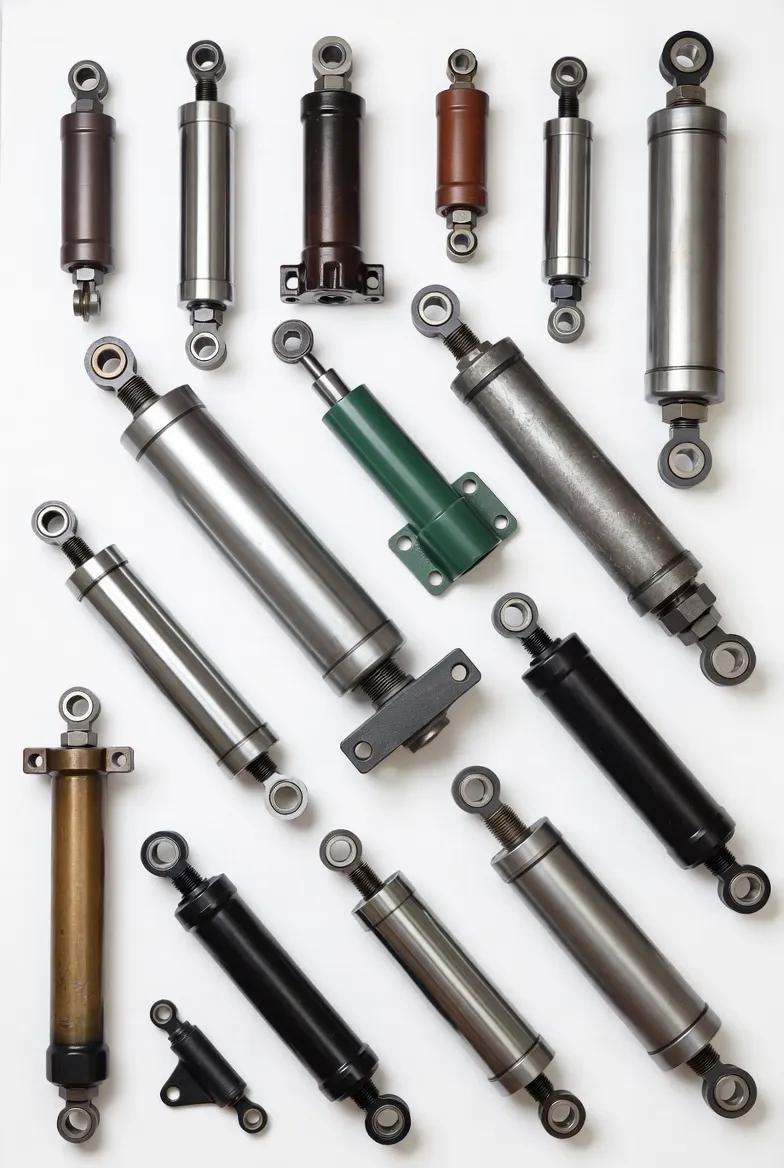
The safest, most efficient, and highly engineered method for purging air from a fluid power actuator is utilizing the dedicated bleed screws. Premium industrial cylinders, especially those deployed in aerospace testing, long stroke marine environments, or high precision manufacturing, are manufactured with small, threaded bleed valves integrated directly into the steel cylinder head and base cap.
The Bleed Valve Procedure
- 1.
Position the Cylinder: Actuate the hydraulic system to extend the cylinder fully. This action forces the internal piston to push the volume of oil and any trapped air toward the rod end chamber.
- 2.
Reduce System Pressure: If your machine has a variable pressure relief valve, dial the system pressure down to the absolute minimum required to move the cylinder. Bleeding at 3000 PSI is incredibly dangerous; bleeding at 200 PSI is highly controlled and safe.
- 3.
Open the Valve: Locate the bleed screw on the rod end gland. Place a thick rag over the valve to catch fluid splatter. Using the appropriate hex key or wrench, slowly crack the bleed valve open counterclockwise by half a turn. Do not remove the screw entirely.
- 4.
Observe the Effluent: You will immediately hear a hissing sound as the pressurized air escapes, followed by a sputtering, foamy mixture of air and hydraulic oil. Keep the valve open while a helper slowly actuates the cylinder back and forth slightly.
- 5.
Secure and Repeat: Once the sputtering stops and a solid, clear, bubble free stream of hydraulic oil flows continuously from the valve, the air is purged. Firmly tighten the bleed screw. You must then retract the cylinder fully and repeat this exact process on the base end bleed valve to clear the opposite chamber.
Method 2: Bleeding by Cracking the Hydraulic Fittings
Unfortunately, the vast majority of standard mobile hydraulic cylinders found on tractors, excavators, and basic industrial machinery are not manufactured with dedicated bleed valves to reduce production costs. When facing an actuator without bleed screws, maintenance technicians must employ a highly meticulous alternative method known as cracking the fittings.
This method requires significantly more caution. You are essentially using the main hydraulic hose connection as an improvised bleed valve. Because the threaded port is much larger than a tiny bleed screw, cracking a high pressure line poses an exponentially higher risk of a massive fluid blowout or severe high pressure injection injury. Full personal protective equipment, including heavy duty leather gloves and face shields, is absolutely mandatory.
The Cracking Procedure
Identify the highest hydraulic hose connection on the cylinder based on its physical orientation. Turn the machine on and extend the cylinder completely. Have an assistant hold the control lever so that a very slight amount of pressure remains in the line. Wrap a heavy shop rag entirely around the steel hose fitting.
Using an appropriately sized wrench, very slowly crack the fitting nut loose by turning it a fraction of an inch counterclockwise. You are not removing the hose; you are merely breaking the mechanical seal just enough to allow pressurized gas to escape the threads. The rag will catch the sputtering, aerated oil. Once the hissing stops and clear fluid weeps out, immediately retighten the fitting to the specified factory torque. Stroke the cylinder in the opposite direction and repeat the process for the other hose connection.

Method 3: Self Bleeding and Systemic Purging Cycles
For many modern, well designed fluid power systems, physically opening the hydraulic lines is not always necessary. If the machine architecture allows the cylinder to be positioned so that the fluid ports are located at the absolute highest point of the barrel, the cylinder can essentially bleed itself through cyclic purging.
This engineering technique relies on fluid flow to physically push the trapped air out of the cylinder chambers, through the high pressure hoses, back through the directional control valves, and ultimately returning it to the main hydraulic power unit reservoir. Once the aerated oil enters the large reservoir, the fluid velocity drops dramatically. The reservoir is typically engineered with internal steel baffle plates. These baffles force the oil to travel a long, circuitous route before re entering the pump suction line. This extended dwell time inside the tank gives the lighter air bubbles the opportunity to rise to the surface of the oil and dissipate harmlessly out through the reservoir breather cap.
The Cyclic Purging Execution
To execute a systemic purge, verify the machine is under zero mechanical load. Turn on the hydraulic pump and set the engine or electric motor to a low idle speed to prevent violent fluid turbulence. Slowly actuate the control valve to extend the cylinder fully until it bottoms out against the end cap. Hold the pressure for two seconds. Then, slowly retract the cylinder fully until it bottoms out on the opposite end, again holding the pressure for two seconds. Repeat this full extension and retraction cycle continuously for ten to fifteen minutes. You will physically notice the cylinder motion transforming from jerky and hesitant to perfectly smooth and rigid as the entrapped air is cycled back to the main tank.

Conclusion: The Imperative of a Pure Fluid Medium
Knowing how to bleed air from a hydraulic cylinder is a fundamental prerequisite for maintaining the efficiency, precision, and longevity of any heavy industrial machinery. Trapped air is not merely a nuisance; it is a highly destructive force that induces kinematic instability, causes lethal load drifting, and triggers explosive thermal degradation through the diesel effect and cavitation. By strictly adhering to safety protocols, utilizing dedicated bleed valves when available, carefully cracking hydraulic fittings when necessary, and employing systemic cyclic purging, maintenance professionals can ensure the fluid power system operates exactly as engineered. A properly bled hydraulic cylinder guarantees smooth, unyielding mechanical force, protecting the structural integrity of the equipment and ensuring maximum productivity on the factory floor and the construction site.