
Fluid Power Engineering Masterclass
Tie-Rod vs. Welded Hydraulic Cylinders: Which One Do You Need?
An authoritative technical blueprint exploring the metallurgical architecture, fluid dynamic principles, and structural limits of the two most dominant fluid power actuators in the industrial landscape.

The Great Divide in Fluid Power Architecture
In the highly rigorous disciplines of mechanical engineering, heavy equipment manufacturing, and automated industrial fabrication, the deployment of kinetic force must be flawless. When engineers map out the kinematic framework for a new machine, they rely on hydraulic linear actuators to convert the hydrostatic energy of pressurized fluid into unrelenting physical motion. However, long before the first steel plate is cut, procurement specialists and design engineers must confront a fundamental architectural decision: choosing between a tie-rod and a welded body hydraulic cylinder. Making the incorrect selection will inevitably lead to premature mechanical failure, catastrophic fluid blowouts, and highly expensive machine downtime. If you are beginning a new design project, exploring the extensive resources available on our premium hydraulic cylinders platform is a vital first step.
While both variations serve the exact same foundational purpose to push or pull a heavy payload utilizing hydraulic oil they achieve this goal through entirely divergent structural philosophies. A tie-rod hydraulic cylinder utilizes a modular, clamped assembly relying on external threaded steel bolts to hold the pressure vessel together. Conversely, a welded body hydraulic cylinder relies on permanent metallurgical fusion, utilizing advanced automated welding techniques to create a monolithic steel housing. These seemingly subtle manufacturing differences dictate massive variations in their physical footprint, their ability to withstand severe shock loads, their resilience in corrosive environments, and their long term maintenance requirements.
From an authoritative engineering perspective evaluated against international fluid power standards, neither design is universally superior. The optimal choice depends entirely on the specific industrial application. A manufacturing plant manager running a high speed plastic injection molding machine has entirely different reliability requirements than a forestry contractor operating a logging harvester in a subzero, mud filled environment. This comprehensive technical guide will meticulously dissect the anatomical architecture of both designs, contrasting their capabilities in handling extreme hydrostatic fatigue, environmental contamination, and executing predictive maintenance protocols to answer the ultimate question of which one you truly need.
The Anatomy of Tie-Rod Hydraulic Cylinders
The tie-rod design is the historical foundation of industrial fluid power. It is instantly recognized by its bulky square end caps and the prominent external steel rods clamping the assembly together.
Mechanical Clamping Forces
A tie-rod cylinder consists of a central seamless steel barrel flanked by two distinct, removable end caps the head gland and the base cap. To hold these three components together against thousands of PSI of internal fluid pressure, four or more high tensile threaded steel tie-rods are installed around the exterior perimeter. Heavy duty hex nuts are torqued onto the ends of these rods to exact factory engineering specifications. This generates immense mechanical clamping force, sandwiching the barrel tightly between the caps and compressing the static O-rings to establish a perfectly sealed pressure vessel.
NFPA Dimensional Standardization
The defining characteristic of tie-rod cylinders is their adherence to the National Fluid Power Association NFPA standards. This standardization means that a specific bore size, stroke length, and mounting style will share the exact same physical footprint regardless of which brand manufactured it. For a plant manager running a high speed assembly line, this is revolutionary. If an actuator fails, they can immediately source an identical NFPA hydraulic cylinder from a local fluid power distributor, drop it into the exact same mounting brackets, and instantly resume production.

The Architecture of Welded Body Hydraulic Cylinders
In stark contrast to the clamped assembly of a tie-rod unit, the welded body hydraulic cylinder relies on permanent metallurgical fusion. This design was born out of the absolute necessity to survive the brutal, unpredictable forces encountered in heavy mobile equipment operating in hostile outdoor environments.
Monolithic Structural Fusion
In a welded cylinder, the heavy duty base cap is permanently welded directly to the seamless steel cylinder barrel utilizing advanced automated orbital or friction welding techniques. Furthermore, the fluid ports and mounting clevises are also fused directly to the housing. To allow for internal maintenance, the front cylinder head gland is typically threaded securely into the internal diameter of the barrel. By eliminating external tie-rods and square end caps, the welded cylinder creates an incredibly strong, rigid, and monolithic pressure vessel. This solid construction is exactly why robust Agricultural Hydraulic Cylinders are almost universally of the welded variety, allowing them to endure punishing field work without fatigue.
Custom Engineering for Specific Payloads
Unlike tie-rod cylinders that adhere to strict NFPA dimensions, welded body cylinders are almost entirely custom engineered for the specific machinery they operate. The manufacturer of a mining loader dictates the exact stroke length, bore size, and trunnion mounting locations required to fit perfectly within their proprietary chassis design. Because there are no standardized footprints to adhere to, engineers have the ultimate freedom to optimize the fluid dynamics, internal sealing architecture, and metallurgical strength to perfectly match the maximum operational payload of the heavy vehicle.

Head-to-Head Comparison: Evaluating Performance Metrics
To determine the correct actuator for a specific application, engineers must analyze how these differing architectures perform under extreme physical stress, environmental contamination, and tight spatial constraints.
Spatial Envelope and Footprint
Tie-Rod: These cylinders are physically bulky. The large square end caps and the protruding threaded rods require a significant installation footprint. This bulk is generally acceptable in stationary factory machinery.
Welded: These cylinders offer a highly compact, sleek, and streamlined profile. By eliminating the external hardware, engineers can squeeze massive fluid power capabilities into the incredibly tight, confined mechanical spaces of mobile equipment like skid steer loaders or articulated boom lifts.
Tensile Fatigue and Shock Loads
Tie-Rod: When a cylinder extends under extreme pressure, the fluid attempts to blow the end caps off. A tie-rod design relies entirely on the tensile strength of its external rods to hold it together. If subjected to violent shock loads, these rods can physically stretch. When they stretch, the clamping force is lost, the O-rings decompress, and the cylinder suffers a catastrophic blowout.
Welded: The monolithic fused construction of a welded cylinder easily absorbs brutal hydrostatic shockwaves and severe lateral vibrations without stretching or losing its structural integrity.
Environmental Resilience
Tie-Rod: The exposed threads and protruding hardware act as magnets for environmental debris. Mud, ice, concrete dust, and corrosive chemicals pack into the crevices, accelerating severe external oxidation and making disassembly highly difficult.
Welded: The smooth, seamless exterior profile of a welded cylinder naturally sheds mud, water, and debris, making it the only logical and reliable choice for hostile outdoor industrial applications.
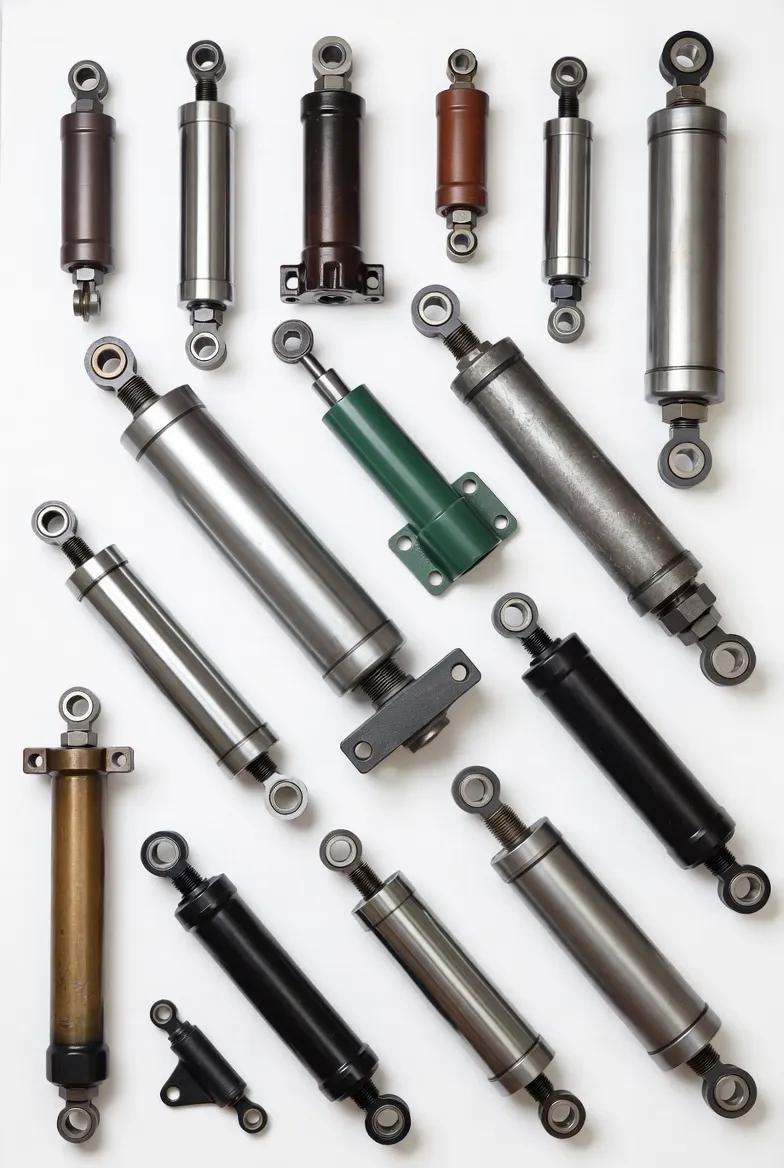
Strategic Industrial Applications: Where They Dominate
Because their strengths and weaknesses perfectly mirror each other, these two cylinder designs dominate entirely different sectors of the global industrial economy. Selecting the right one is about matching the architecture to the environment.
- ✔️
Industrial Automation (Tie-Rod Dominance): Inside climate controlled manufacturing facilities, automated assembly lines, and plastic injection molding plants, tie-rod hydraulic cylinders are king. The environment is clean, violent shock loads are rare, and the absolute priority is minimizing machine downtime through NFPA standardization and rapid, on-site seal replacements using standard hand tools.
- ✔️
Mobile Heavy Equipment (Welded Body Dominance): Conversely, welded hydraulic cylinders completely command the mobile equipment sector. For example, Excavator Hydraulic Cylinders and heavy Dump Truck Hydraulic Cylinders rely exclusively on this custom welded construction. They require the compact design to fit within tight chassis constraints, and they demand the indestructible monolithic welded steel strength to survive decades of violent shock loads, abrasive mud, and corrosive elements without suffering tensile blowout failures.

Making the Right Choice for Your Fluid Power Network
The long term total cost of ownership for a fluid power system is heavily influenced by your initial architectural choice. While a tie-rod cylinder might be cheaper to purchase and easier to rebuild initially, placing it on a piece of outdoor forestry equipment will guarantee relentless failure and massive replacement costs. Similarly, over-engineering an indoor conveyor belt with custom welded cylinders will make routine seal maintenance an agonizing, time consuming chore requiring a specialized hydraulic breakout bench.
Modern fluid power engineering is also rapidly evolving with the integration of predictive maintenance sensors. Regardless of whether you choose a tie-rod or welded design, specifying cylinders equipped with embedded linear position sensors and pressure transducers allows your control systems to monitor exact cycle counts and pressure spikes. This data driven approach allows maintenance teams to schedule targeted seal replacements long before a catastrophic failure ever occurs on the production floor.

Conclusion: The Precision of Engineering Choice
Understanding the defining differences between tie-rod and welded hydraulic cylinders is the fundamental bedrock of engineering a reliable fluid power system. There is no universally superior design; there is only the correct design for a specific operational environment. By analyzing the critical factors of physical space constraints, anticipated shock loads, environmental exposure to corrosive debris, and the logistical realities of long term maintenance, engineering professionals can specify the exact actuator required. Choosing the right architectural design ensures that whether powering a delicate robotic manufacturing arm or driving the boom of a massive mining excavator, the hydraulic system will deliver uncompromising, unyielding, and safe kinetic force.