
Advanced Fluid Power Quality Assurance
Hydraulic Cylinder Pressure Testing: ISO Standards and Quality Control Procedures
An authoritative engineering blueprint detailing hydrostatic proof testing, internal leakage diagnostics, strict ISO compliance mandates, and the definitive quality assurance protocols required to guarantee absolute mechanical reliability in fluid power systems.

The Absolute Necessity of Hydrostatic Validation
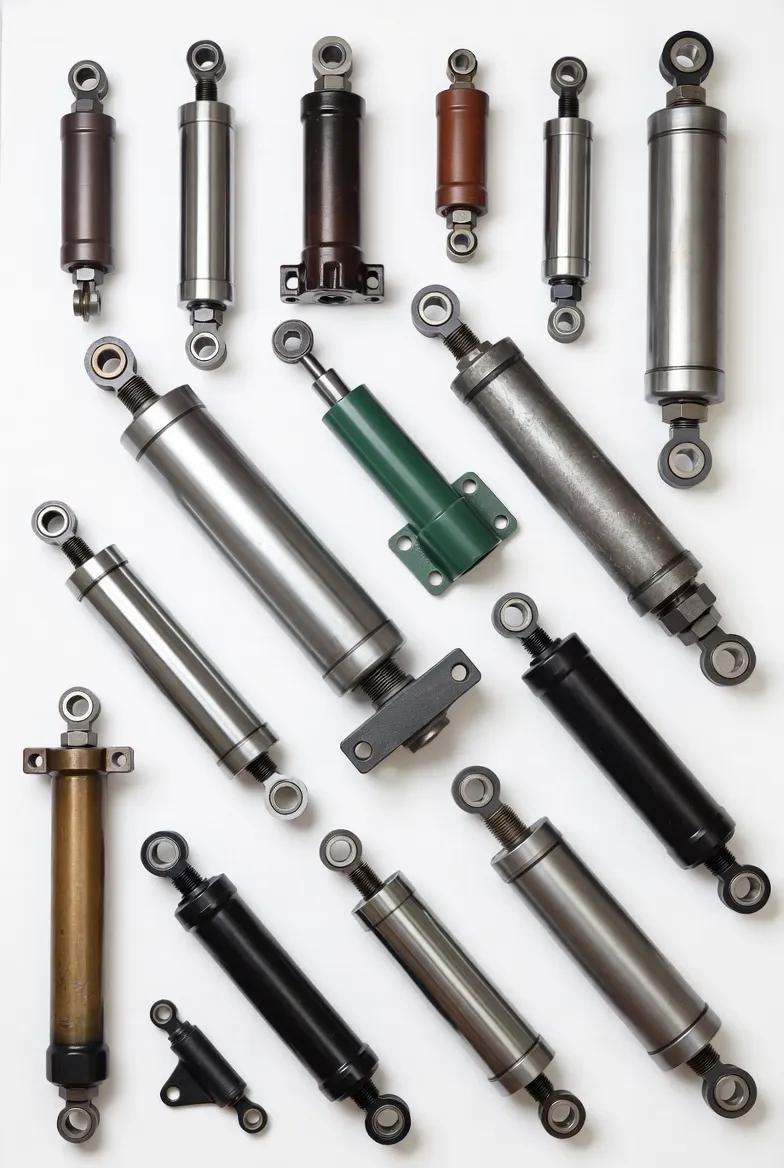
In the highly intensive disciplines of commercial earthmoving, deep underground mining, aerospace support, and automated heavy manufacturing, fluid power systems represent the undisputed foundation of kinetic force. Hydraulic cylinders are the critical mechanical actuators that convert the immense hydrostatic pressure of synthetic fluid into perfectly controlled linear motion. Because these pressure vessels routinely operate at internal pressures exceeding five thousand pounds per square inch, any structural or elastomeric flaw is not merely an operational inconvenience; it is a severe safety hazard capable of causing catastrophic equipment failure and lethal fluid injection injuries. Therefore, before any actuator is deployed into the field, it must undergo rigorous hydraulic cylinder pressure testing. To explore the absolute highest industry standards for pre-tested fluid power components, visiting our premium hydraulic cylinders platform is a mandatory first step for procurement engineers.
Quality control in fluid power manufacturing cannot rely on visual inspections or theoretical metallurgical calculations alone. The only definitive method to verify the structural integrity of the steel welds, the micro-honed finish of the barrel, and the sealing capability of the internal polyurethane polymers is through empirical hydrostatic testing. A properly executed testing protocol forces the cylinder into conditions that intentionally exceed its standard operational envelope. By pushing the actuator to its physical limits in a controlled laboratory environment, engineers can confidently guarantee that it will survive the brutal, unpredictable reality of the industrial job site.
From an authoritative engineering perspective evaluated against international manufacturing criteria, executing these tests requires strict adherence to standardized procedures. This comprehensive technical guide will meticulously dissect the specific ISO standards governing fluid power acceptance, explore the exact physics of proof pressure and internal leakage testing, detail the advanced computerized diagnostic equipment utilized in modern manufacturing, and provide the definitive quality control protocols required to certify a hydraulic cylinder for heavy-duty industrial deployment.
Decoding the Directives: ISO Standards for Fluid Power
The global manufacturing industry relies on the International Organization for Standardization to establish the exact empirical baselines for hydraulic cylinder pressure testing. Compliance with these directives is non-negotiable for premier fluid power fabricators.
ISO 10100: Acceptance Tests
The foundational document governing the quality control of fluid power actuators is ISO 10100. This highly specific engineering standard dictates the exact testing protocols that a newly manufactured cylinder must pass before it can be classified as ready for delivery. It defines the parameters for visual inspection, dynamic stroke verification, proof pressure applications, and the acceptable limits for both internal and external fluid leakage. When a manufacturer certifies that their Excavator Hydraulic Cylinders meet ISO 10100 specifications, it guarantees the end-user that the component has survived a ruthless, standardized diagnostic gauntlet designed to expose any underlying metallurgical or elastomeric weakness.
ISO 4406: Fluid Cleanliness
A crucial, yet frequently overlooked, aspect of pressure testing is the purity of the fluid used on the test bench. ISO 4406 establishes the rigid coding system for quantifying the level of microscopic particulate contamination within hydraulic oil. If a manufacturer conducts pressure testing using contaminated fluid, they will actively inject abrasive silica or metal shavings directly into the brand-new actuator, scoring the barrel before it ever reaches the customer. World-class fabrication facilities utilize dedicated kidney-loop filtration systems on their testing rigs to maintain strict ISO 4406 cleanliness codes, ensuring that sensitive components like Aerial Work Vehicle Hydraulic Cylinders remain perfectly pristine during the diagnostic phase.

The Core Quality Control Procedures: Step-by-Step Diagnostics
Proper hydraulic cylinder pressure testing is not a single event; it is a multi-stage procedural hierarchy. Once the cylinder is fully assembled in a positive-pressure clean room, it is transferred directly to a computerized hydrostatic test bench to begin the validation sequence.
Stage 1: System Purging and Dynamic Stroke Verification
Before high pressure is applied, the cylinder must be completely purged of atmospheric air. Trapped air is highly compressible and can cause violent, explosive thermodynamic reactions known as the diesel effect when suddenly pressurized. The test bench cycles the cylinder back and forth at low pressure, allowing internal bleed valves to eject the air. During this phase, quality control engineers visually verify the dynamic stroke. The piston rod must extend and retract flawlessly, without any shuddering, hesitation, or “stick-slip” motion. Smooth kinematics prove that the internal brass bearing guides are perfectly aligned and the induction-hardened chrome rod is free from lateral binding. This dynamic testing is exceptionally critical for long-reach components like multi-stage Dump Truck Hydraulic Cylinders.
Stage 2: The Proof Pressure Test
Once purged and dynamically verified, the cylinder undergoes the ultimate structural trial: the proof pressure test. The actuator is driven to the absolute end of its stroke, physically stalling the piston against the end cap. The test bench then rapidly escalates the hydrostatic pressure inside the chamber. According to standard industry protocols, the proof pressure is typically set to 1.5 times (or 150 percent) of the cylinder’s maximum designed working pressure. The cylinder is held at this extreme over-pressurized state for a designated dwell time. This brutally tests the tensile strength of the steel barrel, the integrity of the robotic orbital welds, and the extreme extrusion resistance of the polyurethane seals. If the barrel undergoes plastic deformation or a weldment weeps a single drop of oil, the cylinder is immediately rejected.

Stage 3: Advanced Leakage Diagnostics
Structural survival is only half of the engineering equation. A cylinder that does not burst but cannot hold a load rigidly is entirely useless on a job site. Evaluating leakage requires microscopic precision.
External Leakage Verification
External leakage is the most visible form of failure. During the high-pressure dwell phase, quality control technicians meticulously inspect the junction where the chrome rod exits the head gland, as well as every threaded port and welded seam. The tolerance for external leakage is universally absolute zero. Not a single drop of synthetic oil is permitted to escape the pressure vessel. Ensuring perfect external sealing is particularly vital for Agricultural Hydraulic Cylinders operating in sensitive environments where fluid contamination of soil or crops is an unacceptable environmental liability.
Internal Leak-Down Testing
Internal leakage is invisible to the naked eye but causes devastating payload drift. To test this, the cylinder is positioned mid-stroke, and pressure is applied to the blind end while the rod end port is left completely open to the atmosphere. The pressure is held static. The open rod end port is monitored using highly sensitive digital flow meters. If fluid begins to weep out of the open port, it proves that high-pressure oil is physically bypassing the central piston seals within the barrel. Depending on the ISO classification of the actuator, there may be an allowable microscopic bypass rate (measured in drops per minute), but for precision holding equipment like Forklift Hydraulic Cylinders, the tolerance is exceptionally strict to prevent suspended cargo from dropping.

Documentation, Traceability, and Safety Protocols
The modern fluid power manufacturing process relies on massive data collection. A successful pressure test is not just a visual confirmation; it is a legally binding empirical record that protects both the manufacturer and the end-user.
- ✔️
Digital Data Logging: Advanced hydrostatic test benches are fully computerized. During the proof and leakage tests, high-speed transducers record the pressure curves, fluid temperatures, and dwell times in real-time. This data generates a unique digital certificate for every single cylinder produced. This absolute traceability ensures that if a component ever fails in the field, engineers can review its exact factory test profile to determine if the failure was caused by a manufacturing defect or extreme operational abuse by the end-user.
- ✔️
Extreme Safety Mandates: Conducting tests at 5000+ PSI is inherently hazardous. Test facilities are engineered with ballistic-rated steel enclosures and shatterproof polycarbonate viewing windows. If a prototype cylinder undergoes a destructive burst test—where pressure is increased until the steel literally rips apart to verify its ultimate tensile strength—the explosion of fluid and shrapnel is entirely contained. Personnel must adhere to strict Lockout/Tagout (LOTO) depressurization protocols before entering the testing envelope to disconnect the hoses.

Conclusion: The Ultimate Guarantee of Reliability
Hydraulic cylinder pressure testing is the defining boundary between catastrophic risk and guaranteed industrial productivity. Strict adherence to ISO standard quality control procedures transforms a simple assembly of machined steel and polyurethane seals into a certified, highly reliable instrument of kinetic force. By systematically purging atmospheric air, executing ruthless hydrostatic proof pressure overloads, and employing microscopic digital flow meters to verify absolute internal seal integrity, elite manufacturers eliminate the variables of chance. This uncompromising dedication to quality assurance ensures that whether your heavy equipment is erecting coastal infrastructure or extracting deep-earth minerals, the fluid power actuators will perform safely, predictably, and relentlessly. If your organization demands fluid power components that have been engineered, manufactured, and empirically tested to the absolute highest international standards, our technical team stands ready to deliver the ultimate mechanical solution.