
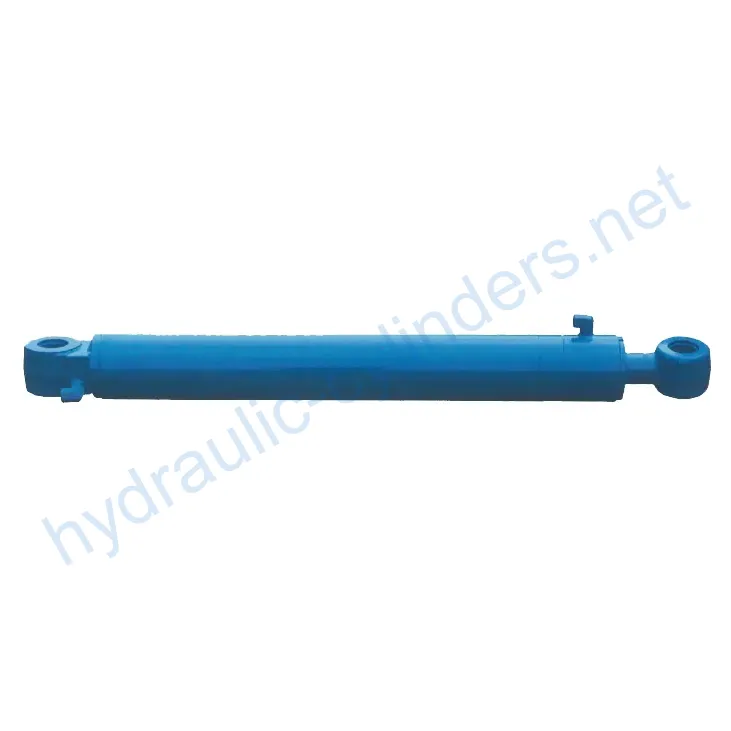
Arm CylinderFor Doosan Middle Excavator DH260LC
Kaip vienas iš hidraulinių cilindrų gamintojų, tiekėjų ir mechaninių produktų eksportuotojų, mes siūlome hidraulinius cilindrus ir daugelį kitų produktų.
Susisiekite su mumis dėl išsamesnės informacijos.
Paštas:sales@hydraulic-cylinders.net
Hidraulinių cilindrų gamintojas, tiekėjas ir eksportuotojas.
Arm Cylinder For Doosan Middle Excavator DH260LC
Įvadas
The arm cylinder is a specially designed hydraulic cylinder that is used to provide linear motion and power to the arm of various types of machinery, such as excavators, cranes, and robotic arms. It plays a crucial role in hydraulic systems, enabling the efficient movement and control of additional tools or attachments. These cylinders not only enable smooth motion but also withstand heavy loads, ensuring the efficient operation and reliability of the machinery under various working conditions.
Apibrėžimas ir paaiškinimas
The arm cylinder is a hydraulic cylinder designed to provide linear motion and power to the arm of various types of machinery. It is a key component in hydraulic systems, allowing for the effective movement and control of additional tools or attachments. These cylinders are capable of smooth motion and can withstand heavy loads, ensuring the efficient operation and reliability of the machinery in various working conditions.
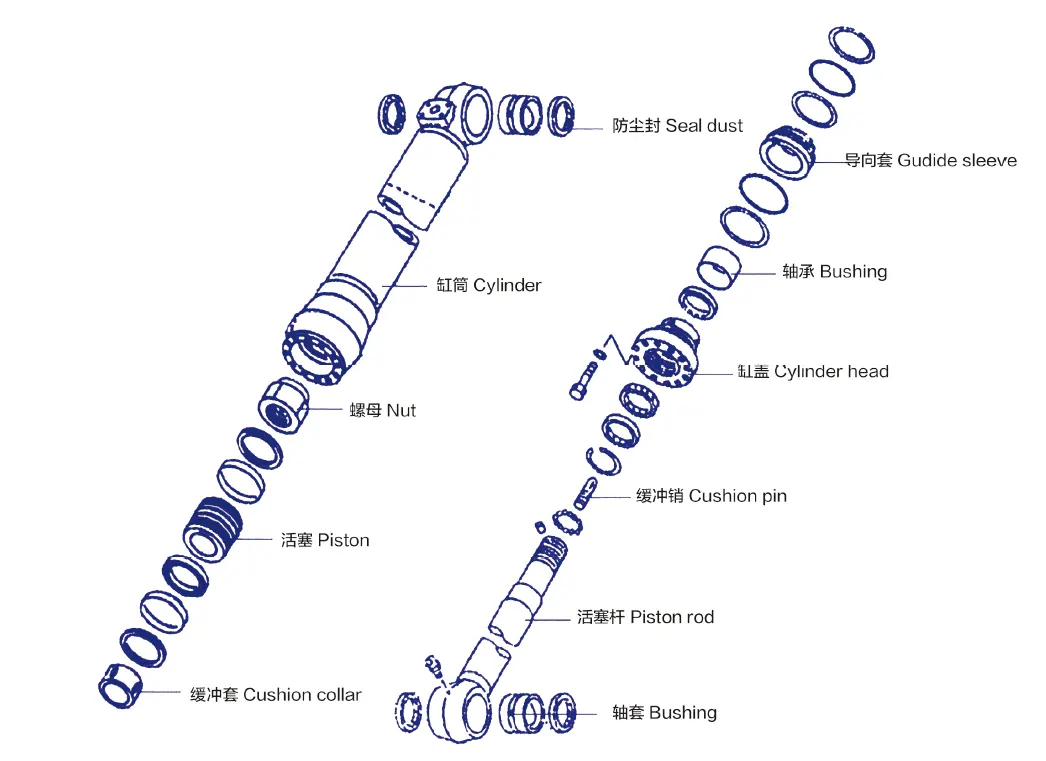
Savybės
- Didelio efektyvumo transmisija: Svirties cilindras užtikrina galingą tiesinį judesį ir jėgą, užtikrindamas aukštą mechaninės svirties našumą atliekant įvairias operacijas.
- Tikslus valdymas: Through a hydraulic system, the arm cylinder allows for precise motion control, making the operation of attached tools more flexible and accurate.
- Patvarumas: Svirtiniai cilindrai paprastai gaminami iš didelio stiprumo medžiagų, pasižyminčių puikiu atsparumu dilimui ir korozijai, todėl jie tinkami ilgalaikiam naudojimui atšiauriomis sąlygomis.
- Daugiafunkcinis prisitaikymas: Šie cilindrai gali būti plačiai naudojami įvairių tipų mašinose, tokiose kaip ekskavatoriai, kranai ir robotinės rankos, pritaikant juos prie skirtingų darbo reikalavimų.
- Lengva priežiūra: Designed for ease of maintenance and replacement, the arm cylinders facilitate regular inspections and maintenance, reducing equipment downtime.

Paraiškos
The arm cylinder finds applications in various industries, including:
1. Statybos inžinerija
Ekskavatoriuose ir kranuose peties cilindras valdo kaušo arba strėlės judėjimą atliekant žemės darbus, medžiagų tvarkymą ir konstrukcijų montavimą.
2. Gamybos pramonė
In automated production lines, the arm cylinder enables the movement of robotic arms for assembly, welding, and handling processes, improving production efficiency and accuracy.
3. Žemės ūkio technika
In agricultural machinery such as harvesters and seeders, the arm cylinder controls the movement of the operating arm for tasks like planting, fertilizing, and harvesting.
4. Kasyba
In mining equipment, the arm cylinder controls the arm movement for mining and material transport operations.
5. Logistika ir transportas
In forklifts and handling robots, the arm cylinder controls the lifting and movement of the forks, enabling material handling and stacking.

Projektavimo aspektai ir atrankos kriterijai
When it comes to the design and selection of arm cylinders, several key factors should be considered:
1. Apkrovos pajėgumas
The arm cylinder should be able to withstand the expected loads during operation to ensure safe and efficient performance.
2. Sandarinimas
Various sealing components, such as piston seals and rod seals, should be used to prevent leaks and maintain the cylinder’s performance. Seals made of wear-resistant materials like polyurethane and nitrile rubber are commonly chosen.
3. Patvarumas
The arm cylinder should be made of high-quality materials with excellent wear and corrosion resistance, ensuring long-term reliability in demanding environments.
4. Saugumas
Safety features, such as pressure relief valves and emergency stop mechanisms, should be incorporated into the design to ensure safe operation and prevent accidents.
5. Priežiūra
The design should consider ease of maintenance and replacement, allowing for convenient periodic inspections and reducing downtime.

Sandarinimas ir tepimas
The arm cylinder utilizes various sealing components, such as piston seals and rod seals, to ensure proper sealing and prevent leaks. These seals are made of wear-resistant materials like polyurethane and nitrile rubber. Additionally, the cylinder body and threaded ends are finely treated to enhance wear resistance. Regular lubrication with the appropriate amount of hydraulic oil is required to ensure smooth operation.
Reguliarus patikrinimas ir prevencinė priežiūra
To maintain optimal performance and extend the lifespan of the arm cylinder, regular inspections and preventive maintenance are essential. The following measures should be taken:
1. Apžiūra
Regularly inspect the arm cylinder for signs of wear, leaks, or damage. Check the seals, connections, and overall condition of the cylinder. Replace any worn or damaged components promptly.
2. Tepimas
Ensure the arm cylinder is properly lubricated with the recommended hydraulic oil. Regularly check and refill the oil to maintain the required level.
3. Valymas
Keep the arm cylinder clean and free from debris or contaminants that could affect its performance. Use appropriate cleaning methods and materials.
4. Pressure Testing
Periodically conduct pressure tests to verify the cylinder’s performance and identify any potential issues. Follow the manufacturer’s guidelines for testing procedures.

Saugos aspektai ir aplinkos veiksniai
When working with arm cylinders, safety measures are crucial to protect personnel and equipment. It is important to emphasize the following:
Saugos priemonės
Always follow proper safety procedures and guidelines when operating or maintaining arm cylinders. Use personal protective equipment (PPE) as required and ensure proper training for personnel.
Environmental Factors
Consider the environmental conditions in which the arm cylinder will be operating. Take into account temperature, humidity, and other factors that may affect performance or require additional protective measures.
Gedimų diagnostika ir dažniausios problemos
Arm cylinders may experience faults or common issues that can affect their performance. Some possible problems include:
1. Leaks
Leaks in the cylinder’s seals or connections can result in loss of hydraulic fluid and reduced performance. Inspect and replace worn or damaged seals promptly.
2. Slow or Inconsistent Movement
If the arm cylinder exhibits slow or inconsistent movement, it may indicate a problem with the hydraulic system, such as low fluid pressure or a faulty control valve. Check the system components and address any issues accordingly.
3. Per didelis triukšmas arba vibracija
Unusual noise or vibration during operation could be a sign of misalignment, worn bearings, or loose components. Inspect the cylinder and associated parts for any signs of damage or wear.
4. Cilindro dreifas
Cylinder drift occurs when the arm slowly moves even when no external force is applied. This can be caused by internal valve leakage or problems with the cylinder’s seals. Address the issue by replacing faulty seals or repairing the valve.
Trikčių šalinimo patarimai ir sprendimai
To effectively diagnose and resolve issues with arm cylinders, consider the following tips:
1. Inspect and Clean
Thoroughly inspect the cylinder and associated parts, paying attention to cleanliness
Hidraulinio cilindro pritaikymas:

 LT
LT  EN
EN  PT
PT  ES
ES  DE
DE  FR
FR  IT
IT  AR
AR  ZH
ZH  RU
RU  KO
KO  KA
KA  BG
BG  CS
CS  DA
DA  EL
EL  ET
ET  FI
FI  HU
HU  ID
ID  LV
LV  NB
NB  NL
NL  PL
PL  RO
RO  SK
SK  SL
SL  SV
SV  TR
TR  UK
UK