
Fluid Power Engineering Masterclass
Mobile vs. Industrial Hydraulic Cylinders: Design Differences You Must Know
An authoritative and comprehensive technical blueprint detailing the architectural divergence, metallurgical stress handling, kinematic variations, and operational physics between stationary manufacturing actuators and dynamic heavy machinery fluid power systems.

The Great Divide in Fluid Power Architecture
In the highly rigorous disciplines of modern mechanical engineering, fluid power systems act as the undisputed driving force behind both global infrastructure development and automated mass production. Hydraulic linear actuators convert the immense hydrostatic pressure of synthetic fluid into perfectly controlled, unrelenting kinetic motion. However, to the untrained eye, all hydraulic cylinders appear functionally identical—a polished steel rod extending from a painted metal barrel. This superficial similarity masks a profound architectural divergence. The fluid power industry is fundamentally split into two distinct engineering categories: Mobile Hydraulic Cylinders and Industrial Hydraulic Cylinders. Understanding the profound design differences between these two systems is not merely a matter of academic interest; it is the absolute bedrock of proper machine design and equipment reliability. To explore the highest manufacturing standards across both categories, visiting our premium hydraulic cylinders platform provides an essential engineering baseline.
Specifying the incorrect classification of hydraulic cylinder for a project guarantees catastrophic underperformance. If a design engineer attempts to deploy a heavy, cast-iron industrial cylinder onto the articulated arm of an off-road excavator, the sheer weight of the component will destroy the machine’s fuel efficiency, while its rigid mounting architecture will instantly shatter under the twisting lateral chassis flex of uneven terrain. Conversely, deploying a lightweight mobile cylinder into a high-speed, continuous-duty factory injection molding machine will result in rapid seal degradation, overheating, and massive fatigue failures due to the lack of heavy-duty cycle endurance. The operational environments dictate the metallurgical design.
From an authoritative engineering perspective evaluated against international ISO manufacturing criteria, mobile and industrial cylinders differ in almost every conceivable metric: construction methodology, material selection, sealing architecture, mounting kinematics, and maintenance serviceability. This comprehensive technical blueprint will meticulously dissect the specific environmental stressors that define each category. We will explore the physics of welded versus tie-rod designs, analyze the thermodynamic challenges of continuous versus intermittent duty cycles, and provide the definitive decision matrix required to specify the optimal fluid power actuator for your bespoke machinery.
Mobile Hydraulic Cylinders: Engineering for the Unforgiving
Mobile hydraulic systems are deployed in construction, mining, agriculture, and transportation. They are forced to operate in the most hostile thermodynamic and physical environments imaginable, demanding a unique architectural approach.
Welded Body Construction
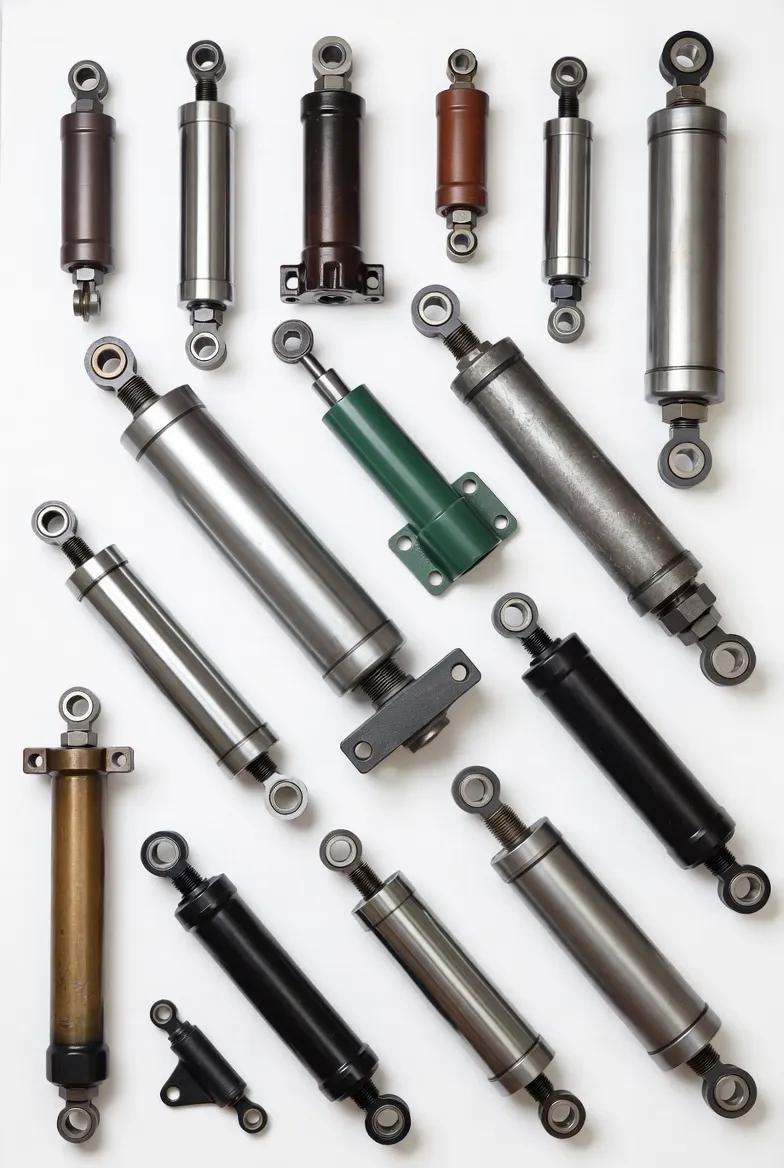
The defining characteristic of a mobile hydraulic cylinder is its welded body design. The end caps, barrel, and mounting trunnions are permanently fused together using advanced automated orbital welding techniques. This creates a smooth, monolithic exterior profile that eliminates bulky external bolts. This sleek profile is critical because mobile equipment often features complex, tightly packed kinematic linkages. Protruding hardware would catch on debris, rocks, or passing branches. For machinery like massive Excavator Hydraulic Cylinders, the welded design provides the ultimate structural rigidity capable of absorbing violent shock loads as the bucket slams into solid bedrock.
Weight Optimization and Material Science
In mobile applications, every ounce of excess weight directly diminishes the vehicle’s fuel efficiency, reduces its legal payload capacity, and alters its center of gravity. Mobile cylinders are engineered using high-tensile, high-yield micro-alloyed steels. This advanced metallurgy allows the cylinder barrel walls to be machined significantly thinner than industrial counterparts while still safely containing internal operating pressures that routinely exceed 5,000 PSI. The result is a highly compact, lightweight actuator that maximizes the kinetic output-to-weight ratio. This is particularly vital for Dump Truck Hydraulic Cylinders, where the telescopic actuator must lift massive aggregate payloads without consuming the truck’s overall weight allowance.

Industrial Hydraulic Cylinders: Relentless Precision
Industrial fluid power systems operate indoors within climate-controlled factories, steel mills, and automated assembly plants. They do not face mud or rain, but they face a different kind of brutality: unrelenting, high-speed, continuous-duty cycles.
The Tie-Rod Architectural Standard
The overwhelming majority of industrial hydraulic cylinders utilize tie-rod construction. Instead of welding the components together, the cylinder barrel is sandwiched between two massive, square cast-iron or machined steel end caps. These caps are physically clamped together using four or more high-strength threaded steel rods (tie-rods) running along the outside of the barrel. While this creates a bulky, squared-off exterior profile that would be unacceptable on a mobile excavator, spatial aesthetics are rarely a concern in a massive factory press. The National Fluid Power Association (NFPA) heavily standardizes tie-rod cylinder dimensions, meaning an industrial engineer can easily swap out a failed cylinder from one brand with an identical drop-in replacement from another brand, ensuring absolute minimum downtime on a multi-million-dollar production line.
Massive Thermal Mass and Durability
Weight is not a penalty in industrial environments; it is an advantage. Industrial cylinders are intentionally over-engineered with incredibly thick steel barrels and massive cast-iron heads. This massive thermal mass acts as a highly efficient heat sink. In a plastic injection molding machine where the cylinder might cycle every three seconds for twenty-four hours a day, the sheer friction of the seals generates immense thermodynamic heat. The heavy metal housing absorbs and dissipates this heat, preventing the internal polyurethane seals from melting. The design ethos is brute-force longevity and absolute kinematic precision over tens of millions of cycles.

The Direct Engineering Comparison
To successfully specify an actuator, procurement engineers must evaluate three critical functional differences between mobile and industrial design philosophies.
Maintenance and Repairability
Industrial tie-rod cylinders are the undisputed champions of easy maintenance. To rebuild one, a technician simply unbolts the four external tie-rods, and the entire cylinder dismantles seamlessly on the workbench, allowing for rapid seal replacement. Conversely, repairing a mobile welded cylinder is highly complex. The threaded head gland is often torqued to thousands of foot-pounds and secured with industrial adhesives, requiring massive, specialized breakout benches to dismantle. Mobile cylinders trade ease of repair for a smaller, stronger physical footprint.
Kinematic Mounting Architectures
Industrial machinery is rigid and stationary; therefore, industrial cylinders primarily utilize rigid flange mounts or fixed foot mounts to drive force in a perfect, unyielding straight line. Mobile equipment, however, traverses uneven terrain, causing the chassis to constantly flex and twist. If a mobile cylinder were rigidly mounted, this twisting would snap the rod in half. Therefore, mobile cylinders rely almost exclusively on articulating pivot mounts, such as clevises or spherical bearing trunnions. These advanced ball-and-socket joints absorb structural misalignment, protecting the delicate internal sealing architecture from destructive lateral side-loading.
Environmental Sealing Defense
An industrial tie-rod cylinder operating in a clean room utilizes low-friction Teflon seals optimized for high velocity. However, if you placed that same cylinder on a tractor, the external dirt would destroy it in hours. Mobile cylinders are equipped with aggressive, heavy-duty polyurethane wiper seals or metallic brass scraper rings. Their singular purpose is to violently shear off hardened mud, abrasive silica sand, and winter ice from the retracting rod before it can penetrate the pressure vessel. This extreme environmental defense is mandatory for components like Agricultural Hydraulic Cylinders operating in deep mud and caustic fertilizers.
Bridging the Gap: Crossover Applications
While the divide between mobile and industrial design is stark, the modern engineering landscape occasionally blurs the lines, demanding hybrid solutions that incorporate the durability of one with the precision of the other.
- ✔️
Warehouse Logistics: Forklifts represent a unique intersection. They are mobile vehicles, yet they operate on smooth concrete floors similar to an industrial factory. Forklift Hydraulic Cylinders often utilize heavy welded construction for the mast lift, but incorporate high-precision industrial-style internal load holding valving to ensure perfectly stable payload placement.
- ✔️
Safety Critical Elevation: When lifting human technicians, the actuator must possess the indestructible physical strength of a mobile unit combined with the absolute fail-safe precision of an automated factory. Aerial Work Vehicle Hydraulic Cylinders are welded for structural integrity but are heavily modified with integrated pilot-operated check valves (PO Checks) directly fused to the barrel, ensuring the platform cannot plummet even if a primary hydraulic hose is violently severed.


Conclusion: Architecting the Ultimate Kinetic Solution
The debate between mobile and industrial hydraulic cylinders is not a question of which design is superior, but rather which metallurgical and kinematic profile perfectly aligns with your specific engineering objectives. If you are designing stationary manufacturing equipment where high-speed continuous cycles, rapid standardized maintenance, and massive thermal dissipation are required, the industrial tie-rod cylinder is the undisputed champion. However, if your machinery must conquer the unpredictable chaos of the outdoors, demanding sleek welded profiles to navigate tight spaces, spherical mounts to absorb violent chassis twist, and aggressive scraper seals to battle the elements, the mobile hydraulic cylinder is the only viable choice. Selecting the correct architectural foundation ensures your machinery will perform with unrelenting force, maximum safety, and decades of profitable reliability. If your project demands unparalleled fluid power expertise to navigate these complex specifications, our specialized engineering team is ready to architect your success.