
Fluid Power Engineering Mastery
What Are the Parts of a Hydraulic Cylinder? A Complete Engineering Guide
An authoritative technical analysis exploring internal fluid dynamics, aerospace grade metallurgy, high pressure sealing architectures, and the fundamental hydraulic cylinder components driving modern industrial machinery.

Decoding the Anatomy of Linear Kinetic Force
In the vast and complex world of heavy machinery, manufacturing automation, and mobile construction equipment, fluid power remains the absolute pinnacle of force generation. At the very core of this technological domain lies the hydraulic cylinder. A hydraulic cylinder is a mechanical linear actuator that converts the hydrostatic energy of pressurized hydraulic fluid into highly controlled, unidirectional kinetic force. From the colossal excavators shaping our modern infrastructure to the microscopic precision required in aerospace materials testing equipment, understanding the parts of a hydraulic cylinder is absolutely essential for any mechanical engineer, procurement specialist, or maintenance professional.
A hydraulic cylinder may appear as a simple steel tube on the outside, but its interior is a masterclass in precision machining, metallurgy, and advanced polymer chemistry. Every single component inside the actuator must work in perfect harmony to contain internal pressures that frequently exceed five thousand pounds per square inch. If a single internal seal degrades, or if the microscopic surface finish of the barrel is compromised, the entire fluid power system will suffer from catastrophic efficiency losses, dangerous load drifting, or explosive physical failure.
From a rigorous engineering perspective evaluated against international manufacturing standards such as the National Fluid Power Association guidelines, mastering the anatomy of these actuators requires deep technical knowledge. To properly diagnose machinery failures or specify equipment for a harsh industrial environment, one must know exactly how the piston rod interfaces with the gland, how the internal seals prevent fluid bypass, and why specific mounting architectures are chosen. This highly detailed, authoritative guide will comprehensively dissect the hydraulic cylinder components, exploring their internal mechanical kinematics, their structural designs, and their ideal deployment scenarios in the modern industrial landscape.
The Pressure Vessel: The Cylinder Barrel
The cylinder barrel, also known as the cylinder tube, is the primary body of the actuator. It is the critical pressure vessel responsible for containing the immense hydrostatic forces generated by the hydraulic pump.
Metallurgy and Structural Integrity
To safely contain hydraulic fluid pressurized to thousands of PSI, the cylinder barrel must possess extreme yield strength. The vast majority of industrial cylinder barrels are manufactured from seamless cold drawn carbon steel tubing. The seamless construction is vital, as a welded seam would introduce a critical weak point susceptible to bursting under high cyclic fatigue. For specialized applications such as offshore marine drilling or sanitary food processing, the barrel may be forged from 316L stainless steel or aerospace grade aluminum to combat severe environmental corrosion.
Precision Micro Honing
The interior surface of the cylinder barrel is just as important as its wall thickness. The inner bore must be flawlessly smooth to ensure the dynamic piston seals can glide back and forth without friction or premature wear. During manufacturing, the interior is subjected to a deep hole boring process followed by multi stage micro honing or skintle burnishing. This creates a mirror like finish with microscopic cross hatching, which retains a tiny film of lubricating oil to eliminate the destructive stick slip phenomenon during operation.

The Moving Barrier: The Hydraulic Piston
Inside the cylinder barrel lies the piston, a solid disc of machined metal that serves as the internal dividing wall. The primary function of the hydraulic cylinder piston is to separate the pressure zones inside the barrel. In a double acting cylinder, the piston creates a distinct boundary between the cap end chamber and the rod end chamber.
Force Conversion Dynamics
When pressurized fluid is pumped into the cap end, it pushes against the full circular surface area of the piston face. Because force is calculated by multiplying fluid pressure by the surface area, the larger the piston diameter, the greater the pushing force the cylinder can generate. The piston is physically bolted, threaded, or welded onto the end of the piston rod, transferring this massive hydrostatic energy directly into linear mechanical motion.
Piston Sealing and Wear Bands
If fluid bypasses the piston, the cylinder loses pressure, resulting in load drifting and a severe loss of power. To prevent this, the outer circumference of the piston is machined with precise grooves that house the piston seals. These are typically heavy duty elastomeric profiles reinforced with anti extrusion rings. Furthermore, the piston is fitted with specialized polymer wear rings. These wear bands ensure the metal piston never physically touches the metal cylinder barrel, preventing catastrophic scoring and preserving the internal geometry over millions of operational cycles.

The Piston Rod: Transmitting Power to the Payload
The piston rod, frequently referred to as the cylinder rod, is the highly visible steel shaft that extends and retracts from the actuator body. It is the direct physical link between the internal fluid power and the external machine workload.
Buckling Resistance and Tensile Strength
During the extension stroke, the piston rod is subjected to immense compressive forces. If the load is heavy and the stroke is long, the rod faces a severe risk of buckling. To combat this, fluid power engineers carefully calculate the required rod diameter using Euler column formulas. Piston rods are forged from cold rolled high yield carbon steel, ensuring they possess the structural rigidity to push massive payloads without bending or snapping.
Hard Chrome Plating and Corrosion Defense
Because the rod is exposed to the harsh external environment, it must be protected against rust, acidic chemicals, and physical impacts from debris. The standard industry defense is a thick layer of hard chrome plating applied directly to the induction hardened steel. For marine, offshore, or mining applications, more advanced metallurgical defenses are utilized, such as High Velocity Oxygen Fuel thermal sprayed ceramic coatings or laser cladding, creating an impenetrable armor against aggressive atmospheric corrosion.
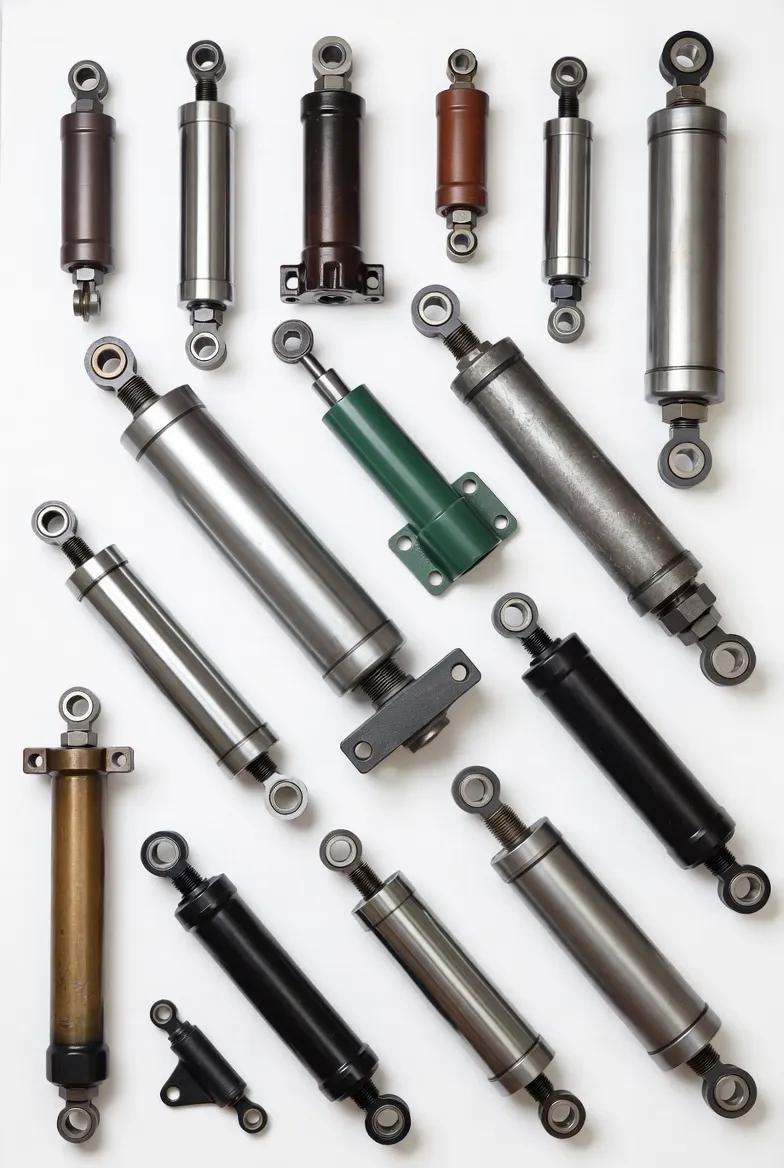
The Enclosures: Cylinder Head and Cylinder Base
To contain the pressurized fluid and guide the kinetic motion, the open ends of the steel barrel must be capped securely. These two critical end points are the cylinder head and the cylinder base, each serving a distinct engineering purpose within the actuator anatomy.
- ✔️
The Cylinder Head Gland: Located at the end where the rod protrudes, the cylinder head also called the gland is perhaps the most complex part of a hydraulic cylinder. It contains a highly sophisticated sealing arrangement. The internal rod seal prevents high pressure fluid from leaking out of the barrel along the moving shaft. Externally, an aggressive polyurethane wiper seal or scraper seal forcefully shears away dirt, ice, and dried mud before the rod retracts, preventing abrasive debris from entering and destroying the internal hydraulics. The gland also houses heavy duty bearing guides to keep the rod perfectly centered during side loading.
- ✔️
The Cylinder Base Cap End: Located at the blind end of the actuator, the cylinder base seals the rear of the pressure vessel. Depending on the construction style of the actuator, the base may be permanently welded to the barrel for maximum durability in mobile equipment, or it may be clamped in place using heavy duty steel tie rods for easier maintenance in factory automation environments. The base also typically houses one of the primary fluid inlet ports.
- ✔️
Mounting Accessories: Both the cylinder base and the tip of the piston rod are fitted with specialized mounting accessories to connect the actuator to the machinery. Common architectures include clevis mounts and spherical trunnion bearings, which allow the cylinder to pivot and absorb arc movements necessary in excavator booms. Flange mounts provide rigid, straight line connections ideal for industrial pressing operations where zero lateral movement is expected.

The Digital Horizon: Smart Sensors and IoT Integration
The global fluid power industry is currently experiencing a monumental technological paradigm shift driven by the Industrial Internet of Things. Traditional hydraulic cylinder components, long considered purely passive mechanical force generators, are evolving into highly intelligent, sensor driven data nodes integrated seamlessly into facility management software and mobile equipment telematics.
Next generation smart hydraulic cylinders are being deeply integrated with absolute linear position sensors hidden safely inside the hollow piston rod. These advanced sensors feed real time stroke telemetry directly to the machine control unit, allowing for absolute precision in automated material handling operations. Furthermore, integrated high resolution pressure transducers and vibration sensors can analyze the performance signature of the cylinder over millions of lifting cycles. Artificial intelligence algorithms utilize this data to accurately predict internal seal wear, fluid degradation, or impending rod binding. This crucial shift toward AI driven predictive maintenance allows logistics managers and factory engineers to replace degrading fluid power components during scheduled downtime, entirely eradicating the catastrophic financial costs and safety hazards associated with sudden, unexpected hydraulic failures on the warehouse floor.

Conclusion: Mastering the Components of Fluid Power
Understanding the individual parts of a hydraulic cylinder is the fundamental baseline for any successful mechanical design involving heavy lifting, pressing, or articulation. From the immense pressure containment of the seamless steel barrel to the micro engineering of the gland wiper seals and the buckling resistance of the piston rod, every component must operate in flawless mechanical synergy. Whether deploying a rugged welded body actuator for a mining excavator or a highly complex multi stage telescopic cylinder for aerial rescue equipment, mastering the internal anatomy of these mechanical titans guarantees operational safety, maximizes energy efficiency, and ensures long term structural reliability in the highly demanding field of industrial automation.