
Fluid Power Component Engineering
What Is the Difference Between a Piston and a Ram Hydraulic Cylinder?
A comprehensive technical comparison exploring single acting versus double acting designs, seal configurations, force characteristics, and application suitability for piston type and ram type hydraulic actuators.

Understanding the Two Fundamental Hydraulic Cylinder Architectures
In the diverse world of fluid power actuation, the question of what is the difference between a piston and a ram hydraulic cylinder represents one of the most fundamental distinctions in linear actuator design. While both devices convert pressurized hydraulic fluid energy into linear mechanical force and motion, they achieve this conversion through distinctly different internal architectures that profoundly influence their operating characteristics, force output, directional capability, and suitability for various applications. Understanding these differences is essential for engineers and system designers who must select the optimal actuator configuration for specific functional requirements, spatial constraints, and operating conditions.
The piston type hydraulic cylinder, also commonly referred to as a double acting cylinder, employs a piston that divides the cylinder bore into two distinct pressure chambers. Hydraulic fluid can be directed to either side of the piston, enabling powered motion in both extension and retraction directions with controlled force and velocity. The piston is fitted with dynamic seals that prevent fluid bypass between the chambers, while the piston rod extends through a sealed head gland at one end of the cylinder. This configuration provides the versatility of bidirectional powered motion, precise position control in both directions, and the ability to generate substantial forces during retraction as well as extension. Piston type cylinders dominate the vast majority of industrial and mobile hydraulic applications, from construction equipment and manufacturing machinery to aerospace flight controls and marine steering systems.
The ram type hydraulic cylinder, in contrast, represents a simpler single acting design where the pressurized fluid acts directly upon the end face of a large diameter plunger or ram. There is no piston with dynamic seals dividing the bore, and the cylinder typically provides powered motion in only one direction, with retraction accomplished by gravity, external load, or a separate return mechanism. Ram cylinders are characterized by their robust construction, high force output for a given bore diameter, and exceptional resistance to side loading and contamination. These attributes make ram cylinders the preferred choice for applications such as hydraulic jacks, lift platforms, dump bodies, and heavy presses where the primary requirement is substantial lifting or pushing force in a single direction. This comprehensive technical guide will exhaustively examine the design features, operating principles, performance characteristics, and application selection criteria that distinguish piston type and ram type hydraulic cylinders.
Piston Type Hydraulic Cylinders: Double Acting Design and Operation
Piston type cylinders represent the most versatile and widely used hydraulic cylinder configuration, providing powered motion in both directions.
Internal Architecture and Seal Configuration
The defining feature of a piston type hydraulic cylinder is the piston assembly that divides the cylinder bore into cap end and rod end pressure chambers. The piston is typically manufactured from ductile iron, steel, or aluminum and is fitted with dynamic seals that maintain pressure separation between the two chambers. These piston seals are precision engineered components that must provide effective sealing while minimizing friction and wear during millions of reciprocating cycles. Common piston seal configurations include lip seals, compact seals with O-ring energizers, and multi component seal arrangements incorporating primary seals, secondary buffer seals, and anti extrusion backup rings. The piston is attached to the rod via a threaded connection or, in larger cylinders, a bolted flange arrangement. Wear rings fabricated from filled PTFE, phenolic composites, or bronze are installed on either side of the piston seal to support transverse loads and maintain concentric alignment between the piston and cylinder bore. The rod extends through a head gland containing rod seals, wiper seals, and a rod bearing or bushing that supports the rod against side loads while providing a low friction dynamic seal interface.
Force and Speed Characteristics in Both Directions
Piston type hydraulic cylinders provide the significant advantage of powered motion with controllable force and speed in both extension and retraction directions. During extension, hydraulic pressure acts upon the full piston area, generating maximum force for a given pressure and bore diameter. During retraction, pressure acts upon the annular area, which is the full piston area minus the cross sectional area of the rod. The retraction force is therefore inherently lower than the extension force for any given operating pressure, with the force ratio determined by the relative sizes of the bore and rod diameters. This differential force characteristic must be considered when sizing piston type cylinders for applications requiring balanced bidirectional force. Velocity characteristics similarly differ between extension and retraction due to the area differential. For a given input flow rate, the retraction velocity will be higher than the extension velocity because the same flow is acting upon a smaller effective area. This speed differential is often advantageous in machine cycles where the return stroke is non productive and benefits from faster completion, but must be accounted for in applications requiring symmetric cycle times.

Ram Type Hydraulic Cylinders: Single Acting Simplicity and Robustness
Ram type cylinders embody a simpler single acting design philosophy optimized for applications requiring substantial force in one primary direction.
?Ram Cylinder Construction and Operating Principle
A ram type hydraulic cylinder consists of a cylindrical barrel housing a large diameter plunger or ram that extends through a close fitting bearing at the head end. Unlike piston cylinders, there is no piston with dynamic seals dividing the bore into separate chambers. Instead, the ram itself serves as both the force generating element and the output member. Hydraulic fluid is introduced into the closed end of the cylinder, where it acts directly upon the end face of the ram, generating an extension force equal to the fluid pressure multiplied by the full cross sectional area of the ram. Because there is no rod side chamber or pressure area, the extension force of a ram cylinder for a given bore diameter and pressure is higher than that of an equivalent bore piston cylinder, which loses effective area to the rod. The ram is guided by precision bearings in the head gland that also provide the dynamic seal against external leakage. Ram cylinders inherently provide powered motion in only the extension direction. Retraction is accomplished by external means including gravity acting on the load, a separate return cylinder or spring mechanism, or in some configurations, by reversing fluid flow to push the ram back into the barrel. This simplicity of design results in robust, compact actuators with fewer internal components subject to wear and failure.
?Force Output Advantages and Structural Considerations
The absence of a rod penetrating the pressure chamber gives ram cylinders distinct force output advantages over comparable bore piston cylinders. Since the entire bore diameter is utilized as the effective pressure area, ram cylinders produce maximum extension force for a given envelope diameter and operating pressure. This characteristic makes ram cylinders the preferred choice for applications such as hydraulic jacks, where compact dimensions and maximum lifting capacity are paramount. The ram itself, being a solid or thick walled cylindrical member, possesses exceptional column strength and resistance to buckling under compressive loads. Unlike piston rods which must be designed to resist Euler buckling as slender columns, rams typically operate with diameter to length ratios that keep compressive stresses well within material limits. Ram cylinders are also highly resistant to damage from side loading and contamination. The large diameter ram provides generous bearing area to support transverse loads, while the absence of internal dynamic seals eliminates the sensitivity to particulate contamination that plagues piston type cylinders. These attributes make ram cylinders particularly suitable for severe service applications in construction, mining, and heavy manufacturing environments where contamination and abuse are inescapable operational realities.

Comparative Analysis: Piston vs Ram Hydraulic Cylinder Performance
The distinct design philosophies of piston and ram cylinders produce markedly different performance characteristics that dictate their suitability for specific applications.
Directional Capability and Motion Control
Piston Type Cylinders: Provide powered, controlled motion in both extension and retraction directions. Hydraulic pressure can be directed to either side of the piston, enabling precise bidirectional position and velocity control through servo or proportional valve systems. This bidirectional capability is essential for applications such as machine tool positioning, robotic manipulation, and aircraft flight control surfaces where the cylinder must actively drive the load in both directions with equal authority. The ability to pressurize the rod side also enables load holding in the retracted position, a critical safety feature for many lifting and positioning applications.
Ram Type Cylinders: Inherently provide powered motion in only the extension direction. Retraction must be accomplished through external forces such as gravity, mechanical springs, or auxiliary return cylinders. While this limitation restricts their use in applications requiring bidirectional powered control, the simplicity of the single acting design eliminates the need for complex valving and reduces the number of components subject to wear. Ram cylinders excel in applications where gravity provides reliable, fail safe retraction, such as dump truck bodies, lift tables, and vertical presses.
Contamination Resistance and Maintenance Requirements
Piston Type Cylinders: Contain multiple dynamic seals including piston seals, rod seals, and wiper seals that are all susceptible to damage from particulate contamination circulating in the hydraulic fluid. Abrasive particles can become embedded in seal lips, scoring precision rod and bore surfaces and accelerating seal wear. Effective contamination control through proper filtration is essential for achieving rated service life from piston type cylinders. When seals do fail, cylinder rebuild typically requires complete disassembly, seal replacement, and often rod rechroming or barrel honing if scoring has occurred. The maintenance complexity and cost of piston cylinder repair are significantly higher than for ram cylinders.
Ram Type Cylinders: With no internal piston seals and typically a single dynamic rod seal at the head gland, ram cylinders are inherently more tolerant of fluid contamination and require less frequent maintenance. The large diameter ram is less susceptible to scoring damage, and the absence of internal seals eliminates the most common failure mode of piston cylinders. When resealing is required, ram cylinders are typically simpler to service, often requiring only head gland seal replacement without complete cylinder disassembly. For applications in severe contamination environments where maintaining pristine fluid cleanliness is impractical, ram cylinders offer compelling reliability advantages.
Space Claim and Installation Flexibility
Piston Type Cylinders: The rod protruding from one end increases the overall retracted length of the cylinder package, and clearance must be provided for the rod to extend fully without interference. Mounting configurations including clevis, flange, trunnion, and foot mounts provide versatile installation options adaptable to diverse machine structures. The ability to route hydraulic fluid to both ends of a double acting piston cylinder requires two fluid ports and associated plumbing, increasing installation complexity.
Ram Type Cylinders: Typically feature a more compact retracted length for a given stroke, as the ram retracts fully into the barrel. Single acting operation requires only a single fluid port, simplifying hydraulic plumbing. Ram cylinders are often mounted vertically to utilize gravity for retraction, though horizontal and inclined installations are possible with external return mechanisms. The robust construction and compact envelope of ram cylinders make them ideal for applications where space is constrained and simplicity is valued.
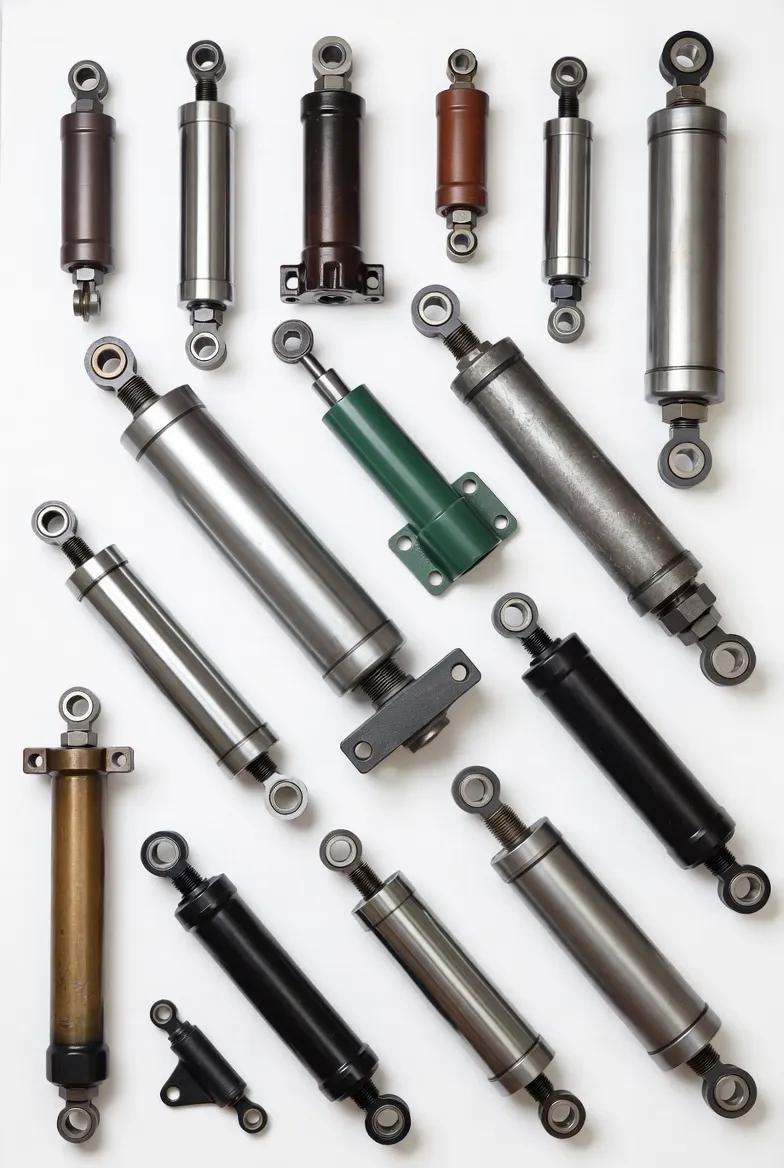
Application Selection Criteria: Choosing Between Piston and Ram Cylinders
The selection of piston versus ram hydraulic cylinder architecture for a specific application involves systematic evaluation of functional requirements, operating conditions, and lifecycle considerations.
- ?
Bidirectional Motion Requirement: If the application requires powered, controlled motion in both extension and retraction directions, a piston type double acting cylinder is the clear choice. Applications such as machine tool slides, robotic manipulators, and steering systems that must actively position loads in both directions demand the bidirectional capability that only piston cylinders provide. Conversely, if the load provides reliable gravity return or if a separate return mechanism is acceptable, a ram cylinder’s simplicity and lower cost may be advantageous. Dump truck bodies, vertical lift platforms, and hydraulic jacks exemplify applications where single acting ram cylinders are optimally suited because gravity reliably accomplishes retraction without requiring hydraulic power.
- ?
Maximum Force Requirements and Space Constraints: When the application demands maximum extension force from the minimum possible cylinder envelope, a ram cylinder’s ability to utilize the full bore diameter as effective pressure area provides a distinct advantage over piston cylinders. For a given envelope diameter and system pressure, a ram cylinder generates higher extension force than an equivalent sized piston cylinder with its area reduced by the rod cross section. This characteristic is particularly valuable in applications such as compact lifting jacks and portable hydraulic tools where every pound of force per inch of diameter is critical to performance. Additionally, the superior column strength of the large diameter ram enables longer strokes without buckling concerns compared to the relatively slender rods typical of piston cylinders.
- ?️
Operating Environment and Maintenance Philosophy: For applications in highly contaminated environments such as underground mining, foundries, or heavy construction where maintaining ideal fluid cleanliness is impractical, ram cylinders offer inherent reliability advantages through their simplified internal design with fewer dynamic seals. The absence of internal piston seals eliminates the most common failure mode of piston cylinders in contaminated fluid conditions. Organizations without sophisticated fluid maintenance programs or those operating in remote locations where frequent cylinder rebuilds are logistically challenging may benefit from the reduced maintenance requirements of ram cylinders for suitable single acting applications.

Telescoping Cylinders and Hybrid Configurations
Beyond the fundamental piston and ram architectures, specialized cylinder configurations combine elements of both designs to meet unique application requirements.
Telescoping Ram Cylinders
Telescoping ram cylinders represent a specialized configuration employing multiple nested stages that extend sequentially, providing exceptionally long strokes from a compact retracted length. These cylinders are typically single acting, with each stage functioning as a ram within the next larger stage. Telescoping ram cylinders find extensive application in dump truck bodies, refuse collection vehicles, and cargo handling systems where extended reach is required but installation space for a conventional single stage cylinder is limited. The telescoping design introduces additional complexity in seal and bearing arrangements at each stage interface, but the fundamental operating principle remains that of a ram cylinder with extension force decreasing at each successive stage due to the progressively smaller effective areas.
Double Acting Ram Cylinders
While traditional ram cylinders are single acting, specialized double acting ram configurations exist for applications requiring bidirectional powered motion with the robustness of ram construction. These cylinders incorporate a hollow ram with internal porting that directs fluid to the annular area between the ram and barrel for powered retraction. Double acting ram cylinders combine the structural advantages of ram design with the bidirectional capability of piston cylinders, though at increased complexity and cost compared to either standard configuration. They are employed in specialized applications such as large injection molding machines and heavy press equipment where both the robustness of ram construction and bidirectional hydraulic control are required.
Plunger Cylinders for Extreme Force Applications
Plunger cylinders represent an extreme force variant of ram cylinder technology, where the plunger diameter is maximized relative to the overall cylinder envelope to generate the highest possible force for a given system pressure. These specialized cylinders are used in applications such as forging presses, shipbuilding jacks, and heavy structural testing equipment where force requirements reach thousands of tons. The plunger is typically a massive solid forging or casting with minimal internal features, guided by robust replaceable bearings at the head gland. Multiple plunger cylinders are often synchronized through sophisticated control systems to apply uniform force across large press platens, requiring precision position and pressure feedback to prevent uneven loading that could damage tooling or produce defective parts.
Understanding the difference between a piston and a ram hydraulic cylinder provides the foundational knowledge necessary for selecting the optimal actuator configuration for any given application. By evaluating functional requirements, force and speed needs, environmental conditions, and maintenance considerations against the distinct characteristics of each cylinder type, engineers can specify actuators that deliver optimal performance, reliability, and lifecycle value.

Conclusion: Selecting Between Piston and Ram Cylinders Through Informed Engineering
The difference between piston and ram hydraulic cylinders embodies a fundamental design philosophy choice that reverberates through every aspect of actuator performance, reliability, and application suitability. Piston type cylinders, with their bidirectional powered motion, versatile control characteristics, and ability to generate substantial forces in both extension and retraction, dominate the vast majority of industrial and mobile hydraulic applications. Their double acting capability enables the sophisticated motion control essential for modern automated machinery, robotics, and precision positioning systems. Ram type cylinders, with their elegant simplicity, robust construction, and superior force output for a given envelope, excel in applications where single direction powered motion suffices and where contamination resistance, minimal maintenance, and maximum lifting capacity are paramount. By thoroughly evaluating the specific demands of each application against the distinct characteristics of these two fundamental cylinder architectures, fluid power engineers can specify actuators that optimize performance, reliability, and lifecycle cost. The mastery of cylinder selection represents a core competency that directly impacts the success of fluid power systems across the full spectrum of industrial and mobile equipment applications.