

„Volvo Small Excavator EC55B“ svirties cilindras
Kaip vienas iš hidraulinių cilindrų gamintojų, tiekėjų ir mechaninių produktų eksportuotojų, mes siūlome hidraulinius cilindrus ir daugelį kitų produktų.
Susisiekite su mumis dėl išsamesnės informacijos.
Paštas:sales@hydraulic-cylinders.net
Hidraulinių cilindrų gamintojas, tiekėjas ir eksportuotojas.
Arm Cylinder For Volvo Small Excavator EC55B
Įvadas
The Arm Cylinder is a specially designed hydraulic cylinder that provides linear motion and power to the arm of various types of machinery, such as excavators, cranes, and robotic arms. It plays a crucial role in hydraulic systems, allowing for efficient movement and control of additional tools or attachments. These cylinders not only provide smooth motion but also withstand heavy loads, ensuring efficient operation and reliability in various working conditions.
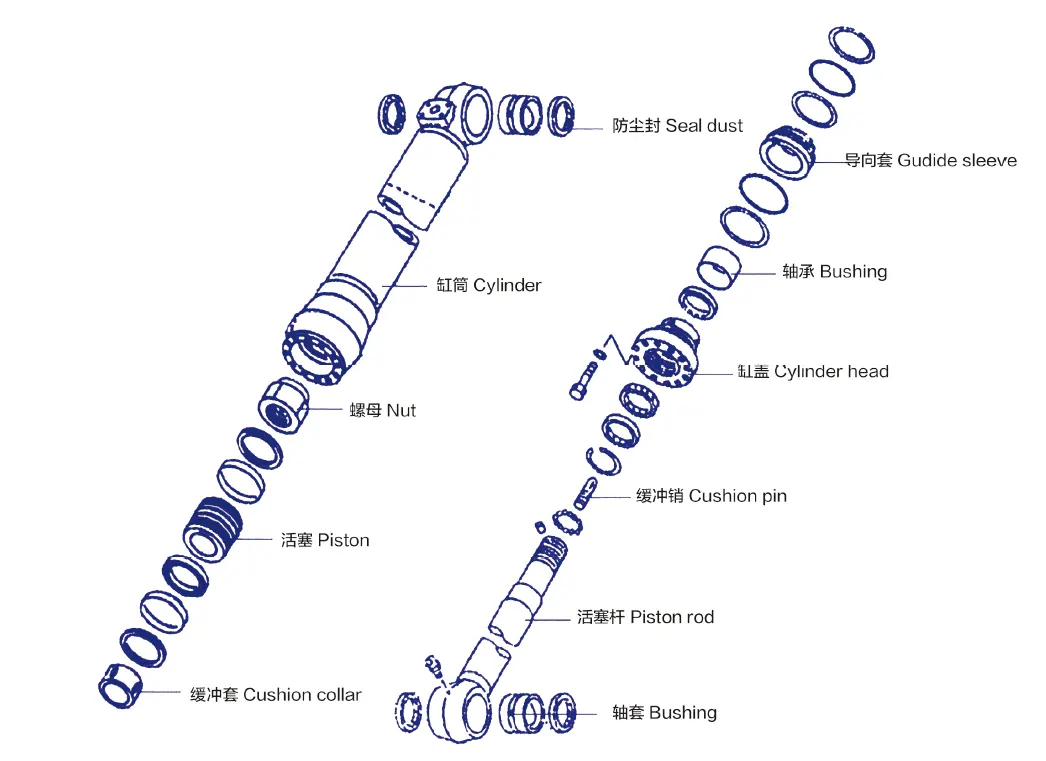
Savybės
- High-efficiency transmission: The Arm Cylinder provides powerful linear motion and force, ensuring high-performance capabilities during various operations.
- Precise control: Through the hydraulic system, the Arm Cylinder enables precise motion control, making the operation of attached tools more flexible and accurate.
- Patvarumas: Svirtiniai cilindrai paprastai gaminami iš didelio stiprumo medžiagų, pasižyminčių puikiu atsparumu dilimui ir korozijai, todėl jie tinkami ilgalaikiam naudojimui atšiauriomis sąlygomis.
- Multi-function adaptability: These cylinders can be widely applied to various machinery such as excavators, cranes, and robotic arms, adapting to different work requirements.
- Easy maintenance: The design of the Arm Cylinder takes into consideration ease of maintenance and replacement, making regular inspection and upkeep convenient, reducing equipment downtime.

Paraiškos
Svirtinis cilindras naudojamas įvairiose pramonės šakose:
1. Statybos inžinerija
Ekskavatoriuose ir kranuose svirties cilindras naudojamas kaušų arba strėlių judėjimui valdyti atliekant žemės darbus, medžiagų tvarkymą ir konstrukcijų montavimą.
2. Gamyba
In automated production lines, the Arm Cylinder is employed for the motion of robotic arms, assembly, welding, and material handling processes, improving production efficiency and accuracy.
3. Žemės ūkio technika
Žemės ūkio technikoje, pavyzdžiui, derliaus nuėmimo ir sodinamosiose, svirties cilindras valdo valdymo svirčių judėjimą atliekant tokias užduotis kaip sėja, tręšimas ir derliaus nuėmimas.
4. Kasyba
Kasybos įrangoje svirties cilindras valdo kasybos mašinų svirties judesius rūdos gavybai ir transportavimui.
5. Logistika ir transportas
In forklifts and automated handling robots, the Arm Cylinder is responsible for controlling the lifting and movement of forks, facilitating material handling and stacking.

Projektavimo aspektai ir atrankos kriterijai
When it comes to the design and selection of Arm Cylinders, several factors are taken into consideration:
1. Load-bearing capacity
The Arm Cylinder must be designed to handle the specific load requirements of the machinery it is intended for, ensuring safe and efficient operation.
2. Sandarinimas
Various sealing elements, such as piston seals and rod seals, are used in Arm Cylinders. These seals are made of wear-resistant materials like polyurethane and nitrile rubber, providing effective sealing to prevent leaks and ensure optimal performance. The cylinder body and threaded ends undergo fine surface treatments to enhance wear resistance.
3. Patvarumas
Arm Cylinders are manufactured using high-quality materials and undergo rigorous testing to ensure durability and reliability in demanding environments.
4. Saugumas
Arm Cylinders are designed with safety features to prevent accidents and ensure the protection of operators and surrounding equipment during operation.
5. Priežiūra
Regular maintenance and timely replacement of worn components are essential to keep the Arm Cylinder functioning optimally. Proper lubrication with hydraulic oil is necessary to ensure smooth operation.

Reguliarus patikrinimas ir prevencinė priežiūra
Regular inspection and preventive maintenance measures are essential for the long-term performance of the Arm Cylinder:
1. Apžiūra
Regularly inspect the Arm Cylinder for signs of wear, leaks, or damage. Check all seals, connections, and mounting points for any issues.
2. Tepimas
Ensure proper lubrication by regularly adding an adequate amount of hydraulic oil to the cylinder. Follow manufacturer guidelines for the correct oil type and quantity.
3. Replacement
Replace worn or damaged components promptly to avoid further damage and ensure optimal performance. Consult the manufacturer’s guidelines for recommended replacement intervals.
Produkto diegimo vadovas
Proper installation of the Arm Cylinder is crucial for its efficient operation and longevity. Follow these steps for correct installation:
1. Pasiruošimas
Ensure all necessary tools and equipment are available. Review the manufacturer’s installation instructions and guidelines.
2. Inspection
Thoroughly inspect the Arm Cylinder and all associated components before installation to ensure they are in good condition and free from damage.
3. Mounting
Follow the manufacturer’s instructions to securely mount the Arm Cylinder in the correct position, ensuring proper alignment with other components.
4. Connection
Attach hydraulic hoses and fittings to the Arm Cylinder according to the provided specifications, ensuring tight connections to prevent leaks.
5. Testavimas
After installation, test the Arm Cylinder’s functionality by operating the machinery. Check for any abnormal noises, leaks, or improper movement.

Saugos aspektai ir aplinkos veiksniai
When using the Arm Cylinder, it is essential to prioritize safety measures to protect operators and ensure proper operation. Consider the following:
1. Safety Measures: Implement safety protocols, such as providing operator training, using protective equipment, and following machine-specific safety guidelines.
2. Environmental Factors: Consider environmental conditions, such as temperature, moisture, and exposure to corrosive substances, and take appropriate measures to protect the Arm Cylinder from potential damage.
Trikčių šalinimas ir dažniausiai pasitaikančios problemos
Understanding the potential faults and issues that may arise with the Arm Cylinder can help in diagnosing and resolving problems effectively. Here are some common concerns:
1. Nuotėkis
If there is leakage from the Arm Cylinder, check the seals, connections, and fittings for damage or improper installation. Replace any faulty seals or tighten loose connections.
2. Slow or Jerky Movement
If the Arm Cylinder’s movement is slow or jerky, inspect the hydraulic system for low fluid levels or potential blockages. Check the hydraulic pump and valves for proper functioning.
3. Abnormal Noises
If there are unusual noises coming from the Arm Cylinder, it may indicate internal wear or damage. Inspect the cylinder for any signs of wear or loose components and address the issue accordingly.
4. Erratic Operation
If the Arm Cylinder’s operation is erratic or unpredictable, check the control valves and hydraulic system for any malfunctions. Ensure the system is properly calibrated and all components are functioning correctly.
By following these troubleshooting tips and implementing preventive measures, you can effectively diagnose and resolve issues, minimizing potential problems and ensuring optimal performance of the Arm Cylinder.
Apie mus
We are a
Hidraulinio cilindro pritaikymas:

 LT
LT  EN
EN  PT
PT  ES
ES  DE
DE  FR
FR  IT
IT  AR
AR  ZH
ZH  RU
RU  KO
KO  KA
KA  BG
BG  CS
CS  DA
DA  EL
EL  ET
ET  FI
FI  HU
HU  ID
ID  LV
LV  NB
NB  NL
NL  PL
PL  RO
RO  SK
SK  SL
SL  SV
SV  TR
TR  UK
UK