
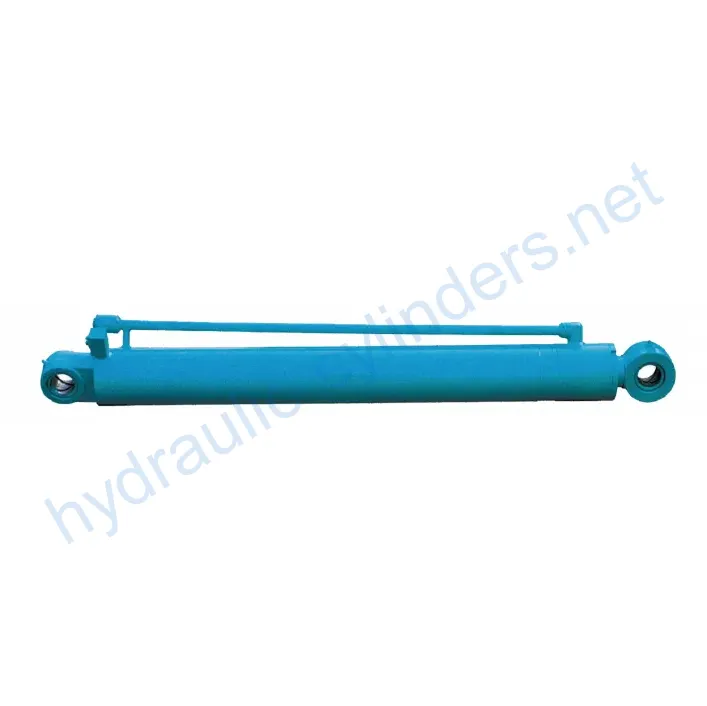
Arm CylinderFor Komatsu Large Excavator PC400-3-5-6-7-8
Kā viens no hidraulisko cilindru ražotājiem, piegādātājiem un eksportētājiem, mēs piedāvājam hidrauliskos cilindrus un daudzus citus produktus.
Lūdzu, sazinieties ar mums, lai saņemtu sīkāku informāciju.
Pasts:sales@hydraulic-cylinders.net
Hidraulisko cilindru ražotājs, piegādātājs, eksportētājs.
Arm Cylinder For Komatsu Large Excavator PC400-3-5-6-7-8
Ievads
The Arm Cylinder is a specially designed hydraulic cylinder that provides linear motion and power to the arms of various machinery such as excavators, cranes, and robotic arms. It plays a crucial role in hydraulic systems, enabling efficient movement and control of attachments or accessories. These cylinders not only ensure smooth motion but also withstand heavy loads, ensuring high operational efficiency and reliability in various working conditions.
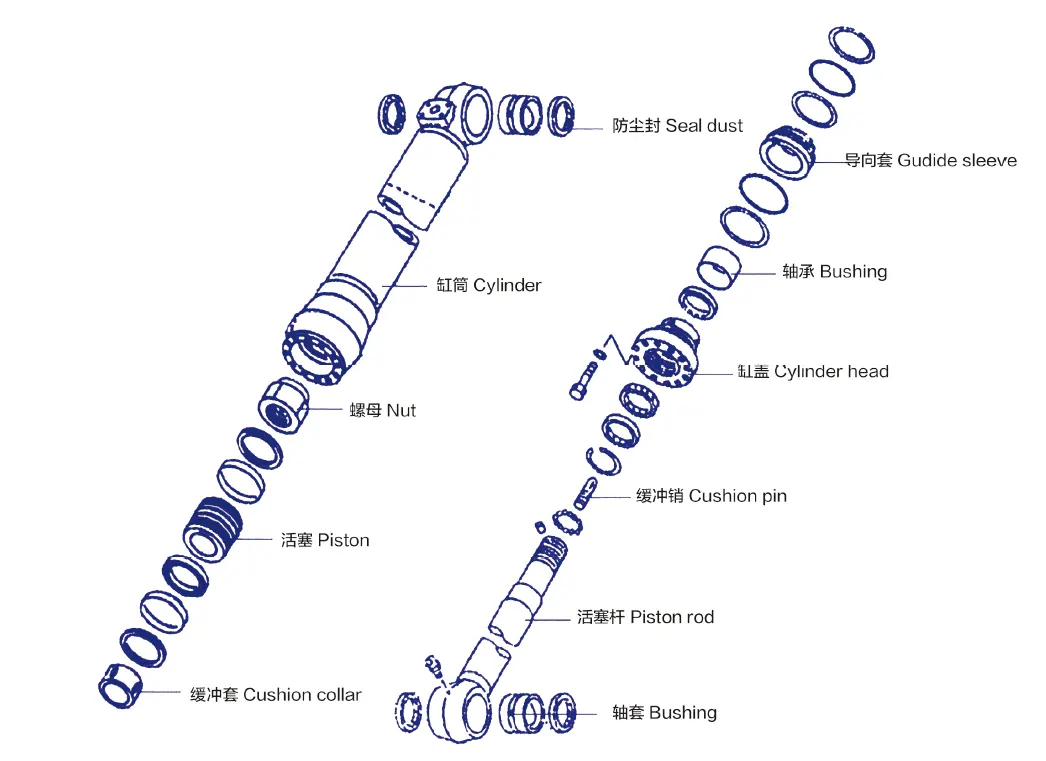
Funkcijas
- Augstas efektivitātes pārraide: The Arm Cylinder provides powerful linear motion and force, ensuring high-performance capabilities for the machinery arm.
- Precīza kontrole: With the hydraulic system, the Arm Cylinder enables precise motion control, making operations of attached tools more flexible and accurate.
- Izturība: Arm Cylinders are typically made of high-strength materials, offering excellent wear resistance and corrosion resistance, suitable for long-term use in harsh environments.
- Daudzfunkcionāla pielāgošanās spēja: These cylinders find wide applications in various machinery, such as excavators, cranes, and robotic arms, adapting to different working requirements.
- Vienkārša apkope: Designed for easy maintenance and replacement, the Arm Cylinder facilitates convenient periodic inspections and maintenance, reducing equipment downtime.

Pieteikumi
The Arm Cylinder is utilized in the following industries and applications:
1. Būvniecības inženierija
In excavators and cranes, the Arm Cylinder controls the movement of the bucket or boom for earthwork, material handling, and structural installation.
2. Ražošana
Automatizētās ražošanas līnijās rokas cilindrs nodrošina robotizētu roku kustību montāžas, metināšanas un materiālu apstrādes procesos, uzlabojot ražošanas efektivitāti un precizitāti.
3. Lauksaimniecības tehnika
In agricultural machinery like harvesters and seeders, the Arm Cylinder controls the movement of operating arms for tasks such as sowing, fertilizing, and harvesting.
4. Kalnrūpniecība
Kalnrūpniecības iekārtās sviras cilindrs kontrolē kalnrūpniecības mašīnu sviras kustību rūdas ieguvei un transportēšanai.
5. Loģistika un transports
Iekrāvējos un apstrādes robotos rokas cilindrs kontrolē dakšu pacelšanu un kustību, nodrošinot materiālu apstrādi un sakraušanu.

Dizaina apsvērumi un atlases kritēriji
When selecting the Arm Cylinder, the following design considerations and selection criteria are important:
1. Nestspēja
The Arm Cylinder should be able to withstand the expected loads and forces encountered during operation.
2. Sealing and Lubrication
Various sealing components such as piston seals and rod seals should be used, made of wear-resistant materials like polyurethane and nitrile rubber. The cylinder body and threaded ends should undergo fine treatment to improve wear resistance. Regular lubrication with the appropriate hydraulic oil is necessary.
3. Izturība
The Arm Cylinder should be designed to withstand the intended operating conditions, including environmental factors such as temperature, humidity, and exposure to corrosive substances.
4. Drošība
Safety considerations should be taken into account during the design of the Arm Cylinder, ensuring the prevention of potential hazards and adherence to relevant safety standards.
5. Uzturamība
The Arm Cylinder should be designed for easy maintenance and repair, allowing for efficient inspection, replacement, and troubleshooting procedures.

Regulāra pārbaude un profilaktiskā apkope
Regular inspection and preventive maintenance measures for the Arm Cylinder include:
1. Pārbaude
– Check for any leaks or damage to the cylinder body and seals.
– Inspect the piston rod for wear and damage.
– Verify proper lubrication and replace hydraulic oil if necessary.
– Ensure all connections and fasteners are secure.
2. Preventīvā apkope
– Clean the external surfaces of the cylinder to remove dirt and debris.
– Apply lubricant to the moving parts as recommended by the manufacturer.
– Keep the cylinder protected from environmental contaminants.
– Ievērojiet ražotāja norādījumus par apkopes intervāliem un procedūrām.
Produkta uzstādīšanas rokasgrāmata
Pareiza sviras cilindra uzstādīšana ir būtiska optimālai veiktspējai un drošībai. Veiciet šīs darbības:
1. Sagatavošana
– Ensure the equipment is powered off and isolated from any power sources.
– Review the equipment’s manual for specific installation instructions.
– Gather all necessary tools and equipment for the installation.
2. Montāža
– Position the Arm Cylinder in the designated mounting location.
– Secure the cylinder using appropriate bolts and fasteners.
– Make sure the cylinder is aligned properly with other components.
3. Connectors and Hoses
– Connect the hydraulic hoses to the appropriate ports on the cylinder.
– Ensure proper tightening of the connectors to prevent leaks.
– Route the hoses away from moving parts and potential sources of damage.
4. Testēšana
– Perform a functional test of the Arm Cylinder to verify proper operation.
– Check for any leaks or abnormal noise during operation.
– Make adjustments if necessary and retest as needed.

Drošības apsvērumi un vides faktori
When using the Arm Cylinder, it is crucial to prioritize safety measures in conjunction with the specific application requirements. Proper training, precautions, and adherence to safety guidelines are essential to prevent accidents and injuries. Environmental factors, such as temperature variations and the presence of hazardous substances, should also be taken into account to ensure the durability and performance of the Arm Cylinder.
Problēmu novēršana un bieži sastopamas problēmas
While using the Arm Cylinder, you may encounter the following troubleshooting scenarios and common issues:
1. Noplūde
– Check all connections and seals for any signs of leakage.
– Tighten loose connections or replace damaged seals as necessary.
2. Neparasts troksnis
– Inspect the cylinder and its components for any loose or worn parts.
– Lubricate moving parts to reduce friction and noise.
– Seek professional assistance if the issue persists.
3. Nekonsekventa kustība
– Inspect the hydraulic system for any restrictions or blockages.
– Check for proper hydraulic fluid levels and quality.
– Ensure all valves and controls are functioning correctly.
Preventīvie pasākumi
– Follow the recommended maintenance schedule for the Arm Cylinder.
– Regularly inspect and clean the cylinder and its components.
– Monitor hydraulic fluid levels and quality.
– Address any issues promptly to prevent further damage.
Par mums
We are a professional manufacturer specializing in the production of replacement hydraulic cylinders. With a wide range of products, we have become one of the leading manufacturers and wholesale distributors in the domestic and international markets. We uphold the
Hidrauliskā cilindra pielietojums:

 LV
LV  EN
EN  PT
PT  ES
ES  DE
DE  FR
FR  IT
IT  AR
AR  ZH
ZH  RU
RU  KO
KO  KA
KA  BG
BG  CS
CS  DA
DA  EL
EL  ET
ET  FI
FI  HU
HU  ID
ID  LT
LT  NB
NB  NL
NL  PL
PL  RO
RO  SK
SK  SL
SL  SV
SV  TR
TR  UK
UK