
Fluid Power Procurement Strategy
How to Choose a Hydraulic Cylinder Manufacturer?
A comprehensive evaluation guide covering quality certifications, manufacturing capabilities, material standards, testing protocols, and partnership criteria for selecting reliable hydraulic cylinder suppliers.

The Strategic Importance of Hydraulic Cylinder Manufacturer Selection
In the competitive and quality driven world of fluid power systems, knowing how to choose a hydraulic cylinder manufacturer is a strategic decision that profoundly impacts equipment reliability, operational costs, supply chain stability, and ultimately the success of original equipment manufacturer products and end user operations. The hydraulic cylinder supplier selection process extends far beyond simple price comparison to encompass comprehensive evaluation of engineering expertise, manufacturing quality, material traceability, testing and validation capabilities, aftermarket support, and the cultural alignment of business values and communication practices. A poorly chosen manufacturer can result in chronic quality issues, production delays, warranty costs, and damage to end customer relationships that far outweigh any initial price advantages.
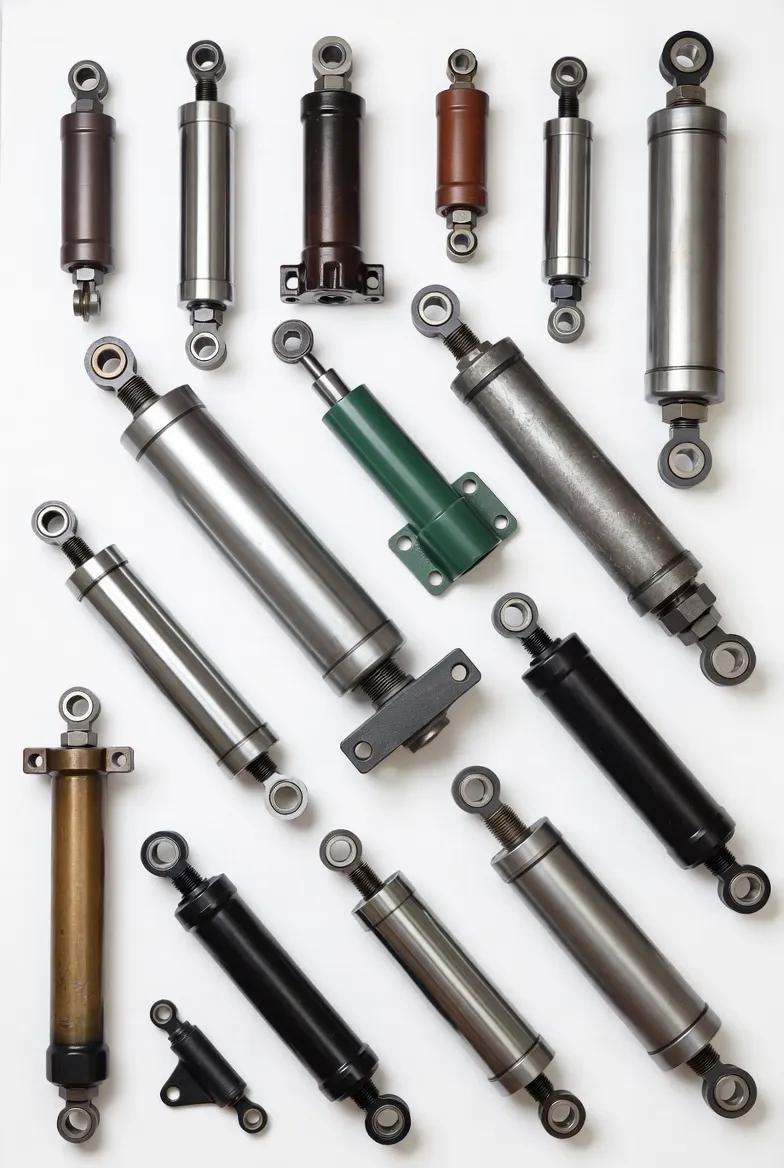
The global hydraulic cylinder manufacturing landscape encompasses a diverse spectrum of suppliers ranging from small local job shops fabricating custom cylinders in limited quantities to multinational corporations producing standardized cylinders by the millions. Between these extremes lie specialized manufacturers focusing on particular cylinder types, industry verticals, or geographic regions. The challenge for procurement professionals and engineering decision makers lies in matching the specific requirements of their application with a manufacturer whose capabilities, capacity, and quality systems align with the technical demands and commercial expectations of the project. A manufacturer excelling in high volume standard NFPA tie rod cylinders may be ill equipped to produce the large bore, long stroke custom engineered welded cylinders required for a heavy construction application, while a specialist in complex custom cylinders may lack the cost competitiveness required for high volume standardized components.
This comprehensive evaluation guide provides a structured framework for assessing and selecting hydraulic cylinder manufacturers based upon objective criteria that directly correlate with product quality, reliability, and supplier performance. We will explore the essential quality certifications and manufacturing standards that distinguish reputable manufacturers, the engineering and design capabilities necessary for application optimized cylinder solutions, the material sourcing and traceability practices that ensure consistent product integrity, the testing and validation procedures that verify performance before shipment, and the aftermarket support and warranty considerations that protect the investment over the equipment lifecycle. By applying the systematic evaluation methodology detailed herein, procurement professionals and engineers can make informed manufacturer selections that build robust, reliable supply chains and deliver long term value.
Quality Certifications and Manufacturing Standards
The foundational criterion for hydraulic cylinder manufacturer evaluation is the presence of recognized quality management systems and adherence to industry standards.
ISO 9001 and Industry Specific Certifications
ISO 9001 certification represents the minimum baseline quality management system standard that any reputable hydraulic cylinder manufacturer should hold. This internationally recognized certification demonstrates that the manufacturer has implemented documented processes for design control, supplier management, production, inspection, nonconformance handling, and continuous improvement. However, ISO 9001 alone does not guarantee cylinder quality it merely confirms that defined processes exist. For demanding applications, seek manufacturers holding additional certifications relevant to specific industries. ISO 14001 environmental management certification indicates commitment to sustainable manufacturing practices. Manufacturers serving defense, aerospace, or nuclear industries may hold AS9100 or NQA-1 certifications reflecting enhanced quality requirements. For cylinders destined for European markets, CE marking compliance confirms conformity with applicable European directives. Verify that certifications are current and issued by accredited registrars, and request certificates during the supplier qualification process.
NFPA and ISO Dimensional Compliance
For tie rod hydraulic cylinders, adherence to National Fluid Power Association dimensional standards ensures interchangeability and availability of replacement seals and components. A qualified hydraulic cylinder manufacturer should demonstrate comprehensive knowledge of NFPA mounting styles, rod end configurations, and port standards. For metric cylinders, ISO 6020, ISO 6022, and related standards govern dimensional interchangeability. Manufacturers should maintain the precision machining capabilities necessary to consistently achieve the tolerances specified by these standards. Request dimensional capability studies or process capability data for critical features including bore diameter tolerance, piston rod straightness, and mounting surface parallelism. Manufacturers employing statistical process control and regularly monitoring process capability indices demonstrate commitment to dimensional consistency that translates directly to reliable seal performance and cylinder life.

Engineering Expertise and Design Capabilities
Superior hydraulic cylinder manufacturers distinguish themselves through demonstrable engineering expertise that adds value beyond simple fabrication.
?Application Engineering and Custom Design Support
The best hydraulic cylinder manufacturers offer substantive application engineering support that goes beyond quoting specified dimensions. When evaluating how to choose a hydraulic cylinder manufacturer, assess their willingness and ability to analyze the intended application, recommend appropriate materials and seal selections, perform stress and buckling calculations, and suggest design optimizations that improve performance or reduce cost. Manufacturers with experienced application engineers can identify potential failure modes before production begins, propose alternative materials or coatings that extend service life in specific environments, and optimize cylinder design for manufacturability without compromising function. Request examples of past application engineering contributions during the supplier evaluation process. Manufacturers that simply build to print without offering engineering insight may be acceptable for simple replacement cylinders but add limited value for new equipment development or complex applications.
?Finite Element Analysis and Advanced Simulation
Manufacturers investing in advanced engineering tools including finite element analysis, computational fluid dynamics, and multibody dynamics simulation demonstrate commitment to optimized designs validated by physics based analysis rather than empirical trial and error. Finite element analysis enables prediction of stress distributions in cylinder components under combined pressure, axial, and bending loads, identifying potential fatigue initiation sites and allowing design optimization before prototype fabrication. For welded cylinders, FEA can model residual stresses from manufacturing processes and their interaction with service loads. Manufacturers capable of providing engineering analysis reports supporting their design recommendations offer valuable risk reduction for critical applications. While not every cylinder application warrants detailed FEA, the availability of these capabilities indicates a technically sophisticated manufacturer that understands the underlying engineering principles governing cylinder performance and reliability.

Material Sourcing Testing and Manufacturing Process Control
The materials and processes employed in cylinder manufacturing directly determine product quality consistency and reliability.
Raw Material Traceability and Certification
Reputable hydraulic cylinder manufacturers maintain rigorous raw material traceability and certification programs. Cylinder barrels, piston rods, tie rods, and structural components should be traceable to mill test reports documenting chemical composition and mechanical properties. For critical applications including defense, nuclear, and subsea service, full material traceability with heat lot identification permanently marked on components may be required. Verify that the manufacturer sources materials from reputable steel mills with established quality reputations. Be cautious of manufacturers unable or unwilling to provide material certifications, as the use of substandard or uncertified materials can lead to premature failures with serious safety and liability implications. The cost differential between certified and uncertified materials is modest compared to the potential consequences of a material related cylinder failure in a critical application.
Non Destructive Testing and Weld Quality
For welded hydraulic cylinders, the quality of welded joints is absolutely critical to structural integrity and pressure containment. Evaluate the manufacturer’s welding certifications, personnel qualifications, and non destructive testing capabilities. Welding procedures should be qualified in accordance with applicable codes such as AWS D1.1 or ASME Section IX, with welder performance qualification records maintained and current. Ultrasonic testing, magnetic particle inspection, and dye penetrant testing are commonly employed NDT methods for verifying weld integrity. For critical welds in high pressure or safety related applications, radiographic testing may be specified. A quality hydraulic cylinder manufacturer will have documented welding procedure specifications, qualified welding personnel, and in house or contracted NDT capabilities appropriate to the complexity and criticality of their products. Request to review weld procedure qualifications and sample NDT reports during the supplier audit process.
Surface Treatments and Coating Quality Control
Piston rod chrome plating quality and cylinder exterior coating durability significantly influence long term cylinder performance and appearance. When evaluating how to choose a hydraulic cylinder manufacturer, investigate their chrome plating capabilities and quality control. Chrome plating thickness, hardness, and adhesion should be verified through destructive or non destructive testing on a sampling basis. Rods should be inspected for plating defects including pits, nodules, and inadequate coverage. Cylinder exterior paint or coating systems should be appropriate for the intended service environment, with surface preparation, primer application, and topcoat processes documented and controlled. Manufacturers should provide coating system specifications including surface preparation standards, dry film thickness, and performance testing such as salt spray resistance. For corrosive marine or chemical environments, the availability of alternative rod materials and specialized coating systems indicates a manufacturer experienced with demanding applications.
Testing Validation and Quality Assurance Protocols
Comprehensive testing protocols distinguish manufacturers committed to delivering verified quality from those relying solely on in process inspection.
- ?
Pressure Testing and Leakage Verification: Every hydraulic cylinder should undergo pressure testing before shipment to verify structural integrity and seal performance. Standard practice includes hydrostatic testing at 1.5 times rated working pressure with sustained hold periods to detect any external leakage or permanent deformation. For critical applications, pneumatic testing at lower pressures may supplement hydrostatic testing to detect leakage too small to be visible with liquid. Evaluate the manufacturer’s pressure testing capabilities including the availability of test benches sized for their largest cylinders, calibrated pressure gauges and transducers with current certification, and documented test procedures. Verify that test pressures, hold times, and acceptance criteria are clearly defined and that test records are maintained and available for review. Manufacturers should have a defined process for addressing test failures including root cause investigation and corrective action before retesting.
- ?
Dimensional Inspection and First Article Approval: Dimensional inspection capabilities including coordinate measuring machines, precision micrometers, bore gauges, and surface finish measurement equipment are essential for verifying that manufactured cylinders conform to specifications. For new cylinder designs or first production runs, First Article Inspection reports documenting complete dimensional verification of all critical features provide confidence in the manufacturer’s ability to consistently produce conforming product. Evaluate the manufacturer’s inspection equipment list, calibration program, and the qualifications of inspection personnel. Statistical process control data for critical characteristics such as bore diameter and rod straightness provide insight into process capability and consistency. Manufacturers employing automated inspection systems or in line gauging demonstrate investment in quality assurance that manual inspection alone cannot match for high volume production.
- ?
Endurance Testing and Validation Capabilities: For original equipment manufacturer applications where cylinder reliability is critical to product success, the availability of in house endurance testing capabilities distinguishes top tier hydraulic cylinder manufacturers. Cyclic endurance testing subjects cylinders to repeated pressure and mechanical cycles simulating years of field service in a compressed timeframe, revealing potential design weaknesses or material deficiencies before production commitment. Environmental testing including thermal cycling, salt spray exposure, and dust ingestion evaluates cylinder performance under specific environmental conditions. Request information on the manufacturer’s validation testing capabilities and experience with similar applications. While endurance testing adds cost and lead time to new product introduction, the risk reduction it provides is invaluable for high volume or safety critical applications where field failures carry severe consequences.

Aftermarket Support Warranty and Long Term Partnership Value
The true measure of a hydraulic cylinder manufacturer often emerges after the sale through their commitment to customer support and willingness to stand behind their products.
Warranty Terms and Claims Handling
Warranty coverage reflects the manufacturer’s confidence in their product quality and their commitment to customer satisfaction. Standard hydraulic cylinder warranties typically range from twelve to twenty four months from shipment or installation, covering defects in materials and workmanship. Evaluate warranty terms carefully, noting exclusions for misuse, improper installation, contamination damage, and normal wear items such as seals. Beyond the written warranty terms, investigate the manufacturer’s reputation for handling warranty claims fairly and expeditiously. A manufacturer that disputes legitimate claims, imposes unreasonable documentation requirements, or delays resolution creates hidden costs that erode the value of even the most attractively priced initial quotation. Request references from customers who have experienced warranty situations to gain insight into the manufacturer’s claims handling practices.
Spare Parts Availability and Seal Kit Support
The availability of replacement seals and spare parts throughout the cylinder’s service life is a critical consideration when choosing a hydraulic cylinder manufacturer. Standard NFPA and ISO cylinders utilize commercially available seal kits from multiple suppliers, ensuring long term availability even if the original manufacturer discontinues the product line. For custom cylinders with proprietary seal geometries or unique component designs, verify that the manufacturer commits to supplying seal kits and critical spare parts for a defined period, typically ten years or more. Manufacturers maintaining comprehensive records of cylinder configurations by serial number can rapidly identify and supply correct seal kits years after original manufacture. The inability to obtain correct replacement seals renders otherwise serviceable cylinders unrepairable, forcing premature replacement at substantial cost.
Financial Stability and Long Term Viability
The financial stability and long term viability of a hydraulic cylinder manufacturer directly impact supply continuity and future support. A manufacturer that ceases operations leaves customers without access to engineering records, replacement parts, or warranty recourse. Evaluate the manufacturer’s years in business, ownership structure, facility investment, and apparent commitment to the hydraulic cylinder market. Publicly available financial information, Dun and Bradstreet ratings, and trade references provide insight into financial health. While no manufacturer can guarantee perpetual operation, those with established market positions, diversified customer bases, and demonstrated reinvestment in facilities and technology present lower risk of business interruption. The cost of qualifying a new supplier and requalifying designs exceeds any price savings from selecting a financially marginal manufacturer.
The decision of how to choose a hydraulic cylinder manufacturer carries implications extending years into the future. By applying the comprehensive evaluation criteria detailed in this guide quality systems, engineering capability, manufacturing processes, testing protocols, and aftermarket support procurement professionals can identify manufacturing partners who will deliver reliable, high quality cylinders and provide enduring value throughout the equipment lifecycle.

Conclusion: Building Reliable Supply Chains Through Informed Manufacturer Selection
Choosing the right hydraulic cylinder manufacturer is a strategic procurement decision that fundamentally influences equipment quality, reliability, and total lifecycle cost. The evaluation framework presented in this guide provides a structured methodology for assessing potential suppliers across the dimensions that matter most: quality certifications and process control, engineering expertise and design support, material sourcing and traceability, comprehensive testing and validation, and responsive aftermarket support. While price inevitably factors into any procurement decision, the total cost of ownership perspective that accounts for quality related warranty costs, downtime from premature failures, and the value of engineering support reveals that the lowest initial price rarely delivers the best long term value. By investing the effort to thoroughly evaluate and qualify hydraulic cylinder manufacturers, organizations build robust supply chains that deliver consistent quality, support innovation, and provide the reliability that end customers demand. The disciplined manufacturer selection process is not merely a procurement exercise but a fundamental element of engineering successful products and maintaining competitive advantage in quality driven markets.