

Armsylinder for Doosan liten gravemaskin DX120
Som en av produsentene, leverandørene og eksportørene av mekaniske produkter tilbyr vi hydrauliske sylindere og mange andre produkter.
Ta kontakt med oss for mer informasjon.
Post:sales@hydraulic-cylinders.net
Produsent, leverandør og eksportør av hydrauliske sylindere.
Arm Cylinder for Doosan Small Excavator DX120
The arm cylinder is a specially designed hydraulic cylinder that is used to provide linear motion and power to the arm of various types of machinery, such as excavators, cranes, and robotic arms. The arm cylinder plays a crucial role in hydraulic systems, allowing for the effective movement and control of additional tools or attachments. These cylinders not only enable smooth motion but also have the ability to withstand heavy loads, ensuring efficient operation and reliability of the machinery under various working conditions.
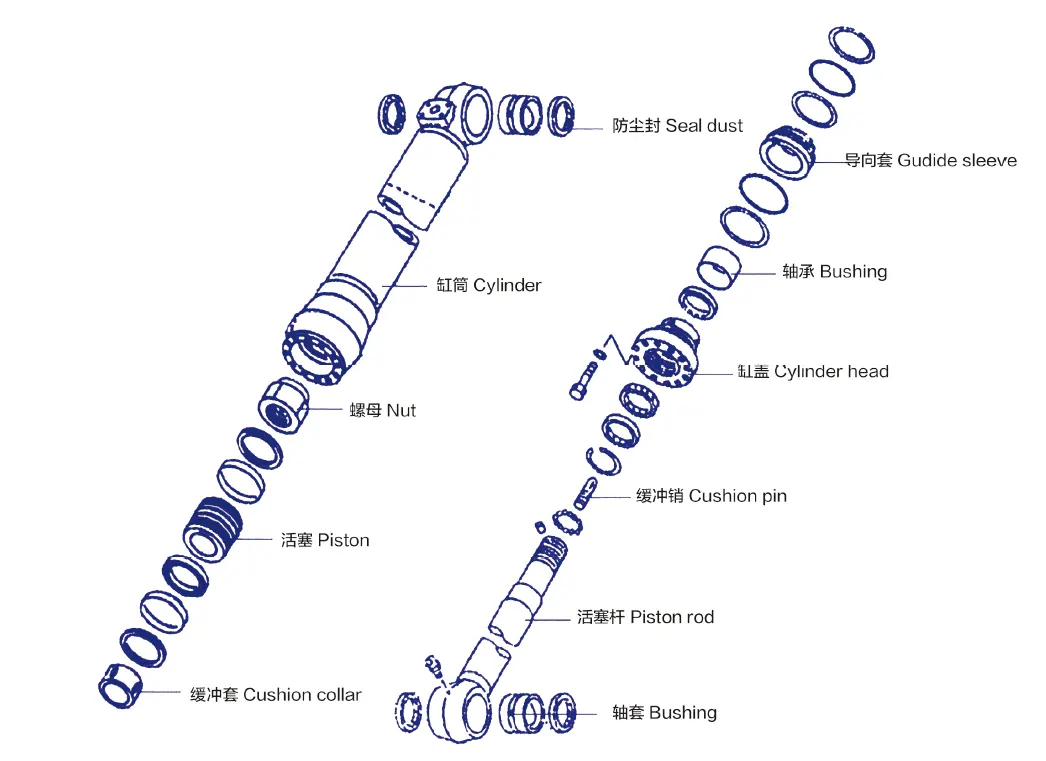
Funksjoner på armsylinderen:
- Høyeffektiv girkasse: Armsylinderen gir kraftig lineær bevegelse og kraft, noe som sikrer robotarmens høye ytelse i ulike operasjoner.
- Presis kontroll: Gjennom det hydrauliske systemet gir armsylinderen presis bevegelseskontroll, noe som gjør betjeningen av tilleggsverktøy mer fleksibel og nøyaktig.
- Varighet: Armsylindere er vanligvis laget av høyfaste materialer, som gir utmerket slitasje- og korrosjonsbestandighet, noe som gjør dem egnet for langvarig bruk i tøffe miljøer.
- Multifunksjonell tilpasningsevne: These cylinders can be widely applied to various machinery, such as excavators, cranes, and robotic arms, adapting to different job requirements.
- Enkelt vedlikehold: Designed with ease of maintenance and replacement in mind, arm cylinders facilitate convenient regular inspections and maintenance, reducing equipment downtime.

Armsylinderen finner sine bruksområder i ulike bransjer:
- Konstruksjon: I gravemaskiner og kraner styrer armsylinderen bevegelsen til skuffen eller bommen for jordarbeid, materialhåndtering og strukturell installasjon.
- Manufacturing: In automated production lines, the arm cylinder enables the motion of robotic arms for processes like assembly, welding, and material handling, increasing production efficiency and precision.
- Landbruksmaskiner: I landbruksmaskiner som hogstmaskiner og såmaskiner styrer armsylinderen bevegelsen til betjeningsarmene for oppgaver som planting, gjødsling og høsting.
- Gruvedrift: I gruveutstyr styrer armsylinderen armbevegelsen for malmutvinning og transport.
- Logistics and Transportation: In forklifts and handling robots, the arm cylinder controls the lifting and movement of forks, allowing for material handling and stacking.
Designhensyn og utvalgskriterier:
Ved utforming av armsylindere tas det hensyn til flere viktige faktorer:
- Bæreevne: Arm cylinders are designed to withstand specific loads, ensuring safe and efficient operation.
- Tetting: Various types of seals, such as piston seals and rod seals, are used to ensure effective sealing. These seals are made from wear-resistant materials like polyurethane and nitrile rubber.
- Varighet: Cylinder bodies and threaded ends undergo precision treatments to enhance wear resistance.
- Sikkerhet: Safety features, such as pressure relief valves, are incorporated to prevent excessive pressure and ensure safe operation.
- Vedlikeholdbarhet: Regular inspection and preventive maintenance measures are essential to extend the lifespan of the arm cylinder and minimize potential issues.

Proper sealing and lubrication are crucial for the performance and longevity of the arm cylinder:
- Various sealing elements, such as piston seals and rod seals, are used to prevent fluid leakage and maintain proper operation.
- The seals are made from durable materials like polyurethane and nitrile rubber, which have excellent wear resistance.
- Sylinderhuset og gjengede ender gjennomgår grundige overflatebehandlinger for å forbedre slitestyrken.
- Regular lubrication with an appropriate amount of hydraulic oil is required to ensure smooth operation and reduce friction.
Regelmessig inspeksjon og forebyggende vedlikehold:
To ensure the optimal performance and longevity of the arm cylinder, regular inspections and preventive maintenance measures should be implemented:
- Inspiser sylinderen for tegn på lekkasje, skade eller slitasje.
- Sjekk pakningene og skift dem ut om nødvendig.
- Monitor the fluid levels and top up with hydraulic oil as needed.
- Examine the cylinder for any signs of contamination or corrosion.
- Stram til eventuelle løse koblinger eller beslag.
- Follow the manufacturer’s guidelines for specific inspection and maintenance procedures.

Installasjonsveiledning:
Riktig montering av armsylinderen er avgjørende for dens ytelse og sikkerhet. Følg disse trinnene:
- Sørg for at utstyret er trygt sikret og slått av.
- Carefully position the arm cylinder, aligning it with the mounting points.
- Securely fasten the cylinder to the equipment using appropriate bolts and fittings.
- Inspect all connections to ensure they are tightly secured and leak-free.
- Double-check the alignment and movement of the cylinder before operation.

Sikkerhetshensyn og miljøfaktorer:
Når man arbeider med armsylindere, er sikkerhetstiltak av største betydning. Det er viktig å prioritere følgende:
- Follow proper operating procedures and guidelines provided by the equipment manufacturer.
- Ensure all operators are trained on the safe operation of the machinery.
- Use appropriate personal protective equipment (PPE), such as gloves and safety glasses.
- Regularly inspect and maintain the equipment to identify and address any potential safety hazards.
- Dispose of used hydraulic oil and other waste materials in accordance with environmental regulations.
Feilsøking og vanlige problemer:
Arm cylinders may encounter certain faults or issues during operation. Here are some common ones:
- Væskelekkasje: Inspect seals and connections for signs of leakage. Replace worn or damaged seals.
- Sakte eller inkonsekvent bevegelse: Check the hydraulic system for any restrictions or insufficient fluid levels. Ensure proper lubrication.
- Excessive Noise or Vibration: Inspect the cylinder for any loose fittings or damaged components. Tighten or replace as necessary.
- Poor or Erratic Performance: Check the hydraulic system for any issues with pressure or flow. Clean or replace filters and monitor fluid levels.
For troubleshooting, consider the following tips and solutions to effectively diagnose and resolve problems:
- Refer to the equipment’s user manual or consult with technical support for specific troubleshooting steps.
- Inspect the hydraulic system for any signs of damage, contamination, or blockages.
- Check all connections and fittings for tightness and leaks.
- Analyze the system’s pressure and flow rates to identify any abnormalities.
- Follow preventive maintenance measures to minimize potential issues.
Forfatter: lyl
Om selskapet vårt:
We are a professional
Hydraulisk sylinderapplikasjon:

 NB
NB  EN
EN  PT
PT  ES
ES  DE
DE  FR
FR  IT
IT  AR
AR  ZH
ZH  RU
RU  KO
KO  KA
KA  BG
BG  CS
CS  DA
DA  EL
EL  ET
ET  FI
FI  HU
HU  ID
ID  LT
LT  LV
LV  NL
NL  PL
PL  RO
RO  SK
SK  SL
SL  SV
SV  TR
TR  UK
UK