
Fluid Power Testing and Quality Assurance
How to Pressure Test a Hydraulic Cylinder for Leaks?
A comprehensive step by step guide covering hydrostatic and pneumatic testing procedures, required equipment, safety protocols, acceptance criteria, and documentation for verifying hydraulic cylinder sealing integrity.

The Critical Role of Pressure Testing in Hydraulic Cylinder Quality Assurance
In the rigorous discipline of fluid power system commissioning and maintenance, knowing how to pressure test a hydraulic cylinder for leaks is an essential technical competency that directly verifies structural integrity, seal performance, and overall actuator reliability before the cylinder is placed into service or returned to operation following rebuild. Pressure testing represents the definitive quality assurance gate that confirms the cylinder can safely contain its rated working pressure without external leakage, internal bypass, or permanent deformation. While visual inspection and dimensional verification provide important pre-test assessments, only the application of controlled test pressure can reveal latent defects in seals, welds, threaded connections, or component materials that would otherwise manifest as premature field failures with potentially serious safety and economic consequences.
Pressure testing of hydraulic cylinders encompasses two primary methodologies, each serving distinct purposes and presenting unique advantages and risks. Hydrostatic testing, which employs incompressible hydraulic fluid as the pressurization medium, is the standard industry practice for verifying cylinder pressure integrity. Because hydraulic fluid stores minimal energy under pressure compared to compressible gases, hydrostatic testing presents significantly lower safety risks in the event of a catastrophic failure. Pneumatic testing, which uses compressed air or nitrogen as the pressurization medium, offers advantages in detecting very small leaks that might not produce visible fluid seepage, but carries substantially greater safety risks due to the stored energy of compressed gases. The selection of test method, test pressure, and acceptance criteria depends upon the cylinder type, application criticality, industry standards and regulations, and the specific failure modes being evaluated.
This comprehensive technical guide provides detailed procedures for safely and effectively pressure testing hydraulic cylinders to detect leakage. We will explore the essential safety precautions that must be implemented before any pressure testing activity, the equipment and instrumentation required for accurate and reliable testing, step by step procedures for both hydrostatic and pneumatic testing methods, quantitative and qualitative acceptance criteria for evaluating test results, and documentation practices that support quality assurance and regulatory compliance. By mastering the pressure testing principles and procedures detailed herein, maintenance technicians, rebuild specialists, and quality assurance personnel can ensure that every hydraulic cylinder placed into service has been verified to meet its pressure containment requirements, protecting personnel, equipment, and the environment from the consequences of undetected leakage.
Safety Protocols and Test Preparation Requirements
Pressure testing involves potentially hazardous stored energy and demands rigorous adherence to safety protocols and thorough preparation.
Personnel Protection and Test Area Safeguards
Before initiating any hydraulic cylinder pressure test, comprehensive safety measures must be implemented to protect personnel and prevent equipment damage. The test area should be clearly demarcated with barriers or warning signs to exclude unauthorized personnel during testing. All personnel directly involved in the test must wear appropriate personal protective equipment including safety glasses with side shields, face shields for higher pressure or pneumatic testing, protective gloves resistant to hydraulic fluid, and steel toed footwear. For testing at pressures exceeding 3000 PSI or for pneumatic testing at any pressure, consideration should be given to the use of blast shields or test enclosures that can contain high velocity fluid jets or component fragments in the event of a catastrophic failure. The cylinder must be adequately restrained to prevent movement during pressurization and testing. For cylinders that will extend under pressure, ensure that the rod has sufficient clearance to stroke fully without impacting personnel, structures, or test equipment. Secure the cylinder in a test fixture or adequately support it to prevent falling or rolling during testing. Never position any part of your body in line with potential leakage paths, rod extension, or end cap ejection zones while the cylinder is pressurized.
Test Equipment Setup and Instrumentation Calibration
Reliable pressure testing requires properly configured equipment with calibrated instrumentation. The test setup typically includes a hydraulic power source capable of generating pressure at least 1.5 times the cylinder’s rated working pressure, appropriate high pressure hoses and fittings rated for the test pressure with an adequate safety factor, a calibrated pressure gauge or pressure transducer with current calibration certification, isolation and vent valves for controlled pressurization and depressurization, and appropriate fittings to connect to the cylinder ports. The pressure gauge should be sized such that the test pressure falls within the middle third of the gauge scale, where accuracy is typically best. For critical testing, dual independent pressure measurement devices provide redundancy and cross verification. All pressure containing components including hoses, fittings, valves, and test adapters must be rated for pressures exceeding the maximum test pressure. Before connecting the cylinder, pressurize the test circuit to the planned test pressure with a blanking plug installed at the cylinder connection point, and verify that the circuit holds pressure without leakage. This preliminary check ensures that any leakage observed during cylinder testing originates from the cylinder rather than the test equipment.

Hydrostatic Pressure Testing Procedures for Hydraulic Cylinders
Hydrostatic testing with hydraulic fluid is the standard method for verifying hydraulic cylinder pressure integrity due to its inherent safety advantages.
?Step by Step Hydrostatic Test Execution
Begin the hydrostatic pressure test by connecting the test circuit to the cylinder port corresponding to the pressure chamber being evaluated. For double acting piston cylinders, both the cap end and rod end should be tested independently, as the rod seal and piston seal represent distinct leakage paths requiring separate verification. Before pressurization, ensure that all air is bled from the cylinder and test circuit, as entrapped air acts as a compressible spring that stores energy and can produce misleading pressure decay readings. Bleed air by slowly filling the cylinder with hydraulic fluid while maintaining a vent path at the highest point of the cylinder until a solid stream of fluid without air bubbles is observed. Close the vent and begin pressurization, increasing pressure gradually in increments of approximately 500 PSI while monitoring for any immediate leakage or anomalous sounds. Allow pressure to stabilize briefly at each increment. Continue increasing pressure to the specified test level, typically 1.5 times the cylinder’s rated working pressure. Once the target test pressure is achieved, isolate the pressure source and begin the pressure hold period. For standard industrial cylinders, a hold time of three to five minutes is typical, although longer hold periods may be specified for critical applications. Monitor the pressure gauge continuously during the hold period for any pressure decay that would indicate leakage. After the hold period, slowly depressurize the cylinder through the vent valve, ensuring controlled release of pressure.
?Leak Detection and Visual Inspection During Testing
Effective leak detection during hydrostatic testing requires systematic visual inspection of all potential leakage paths. While the cylinder is at test pressure, carefully inspect the rod seal area where the rod exits the head gland. Any fluid weeping, droplet formation, or dampness at the rod surface indicates rod seal leakage. A properly functioning rod seal should maintain a dry rod surface, although a microscopic lubrication film that does not form visible droplets is generally acceptable. Inspect the head gland to barrel interface and the cap to barrel interface for any fluid seepage indicating static seal leakage. For tie rod cylinders, inspect each tie rod nut area for leakage indicating O-ring extrusion or damage. Check all port connections and test fittings for leakage. For detecting internal piston seal bypass, observe the non pressurized cylinder port. During cap end pressurization, any fluid flow from the open rod end port indicates piston seal leakage allowing fluid bypass across the piston. Quantify bypass leakage by collecting fluid from the open port over a measured time interval. For new or newly rebuilt cylinders, a small amount of bypass may be acceptable during initial testing as seals seat, but persistent or increasing leakage indicates seal damage or incorrect installation requiring disassembly and correction before the cylinder can be approved for service.

Pneumatic Testing Internal Leakage and Acceptance Criteria
Pneumatic testing offers unique advantages for detecting small leaks but demands enhanced safety precautions due to stored gas energy.
Pneumatic Testing Procedures and Enhanced Safety Requirements
Pneumatic pressure testing of hydraulic cylinders employs compressed air or nitrogen at relatively low pressures, typically 50 to 100 PSI, to detect leaks that might not be apparent during hydrostatic testing. The compressibility of gases means that even small leaks produce measurable pressure decay or audible sound, making pneumatic testing particularly sensitive for detecting minor seal imperfections. However, this same compressibility stores significant energy in the gas volume, creating explosion like release potential if a component fails catastrophically. Consequently, pneumatic testing demands enhanced safety measures beyond those required for hydrostatic testing. Pneumatic test pressures should be strictly limited to the minimum necessary to detect leakage, typically not exceeding 100 PSI and never exceeding the cylinder’s rated working pressure. The cylinder should be positioned behind blast shields or within a test enclosure designed to contain fragments. All personnel must remain behind protective barriers during pressurization and while the cylinder is under gas pressure. The gas source should be equipped with a pressure regulator set to the desired test pressure, and a pressure relief valve should be installed in the test circuit to prevent accidental over pressurization. Use only clean, dry compressed air or nitrogen to avoid introducing moisture or contamination into the cylinder.
Quantitative Leak Rate Measurement and Acceptance Standards
Quantitative assessment of hydraulic cylinder leakage during pressure testing provides objective acceptance criteria that eliminate the subjectivity of visual inspection alone. For hydrostatic testing, pressure decay measurement is the primary quantitative method. After stabilizing the cylinder at test pressure and isolating the pressure source, monitor pressure gauge readings over a defined hold period. A pressure drop exceeding approximately 2 percent of the test pressure over a three minute hold period typically indicates unacceptable leakage, though specific acceptance criteria vary by application and industry standards. For pneumatic testing, pressure decay measurement is even more sensitive, with pressure drops of less than 1 PSI over five minutes indicating excellent seal integrity. For critical applications, the submerged leak test method provides the ultimate sensitivity: the pressurized cylinder is submerged in a water tank, and any leakage manifests as a visible stream of bubbles. This method can detect leaks as small as one ten thousandth of a cubic centimeter per minute. The soap solution method, applying a soap and water mixture to potential leak points and observing for bubble formation, provides a practical field alternative to submersion testing. Regardless of the quantitative method employed, acceptance criteria should be established before testing begins and documented as part of the test procedure.
Post Test Procedures and Failed Test Disposition
After completing pressure testing, proper post test procedures ensure safe system depressurization and appropriate disposition of the test results. Slowly depressurize the cylinder through the vent valve, never by loosening fittings or connections while the system is pressurized. After complete depressurization, disconnect test equipment and drain excess fluid from the cylinder. If the cylinder has passed the pressure test, apply protective caps or plugs to the ports to prevent contamination ingress during subsequent handling and installation. If the cylinder has failed the pressure test, clearly tag or label it to prevent inadvertent use and segregate it from accepted cylinders. Document the failure mode in detail including the specific location and nature of leakage, the test pressure at which leakage was observed, and any relevant observations regarding seal condition or component damage. This documentation supports root cause analysis and corrective action. Failed cylinders should be disassembled for inspection to identify the specific cause of leakage, which may include damaged seals, incorrect seal installation or orientation, scored sealing surfaces, or defective components. Simply replacing seals without understanding the root cause of the leak risks repeating the failure. Only after corrective action has been taken and the root cause addressed should the cylinder be retested and, upon passing, approved for service.
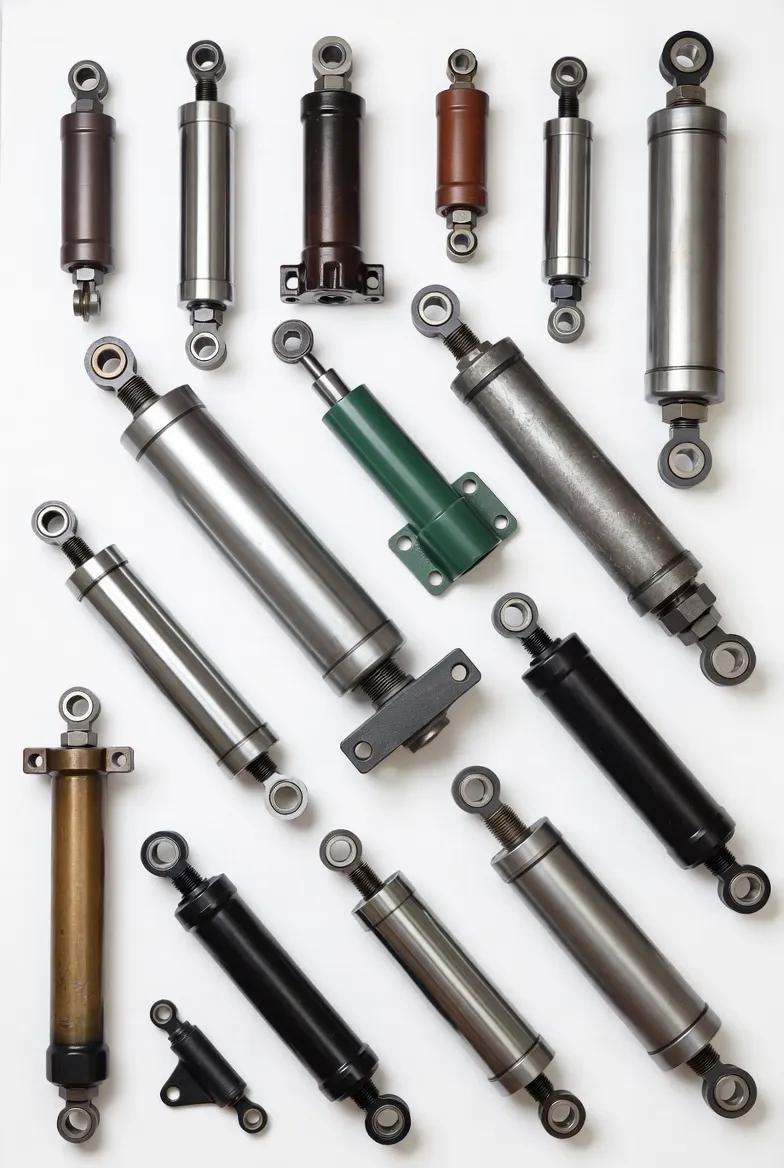
Specialized Testing for Double Acting and Telescoping Cylinders
Different hydraulic cylinder configurations require adapted test procedures to fully evaluate all potential leakage paths and verify complete pressure integrity.
- ?
Double Acting Cylinder Testing Sequence: Thorough pressure testing of double acting hydraulic cylinders requires testing both the cap end and rod end pressure chambers independently. Begin by connecting the test circuit to the cap end port while leaving the rod end port open to atmosphere. Pressurize the cap end to the specified test pressure. During cap end pressurization, the piston seal is loaded in one direction, and any fluid observed at the open rod end port indicates piston seal bypass. After completing the cap end test and depressurizing, connect the test circuit to the rod end port with the cap end port open. Pressurize the rod end to test pressure. The effective annular area on the rod side is smaller than the full piston area, so the same test pressure generates lower total force, but the piston seal is loaded in the opposite direction, potentially revealing leakage paths not evident during cap end testing. Observe the rod seal area for external leakage during both test phases. For cylinders equipped with cushioning systems at both ends, cycle the cylinder to engage the cushions during testing to verify that cushion seals and passages are leak free under pressure. After independent testing of both sides, some specifications require testing with both sides simultaneously pressurized to verify the static seals at the head gland and cap interface under differential pressure conditions.
- ?
Telescoping Cylinder Multi Stage Testing: Telescoping hydraulic cylinders present unique challenges for pressure testing due to their multiple stages with different effective areas and the sequential extension of stages. Each stage must be tested independently at its rated working pressure. Extend the first stage fully and secure it to prevent further extension during pressurization. Test this stage to its rated pressure while monitoring for external leakage at the stage seals and internal leakage to the next stage. After depressurizing, extend the second stage and repeat the process. Continue until all stages have been individually tested. Pay particular attention to the interstage seals, which are often the most difficult to replace and the most likely to leak in service. For single acting telescoping cylinders that rely on gravity or load for retraction, the test setup must accommodate the cylinder orientation and ensure that all stages can be properly extended and pressurized. The large volumes typical of telescoping cylinders require proportionally larger test fluid volumes and longer fill and bleed times to ensure all air is removed before pressurization.
- ?
Test Documentation and Certification Requirements: Comprehensive documentation of hydraulic cylinder pressure testing provides the quality record essential for traceability, regulatory compliance, and future reference. A complete test report should include the cylinder identification including model number, serial number, bore, stroke, and working pressure rating; the test date and identification of the technician performing the test; the test method employed including the test medium and instrumentation used with calibration dates; the test pressures achieved for each chamber tested; the pressure hold duration and any pressure decay observed; the results of visual inspection and any quantitative leakage measurements; and the final disposition including pass or fail determination and any observations relevant to cylinder condition. For cylinders destined for regulated industries or safety critical applications, test reports should be signed and dated by qualified quality assurance personnel. The test report becomes part of the cylinder’s permanent quality record and supports warranty claims, future troubleshooting, and decisions regarding cylinder rebuild or replacement. Retain test reports in accordance with the organization’s document retention policies and any applicable regulatory requirements.

Troubleshooting Common Pressure Test Failures
When a hydraulic cylinder fails pressure testing, systematic troubleshooting identifies the specific root cause and guides effective corrective action.
External Rod Seal Leakage Diagnosis
Rod seal leakage detected during pressure testing can originate from multiple root causes requiring different corrective actions. If leakage occurs immediately upon pressurization at relatively low pressure, the most likely cause is installation damage to the rod seal, such as a cut or nick from passing over sharp threads without an installation sleeve. The seal may be installed backwards, with the dynamic lip facing the wrong direction such that pressure forces the lip away from the rod rather than against it. If leakage begins only at higher test pressures, the extrusion gap between the rod and head gland may be excessive due to worn rod bushing or incorrect machining tolerances, allowing the seal to extrude into the gap. Contamination trapped between the seal lip and rod surface during assembly can create a persistent leakage path that does not improve with cycling. For each of these failure modes, cylinder disassembly and careful examination of the removed seal will reveal the specific cause: a cut or nick indicates installation damage, a seal with the lip facing outward indicates incorrect orientation, and a nibbled or frayed low pressure edge indicates extrusion. Understanding the specific cause guides corrective action to prevent recurrence.
Internal Piston Bypass Investigation
Internal leakage across the piston seal detected during pressure testing similarly has several potential root causes. If the piston seal was damaged during installation over sharp port edges or burrs in the cylinder bore, bypass will be evident from the first pressurization. An incorrectly sized piston seal, either due to wrong part selection or inaccurate bore measurement, will provide inadequate radial squeeze and allow bypass. A piston seal installed backwards may seal in one direction but leak in the other, producing asymmetric bypass that is more pronounced during testing of one cylinder side than the other. Worn or incorrectly sized wear rings can allow the piston to cock within the bore, creating uneven seal compression and localized leakage paths. As with rod seal failures, disassembly and careful inspection provides the evidence necessary to identify the specific root cause. Measuring piston seal dimensions, bore diameter, and wear ring thickness against specifications often reveals the source of the problem. Documenting these findings supports continuous improvement in cylinder rebuild processes and reduces the likelihood of repeat failures.
Static Seal and Threaded Connection Leakage
Leakage at static seal interfaces including the head gland to barrel O-ring, cap to barrel O-ring, and port fittings typically results from assembly errors or surface defects rather than seal material failure. Common causes include O-rings pinched or twisted during assembly, O-ring grooves contaminated with debris preventing proper seal seating, insufficient bolt torque allowing joint separation under pressure, and damaged or corroded sealing surfaces that prevent uniform O-ring compression. When static seal leakage is detected during pressure testing, first attempt to correct the issue by incrementally increasing bolt torque within specified limits while monitoring for leakage reduction. If torque correction does not resolve the leakage, depressurize and disassemble the leaking joint to inspect the O-ring and sealing surfaces. A pinched O-ring will exhibit a characteristic flattened or cut section where it was trapped between mating surfaces. Surface imperfections can be dressed with fine abrasive cloth, but deep pitting or corrosion damage may require component replacement or remachining to restore seal integrity.
Mastering how to pressure test a hydraulic cylinder for leaks is a fundamental quality assurance competency that directly verifies actuator integrity before the cylinder is placed into service. The disciplined execution of properly designed test procedures, combined with systematic interpretation of test results and appropriate corrective action for failures, ensures that every hydraulic cylinder meets its pressure containment requirements and will perform reliably throughout its intended service life.

Conclusion: Ensuring Hydraulic Cylinder Integrity Through Rigorous Pressure Testing
Pressure testing is the definitive quality verification step that confirms hydraulic cylinders can safely and reliably contain their rated working pressures without external leakage, internal bypass, or structural deformation. The comprehensive testing framework presented in this guide safety conscious test preparation, methodical hydrostatic and pneumatic testing procedures, quantitative leakage assessment, and systematic failure analysis provides the technical foundation for conducting meaningful pressure tests that genuinely validate cylinder integrity. The investment of time and care in proper pressure testing pays dividends throughout the cylinder’s service life: commissioning problems are avoided, warranty claims are minimized, and the confidence of end users in the reliability of their hydraulic equipment is justified. By treating pressure testing not as a perfunctory final check but as a rigorous quality assurance process demanding proper equipment, trained personnel, and objective acceptance criteria, fluid power professionals ensure that every cylinder placed into service has been verified to meet the fundamental requirement of leak free pressure containment upon which all other aspects of cylinder performance depend.