
Fluid Power Structural Engineering
What Causes a Hydraulic Cylinder Rod to Bend? A Definitive Engineering Analysis
An authoritative technical guide exploring Euler buckling physics, devastating side loading forces, mechanical misalignment, and the preventative metallurgical strategies required to safeguard fluid power actuators.

The Catastrophic Failure of Linear Force
In the highly intensive sectors of heavy construction, deep underground mining, automated manufacturing, and commercial agriculture, fluid power systems are relied upon to deliver unparalleled kinetic force. Hydraulic cylinders act as the fundamental mechanical muscles of this machinery, converting the hydrostatic energy of pressurized fluid into precise linear motion capable of lifting hundreds of thousands of pounds. The entirety of this massive mechanical force is transmitted to the external world through a single, highly specialized component: the piston rod. When equipment operators or mechanical design engineers ask what causes a hydraulic cylinder rod to bend, they are confronting one of the most destructive and expensive catastrophic failures in the entire fluid power industry.
A bent hydraulic cylinder rod is never a minor operational inconvenience; it is a terminal structural failure. The piston rod is machined to exact micrometer tolerances to glide flawlessly through the internal bronze bearing guides and polyurethane high pressure seals located within the cylinder head gland. The moment a rod bends even by a fraction of a single degree it transforms from a precision linear transmission shaft into a massive, destructive eccentric cam. As the bent rod attempts to retract into the cylinder housing, it binds aggressively against the internal components. This violent metal on metal grinding instantly shatters the brass guide bands, completely obliterates the primary pressure seals, and results in an immediate, massive external fluid blowout.
From a highly authoritative engineering perspective evaluated against international fluid power reliability standards, a bent cylinder rod is almost universally the symptom of external mechanical abuse or improper system design, rather than a manufacturing defect of the cylinder itself. Hydraulic actuators are strictly designed to push and pull in a perfectly straight line. When they are subjected to lateral bending moments, misaligned mounting geometry, or compressive forces that exceed the mathematical limits of the steel, the rod yields. This comprehensive technical engineering manual will meticulously dissect the physics of Euler buckling, the devastating effects of lateral side loading, and the predictive maintenance protocols required to prevent hydraulic cylinder rod bending.
Culprit 1: Euler Buckling and Column Strength Limits
The most fundamental mathematical cause of a bent hydraulic rod is exceeding the critical buckling load of the material. In engineering terms, when a cylinder extends to push a payload, the extended rod acts as a slender column subjected to extreme compressive stress.
The Physics of Euler Buckling
Discovered by mathematician Leonhard Euler, the buckling formula determines the exact amount of compressive force a column can withstand before it loses structural stability and bows outward. The hydraulic cylinder column strength is dictated by three primary factors: the physical diameter of the steel rod, the fully extended stroke length, and the mounting style of the cylinder. If a cylinder with a long stroke and a relatively thin rod is commanded to push a massive, immovable payload at maximum hydraulic pressure 3000 PSI or higher the immense compressive force will rapidly exceed the Euler limit. The steel will yield, bowing outward until it permanently deforms and bends.
Undersized Rod Specification
A highly common engineering mistake when designing custom machinery is specifying a cylinder with an undersized rod diameter to save on upfront component costs. While a cylinder with a large bore and a thin rod might generate the necessary pushing tonnage mathematically, the thin rod lacks the geometric moment of inertia required to survive the stroke. To prevent buckling in long stroke applications, engineers must specify heavily oversized rods, or implement mechanical safeguards like internal stop tubes to increase the structural overlap between the piston and the head gland when fully extended.

Culprit 2: The Devastating Impact of Side Loading
If a hydraulic cylinder rod bending causes analysis rules out pure compressive overloading, the investigation must immediately pivot to lateral forces. Hydraulic cylinders are strictly engineered to transmit force in a perfectly straight, linear axis. They possess virtually zero structural tolerance for lateral or perpendicular stress. This destructive lateral stress is universally known within the fluid power industry as side loading.
Side loading hydraulic cylinder failure occurs when a force pushes against the side of the extended piston rod, rather than pushing directly down its centerline. When a rod is fully extended, it acts like a massive steel lever. Even a relatively small lateral force applied at the tip of the rod generates an enormous bending moment at the cylinder head gland. This lateral leverage aggressively forces the hardened chrome rod to grind into one side of the brass bearing guides, while simultaneously forcing the internal piston against the opposite wall of the steel barrel. If the lateral force is severe enough, the steel rod will simply yield and bend permanently.
Common Operational Causes of Side Loading
- –Improper Equipment Operation: The most frequent cause of side loading is operator abuse. For example, if an excavator operator uses the side of the bucket to forcefully sweep heavy concrete debris laterally, massive side loads are transmitted directly into the extended arm cylinders, instantly bending the rods.
- –Chassis Flex and Uneven Terrain: In mobile applications, such as a dump truck raising a heavy load, the machine must be perfectly level. If the truck is parked on a steep incline and raises the bed, the shifting center of gravity of the payload exerts a severe lateral pulling force on the extended telescopic cylinder stages, causing them to bend and buckle.
- –Worn Machine Linkages: If the primary structural pivot pins and bushings on the heavy machinery become worn and sloppy, the entire mechanical linkage will twist during operation. This twisting motion drags the hydraulic cylinder out of linear alignment, forcing the rod to bend as it struggles to follow the warped trajectory of the machine arm.

Culprit 3: Mounting Misalignment and Pivot Binding
A hydraulic actuator is only as reliable as the brackets that anchor it to the machinery. If the mounting geometry is compromised, even the thickest, highest quality steel rod will eventually bend under the strain.
Clevis Pin Seizure
Cylinders that drive sweeping radial arcs, such as crane booms or loader arms, utilize clevis mounts or trunnion mounts to pivot freely during extension. These pivot points must be aggressively and continuously greased. If a maintenance technician neglects to lubricate the clevis pin, the immense friction will cause the steel pin to gall and permanently seize inside the mounting bracket. When the cylinder attempts to extend, it can no longer swing to follow the arc of the machine. The rigidly seized mount forces the extending rod to bend in half to accommodate the mechanical movement.
Rigid Mount Misalignment
In automated factory environments, cylinders are frequently bolted directly to the machine frame using rigid flange mounts or extended tie rods. During installation, the centerline axis of the cylinder must be perfectly parallel to the guide rails of the moving payload. If the mounting plate is welded at even a slight angle, or if the mounting bolts are torqued unevenly, the cylinder will extend at a diagonal trajectory relative to the payload. As it extends, the rigid payload forces the rod back into alignment, inducing massive bending moments that will permanently warp the shaft.
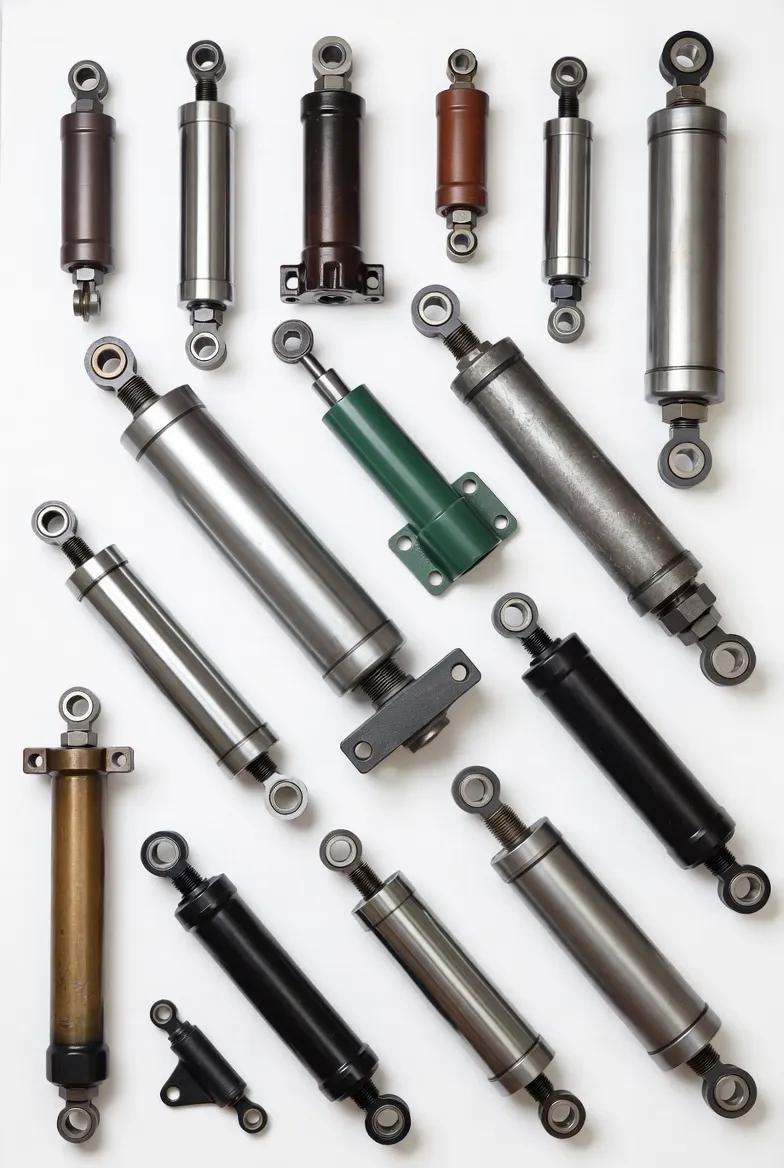
Culprit 4: Metallurgical and Design Inadequacies
Occasionally, the cause of a bent hydraulic cylinder rod is not external abuse, but rather an inherent inadequacy in the metallurgical selection or the structural design of the actuator itself for the specific operational environment.
- ✔️
Low Yield Strength Steel Alloys: Standard hydraulic rods are manufactured from 1045 medium carbon steel, which offers a yield strength of roughly 75,000 PSI. If a heavy duty cylinder is subjected to massive, violent shock loads such as a metal stamping press or a rock crusher 1045 steel is simply too weak. Engineers must upgrade the rod metallurgy to a 4140 chromoly alloy steel, which provides a significantly higher yield strength exceeding 100,000 PSI, allowing it to absorb brutal compressive shocks without bending.
- ✔️
Lack of Internal Stop Tubes: When a cylinder reaches maximum extension, the only structural overlap keeping the rod straight is the distance between the piston and the head gland. In extremely long stroke cylinders, this minimal overlap creates a severe weak point. High quality cylinders designed for long horizontal pushes incorporate internal stop tubes. These heavy steel spacers physically prevent the piston from fully extending to the end of the barrel, artificially increasing the bearing overlap and drastically enhancing the structural rigidity of the extended rod to prevent buckling.

The Cascading Consequences and Diagnostic Symptoms
A bent rod is a terminal diagnosis for a hydraulic cylinder. The moment the rod deviates from a perfectly linear axis, it triggers a rapid chain reaction of mechanical destruction throughout the entire actuator.
The most obvious symptom is immediate, severe fluid leakage from the cylinder head gland. The bent rod crushes one side of the polyurethane wiper and pressure seals, leaving a massive gap on the opposite side for high pressure oil to escape. Secondly, operators will notice intense stick-slip friction. As the bent section of the rod attempts to force its way through the tight tolerances of the head gland, it binds heavily. The cylinder will judder, squeal, and violently pop as the hydraulic pump builds enough pressure to shove the warped steel through the bearing guides. If left in operation, this binding will eventually generate so much thermal friction that the bronze guide bands will shatter, contaminating the entire fluid power circuit with abrasive metal shavings.

Conclusion: Proactive Engineering and Maintenance
Understanding exactly what causes a hydraulic cylinder rod to bend is the fundamental bedrock of proactive heavy machinery design and preventative maintenance. Piston rods do not bend spontaneously; they are destroyed by a combination of mathematical overloading, severe lateral side loading, and neglected mounting kinematics. By ensuring absolute precision during structural alignment, upgrading to spherical bearing mounts to absorb machine chassis flex, aggressively lubricating pivot pins to prevent seizure, and specifying heavily oversized 4140 steel rods for long stroke applications, engineering professionals can eliminate this catastrophic failure mode. Protecting the linear integrity of the actuator guarantees operational safety, mitigates crippling repair costs, and ensures the world’s most powerful equipment performs with relentless reliability.