
Fluid Power Reliability Engineering
What Causes a Hydraulic Cylinder to Fail? A Comprehensive Engineering Analysis
An authoritative technical guide exploring fluid contamination, mechanical side loading, thermodynamic seal degradation, and the definitive root causes of linear actuator catastrophic failure in industrial environments.

The Inevitability of Mechanical Wear and Breakdown
In the rigorous, highly capital intensive domains of heavy construction, automated factory manufacturing, offshore marine operations, and commercial agriculture, fluid power systems are the undisputed backbone of mechanical force generation. Hydraulic cylinders are entrusted to lift, push, pull, and precisely position payloads weighing tens or hundreds of thousands of pounds. These linear actuators are marvels of metallurgical engineering, designed to contain hydrostatic pressures frequently exceeding five thousand pounds per square inch. However, despite their incredibly robust forged steel construction, they are not invincible. Every fluid power engineer, maintenance technician, and heavy equipment owner will eventually confront the devastating operational reality of a blown actuator. Understanding exactly what causes a hydraulic cylinder to fail is the absolute most critical component of establishing a successful predictive maintenance program.
Hydraulic cylinder failure is rarely an isolated, spontaneous event. A catastrophic blowout on a factory floor or a creeping boom on a construction site is almost universally the final symptom of a prolonged, underlying mechanical or chemical degradation process. When an actuator fails, the financial consequences extend far beyond the raw cost of purchasing a replacement cylinder or a seal kit. You must account for the hundreds of gallons of expensive synthetic hydraulic fluid spilled into the environment, the massive labor costs to deploy rigging teams for component extraction, and most devastatingly, the crippling cost of unplanned machine downtime. An idle piece of production machinery can easily bleed thousands of dollars of revenue per hour.
From an authoritative engineering perspective evaluated against international fluid power reliability standards, diagnosing the root cause of actuator failure requires a deep understanding of fluid dynamics, polymer chemistry, and structural mechanics. Cylinders do not simply break; they are destroyed by specific hostile vectors. These vectors include invisible particulate contamination scouring the internal bore, violent lateral forces bending the chrome rod, extreme thermodynamic heat spikes melting the internal seals, and severe chemical corrosion pitting the exterior envelope. This comprehensive, highly detailed technical manual will systematically dissect the primary causes of hydraulic cylinder failure, empowering maintenance professionals to identify destructive patterns before they culminate in catastrophic equipment breakdown.
The Number One Killer: Fluid Contamination
It is a universally accepted metric within the fluid power industry that over seventy five percent of all hydraulic system failures are directly attributable to contaminated hydraulic fluid. The oil is the lifeblood of the machine, and its purity is paramount.
Particulate Ingestion
Microscopic dirt, sand, and metal shavings are exceptionally abrasive. When these hard particles bypass the reservoir filters and enter the high pressure fluid stream, they are blasted against the internal components of the cylinder. As the piston travels back and forth, these particles become embedded in the soft polyurethane piston seals, essentially turning the seal into a piece of high speed liquid sandpaper. This aggressively scratches and scores the highly polished, honed interior finish of the cylinder barrel. Once deep longitudinal scores are carved into the steel tube, high pressure fluid easily bypasses the seal, resulting in immediate load drift and total loss of mechanical holding power.
Water and Moisture Intrusion
Water is a highly destructive contaminant in a fluid power system. Moisture frequently enters the reservoir through condensation caused by rapid thermal cycling in humid environments, or through degraded rod wiper seals during high pressure equipment washdowns. When water emulsifies with hydraulic oil, it severely degrades the fluid lubricity. This leads to accelerated friction between the piston wear rings and the barrel. More critically, free water in the system attacks the steel components, initiating rapid internal rust and oxidation. This rust flakes off, contributing to the particulate abrasive cycle, and weakens the structural integrity of the pressure vessel.

Seal Degradation: The Breakdown of Elastomeric Barriers
Hydraulic cylinder failure causes are frequently traced back to the failure of the internal dynamic seals. The entire operational premise of an actuator relies on perfectly intact seals preventing high pressure fluid from escaping its designated chamber. When these highly engineered polymer components fail, the machine loses its ability to generate or maintain physical force.
Seal Extrusion and Nibbling
Extrusion is a mechanical failure mode directly related to extreme operating pressures. Under thousands of PSI, the polyurethane or nitrile seal material behaves almost like a highly viscous liquid. It attempts to flow away from the high pressure zone. If the microscopic clearance gap between the metal piston and the metal cylinder barrel is too wide due to manufacturing defects or wear, the extreme pressure will physically force the soft seal material into this gap. This is known as extrusion. As the cylinder strokes, this extruded lip of seal material is violently pinched and sheared off, a process called nibbling. Eventually, the seal is entirely destroyed, leading to massive internal fluid bypass and cylinder drift.
Incorrect Seal Installation and Rolling
A staggering percentage of premature hydraulic cylinder failures are caused by improper maintenance procedures during a rebuild. High pressure seals, particularly U cups and energized PTFE rings, are incredibly stiff and directional. If a mechanic installs a seal backwards, it will not flare out to block the fluid pressure, resulting in immediate failure. Furthermore, if a seal is forced into the barrel without adequate lubrication or without using a proper ring compressor sleeve, it can twist or roll inside its groove. A rolled seal provides a massive, continuous leak path and will quickly be shredded by the kinetic movement of the piston.

Mechanical Stress: Side Loading and Structural Failure
Hydraulic cylinders are engineered explicitly to deliver force in a perfectly straight, linear direction. They are highly susceptible to catastrophic destruction when subjected to extreme lateral or bending forces.
The Danger of Side Loading
Side loading hydraulic cylinder failure is a critical engineering hazard. It occurs when an external force pushes against the piston rod from a perpendicular angle, rather than parallel to the stroke. This often happens due to worn machine mounting pins, misaligned installation brackets, or using an excavator boom to sweep heavy debris sideways. Side loading forces the steel piston rod to aggressively grind against one side of the cylinder head gland, and simultaneously forces the internal piston to grind heavily against the opposite side of the barrel. This metal on metal contact rapidly obliterates the wear rings, gouges the chrome rod, scores the barrel, and destroys the sealing architecture.
Bent Piston Rods
A direct consequence of extreme side loading, or attempting to push a payload that far exceeds the maximum column buckling strength of the rod, is a bent piston rod. Once a hydraulic cylinder rod is bent even by a fraction of a degree it acts like a massive cam inside the actuator. Every time it retracts through the head gland, the bowed section crushes the rod seals and the bronze bearing guides. A bent rod guarantees immediate and relentless external fluid leakage and necessitates total replacement of the rod assembly.
Barrel Ballooning
If a machine operator violently shocks the system for example, dropping a heavy load and instantly stopping it by slamming the directional valve shut the trapped fluid experiences an astronomical, instantaneous pressure spike. If this spike vastly exceeds the rated yield strength of the steel tube, the barrel will permanently stretch and deform outward, a condition known as ballooning. When the piston passes through this swelled section of the tube, the seals lose contact with the wall, causing massive internal fluid bypass and total loss of holding power.
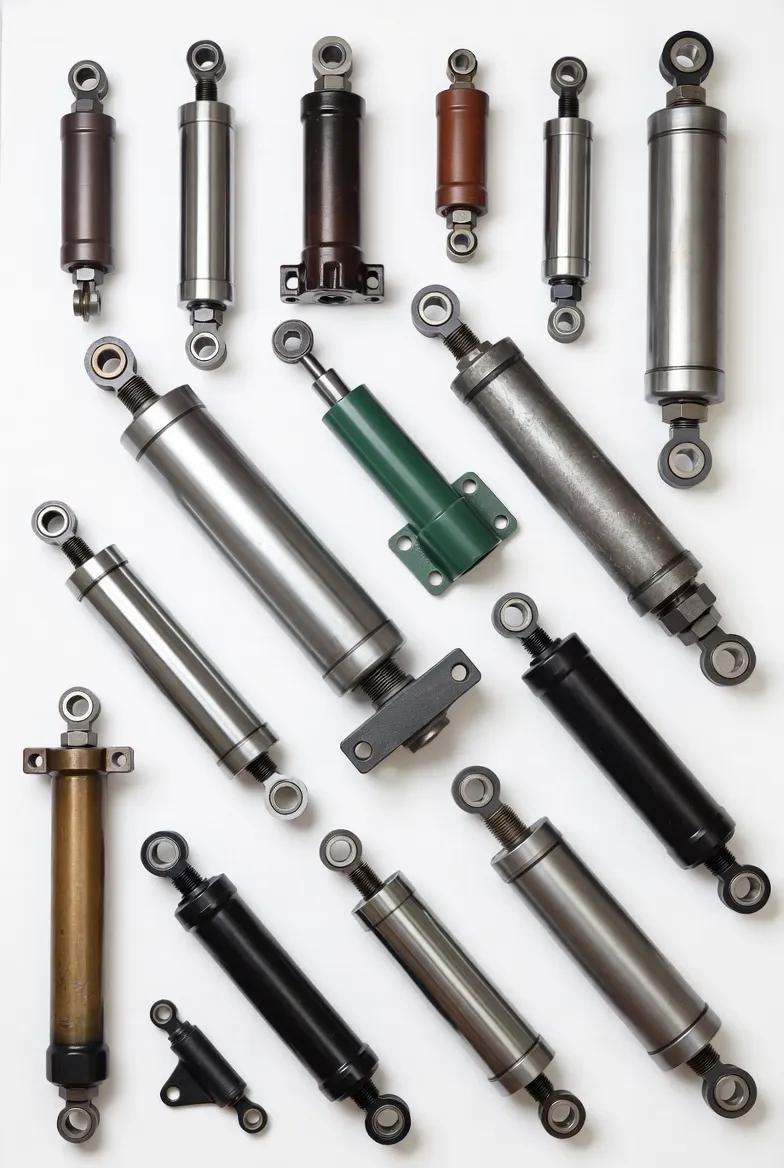
Thermodynamics and Cavitation: Invisible Destructive Forces
Not all causes of hydraulic cylinder failure are immediately visible as bent steel or leaking fluid. Thermodynamic extremes and complex fluid physics can hollow out an actuator from the inside out.
- ✔️
Thermal Degradation (Overheating): Hydraulic systems generate heat. If the heat exchangers fail, or if the pump is constantly driving fluid over a high pressure relief valve due to an undersized cylinder, the oil temperature will skyrocket. Standard nitrile and polyurethane seals have strict maximum operating temperatures, typically around 180 to 200 degrees Fahrenheit. Prolonged exposure to superheated oil causes the elastomeric polymers to bake, harden, and become brittle. They lose all elasticity, crack under pressure, and fail entirely. Furthermore, extreme heat drastically thins the hydraulic fluid, destroying its lubricating properties and increasing metal friction.
- ✔️
Cavitation Erosion: If a pump cannot supply fluid to a rapidly extending cylinder fast enough, it creates a massive vacuum in the chamber. This low pressure void pulls dissolved air out of the hydraulic oil, forming vapor bubbles. When the cylinder stops and high pressure instantly returns, these microscopic vapor bubbles violently implode against the steel wall of the cylinder barrel. The shockwaves from these implosions are so intense they actually blast microscopic chunks of solid steel out of the barrel wall. Over time, cavitation leaves the interior of the cylinder looking heavily pitted, resembling the surface of the moon, which utterly destroys the piston seals as they pass over the rough terrain.
- ✔️
The Diesel Effect: A horrific consequence of allowing air to remain trapped in a cylinder. When high pressure hydraulic fluid suddenly compresses a trapped air bubble, the immense pressure generates astronomical localized heat, mimicking the ignition cycle of a diesel engine. This micro-explosion literally burns the hydraulic oil, producing black carbon soot and superheated shockwaves that melt the surrounding synthetic seals and score the barrel.

The Digital Horizon: Predictive Diagnostics
The modern heavy machinery industry is no longer content with reacting to catastrophic failures after they occur. The global fluid power sector is rapidly adopting Industry 4.0 methodologies to predict and prevent the root causes of actuator destruction before they paralyze an operation.
Next generation smart hydraulic cylinders are being deeply integrated with a suite of IoT diagnostic sensors. High resolution internal pressure transducers monitor the exact fluid pressure on both sides of the piston, instantly alerting operators to extreme pressure spikes that could cause barrel ballooning. Embedded vibration sensors analyze the stroke frequency to detect the early kinematic shuddering associated with severe side loading or bent rods. Real time fluid condition monitors constantly sample the oil for particulate spikes and water intrusion, alerting maintenance teams to flush the system long before the abrasive contaminants can destroy the internal seals. This transition toward AI driven predictive maintenance is revolutionizing equipment reliability.

Conclusion: Mitigating Risk Through Engineering Awareness
Understanding exactly what causes a hydraulic cylinder to fail is the fundamental bedrock of proactive heavy machinery maintenance. Hydraulic actuators do not break randomly; they are systematically destroyed by a combination of abrasive fluid contamination, extreme mechanical side loading, thermodynamic overheating, and the devastating physics of cavitation. By recognizing the diagnostic symptoms of a damaged hydraulic rod, implementing rigorous fluid filtration protocols, preventing improper installation of seals during repair, and utilizing advanced predictive telemetry, engineering professionals can vastly extend the operational lifespan of these critical components. Mastering fluid power reliability guarantees operational safety, mitigates crippling repair costs, and ensures the world’s most powerful equipment performs relentlessly.