


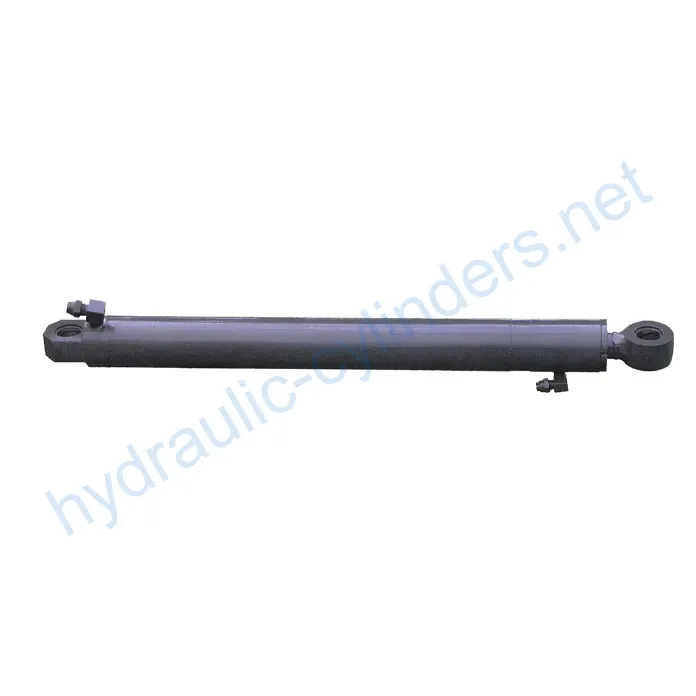
Arm Cylinder For Sany Small Excavator SY75C-9
Introduksjon
Armsylinderen er en spesialdesignet hydraulisk sylinder som gir lineær bevegelse og kraft til armen på diverse maskiner, som gravemaskiner, kraner og robotarmer. Den spiller en avgjørende rolle i hydrauliske systemer, og muliggjør effektiv bevegelse og kontroll av tilleggsverktøy eller tilbehør. Disse sylindrene muliggjør ikke bare jevn bevegelse, men tåler også tunge belastninger, noe som sikrer effektiv drift og pålitelighet av maskineriet under ulike arbeidsforhold.
Definisjon
The arm cylinder, also known as the boom cylinder, is a hydraulic cylinder specifically designed to provide linear motion and power to the arm of machinery. It is responsible for the extension and retraction of the arm, allowing for precise control and efficient operation of the equipment.
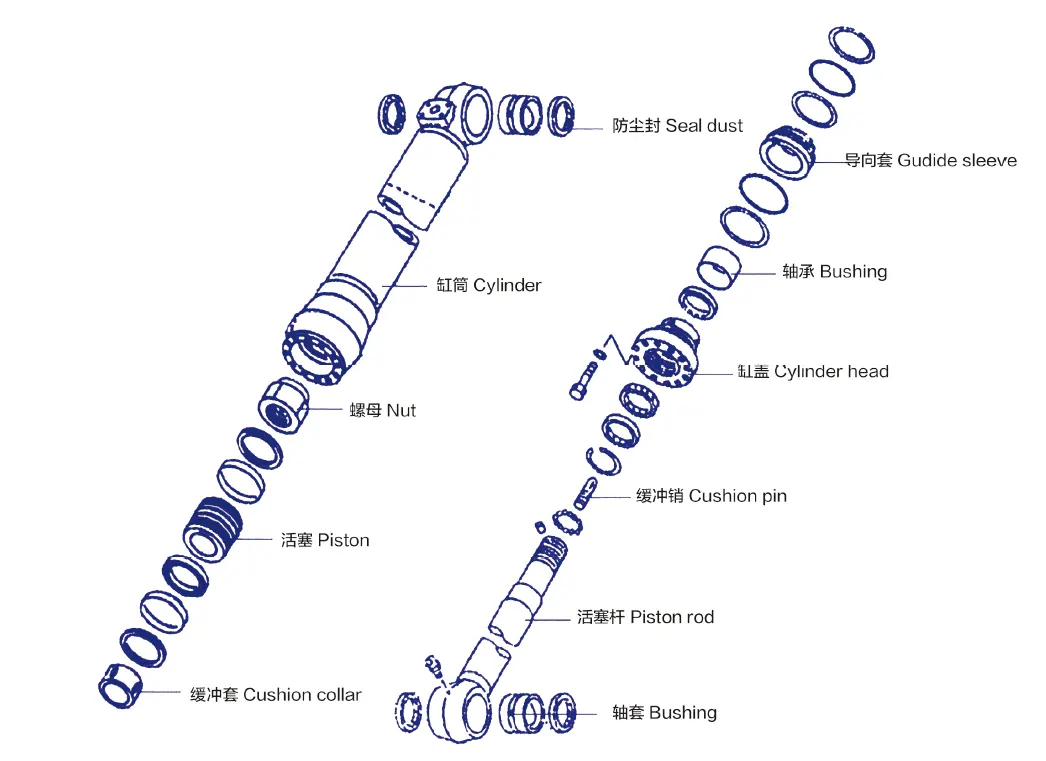

Funksjoner
- Høyeffektiv girkasse: The arm cylinder provides powerful linear motion and force, ensuring high-performance operation of the machinery.
- Presis kontroll: Gjennom det hydrauliske systemet muliggjør armsylinderen presis bevegelseskontroll, noe som gjør betjeningen av tilleggsverktøy mer fleksibel og nøyaktig.
- Varighet: Armsylindere er vanligvis laget av høyfaste materialer og har utmerket slitestyrke og korrosjonsbestandighet, noe som gjør dem egnet for langvarig bruk i tøffe miljøer.
- Multifunksjonell tilpasningsevne: Disse sylindrene kan brukes mye i ulike maskiner, som gravemaskiner, kraner og robotarmer, og tilpasser seg ulike arbeidskrav.
- Enkelt vedlikehold: The design of the arm cylinder takes into consideration ease of maintenance and replacement, making regular inspections and servicing more convenient and reducing equipment downtime.


Bruksområder
Armsylinderen finner bruksområder i ulike bransjer:
1. Byggteknikk
In excavators and cranes, the arm cylinder is used to control the movement of the bucket or boom, enabling earthworks, material handling, and structural installations.
2. Produksjon
I automatiserte produksjonslinjer brukes armsylinderen til bevegelse av robotarmer, noe som muliggjør montering, sveising og materialhåndteringsprosesser, og forbedrer produksjonseffektiviteten og presisjonen.
3. Landbruksmaskiner
In agricultural machinery such as harvesters and planters, the arm cylinder controls the movement of the operating arm, performing tasks like sowing, fertilizing, and harvesting.
4. Gruvedrift
In mining equipment, the arm cylinder is used to control the arm movement of mining machinery, enabling the extraction and transportation of ores.
5. Logistikk og transport
In forklifts and handling robots, the arm cylinder is used for controlling the lifting and movement of forks, facilitating material handling and stacking.


Designhensyn og utvalgskriterier
When designing arm cylinders, several key factors need to be considered:
1. Bæreevne
The arm cylinder should be designed to withstand the maximum load it will be subjected to during operation, ensuring safe and reliable performance.
2. Tetting
Various sealing components, such as piston seals and rod seals, are used to prevent leakage and ensure the hydraulic system operates efficiently. Durable and wear-resistant materials, such as polyurethane and nitrile rubber, are commonly used for seals.
3. Holdbarhet
Arm cylinders are manufactured using high-strength materials and undergo surface treatments to enhance wear resistance. This ensures the longevity of the cylinder, even in demanding working environments.
4. Sikkerhet
Design features should prioritize operator safety, including measures such as safety valves to prevent overloading and protective shields to minimize the risk of accidents.
5. Vedlikeholdbarhet
The design should allow for easy maintenance and repair, ensuring that regular inspections and necessary replacements can be performed conveniently, reducing downtime and improving productivity.


Tetting og smøring
The arm cylinder utilizes various sealing components, such as piston seals and rod seals, which are made of durable and wear-resistant materials like polyurethane and nitrile rubber. The cylinder body and threaded end surfaces are finely treated to enhance wear resistance. Regular lubrication with the appropriate hydraulic oil is required to ensure smooth operation and minimize friction.
Regelmessig inspeksjon og forebyggende vedlikehold
To maintain optimal performance and prolong the lifespan of the arm cylinder, the following measures are recommended:
1. Regularly check for leaks, wear, or damage to the sealing components.
2. Inspect the cylinder body and threaded end surfaces for any signs of wear or corrosion.
3. Ensure proper lubrication by periodically adding the recommended amount of hydraulic oil.
4. Check the hydraulic system for any abnormal pressure or temperature fluctuations.


Produktinstallasjonsveiledning
Riktig montering av armsylinderen er avgjørende for dens ytelse og sikkerhet. Følg disse trinnene:
1. Securely position the cylinder in the designated mounting location on the machinery.
2. Connect the hydraulic hoses to the appropriate ports, ensuring proper sealing.
3. Make sure all fasteners are securely tightened, but avoid over-tightening.
4. Test the cylinder’s functionality and inspect for any leaks before operating the machinery.

Sikkerhetshensyn og miljøfaktorer
When using the arm cylinder, it is important to prioritize safety measures. Some key considerations include:
1. Follow all safety guidelines and instructions provided by the equipment manufacturer.
2. Properly train operators on the safe operation and maintenance of the machinery.
3. Regularly inspect the arm cylinder for any signs of wear, damage, or leaks that could jeopardize safety.
4. Dispose of hydraulic fluids and components in accordance with environmental regulations.
Feilsøking og vanlige problemer
Arm cylinders may encounter certain problems. Here are some common issues and their possible solutions:
1. Lekkasje
If there is a noticeable hydraulic fluid leak, inspect the seal components and replace any damaged seals. Ensure proper assembly and tightness of all connections.
2. Langsom eller inkonsekvent bevegelse
Check hydraulic fluid levels and pressure. If necessary, replace worn-out or damaged components that may be causing fluid restriction or pressure loss.
3. Noisy Operation
Noise during operation could indicate worn-out or damaged components. Inspect and replace any faulty parts accordingly.
4. Excessive Vibration
Excessive vibration may be caused by misalignment or worn-out components. Inspect and reposition or replace