

Arm CylinderFor Doosan Small Excavator DH55G
Som en av produsentene, leverandørene og eksportørene av mekaniske produkter tilbyr vi hydrauliske sylindere og mange andre produkter.
Ta kontakt med oss for mer informasjon.
Post:sales@hydraulic-cylinders.net
Produsent, leverandør og eksportør av hydrauliske sylindere.
Arm Cylinder for Doosan Small Excavator DH55G
Introduksjon:
The arm cylinder is a specially designed hydraulic cylinder that provides linear motion and power to the arm of various machinery, such as excavators, cranes, and robotic arms. The arm cylinder plays a crucial role in hydraulic systems, allowing additional tools or attachments to move and be controlled effectively. These cylinders not only enable smooth motion but also withstand heavy loads, ensuring efficient operation and reliability of the machinery under various working conditions.
Definisjon og forklaring:
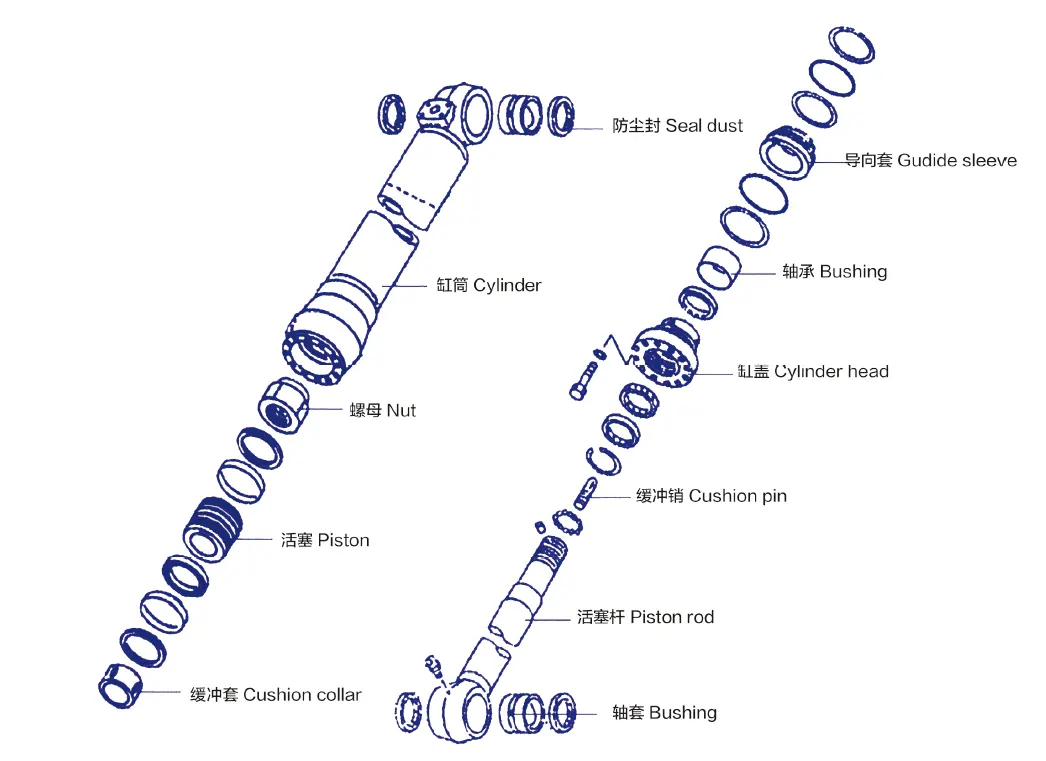
The arm cylinder, also known as the boom cylinder, is an essential component in hydraulic systems. It consists of a cylinder barrel, piston, rod, and various seals. The cylinder barrel houses the piston, which moves back and forth within the cylinder to provide linear motion. The rod connects the piston to the arm or boom of the machinery, transferring the force generated by the hydraulic fluid to perform tasks such as digging, lifting, and material handling. The seals prevent leakage and maintain the necessary pressure for efficient operation.
Funksjoner:
- Høyeffektiv girkasse: The arm cylinder provides powerful linear motion and force, ensuring high-performance operation of the machinery arm in various operations.
- Presis kontroll: Gjennom det hydrauliske systemet muliggjør armsylinderen presis bevegelseskontroll, noe som gjør betjeningen av tilkoblede verktøy mer fleksibel og nøyaktig.
- Sterk holdbarhet: Arm cylinders are typically made of high-strength materials, providing excellent wear and corrosion resistance for prolonged use in harsh environments.
- Allsidig tilpasningsevne: These cylinders can be widely applied to various machinery equipment, including excavators, cranes, and robotic arms, catering to different work requirements.
- Enkelt vedlikehold: Designed with ease of maintenance and replacement in mind, arm cylinders facilitate regular inspection and upkeep, reducing equipment downtime.

Bruksområder:
- Byggteknikk: I gravemaskiner og kraner styrer armsylinderen bevegelsen til skuffen eller bommen, noe som forenkler jordarbeid, materialhåndtering og strukturell installasjon.
- Produksjonsindustri: In automated production lines, the arm cylinder enables the motion of robotic arms for processes such as assembly, welding, and material handling, enhancing production efficiency and precision.
- Landbruksmaskiner: In agricultural equipment like harvesters and seeders, the arm cylinder controls the movement of the operating arms, performing tasks such as seeding, fertilizing, and harvesting.
- Gruvedrift: I gruveutstyr styrer armsylinderen armbevegelsen til gruvemaskineriet, noe som letter malmutvinning og transport.
- Logistikk og transport: I gaffeltrucker og håndteringsroboter styrer armsylinderen løfting og bevegelse av gafler, noe som muliggjør håndtering og stabling av materialer.
Designhensyn og utvalgskriterier:
Designhensyn:
- Bæreevne: The arm cylinder should be designed to withstand the maximum load expected during operation to ensure safety and prevent failure.
- Tetting: Proper selection of seals, such as piston seals and rod seals, is crucial to maintain hydraulic fluid integrity and prevent leakage.
- Varighet: The materials used in the arm cylinder should possess excellent wear resistance and corrosion resistance to withstand challenging operating conditions.
- Sikkerhet: Safety features, such as pressure relief valves and mechanical locks, should be incorporated into the design to prevent accidents and ensure operator protection.
- Vedlikeholdbarhet: Designing the arm cylinder for easy maintenance and repair reduces downtime and enhances the overall lifespan of the hydraulic system.

Tetting og smøring:
The arm cylinder utilizes various sealing components, such as piston seals and rod seals, made from wear-resistant materials like polyurethane and nitrile rubber. The cylinder barrel and threaded ends undergo meticulous surface treatments to enhance wear resistance. Regular lubrication with the appropriate hydraulic oil is essential to ensure smooth operation and prevent premature wear of the seals and other moving parts.
Vedlikehold og forebyggende tiltak:
- Regularly inspect the arm cylinder for signs of leakage, wear, or damage.
- Replace worn-out seals and components promptly to prevent system failure.
- Keep the hydraulic system clean to avoid contamination and maintain optimal performance.
- Monitor and adjust hydraulic fluid levels as recommended by the manufacturer.
- Follow proper installation procedures to ensure the arm cylinder functions correctly.

Installasjonsveiledning:
1. Ensure the machinery is powered off and the hydraulic system is depressurized.
2. Position the arm cylinder in the correct orientation, aligning the rod with the arm or boom attachment point.
3. Securely attach the cylinder to the machinery using appropriate mounting brackets and bolts.
4. Connect the hydraulic hoses or lines to the cylinder’s inlet and outlet ports, following the manufacturer’s specifications.
5. Double-check all connections for leaks or loose fittings before pressurizing the hydraulic system.
6. Gradually increase the pressure and test the operation of the arm cylinder, ensuring smooth and accurate motion.

Sikkerhetshensyn og miljøfaktorer:
When working with arm cylinders, it is crucial to prioritize safety measures. Operators should receive proper training on equipment operation and safety protocols. Additionally, regular inspection and maintenance of the hydraulic system can help identify potential safety hazards and prevent accidents. Environmental factors, such as temperature and fluid compatibility, should also be taken into account to ensure optimal performance and longevity of the arm cylinder.
Feildiagnose og vanlige problemer:
1. Leaks: Inspect seals, connections, and fittings for signs of leakage. Replace worn or damaged components as necessary.
2. Slow or Inconsistent Movement: Check hydraulic fluid levels, filter condition, and system pressure. Clean or replace filters and adjust pressure if needed.
3. Excessive Noise or Vibration: Inspect mounting brackets, bolts, and attachments for looseness or damage. Tighten or replace components as necessary.
4. Cylinder Drift: Check for internal leaks or worn seals. Replace seals and ensure proper sealing to prevent drift.
5. Overheating: Verify proper hydraulic fluid levels and flow. Check for clogged filters or excessive system pressure. Address any issues accordingly.
Husk å organisere artikkelen logisk, bruke underoverskrifter for enkel navigering, innlemme relevante bilder eller diagrammer for bedre forståelse, og sørge for at innholdet er klart, konsist og egnet for lesere med varierende nivåer av teknisk kunnskap.
Forfatter: lyl
Hydraulisk sylinderapplikasjon:

 NB
NB  EN
EN  PT
PT  ES
ES  DE
DE  FR
FR  IT
IT  AR
AR  ZH
ZH  RU
RU  KO
KO  KA
KA  BG
BG  CS
CS  DA
DA  EL
EL  ET
ET  FI
FI  HU
HU  ID
ID  LT
LT  LV
LV  NL
NL  PL
PL  RO
RO  SK
SK  SL
SL  SV
SV  TR
TR  UK
UK