

Arm CylinderFor Komatsu Large Excavator PC300-3-5-6-7-8
Als één van de fabrikanten, de leveranciers en de exporteurs van van de hydraulische cilinders mechanische producten, bieden wij hydraulische cilinders en veel andere producten aan.
Neem contact met ons op voor meer informatie.
Mail:sales@hydraulic-cylinders.net
Fabrikant leverancier exporteur van hydraulische cilinders.
Invoering
The Arm Cylinder for Komatsu Large Excavator PC300-3-5-6-7-8 is a hydraulic cylinder designed specifically to provide linear motion and power for the arm of various types of machinery, such as excavators, cranes, and mechanical arms. The arm cylinder plays a crucial role in hydraulic systems, enabling the efficient movement and control of attachments or accessories. These cylinders not only ensure smooth motion, but also have the ability to withstand heavy loads, ensuring high efficiency and reliability of the machinery under various working conditions.
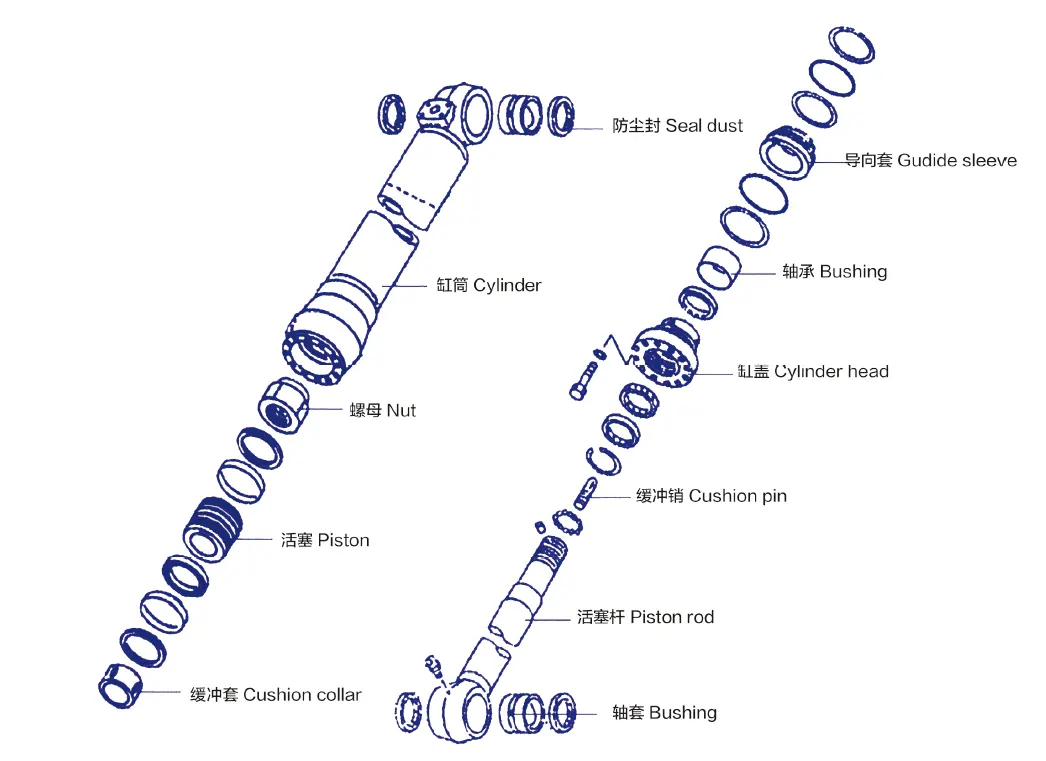
Functies
-
Hoogrendementstransmissie
The arm cylinder provides powerful linear motion and force, ensuring the high efficiency performance of the mechanical arm in various operations.
-
Nauwkeurige controle
Dankzij het hydraulische systeem zorgt de armcilinder voor een nauwkeurige bewegingscontrole, waardoor de bediening van aanbouwdelen flexibeler en nauwkeuriger wordt.
-
Duurzaamheid
The arm cylinder is typically manufactured using high-strength materials, providing excellent wear resistance and corrosion resistance, making it suitable for long-term use in harsh environments.
-
Multifunctionele aanpasbaarheid
These cylinders can be widely applied to various types of machinery, such as excavators, cranes, and mechanical arms, to meet different working requirements.
-
Eenvoudig onderhoud
Designed with maintenance and replacement in mind, the arm cylinders make regular inspection and maintenance more convenient, reducing equipment downtime.

Toepassingen
De armcilinder vindt zijn toepassingen in verschillende industrieën:
-
Bouwkunde
Bij graafmachines en kranen regelt de armcilinder de beweging van bakken of gieken voor grondwerk, materiaaltransport en structurele installatie.
-
Productie
In automated production lines, the arm cylinder is used for the motion of mechanical arms in processes like assembly, welding, and material handling, improving production efficiency and precision.
-
Landbouwmachines
Bij landbouwmachines zoals oogstmachines en zaaimachines regelt de armcilinder de beweging van de bedieningsarmen voor taken als zaaien, bemesten en oogsten.
-
Mijnbouw
In mining equipment, the arm cylinder controls the movement of the arm for mining and material handling.
-
Logistiek en transport
Bij heftrucks en handlingrobots regelt de armcilinder het heffen en bewegen van de vorken, waardoor materiaalverwerking en stapelen mogelijk wordt.
Ontwerpoverwegingen en selectienormen
When it comes to the design and selection of the arm cylinder, several factors need to be considered:
-
Draagvermogen
The arm cylinder should be designed to withstand the required load capacity to ensure safe and efficient operation.
-
Afdichten
Various sealing components, such as piston seals and rod seals, should be used to maintain proper sealing. These seals are made of durable materials like polyurethane and nitrile rubber to withstand wear and tear.
-
Duurzaamheid
The arm cylinder should be constructed with high-quality materials and undergo precise surface treatments to enhance durability and resistance to wear.
-
Veiligheid
The design should incorporate safety features to prevent accidents and ensure the safe operation of the machinery.
-
Onderhoudbaarheid
The arm cylinder should be designed for easy maintenance and replacement, reducing downtime and increasing productivity.

Afdichting en smering
The arm cylinder employs various sealing components, such as piston seals and rod seals, which are made of wear-resistant materials like polyurethane and nitrile rubber. The cylinder body and threaded end surfaces are finely treated to improve wear resistance. Regular lubrication with the appropriate amount of hydraulic oil is required to ensure smooth operation.

Regelmatige inspectie en preventief onderhoud
- Regularly inspect the arm cylinder for any signs of wear or damage.
- Controleer de afdichtingscomponenten en vervang deze indien nodig.
- Ensure proper lubrication and refill with hydraulic oil when needed.
- Inspect and maintain other components connected to the arm cylinder.
- Volg het door de fabrikant aanbevolen onderhoudsschema.
Richtlijnen voor productinstallatie
Volg deze stappen voor een correcte installatie van de armcilinder:
- Zorg dat u de benodigde gereedschappen en apparatuur bij de hand hebt.
- Carefully remove the existing cylinder, if applicable.
- Install the new arm cylinder in the correct position, aligning the mounting points.
- Tighten the bolts securely to ensure a stable connection.
- Controleer op lekkages en abnormale bewegingen na de installatie.

Veiligheidsoverwegingen en omgevingsfactoren
When using the arm cylinder, it is important to follow safety measures to prevent accidents and ensure the well-being of operators and others. Proper safety equipment and training should be provided. Additionally, environmental factors, such as temperature and humidity, should be considered to ensure optimal performance of the arm cylinder.
Problemen oplossen en veelvoorkomende problemen
Common issues that may arise with the arm cylinder:
- Lekkende hydraulische vloeistof
- Abnormale geluiden tijdens de werking
- Langzame of niet-reagerende beweging
- Inconsistent pressure
- Uneven wear on sealing components
To troubleshoot these issues, follow these tips:
- Inspect the cylinder for any visible leaks and repair or replace the damaged seals.
- Check the hydraulic fluid level and refill if necessary.
- Inspect the hydraulic lines, fittings, and valves for any damage or blockage.
- Check the pressure settings and adjust if needed.
- Regularly clean and lubricate the
Toepassing hydraulische cilinder:

 NL
NL  EN
EN  PT
PT  ES
ES  DE
DE  FR
FR  IT
IT  AR
AR  ZH
ZH  RU
RU  KO
KO  KA
KA  BG
BG  CS
CS  DA
DA  EL
EL  ET
ET  FI
FI  HU
HU  ID
ID  LT
LT  LV
LV  NB
NB  PL
PL  RO
RO  SK
SK  SL
SL  SV
SV  TR
TR  UK
UK