
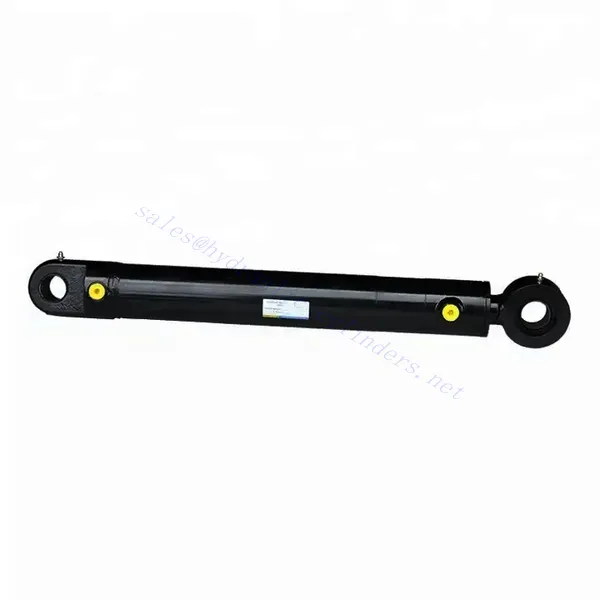
Końcówka drążka tłokowego jest zewnętrznym gwintowanym kolczykiem z główką drążka Połączenie inżynieryjnego cylindra hydraulicznego
Jako jeden z producentów, dostawców i eksporterów produktów mechanicznych, oferujemy cylindry hydrauliczne i wiele innych produktów.
Prosimy o kontakt w celu uzyskania szczegółowych informacji.
Poczta:sales@hydraulic-cylinders.net
Producent dostawca eksporter siłowników hydraulicznych.
Końcówka drążka tłokowego jest zewnętrznym gwintowanym kolczykiem z główką drążka Połączenie inżynieryjnego cylindra hydraulicznego
The piston rod end has an externally threaded rod head earring connection, usually consisting of a threaded rod head at the end of the piston rod. The rod head has external threads and can be connected to external components or load-bearing structures.
HSG series engineering hydraulic cylinder is a double acting piston rod hydraulic cylinder. Installation mode adopts earring type. According to the connection between the cylinder head and the cylinder block, there are three kinds of external thread connection, internal card critical connection, and flange connection. Engineering hydraulic cylinder is mainly used in construction, lifting, mining, and other hydraulic systems.

Parametry cylindra hydraulicznego HSG Engineering:


Siłownik hydrauliczny HSG Engineering Zalety:
The piston rod end with an externally threaded rod head connection offers several advantages in engineering hydraulic cylinders:
- Bezpieczne mocowanie:
- The threaded rod head connection provides a safe and reliable connection that minimizes the risk of loosening or disengagement during operation.
- This improves the safety and stability of hydraulic cylinder assemblies, especially in applications with high loads or vibrations.
- Ease of Installation and Replacement:
- Externally threaded connections simplify the installation and replacement of components or load-bearing structures.
- It allows for quick removal and reassembly using threaded fasteners for easy maintenance, repair, or replacement tasks.
- Zdolność adaptacji:
- Threaded rod head connections can be adapted to different application requirements.
- It allows the connection of various components or load-bearing structures using compatible threaded fasteners, offering versatility and customization options.
Siłownik hydrauliczny HSG Engineering Zastosowania:
- Threaded Fastening:
- Externally threaded rod heads can directly tighten components or load-bearing structures using nuts, bolts, or other threaded fasteners.
- This threaded connection allows for a safe and reliable connection that ensures the stability and integrity of the hydraulic cylinder assembly.
- Customization and Adjustment:
- The threaded rod head connection provides flexibility in attaching different components or load-bearing structures.
- It allows customization and adjustment by selecting appropriate threaded fasteners to suit specific application requirements.
- Konstrukcje nośne:
- Threaded rod head connections can be directly connected to load-bearing structures such as brackets, plates, or other supporting elements.
- This configuration allows the hydraulic cylinder to apply force and support the weight of external objects or machinery, making it suitable for applications that require load-bearing capacity.
How To Bleed Double-Acting Hydraulic Cylinder?
Bleeding a double-acting hydraulic cylinder involves removing air or trapped gases from the system to ensure proper functioning and prevent spongy or inconsistent movement. Here’s a step-by-step guide on how to bleed a double-acting hydraulic cylinder:
- Przygotowanie:
- Upewnij się, że układ hydrauliczny jest rozhermetyzowany, a cylinder schowany.
- Identify the bleed valves or fittings on the cylinder. These are typically located at the end cap or near the cylinder ports.
- Pozycja cylindra:
- If possible, position the cylinder vertically with the rod end facing upward. This helps air bubbles rise to the top for easier bleeding.
- Open the Bleed Valves:
- Locate the bleed valves or fittings on the cylinder.
- Use an appropriate wrench or tool to open the bleed valves or fittings slowly. Start with the one closest to the rod end of the cylinder.
- Zastosuj nacisk:
- Activate the hydraulic system by operating the pump or actuator.
- Gradually increase the pressure to a moderate level. This helps push the trapped air out of the cylinder through the open bleed valves.
- Wypuść powietrze:
- As the hydraulic system pressurizes, you may notice air bubbles escaping through the open bleed valves.
- Allow the air to purge from the system until a steady flow of hydraulic fluid is observed without any air bubbles. This indicates that the cylinder is properly bled.
- Close the Bleed Valves:
- Once all the air is expelled, close the bleed valves or fittings on the cylinder.
- Ensure they are tightened securely, but avoid over-tightening.
- Retract and Extend the Cylinder:
- Operate the hydraulic system to retract and extend the cylinder fully a few times.
- This helps to further purge any remaining air pockets and ensure smooth and consistent cylinder movement.
- Sprawdź, czy nie ma wycieków:
- After bleeding and cylinder operation, inspect the entire hydraulic system for any leaks or abnormal behavior.
- Address any leaks or issues promptly to prevent further problems.
Możliwości i pojemność fabryki:
(1) Montaż
Dysponujemy najwyższej klasy niezależną platformą badawczo-rozwojową. Warsztat produkcji siłowników hydraulicznych posiada cztery półautomatyczne linie montażowe siłowników podnoszących i jedną automatyczną linię montażową siłowników przechyłu, o projektowanej rocznej zdolności produkcyjnej 1 miliona sztuk. Specjalny warsztat cylindrów jest wyposażony w różne specyfikacje półautomatycznego systemu montażu czyszczącego o projektowanej rocznej zdolności produkcyjnej 200 000 i wyposażony w słynny sprzęt do obróbki CNC, centrum obróbcze, specjalny sprzęt do precyzyjnej obróbki cylindrów, robot spawalniczy, automatyczna maszyna czyszcząca, automatyczna maszyna do montażu cylindrów i automatyczna linia produkcyjna do malowania. Istniejący krytyczny sprzęt składa się z ponad 300 zestawów. Optymalna alokacja i efektywne wykorzystanie zasobów sprzętowych zapewniają wymagania dotyczące dokładności produktów i spełniają potrzeby wysokiej jakości produktów.


(2) Obróbka
Warsztat obróbki skrawaniem jest wyposażony w niestandardowe centrum tokarskie z pochyloną szyną, centrum obróbcze, szybkobieżną honownicę, robota spawalniczego i inny powiązany sprzęt, który może obsługiwać przetwarzanie rur cylindrycznych o maksymalnej średnicy wewnętrznej 400 mm i maksymalnej długości 6 metrów.

(3) Spawanie

(4) Malowanie i powlekanie
Z małymi i średnimi automatycznymi liniami do powlekania farbami na bazie wody, w celu osiągnięcia automatycznego załadunku i rozładunku robota oraz automatycznego natryskiwania, wydajność projektowa 4000 sztuk na zmianę;
Posiadamy również półautomatyczną linię do produkcji farb do dużych cylindrów napędzaną łańcuchem napędowym, o wydajności 60 skrzyń na zmianę.


(5) Testowanie
Dysponujemy najwyższej klasy urządzeniami kontrolnymi i stanowiskami testowymi, aby zapewnić, że wydajność cylindra spełnia wymagania.

Jesteśmy jednym z najlepszych producentów cylindrów hydraulicznych do zastosowań inżynieryjnych. Oferujemy kompleksową ofertę cylindrów hydraulicznych do zastosowań inżynieryjnych. Dostarczamy również… przekładnie rolniczeEksportowaliśmy nasze produkty do klientów na całym świecie i zyskaliśmy dobrą reputację dzięki doskonałej jakości produktów i obsłudze posprzedażowej. Serdecznie zapraszamy klientów zarówno z kraju, jak i z zagranicy do kontaktu z nami w celu negocjacji biznesowych, wymiany informacji i… współpracować z nami!
Siłownik hydrauliczny Zastosowanie:

 PL
PL  EN
EN  PT
PT  ES
ES  DE
DE  FR
FR  IT
IT  AR
AR  ZH
ZH  RU
RU  KO
KO  KA
KA  BG
BG  CS
CS  DA
DA  EL
EL  ET
ET  FI
FI  HU
HU  ID
ID  LT
LT  LV
LV  NB
NB  NL
NL  RO
RO  SK
SK  SL
SL  SV
SV  TR
TR  UK
UK