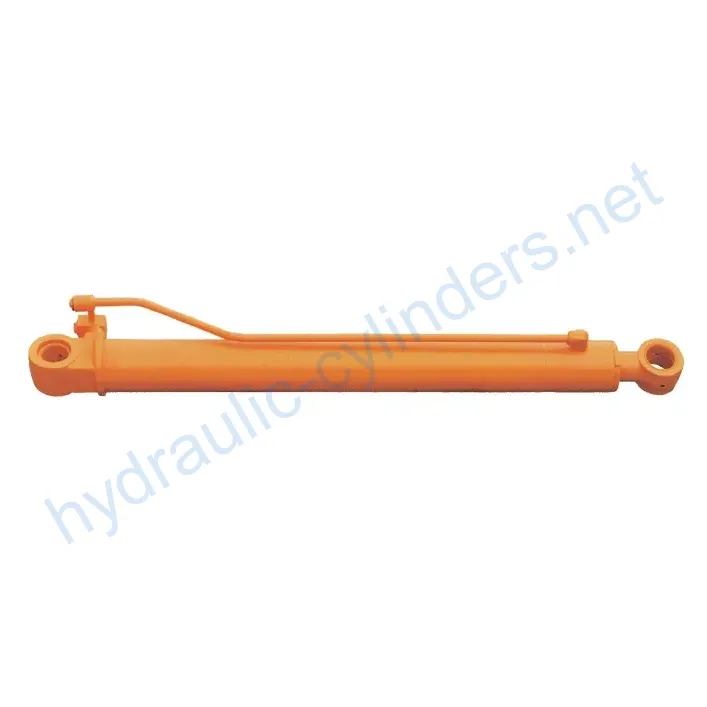
Arm Cylinder For Doosan Middle Excavator DH258-5-7
Arm Cylinder is a specifically designed hydraulic cylinder that provides linear motion and power to the arm of various machinery, such as excavators, cranes, and mechanical arms. It plays a crucial role in hydraulic systems, enabling the effective movement and control of additional tools or attachments. These cylinders not only ensure smooth motion but also withstand heavy loads, ensuring efficient operation and reliability of the machinery under various working conditions.

Características
- High-Efficiency Transmission: The arm cylinder provides powerful linear motion and force, ensuring high-performance efficiency during various operations.
- Controle preciso: por meio do sistema hidráulico, o cilindro do braço permite um controle preciso do movimento, tornando a operação das ferramentas acopladas mais flexível e precisa.
- Durabilidade: Os cilindros de braço são normalmente feitos de materiais de alta resistência, oferecendo excelente resistência ao desgaste e à corrosão, tornando-os adequados para uso a longo prazo em ambientes adversos.
- Multi-functional Adaptability: These cylinders can be widely applied to various machinery equipment, such as excavators, cranes, and mechanical arms, catering to different operational needs.
- Easy Maintenance: Designed for easy maintenance and replacement, arm cylinders facilitate convenient regular inspections and maintenance, minimizing equipment downtime.


Aplicações
- Construction Engineering: In excavators and cranes, arm cylinders control the motion of buckets or booms for earthmoving, material handling, and structural installation.
- Manufacturing Industry: In automated production lines, arm cylinders facilitate the movement of mechanical arms for assembly, welding, and handling processes, enhancing production efficiency and precision.
- Máquinas agrícolas: Em equipamentos agrícolas como colheitadeiras e semeadoras, os cilindros dos braços controlam o movimento dos braços operacionais para tarefas como semeadura, fertilização e colheita.
- Mining: In mining equipment, arm cylinders are used to control the arm movement of mining machinery for ore extraction and transportation.
- Logística e Transporte: Em empilhadeiras e robôs de movimentação, os cilindros dos braços controlam o levantamento e o movimento dos garfos, possibilitando o manuseio e o empilhamento de materiais.
Considerações de design e critérios de seleção
- Load-Bearing Capacity: The arm cylinder’s ability to withstand specific loads is a crucial design consideration.
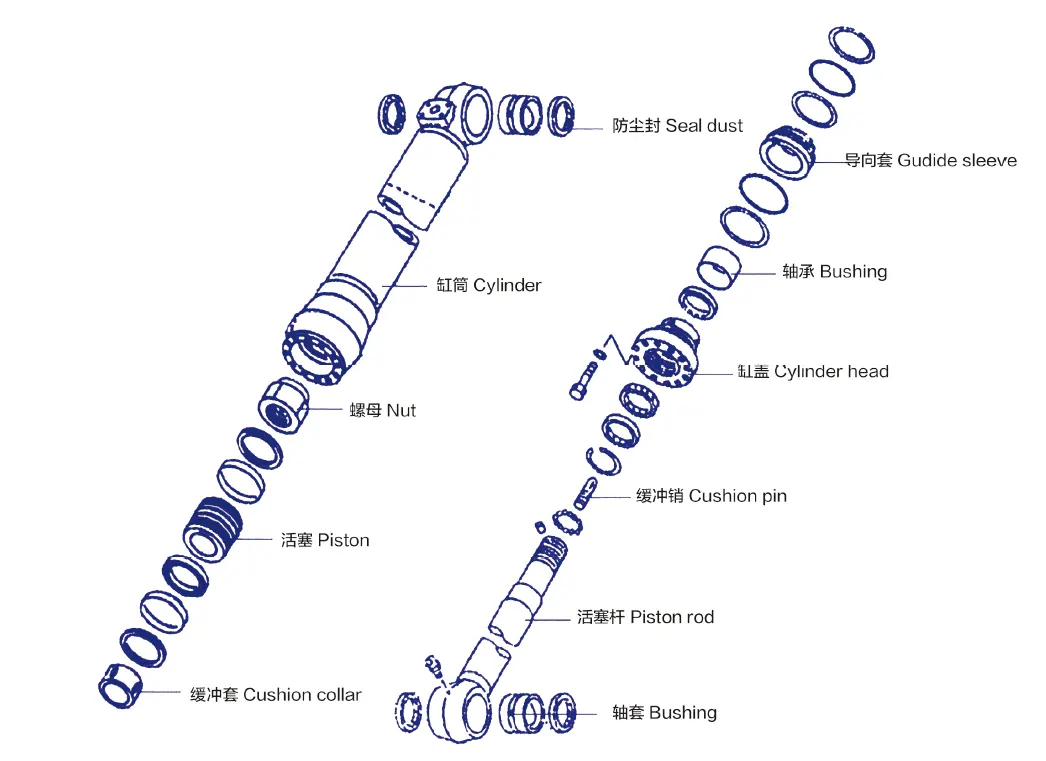
- Sealing: Various sealing elements, such as piston seals and rod seals, made of wear-resistant materials like polyurethane and nitrile rubber, ensure effective sealing.
- Durabilidade: O corpo do cilindro e as superfícies roscadas das extremidades passam por um tratamento meticuloso para aumentar a resistência ao desgaste.
- Safety: Design considerations include safety features to prevent accidents during operation.
- Maintainability: Arm cylinders are designed for easy maintenance and should be regularly lubricated with appropriate hydraulic oil.


Vedação e Lubrificação
Arm cylinders use various sealing components, such as piston seals and rod seals, made of wear-resistant materials like polyurethane and nitrile rubber. The cylinder body and threaded end surfaces are finely treated to enhance wear resistance. Regular lubrication with suitable hydraulic oil is necessary to ensure smooth operation.
Inspeção regular e manutenção preventiva
- Inspecione regularmente o cilindro do braço para verificar se há sinais de vazamento, desgaste ou danos.
- Check and clean the cylinder’s external surfaces and ensure proper lubrication.
- Monitor and maintain the hydraulic system to prevent contamination and ensure optimal performance.
- Siga as orientações do fabricante quanto aos intervalos e procedimentos de manutenção.
Guia de instalação do produto
1. Prepare as ferramentas e equipamentos necessários para a instalação.
2. Ensure the hydraulic system is depressurized before starting the installation.
3. Attach the arm cylinder to the designated mounting points, following the equipment’s specifications and guidelines.
4. Securely tighten all connections and fasteners.
5. Check for proper alignment and clearance.
6. Test the arm cylinder’s operation to ensure smooth movement and functionality.


Considerações de segurança e fatores ambientais
When using Arm Cylinders, implementing safety measures is crucial to prevent accidents and ensure operator protection. Adhering to safety guidelines and regulations helps create a safe working environment.
Diagnóstico de falhas e problemas comuns
1. Leakage: Check for any signs of hydraulic fluid leakage and inspect the seals for damage or wear.
2. Slow or Inconsistent Movement: Inspect the hydraulic system for any blockages or insufficient pressure.
3. Excessive Vibrations: Check for loose connections, damaged components, or misalignment.
4. Overheating: Inspect the cooling system and ensure proper fluid levels.
5. Abnormal Noises: Identify the source of the noise and inspect the relevant components for damage or wear.
For troubleshooting and resolving these issues, consult the manufacturer’s documentation or seek professional assistance. Implementing preventive measures can help minimize potential problems.


Lembre-se de organizar o artigo de forma lógica, usar subtítulos para facilitar a navegação, incorporar imagens ou gráficos relevantes para melhorar a compreensão e garantir que o conteúdo seja claro, conciso e adequado para leitores com diferentes níveis de conhecimento técnico.
Autor: lyl