
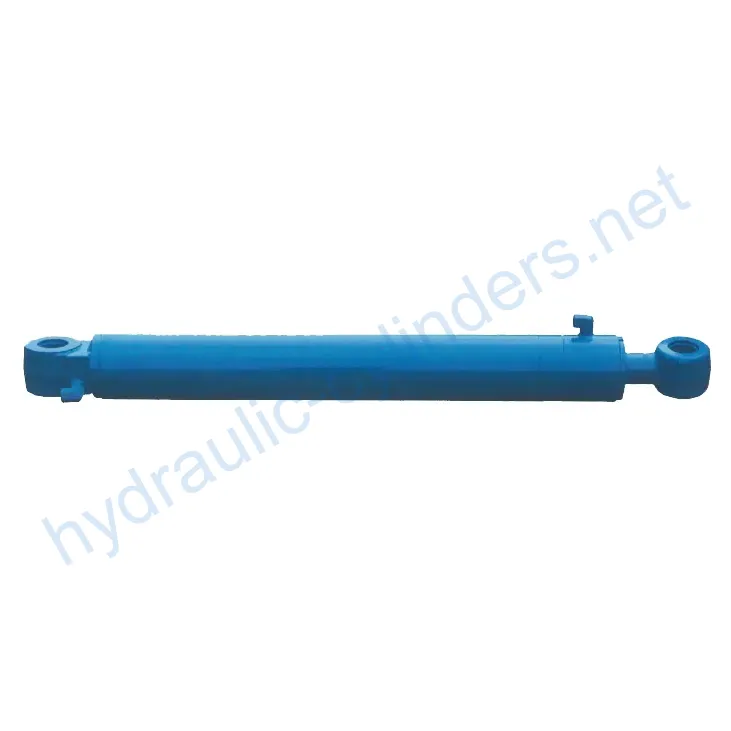
Cilindro do braço para escavadeira média Doosan DH260LC
Como um dos fabricantes, fornecedores e exportadores de produtos mecânicos de cilindros hidráulicos, oferecemos cilindros hidráulicos e muitos outros produtos.
Entre em contato conosco para obter detalhes.
Correio eletrônico:sales@hydraulic-cylinders.net
Fabricante, fornecedor e exportador de cilindros hidráulicos.
Arm Cylinder For Doosan Middle Excavator DH260LC
Introdução
The arm cylinder is a specially designed hydraulic cylinder that is used to provide linear motion and power to the arm of various types of machinery, such as excavators, cranes, and robotic arms. It plays a crucial role in hydraulic systems, enabling the efficient movement and control of additional tools or attachments. These cylinders not only enable smooth motion but also withstand heavy loads, ensuring the efficient operation and reliability of the machinery under various working conditions.
Definição e Explicação
The arm cylinder is a hydraulic cylinder designed to provide linear motion and power to the arm of various types of machinery. It is a key component in hydraulic systems, allowing for the effective movement and control of additional tools or attachments. These cylinders are capable of smooth motion and can withstand heavy loads, ensuring the efficient operation and reliability of the machinery in various working conditions.
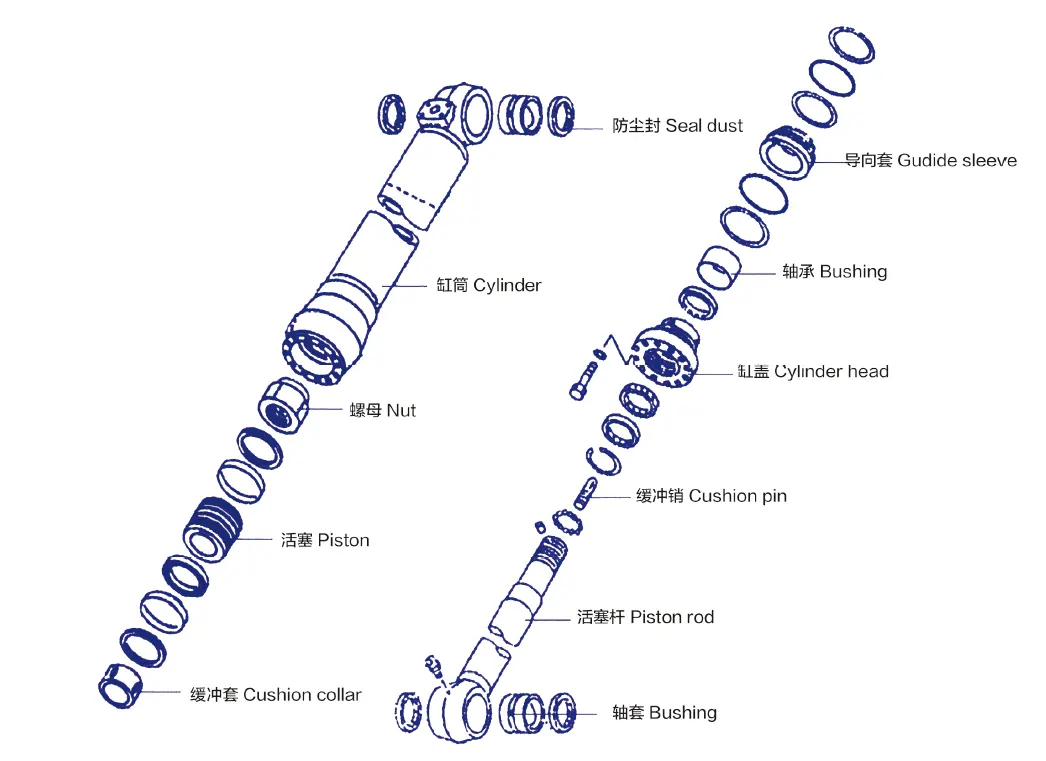
Características
- Transmissão de alta eficiência: O cilindro do braço proporciona movimento linear e força potentes, garantindo recursos de alto desempenho para o braço mecânico em diversas operações.
- Controle de precisão: Through a hydraulic system, the arm cylinder allows for precise motion control, making the operation of attached tools more flexible and accurate.
- Durabilidade: Os cilindros de braço são normalmente feitos de materiais de alta resistência, oferecendo excelente resistência ao desgaste e à corrosão, o que os torna adequados para uso a longo prazo em ambientes agressivos.
- Adaptabilidade multifuncional: These cylinders can be widely used in various types of machinery, such as excavators, cranes, and robotic arms, adapting to different job requirements.
- Fácil manutenção: Designed for ease of maintenance and replacement, the arm cylinders facilitate regular inspections and maintenance, reducing equipment downtime.

Aplicações
O cilindro de braço encontra aplicações em diversas indústrias, incluindo:
1. Engenharia de Construção
Em escavadeiras e guindastes, o cilindro do braço controla o movimento da caçamba ou da lança para trabalhos de terraplenagem, movimentação de materiais e instalação de estruturas.
2. Indústria de Manufatura
In automated production lines, the arm cylinder enables the movement of robotic arms for assembly, welding, and handling processes, improving production efficiency and accuracy.
3. Máquinas agrícolas
In agricultural machinery such as harvesters and seeders, the arm cylinder controls the movement of the operating arm for tasks like planting, fertilizing, and harvesting.
4. Mineração
In mining equipment, the arm cylinder controls the arm movement for mining and material transport operations.
5. Logística e Transporte
In forklifts and handling robots, the arm cylinder controls the lifting and movement of the forks, enabling material handling and stacking.

Considerações de design e critérios de seleção
When it comes to the design and selection of arm cylinders, several key factors should be considered:
1. Capacidade de carga
The arm cylinder should be able to withstand the expected loads during operation to ensure safe and efficient performance.
2. Selagem
Various sealing components, such as piston seals and rod seals, should be used to prevent leaks and maintain the cylinder’s performance. Seals made of wear-resistant materials like polyurethane and nitrile rubber are commonly chosen.
3. Durabilidade
The arm cylinder should be made of high-quality materials with excellent wear and corrosion resistance, ensuring long-term reliability in demanding environments.
4. Segurança
Safety features, such as pressure relief valves and emergency stop mechanisms, should be incorporated into the design to ensure safe operation and prevent accidents.
5. Manutenibilidade
The design should consider ease of maintenance and replacement, allowing for convenient periodic inspections and reducing downtime.

Vedação e Lubrificação
The arm cylinder utilizes various sealing components, such as piston seals and rod seals, to ensure proper sealing and prevent leaks. These seals are made of wear-resistant materials like polyurethane and nitrile rubber. Additionally, the cylinder body and threaded ends are finely treated to enhance wear resistance. Regular lubrication with the appropriate amount of hydraulic oil is required to ensure smooth operation.
Inspeção regular e manutenção preventiva
To maintain optimal performance and extend the lifespan of the arm cylinder, regular inspections and preventive maintenance are essential. The following measures should be taken:
1. Inspection
Regularly inspect the arm cylinder for signs of wear, leaks, or damage. Check the seals, connections, and overall condition of the cylinder. Replace any worn or damaged components promptly.
2. Lubrificação
Ensure the arm cylinder is properly lubricated with the recommended hydraulic oil. Regularly check and refill the oil to maintain the required level.
3. Limpeza
Keep the arm cylinder clean and free from debris or contaminants that could affect its performance. Use appropriate cleaning methods and materials.
4. Pressure Testing
Periodically conduct pressure tests to verify the cylinder’s performance and identify any potential issues. Follow the manufacturer’s guidelines for testing procedures.

Considerações de segurança e fatores ambientais
When working with arm cylinders, safety measures are crucial to protect personnel and equipment. It is important to emphasize the following:
Medidas de segurança
Always follow proper safety procedures and guidelines when operating or maintaining arm cylinders. Use personal protective equipment (PPE) as required and ensure proper training for personnel.
Environmental Factors
Consider the environmental conditions in which the arm cylinder will be operating. Take into account temperature, humidity, and other factors that may affect performance or require additional protective measures.
Diagnóstico de falhas e problemas comuns
Arm cylinders may experience faults or common issues that can affect their performance. Some possible problems include:
1. Vazamentos
Leaks in the cylinder’s seals or connections can result in loss of hydraulic fluid and reduced performance. Inspect and replace worn or damaged seals promptly.
2. Movimento lento ou inconsistente
If the arm cylinder exhibits slow or inconsistent movement, it may indicate a problem with the hydraulic system, such as low fluid pressure or a faulty control valve. Check the system components and address any issues accordingly.
3. Excessive Noise or Vibration
Unusual noise or vibration during operation could be a sign of misalignment, worn bearings, or loose components. Inspect the cylinder and associated parts for any signs of damage or wear.
4. Deriva do Cilindro
Cylinder drift occurs when the arm slowly moves even when no external force is applied. This can be caused by internal valve leakage or problems with the cylinder’s seals. Address the issue by replacing faulty seals or repairing the valve.
Dicas e soluções para solução de problemas
To effectively diagnose and resolve issues with arm cylinders, consider the following tips:
1. Inspect and Clean
Thoroughly inspect the cylinder and associated parts, paying attention to cleanliness
Cilindro hidráulico Aplicação:

 PT
PT  EN
EN  ES
ES  DE
DE  FR
FR  IT
IT  AR
AR  ZH
ZH  RU
RU  KO
KO  KA
KA  BG
BG  CS
CS  DA
DA  EL
EL  ET
ET  FI
FI  HU
HU  ID
ID  LT
LT  LV
LV  NB
NB  NL
NL  PL
PL  RO
RO  SK
SK  SL
SL  SV
SV  TR
TR  UK
UK