
Advanced Forestry Fluid Power
Grapple Cylinders: The Indomitable Grip of Modern Timber Harvesting
An authoritative engineering analysis of hydraulic clamping mechanisms, fluid power dynamics, and extreme environment durability in feller bunchers and harvester heads.

Commanding the Forest with Unyielding Precision
The global timber and logging industry relies upon relentless operational efficiency and unparalleled mechanical power. Harvesting mature hardwood and softwood forests requires heavy duty machinery capable of manipulating multi ton trees with surgical precision. At the vanguard of this highly mechanized operation are feller bunchers and harvester heads. These complex mechanical attachments, mounted on track or wheel based carriers, autonomously grab, cut, delimb, and process timber in seconds. However, the foundational element that allows these attachments to function securely is the grapple cylinder. This highly specialized hydraulic actuator is the literal muscle that dictates the gripping force and secure handling of massive logs.
In forestry machinery, the grapple cylinder performs a uniquely demanding task. When a feller buncher approaches a mature tree, the grapple arms must close rapidly to secure the trunk before the high speed saw engages. Once severed, the entire weight and immense leveraging force of the standing tree are transferred directly into the grapple arms and, consequently, into the hydraulic clamping cylinders. If the clamping force wavers or if a pressure drop occurs, the tree could slip, presenting a catastrophic occupational hazard and risking severe structural damage to the carrier vehicle.
From a rigorous engineering perspective, designing hydraulic cylinders for feller bunchers and harvester heads presents unparalleled challenges. These fluid power components are exposed continuously to falling debris, high impact shock loads, highly abrasive sawdust, and aggressive tree sap. Furthermore, they must operate seamlessly in extreme microclimates ranging from freezing subarctic winters to sweltering tropical humidity. This comprehensive engineering analysis delves deeply into the mechanical architecture, advanced metallurgical corrosion resistance, and intelligent load holding fluid dynamics that define world class forestry equipment hydraulic cylinders.
Mechanical Architecture of Harvester Head Fluid Power
The kinematics of operating massive hydraulic grapple arms are highly complex. Depending on the attachment type, hydraulic actuators must be precisely calibrated to handle extreme load variations and continuous rapid cycling.
Feller Buncher Accumulation Cylinders
Feller bunchers utilize specialized accumulation arms in addition to primary grapple arms. These allow the machine to cut and hold multiple smaller trees simultaneously before laying them down in a single bunch. The hydraulic cylinders controlling these arms must execute rapid, high frequency extensions and retractions. They rely on high flow hydraulic circuits and heavily reinforced cylinder barrels capable of withstanding the immense lateral bending forces generated when multiple tree trunks shift during transport over uneven terrain.
Harvester Head Delimbing Actuation
In processing harvester heads, the grapple arms also function as delimbing knives. As the feed rollers propel the tree trunk through the head, the grapple cylinder must maintain continuous, constant clamping pressure against the bark to strip away heavy branches. This requires dynamic pressure modulation. Advanced proportional valves continuously adjust the fluid flow to the grapple cylinder, ensuring the knives stay tight against tapering tree trunks without applying excess friction that would stall the feed roller motors.

Combatting Abrasive Contamination and Extreme Environmental Wear
The logging site is arguably the most destructive industrial environment for exposed mechanical components. Grapple cylinders are mounted directly on the working end of the machine, plunging them constantly into abrasive brush, dense mud, and sharp broken branches. During processing, they are continuously bombarded by a destructive cocktail of fine sawdust, sticky tree resin, and moisture.
If standard industrial hydraulic cylinders were installed on a harvester head, the abrasive sawdust would quickly bypass conventional wiper seals. Once inside, this debris mixes with hydraulic oil to form a highly destructive grinding paste that shreds the high pressure polyurethane seals and severely scores the honed interior barrel. To guarantee operational longevity, elite forestry equipment fluid power relies heavily on advanced material science and aggressive sealing technology.

Advanced Hardening and Aggressive Composite Sealing Architecture
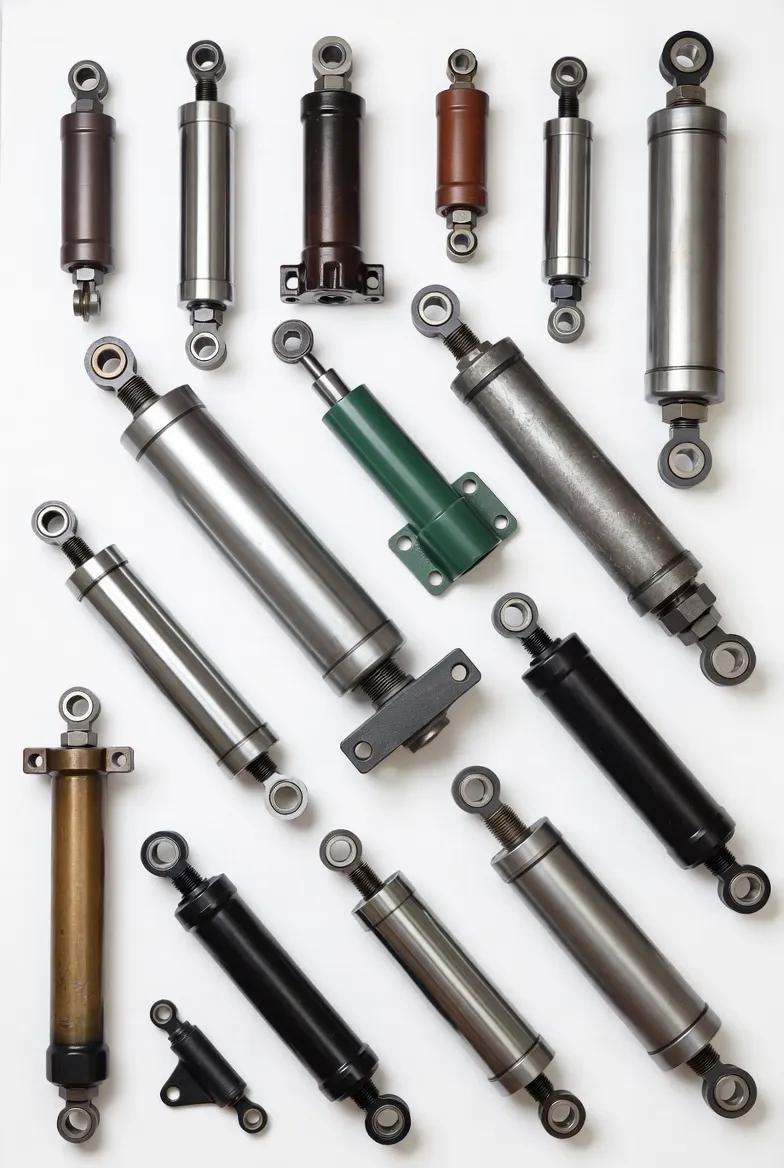
To survive blunt force impacts from falling timber, the piston rods of forestry grapple cylinders are forged from high tensile alloy steel and undergo deep induction hardening before receiving a thick layer of industrial hard chrome plating. This metallurgical combination ensures absolute structural rigidity. Simultaneously, the cylinder head is fitted with an exceptionally aggressive double lip polyurethane scraper. This specialized wiper seal completely shears away baked on resin and abrasive sawdust before the rod retracts, perfectly protecting the internal pressure seals from contamination and preventing costly fluid leaks in environmentally sensitive logging zones.
Absolute Fluid Safety and Dynamic Load Holding Mechanisms
From an authoritative engineering perspective evaluated by stringent safety standards, grasping and maneuvering towering trees weighing several tons leaves absolutely no room for error. The hydraulic systems must default to a state of absolute security in the event of an emergency.
Mechanical Lock via Pilot Operated Check Valves
To completely eliminate the risk of a tree slipping from the grapple due to a burst hydraulic hose or a sudden carrier machine blackout, all heavy duty grapple cylinders feature highly reliable pilot operated check valves or counterbalance valves. These safety devices are flange mounted directly to the cylinder inlet ports. If the system experiences an unexpected pressure loss, the valve instantly snaps shut mechanically in milliseconds. This locks the high pressure hydraulic fluid entirely within the clamping chamber, keeping the massive timber securely gripped until the operator can safely lower the load.
Hydraulic Accumulator Shock Mitigation
When a heavy machine travels over rough terrain holding a massive log, violent bouncing forces are transferred through the grapple arms directly into the hydraulic circuit. To protect the cylinder barrels from rupturing under these severe pressure spikes, advanced forestry heads integrate hydraulic accumulators. These high pressure nitrogen charged vessels act as fluid shock absorbers, compressing slightly to absorb the sudden kinetic impact, thereby preserving the structural integrity of the entire machine linkage.
Preventative Maintenance Strategies for Forestry Machinery
The financial profitability of a commercial logging operation depends entirely on maintaining equipment availability. Executing major hydraulic repairs deep within a remote forest is extraordinarily time consuming and expensive. Therefore, executing rigid preventative maintenance on forestry equipment fluid power systems is an absolute necessity for fleet managers.
- ✔️
Absolute Fluid Cleanliness Management: Modern harvester head proportional control valves are extremely sensitive to contamination. Airborne sawdust easily enters the system via damaged quick disconnects during attachment changes. Maintenance personnel must conduct routine fluid particle counting tests, utilizing high efficiency bypass filtration to purify the hydraulic oil, ensuring it meets strict ISO standards to prevent expensive directional valves from jamming.
- ✔️
Visual Monitoring and Rod Preservation: During daily walkarounds, operators must inspect all exposed piston rods. Any weeping fluid around the cylinder gland indicates that the primary high pressure seal has been compromised by abrasive sawdust ingestion. Catching these micro leaks early prevents massive hydraulic oil spills in environmentally sensitive forestry zones.
- ✔️
Spherical Bearing and Pin Lubrication: Grapple cylinders encounter immense lateral twisting forces as heavy logs shift. The heavy duty spherical plain bearings and steel mounting pins at both ends of the actuator are crucial for absorbing this off center loading. Regularly injecting extreme pressure water resistant grease prevents the bearings from seizing, which would otherwise inflict fatal bending stress on the cylinder barrel.

Digital Transformation: Deep Integration of Smart Hydraulics and IoT
As the concept of smart machinery rapidly expands across global heavy industries, traditional hydraulic clamping technologies are experiencing a profound digital transformation. Grapple cylinders are evolving from simple mechanical actuation components into highly intelligent, multi dimensional sensing nodes within the Industrial Internet of Things.
Next generation smart grapple cylinders are internally embedded with high frequency pressure transmitters and precision magnetostrictive displacement sensors. Throughout the timber processing cycle, these sensors stream dynamic telemetry back to the carrier machine onboard computer. Artificial intelligence algorithms analyze the real time pressure escalation curves to accurately measure the diameter and density of the grabbed tree trunk, automatically optimizing the feed roller pressure to prevent bark damage while maximizing processing speed. Furthermore, through continuous deep learning of the fluid data, the system can predict the fatigue life of internal seals with exceptional accuracy, guiding maintenance teams to perform preventative replacements during scheduled downtime. This data driven predictive maintenance model is fundamentally revolutionizing the safety and efficiency management of massive logging operations.

Conclusion: Forging the Shield of Global Timber Harvesting
Grapple cylinders are indisputably the most critical hydraulic driving force behind the safety, speed, and operation of modern feller bunchers and harvester heads. By perfectly combining extreme heavy duty abrasion resistant metallurgy, uncompromising mechanical fail safe load holding technologies, and high precision electro hydraulic closed loop control based on the Industrial Internet of Things, these technologically advanced heavy actuators ensure that mankind can safely conquer the most demanding forestry environments. For heavy equipment manufacturers and logging fleet enterprises, mastering top tier fluid power and smart hydraulic clamping systems is the fundamental cornerstone to establishing engineering excellence, ensuring absolute operator safety, and securing maximum commercial productivity.