
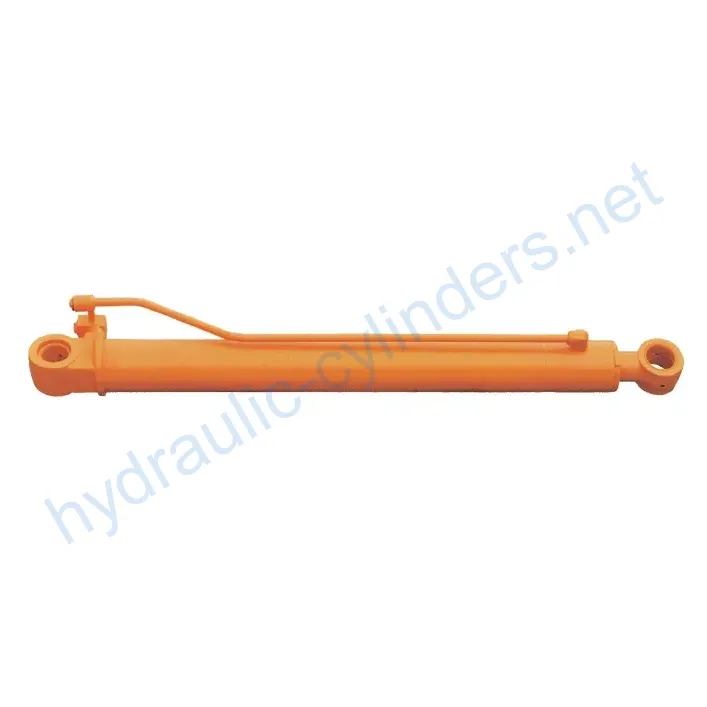
Arm Cylinder For Bonny CE1250-7
Como um dos fabricantes, fornecedores e exportadores de produtos mecânicos de cilindros hidráulicos, oferecemos cilindros hidráulicos e muitos outros produtos.
Entre em contato conosco para obter detalhes.
Correio eletrônico:sales@hydraulic-cylinders.net
Fabricante, fornecedor e exportador de cilindros hidráulicos.
Arm Cylinder For Bonny CE1250-7
Introdução
The arm cylinder, also known as the hydraulic cylinder, is a specially designed cylinder that provides linear motion and power to the arm of various machinery such as excavators, cranes, and robotic arms. It plays a crucial role in hydraulic systems, enabling the efficient movement and control of attachments or accessories. These cylinders not only ensure smooth motion but also withstand heavy loads, ensuring efficient operation and reliability of the machinery under various working conditions.
Características
- Transmissão de alta eficiência: O cilindro do braço proporciona movimento linear e força potentes, garantindo alto desempenho do braço mecânico em diversas operações.
- Controle preciso: Through the hydraulic system, the arm cylinder enables precise motion control, making the operation of the attachments more flexible and accurate.
- Durabilidade: Arm cylinders are typically made from high-strength materials, with good wear resistance and corrosion resistance, making them suitable for long-term use in harsh environments.
- Adaptabilidade multifuncional: Esses cilindros encontram ampla aplicação em diversas máquinas, como escavadeiras, guindastes e braços robóticos, adaptando-se a diferentes requisitos de trabalho.
- Fácil manutenção: Designed for ease of maintenance and replacement, they facilitate regular inspections and maintenance, reducing equipment downtime.

Aplicações
O cilindro de braço é utilizado em diversas indústrias e aplicações:
1. Engenharia de Construção
In excavators and cranes, the arm cylinder controls the movement of buckets or booms, enabling earthwork operations, material handling, and structural assembly.
2. Fabricação
In automated production lines, the arm cylinder facilitates the movement of robotic arms for processes such as assembly, welding, and material handling, improving production efficiency and precision.
3. Máquinas agrícolas
Em equipamentos agrícolas como colheitadeiras e semeadoras, o cilindro do braço controla o movimento dos braços operacionais, realizando tarefas como semeadura, fertilização e colheita.
4. Mineração
Em equipamentos de mineração, o cilindro do braço controla o movimento do braço da máquina de mineração, facilitando a extração e o transporte do minério.
5. Logística e Transporte
Em empilhadeiras e robôs de movimentação, o cilindro do braço controla a elevação e o movimento dos garfos, permitindo o manuseio e o empilhamento de materiais.

Considerações de design e critérios de seleção
When designing and selecting arm cylinders, various factors need to be considered:
1. Capacidade de carga
The cylinder should be able to withstand the maximum load it will be subjected to during operation, ensuring safe and efficient performance.
2. Selagem
Various seals, such as piston seals and rod seals, should be used to prevent leakage and ensure reliable operation. Durable sealing materials like polyurethane and nitrile rubber are commonly chosen.
3. Durabilidade
The cylinder body and threaded ends should undergo fine treatment to improve wear resistance. This ensures long-lasting performance even in demanding conditions.
4. Segurança
Considerations should be given to safety features such as overload protection and emergency stop mechanisms to prevent accidents and ensure operator safety.
5. Facilidade de manutenção
The design should facilitate easy maintenance and replacement of components, reducing downtime and ensuring efficient operation.

Vedação e Lubrificação
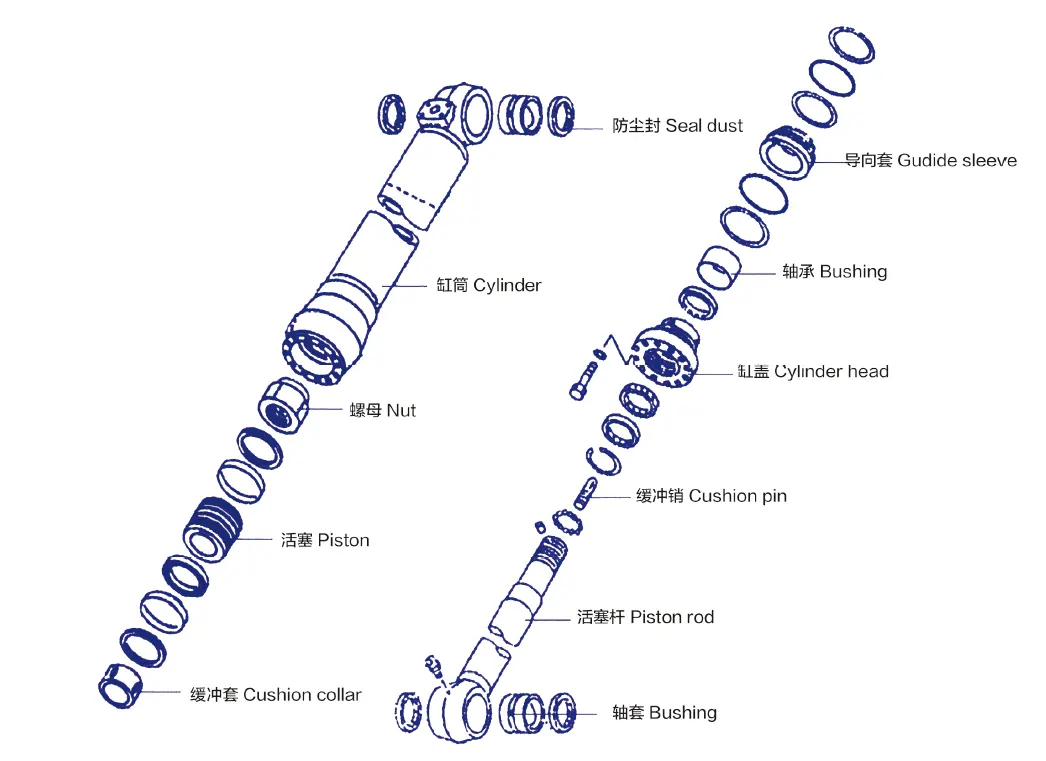
The arm cylinder utilizes various sealing components, such as piston seals and rod seals, made from wear-resistant materials like polyurethane and nitrile rubber. The cylinder body and threaded ends undergo fine treatment to enhance wear resistance. Regular lubrication with the appropriate amount of hydraulic oil is necessary for smooth operation.
Inspeção regular e manutenção preventiva
Para garantir o desempenho ideal e a longevidade do cilindro do braço, as seguintes medidas devem ser tomadas:
- Inspecione regularmente o cilindro para verificar sinais de desgaste, vazamento ou danos.
- Check and maintain the sealing components to prevent oil leakage.
- Monitor the hydraulic oil level and quality, and replenish or replace as needed.
- Inspect and clean the cylinder ports and connections to prevent blockages.
- Siga as orientações do fabricante quanto aos intervalos e procedimentos de manutenção.
Guia de instalação do produto
A instalação correta do cilindro do braço é crucial para seu desempenho e segurança. Siga estes passos:
- Certifique-se de que o equipamento esteja desligado e em uma posição estável.
- Attach the cylinder to the designated mounting points securely.
- Connect the hydraulic hoses following the correct configuration.
- Test the cylinder’s functionality by operating the equipment under controlled conditions.
- Inspect for any leaks or abnormal movement and make necessary adjustments.
- Ensure all connections are properly tightened.

Considerações de segurança e fatores ambientais
When working with arm cylinders, adhering to safety measures is paramount to prevent accidents and injuries. Safety precautions include:
- Wearing appropriate personal protective equipment (PPE) like gloves and safety glasses.
- Following equipment-specific safety guidelines and operating procedures.
- Avoiding overloading the cylinder beyond its rated capacity.
- Maintaining a clean and well-lit work area to prevent trips and falls.
Solução de problemas e problemas comuns
Aqui estão algumas dicas e soluções comuns para problemas com o cilindro do braço:
- If the cylinder is not extending or retracting properly, check for hydraulic fluid leaks and low pressure. Refill or replace the hydraulic fluid as needed.
- If the cylinder is jerky or uneven in its movement, inspect the seals for wear or damage, and replace if necessary.
- If there is excessive noise during cylinder operation, check for loose connections or worn components. Tighten connections and replace any damaged parts.
- If the cylinder is not responding to control signals, check the hydraulic control valve and associated electrical connections.
Preventive measures include regular inspections, proper lubrication, and adherence to recommended operational limits to minimize potential problems.
Sobre nós
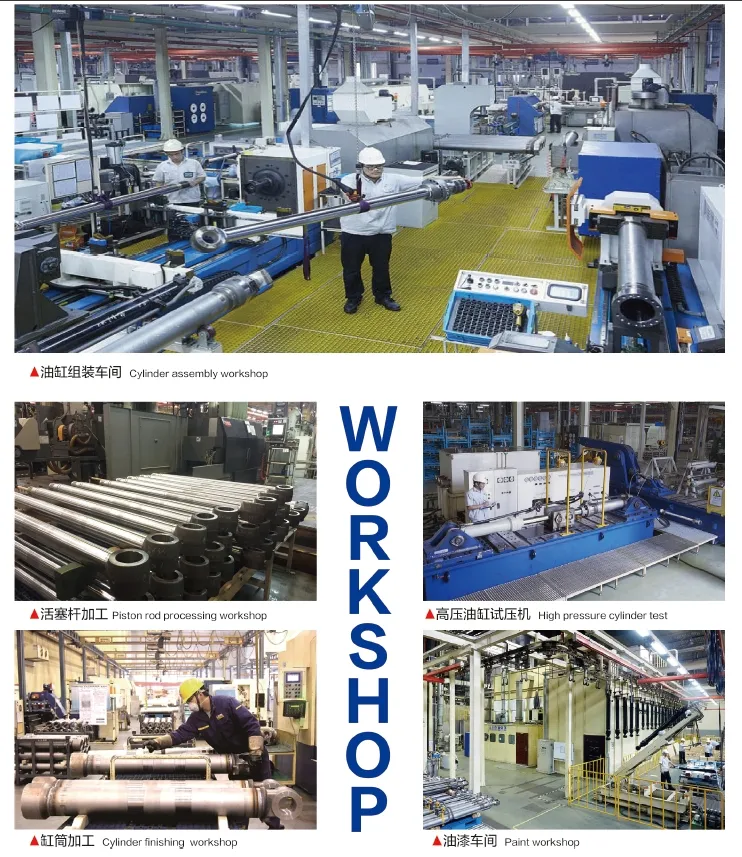
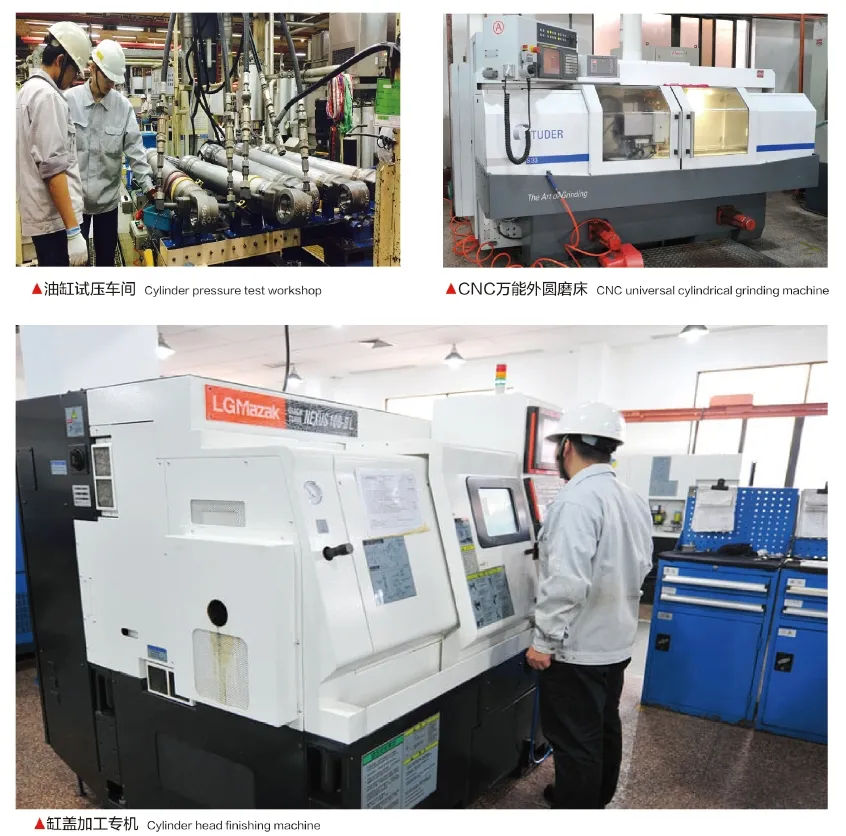
We are a professional manufacturer of replacement hydraulic cylinders offering a wide range of products. We have become one of the leading manufacturers and wholesalers in the domestic and international markets. With a commitment to excellence, we continuously improve our technical expertise and production efficiency through fine-tuned manufacturing processes and advanced equipment.
By introducing high-end digital manufacturing equipment and professional testing systems, we optimize our manufacturing platform and enhance product quality control processes. We have a strong ability to innovate and strive to meet diverse customer needs with principles of efficiency, precision, and high quality.
Nossa empresa é conhecida por:
- Profissionalismo e experiência na fabricação de cilindros hidráulicos.
Cilindro hidráulico Aplicação:

 PT
PT  EN
EN  ES
ES  DE
DE  FR
FR  IT
IT  AR
AR  ZH
ZH  RU
RU  KO
KO  KA
KA  BG
BG  CS
CS  DA
DA  EL
EL  ET
ET  FI
FI  HU
HU  ID
ID  LT
LT  LV
LV  NB
NB  NL
NL  PL
PL  RO
RO  SK
SK  SL
SL  SV
SV  TR
TR  UK
UK