

Cilindro do braço para Nante NT08
Como um dos fabricantes, fornecedores e exportadores de produtos mecânicos de cilindros hidráulicos, oferecemos cilindros hidráulicos e muitos outros produtos.
Entre em contato conosco para obter detalhes.
Correio eletrônico:sales@hydraulic-cylinders.net
Fabricante, fornecedor e exportador de cilindros hidráulicos.
Cilindro do braço para Nante NT08
Introdução
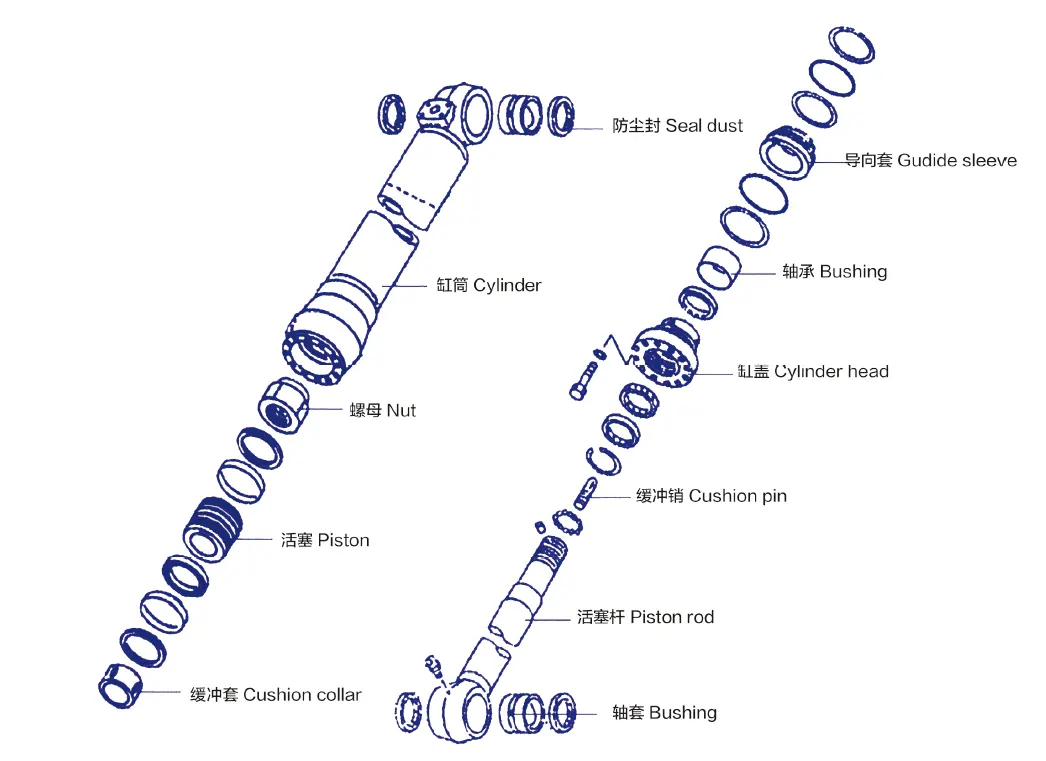
The arm cylinder, also known as an hydraulic cylinder, is a specially designed hydraulic actuator used to provide linear motion and power to the arm of various types of machinery, such as excavators, cranes, and robotic arms. The arm cylinder plays a crucial role in hydraulic systems, enabling the efficient movement and control of additional tools or attachments. These cylinders not only provide smooth motion but also withstand heavy loads, ensuring efficient operation and reliability of the machinery in various working conditions.
Características
- Transmissão de alta eficiência: O cilindro do braço proporciona movimento linear e força potentes, garantindo alto desempenho do braço mecânico em diversas operações.
- Controle preciso: Por meio do sistema hidráulico, o cilindro do braço permite um controle preciso do movimento, tornando a operação de ferramentas adicionais mais flexível e precisa.
- Durabilidade: Os cilindros de braço são normalmente feitos de materiais de alta resistência com excelente resistência ao desgaste e à corrosão, tornando-os adequados para uso a longo prazo em ambientes agressivos.
- Adaptabilidade multifuncional: These cylinders can be widely used in various machinery equipment, such as excavators, cranes, and robotic arms, to accommodate different job requirements.
- Facilidade de manutenção: The design of the arm cylinder takes into consideration ease of maintenance and replacement, making regular inspections and upkeep more convenient, thus reducing equipment downtime.

Aplicações
O cilindro de braço encontra aplicações em vários setores:
1. Engenharia de Construção
Em escavadeiras e guindastes, o cilindro do braço é usado para controlar o movimento da caçamba ou da lança para trabalhos de terraplenagem, movimentação de materiais e instalação de estruturas.
2. Fabricação
In automated production lines, the arm cylinder is used for the motion of robotic arms in processes such as assembly, welding, and material handling, improving production efficiency and precision.
3. Máquinas agrícolas
Em máquinas agrícolas como colheitadeiras e semeadoras, o cilindro do braço controla o movimento do braço operacional para tarefas como plantio, fertilização e colheita.
4. Mineração
Em equipamentos de mineração, o cilindro do braço é usado para controlar o movimento do braço de máquinas de mineração para extração e transporte de minério.
5. Logística e Transporte
Em empilhadeiras e robôs de movimentação, o cilindro do braço controla a elevação e o movimento dos garfos, permitindo o manuseio e o empilhamento de materiais.

Considerações de design e critérios de seleção
When designing and selecting arm cylinders, several factors should be taken into account:
1. Capacidade de carga
The arm cylinder should be able to withstand the expected loads and forces encountered during operation.
2. Selagem
Various sealing elements, such as piston seals and rod seals, should be used to ensure proper sealing. These seals are typically made of wear-resistant materials like polyurethane and nitrile rubber. The surface of the cylinder body and threaded end should also undergo careful processing to improve wear resistance.
3. Durabilidade
The arm cylinder should be constructed using high-quality materials and manufacturing processes to ensure durability and resistance to wear and corrosion.
4. Segurança
Safety considerations, such as pressure relief valves and emergency stop systems, should be incorporated into the design to prevent accidents and protect operators.
5. Manutenção
Regular lubrication with appropriate hydraulic oil and periodic inspection are necessary for maintaining the performance and longevity of the arm cylinder.

Inspeção e Manutenção Preventiva
To ensure optimal performance and longevity of the arm cylinder, the following inspection and preventive maintenance measures should be taken:
1. Inspeções regulares
Inspect the arm cylinder for any signs of wear, leakage, or damage. Check the seals, connections, and hydraulic lines for proper functioning.
2. Lubrificação
Add an appropriate amount of hydraulic oil to ensure proper lubrication of the cylinder components.
3. Maintenance Schedule
Adhere to a regular maintenance schedule, including cleaning, lubrication, and replacement of worn-out parts as needed.
4. Proper Storage
When the arm cylinder is not in use, store it in a clean and dry environment to protect it from contamination and corrosion.
Guia de instalação do produto
Siga estes passos para a instalação correta do cilindro do braço:
- Ensure the machinery is properly supported and in a safe position.
- Remove any existing cylinder or component that the new arm cylinder will replace.
- Attach the arm cylinder to the designated mounting points using appropriate bolts and hardware.
- Aperte bem todas as conexões.
- Connect the hydraulic lines to the appropriate ports, ensuring correct alignment.
- Check for any leaks and perform a pressure test to ensure proper installation.

Considerações de segurança e fatores ambientais
When working with arm cylinders, safety measures are of utmost importance:
It is essential to follow all recommended safety procedures and regulations while operating machinery equipped with arm cylinders. This includes wearing appropriate personal protective equipment, implementing lockout/tagout procedures when performing maintenance, and ensuring proper training for operators.
Additionally, considering environmental factors such as temperature, humidity, and exposure to corrosive substances is crucial to maintain the performance and longevity of the arm cylinder. Regular inspections and proper maintenance help mitigate potential environmental risks.
Solução de problemas e problemas comuns
When encountering issues with the arm cylinder, the following troubleshooting tips and solutions can help diagnose and resolve problems:
- Problema 1: O cilindro não está estendendo ou retraindo corretamente.
- Edição 2: Ruído ou vibração excessivos durante o funcionamento.
- Edição 3: Slow or jerky movement of the arm.
- Issue 4: Cylinder seal failure or leakage.
- Issue 5: Overheating of the hydraulic system.
Solução: Check for hydraulic leaks, ensure proper fluid levels, and inspect the seals for any damage or wear.
Solução: Inspect the mounting points and connections for loose or damaged components. Check for worn-out or misaligned parts.
Solução: Ensure the hydraulic system is properly maintained and the fluid is clean. Check for clogged filters or restrictions in the hydraulic lines.
Solução: Replace the damaged seals with new ones made from suitable materials and ensure proper installation and alignment.
Solução: Check for excessive fluid levels, dirty filters, or inadequate cooling. Address any issues with the hydraulic system to prevent overheating.
Remember to organize the article logically, use subheadings for easy navigation, incorporate relevant images or charts to enhance understanding, and ensure the content is clear, concise, and suitable for readers with varying levels
Cilindro hidráulico Aplicação:

 PT
PT  EN
EN  ES
ES  DE
DE  FR
FR  IT
IT  AR
AR  ZH
ZH  RU
RU  KO
KO  KA
KA  BG
BG  CS
CS  DA
DA  EL
EL  ET
ET  FI
FI  HU
HU  ID
ID  LT
LT  LV
LV  NB
NB  NL
NL  PL
PL  RO
RO  SK
SK  SL
SL  SV
SV  TR
TR  UK
UK