

Cilindro do braço para mini escavadeira Doosan DX120
Como um dos fabricantes, fornecedores e exportadores de produtos mecânicos de cilindros hidráulicos, oferecemos cilindros hidráulicos e muitos outros produtos.
Entre em contato conosco para obter detalhes.
Correio eletrônico:sales@hydraulic-cylinders.net
Fabricante, fornecedor e exportador de cilindros hidráulicos.
Arm Cylinder for Doosan Small Excavator DX120
The arm cylinder is a specially designed hydraulic cylinder that is used to provide linear motion and power to the arm of various types of machinery, such as excavators, cranes, and robotic arms. The arm cylinder plays a crucial role in hydraulic systems, allowing for the effective movement and control of additional tools or attachments. These cylinders not only enable smooth motion but also have the ability to withstand heavy loads, ensuring efficient operation and reliability of the machinery under various working conditions.
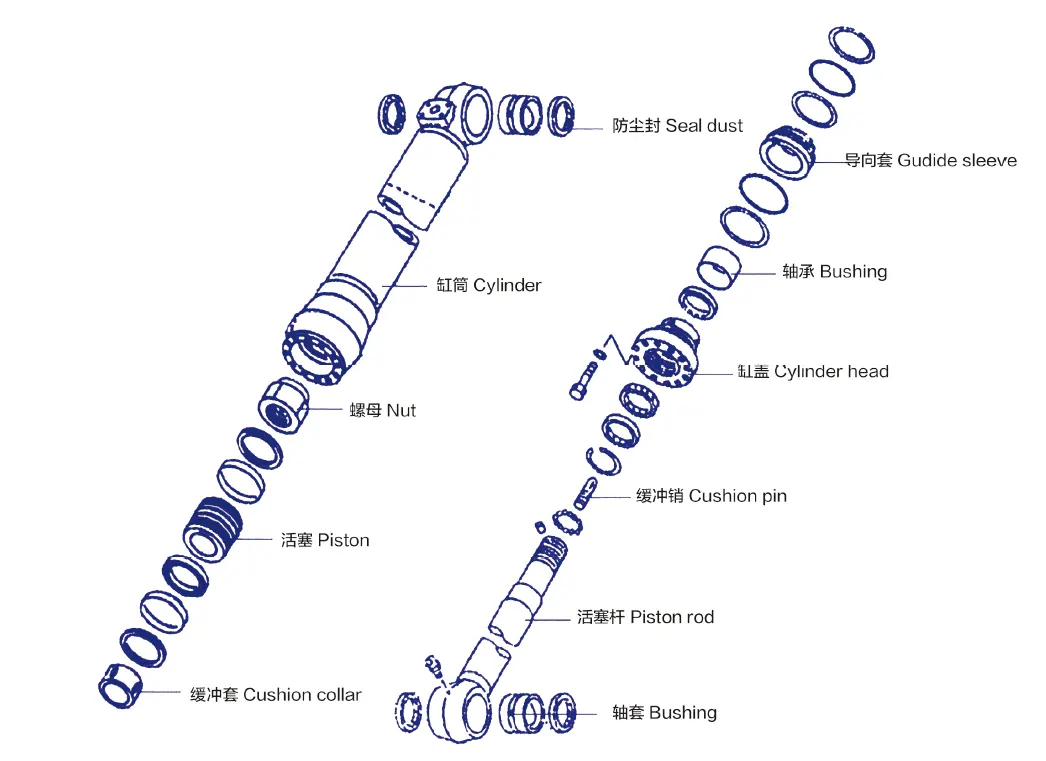
Características do Cilindro do Braço:
- Transmissão de alta eficiência: O cilindro do braço proporciona movimento linear e força potentes, garantindo recursos de alto desempenho para o braço robótico em diversas operações.
- Controle preciso: Por meio do sistema hidráulico, o cilindro do braço permite um controle preciso do movimento, tornando a operação de ferramentas adicionais mais flexível e precisa.
- Durabilidade: Os cilindros de braço são normalmente feitos de materiais de alta resistência, oferecendo excelente resistência ao desgaste e à corrosão, tornando-os adequados para uso a longo prazo em ambientes adversos.
- Adaptabilidade multifuncional: Esses cilindros podem ser amplamente aplicados em diversas máquinas, como escavadeiras, guindastes e braços robóticos, adaptando-se a diferentes requisitos de trabalho.
- Fácil manutenção: Designed with ease of maintenance and replacement in mind, arm cylinders facilitate convenient regular inspections and maintenance, reducing equipment downtime.

O cilindro de braço encontra aplicações em diversas indústrias:
- Construction: In excavators and cranes, the arm cylinder controls the movement of the bucket or boom for earthwork, material handling, and structural installation.
- Manufacturing: In automated production lines, the arm cylinder enables the motion of robotic arms for processes like assembly, welding, and material handling, increasing production efficiency and precision.
- Máquinas agrícolas: Em máquinas agrícolas como colheitadeiras e semeadoras, o cilindro do braço controla o movimento dos braços operacionais para tarefas como plantio, fertilização e colheita.
- Mineração: Em equipamentos de mineração, o cilindro do braço controla o movimento do braço para extração e transporte de minério.
- Logistics and Transportation: In forklifts and handling robots, the arm cylinder controls the lifting and movement of forks, allowing for material handling and stacking.
Considerações de design e critérios de seleção:
Ao projetar cilindros de braço, vários fatores-chave são levados em consideração:
- Capacidade de carga: Arm cylinders are designed to withstand specific loads, ensuring safe and efficient operation.
- Selagem: Various types of seals, such as piston seals and rod seals, are used to ensure effective sealing. These seals are made from wear-resistant materials like polyurethane and nitrile rubber.
- Durabilidade: Cylinder bodies and threaded ends undergo precision treatments to enhance wear resistance.
- Segurança: Safety features, such as pressure relief valves, are incorporated to prevent excessive pressure and ensure safe operation.
- Manutenibilidade: Regular inspection and preventive maintenance measures are essential to extend the lifespan of the arm cylinder and minimize potential issues.

Proper sealing and lubrication are crucial for the performance and longevity of the arm cylinder:
- Various sealing elements, such as piston seals and rod seals, are used to prevent fluid leakage and maintain proper operation.
- The seals are made from durable materials like polyurethane and nitrile rubber, which have excellent wear resistance.
- O corpo do cilindro e as extremidades roscadas passam por tratamentos de superfície meticulosos para aumentar a resistência ao desgaste.
- Regular lubrication with an appropriate amount of hydraulic oil is required to ensure smooth operation and reduce friction.
Inspeção regular e manutenção preventiva:
Para garantir o desempenho ideal e a longevidade do cilindro do braço, devem ser implementadas inspeções regulares e medidas de manutenção preventiva:
- Inspecione o cilindro para verificar se há sinais de vazamento, danos ou desgaste.
- Verifique as vedações e substitua-as se necessário.
- Monitor the fluid levels and top up with hydraulic oil as needed.
- Examine the cylinder for any signs of contamination or corrosion.
- Aperte quaisquer conexões ou acessórios soltos.
- Follow the manufacturer’s guidelines for specific inspection and maintenance procedures.

Guia de instalação:
A instalação correta do cilindro do braço é crucial para seu desempenho e segurança. Siga estes passos:
- Certifique-se de que o equipamento esteja devidamente fixado e desligado.
- Carefully position the arm cylinder, aligning it with the mounting points.
- Securely fasten the cylinder to the equipment using appropriate bolts and fittings.
- Inspect all connections to ensure they are tightly secured and leak-free.
- Double-check the alignment and movement of the cylinder before operation.

Considerações de segurança e fatores ambientais:
When working with arm cylinders, safety measures are of utmost importance. It is essential to prioritize the following:
- Follow proper operating procedures and guidelines provided by the equipment manufacturer.
- Ensure all operators are trained on the safe operation of the machinery.
- Use appropriate personal protective equipment (PPE), such as gloves and safety glasses.
- Regularly inspect and maintain the equipment to identify and address any potential safety hazards.
- Dispose of used hydraulic oil and other waste materials in accordance with environmental regulations.
Solução de problemas e problemas comuns:
Arm cylinders may encounter certain faults or issues during operation. Here are some common ones:
- Vazamento de fluido: Inspect seals and connections for signs of leakage. Replace worn or damaged seals.
- Movimento lento ou inconsistente: Check the hydraulic system for any restrictions or insufficient fluid levels. Ensure proper lubrication.
- Excessive Noise or Vibration: Inspect the cylinder for any loose fittings or damaged components. Tighten or replace as necessary.
- Poor or Erratic Performance: Check the hydraulic system for any issues with pressure or flow. Clean or replace filters and monitor fluid levels.
For troubleshooting, consider the following tips and solutions to effectively diagnose and resolve problems:
- Refer to the equipment’s user manual or consult with technical support for specific troubleshooting steps.
- Inspect the hydraulic system for any signs of damage, contamination, or blockages.
- Check all connections and fittings for tightness and leaks.
- Analyze the system’s pressure and flow rates to identify any abnormalities.
- Follow preventive maintenance measures to minimize potential issues.
Autor: lyl
Sobre a nossa empresa:
We are a professional
Cilindro hidráulico Aplicação:

 PT
PT  EN
EN  ES
ES  DE
DE  FR
FR  IT
IT  AR
AR  ZH
ZH  RU
RU  KO
KO  KA
KA  BG
BG  CS
CS  DA
DA  EL
EL  ET
ET  FI
FI  HU
HU  ID
ID  LT
LT  LV
LV  NB
NB  NL
NL  PL
PL  RO
RO  SK
SK  SL
SL  SV
SV  TR
TR  UK
UK