
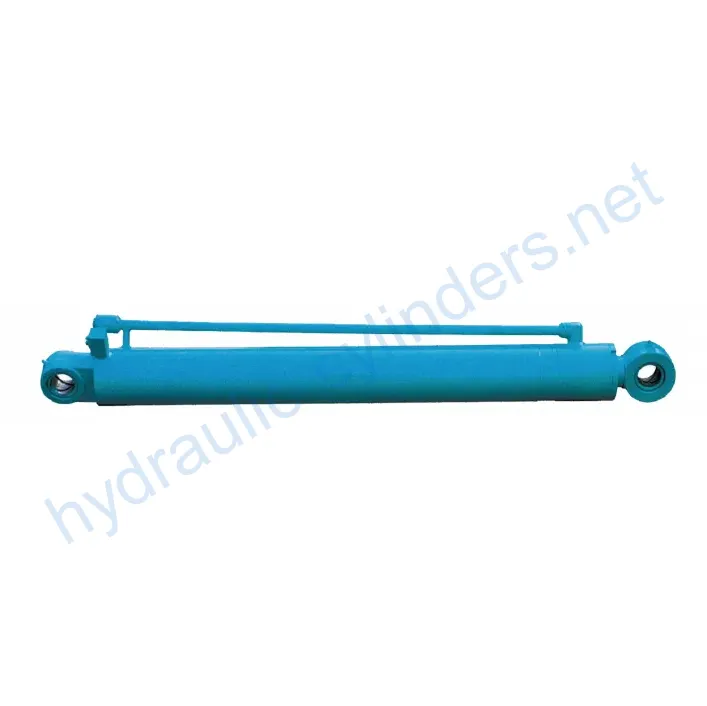
Arm CylinderFor Kobelco Large Excavator SK350LC
Como um dos fabricantes, fornecedores e exportadores de produtos mecânicos de cilindros hidráulicos, oferecemos cilindros hidráulicos e muitos outros produtos.
Entre em contato conosco para obter detalhes.
Correio eletrônico:sales@hydraulic-cylinders.net
Fabricante, fornecedor e exportador de cilindros hidráulicos.
Arm Cylinder For Kobelco Large Excavator SK350LC
Definição e Explicação
The arm cylinder is a specially designed hydraulic cylinder that provides linear motion and power to the arm of various machinery, such as excavators, cranes, and mechanical arms. The arm cylinder plays a crucial role in hydraulic systems, allowing for the efficient movement and control of additional tools or attachments. These cylinders not only enable smooth motion but also withstand heavy loads, ensuring efficient operation and reliability of the machinery under various working conditions.
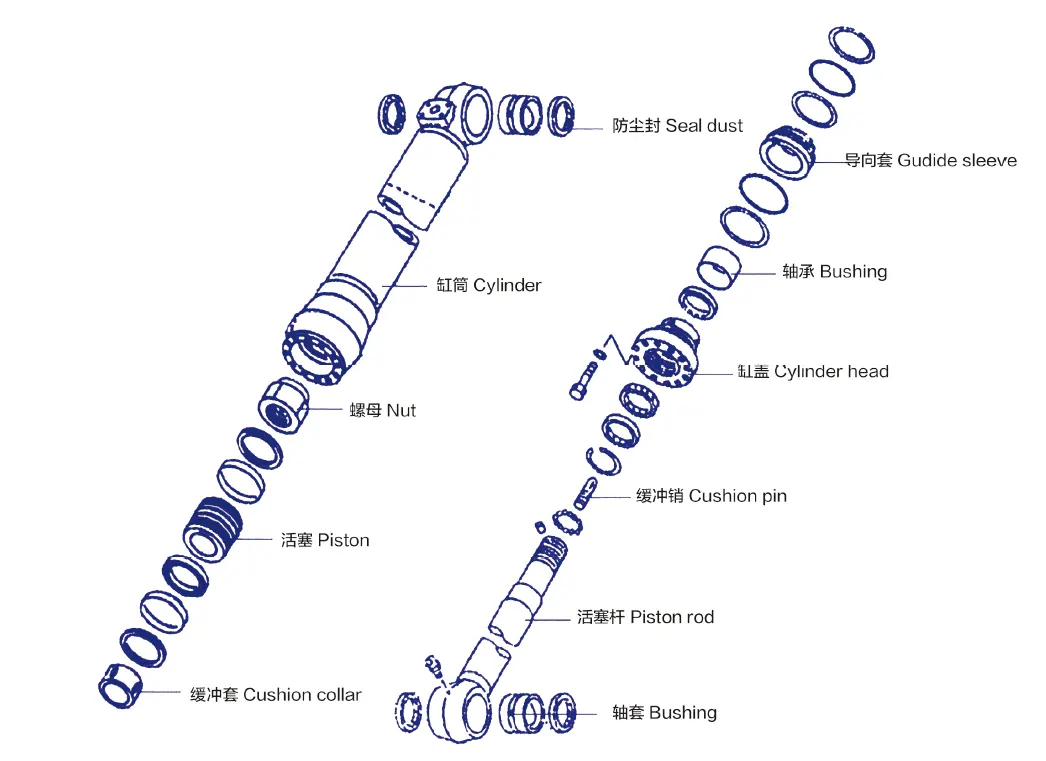
Características
- Transmissão de Alta Eficiência: O cilindro do braço proporciona movimento linear e força potentes, garantindo o alto desempenho do braço mecânico em diversas operações.
- Controle preciso: por meio do sistema hidráulico, o cilindro do braço permite um controle preciso do movimento, tornando a operação de ferramentas adicionais mais flexível e precisa.
- Durability: Arm cylinders are typically made of high-strength materials, offering excellent wear and corrosion resistance, suitable for long-term use in harsh environments.
- Multi-function Adaptability: These cylinders can be widely applied to various machinery, such as excavators, cranes, and mechanical arms, catering to different job requirements.
- Easy Maintenance: The design considers ease of maintenance and replacement, making regular inspections and upkeep more convenient, reducing equipment downtime.

Aplicações
1. Engenharia de Construção: Em escavadeiras e guindastes, o cilindro do braço é usado para controlar o movimento de caçambas ou lanças para terraplenagem, movimentação de materiais e instalação estrutural.
2. Manufacturing: In automated production lines, the arm cylinder is used for the motion of mechanical arms in processes such as assembly, welding, and handling, improving production efficiency and accuracy.
3. Máquinas agrícolas: Em máquinas agrícolas como colheitadeiras e semeadoras, o cilindro do braço controla o movimento dos braços operacionais para tarefas como plantio, fertilização e colheita.
4. Mineração: In mining equipment, the arm cylinder is used to control the arm movement of mining machinery for ore extraction and transport.
5. Logística e Transporte: Em empilhadeiras e robôs de movimentação, o cilindro do braço é usado para controlar a elevação e o movimento dos garfos, permitindo o manuseio e o empilhamento de materiais.
Considerações de design e critérios de seleção
- Bearing Capacity: The arm cylinder’s ability to withstand loads and forces is a critical design consideration.
- Sealing: Various seals, such as piston seals and rod seals, made of wear-resistant materials like polyurethane and nitrile rubber, are used. The cylinder body and threaded ends undergo fine treatment to improve wear resistance.
- Durability: The arm cylinder is designed for durability, considering factors like corrosion resistance, strength, and longevity in demanding operating conditions.
- Safety: Safety features are incorporated into the design to ensure the proper and secure operation of the arm cylinder.
- Maintainability: The design allows for easy maintenance and repair, reducing downtime and ensuring the longevity of the equipment.

Vedação e Lubrificação
The arm cylinder utilizes various seals, such as piston seals and rod seals, which are made of wear-resistant materials like polyurethane and nitrile rubber. The cylinder body and threaded ends are finely treated to enhance wear resistance. Regular lubrication with appropriate hydraulic oil is necessary to ensure smooth operation.
Inspeção regular e manutenção preventiva
- Inspecione regularmente o cilindro do braço para verificar se há sinais de desgaste, vazamentos ou danos.
- Verifique e substitua as vedações e outros componentes conforme necessário.
- Maintain proper lubrication by adding an adequate amount of hydraulic oil.
- Siga as orientações do fabricante quanto aos intervalos e procedimentos de manutenção.
- Implement preventive measures to minimize potential issues and extend the lifespan of the arm cylinder.

Guia de instalação do produto
1. Prepare the necessary tools and equipment for installation, including wrenches, hydraulic fittings, and safety equipment.
2. Ensure the excavator or machinery is safely parked and powered off.
3. Remove any existing arm cylinder, if applicable, by following the manufacturer’s instructions.
4. Carefully position the new arm cylinder in place, aligning it with the attachment points.
5. Securely fasten the arm cylinder using the appropriate bolts or pins.
6. Connect the hydraulic hoses to the designated ports, ensuring proper fittings and tight connections.
7. Double-check all connections, seals, and fittings for any leaks or abnormalities.
8. Test the functionality of the arm cylinder by operating the machinery’s controls.
9. Make any necessary adjustments or troubleshooting if the arm cylinder does not function correctly.

Considerações de segurança e fatores ambientais
When using the arm cylinder, safety measures are of utmost importance to prevent accidents and ensure the well-being of operators and those nearby. Proper training, adherence to safety protocols, and the use of personal protective equipment are crucial. Additionally, considering environmental factors such as fluid leaks and proper disposal of hydraulic components helps reduce the impact on the environment.
Diagnóstico de falhas e problemas comuns
1. Leaks: Check for any visible leaks in the hydraulic system, especially around the seals and connections.
2. Loss of Power: If the arm cylinder is not providing sufficient force, inspect the hydraulic system for blockages or malfunctions.
3. Erratic Movement: If the arm cylinder exhibits unpredictable or jerky motion, it may indicate issues with the control valve or hydraulic fluid levels.
4. Ruído excessivo: Unusual noise during arm cylinder operation may suggest problems with internal components or fluid contamination.
5. Seal Failure: If seals deteriorate or fail, it can lead to leaks, reduced performance, and potential damage to other hydraulic components.
Solução de problemas e soluções
- Inspect and replace damaged or worn seals, ensuring proper installation.
- Check for any blockages in the hydraulic system and clear them if necessary.
- Verify the hydraulic fluid levels and top up as needed with the recommended oil.
- If noise persists, consult a professional to diagnose and repair the arm cylinder.
- Implement regular maintenance to prevent potential issues and address them promptly.
Autor: lyl
Sobre nós
We are a professional manufacturer of replacement hydraulic cylinders, offering a wide range of products. We have become one of the leading manufacturers and wholesale distributors of hydraulic cylinders in domestic and international markets. Guided by the principle of excellent quality, we continuously improve our technological capabilities and production efficiency through refined manufacturing workshops and industrialized production management strategies. By introducing high-end digital manufacturing equipment and professional testing systems, we optimize our manufacturing platform and enhance product quality control processes, demonstrating strong innovation capabilities. Our goal is to meet the diverse needs of customers with principles of efficiency, precision, and high quality.
Cilindro hidráulico Aplicação:

 PT
PT  EN
EN  ES
ES  DE
DE  FR
FR  IT
IT  AR
AR  ZH
ZH  RU
RU  KO
KO  KA
KA  BG
BG  CS
CS  DA
DA  EL
EL  ET
ET  FI
FI  HU
HU  ID
ID  LT
LT  LV
LV  NB
NB  NL
NL  PL
PL  RO
RO  SK
SK  SL
SL  SV
SV  TR
TR  UK
UK