

Arm CylinderFor Komatsu Large Excavator PC300-3-5-6-7-8
Como um dos fabricantes, fornecedores e exportadores de produtos mecânicos de cilindros hidráulicos, oferecemos cilindros hidráulicos e muitos outros produtos.
Entre em contato conosco para obter detalhes.
Correio eletrônico:sales@hydraulic-cylinders.net
Fabricante, fornecedor e exportador de cilindros hidráulicos.
Introdução
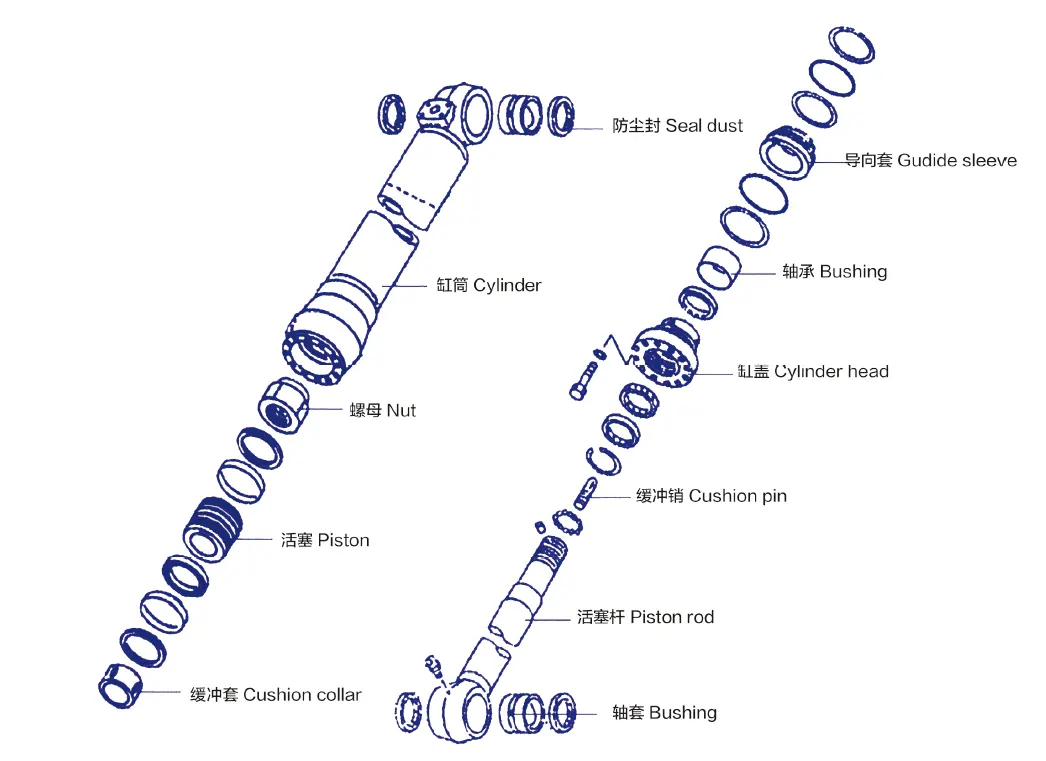
The Arm Cylinder for Komatsu Large Excavator PC300-3-5-6-7-8 is a hydraulic cylinder designed specifically to provide linear motion and power for the arm of various types of machinery, such as excavators, cranes, and mechanical arms. The arm cylinder plays a crucial role in hydraulic systems, enabling the efficient movement and control of attachments or accessories. These cylinders not only ensure smooth motion, but also have the ability to withstand heavy loads, ensuring high efficiency and reliability of the machinery under various working conditions.
Características
-
Transmissão de alta eficiência
O cilindro do braço proporciona movimento linear e força potentes, garantindo o alto desempenho e eficiência do braço mecânico em diversas operações.
-
Controle Preciso
Por meio do sistema hidráulico, o cilindro do braço permite um controle preciso do movimento, tornando a operação dos implementos mais flexível e precisa.
-
Durabilidade
The arm cylinder is typically manufactured using high-strength materials, providing excellent wear resistance and corrosion resistance, making it suitable for long-term use in harsh environments.
-
Adaptabilidade multifuncional
These cylinders can be widely applied to various types of machinery, such as excavators, cranes, and mechanical arms, to meet different working requirements.
-
Fácil manutenção
Designed with maintenance and replacement in mind, the arm cylinders make regular inspection and maintenance more convenient, reducing equipment downtime.

Aplicações
O cilindro de braço encontra aplicações em diversas indústrias:
-
Engenharia de Construção
Em escavadeiras e guindastes, o cilindro do braço controla o movimento das caçambas ou das lanças para trabalhos de terraplenagem, movimentação de materiais e instalação de estruturas.
-
Fabricação
In automated production lines, the arm cylinder is used for the motion of mechanical arms in processes like assembly, welding, and material handling, improving production efficiency and precision.
-
Maquinaria agrícola
Em máquinas agrícolas como colheitadeiras e semeadoras, o cilindro do braço controla o movimento dos braços operacionais para tarefas como semeadura, fertilização e colheita.
-
Mineração
In mining equipment, the arm cylinder controls the movement of the arm for mining and material handling.
-
Logística e Transporte
Em empilhadeiras e robôs de movimentação, o cilindro do braço controla a elevação e o movimento dos garfos, permitindo o manuseio e o empilhamento de materiais.
Considerações de projeto e padrões de seleção
When it comes to the design and selection of the arm cylinder, several factors need to be considered:
-
Capacidade de suporte
O cilindro do braço deve ser projetado para suportar a capacidade de carga necessária para garantir uma operação segura e eficiente.
-
Selagem
Various sealing components, such as piston seals and rod seals, should be used to maintain proper sealing. These seals are made of durable materials like polyurethane and nitrile rubber to withstand wear and tear.
-
Durabilidade
The arm cylinder should be constructed with high-quality materials and undergo precise surface treatments to enhance durability and resistance to wear.
-
Segurança
The design should incorporate safety features to prevent accidents and ensure the safe operation of the machinery.
-
Manutenibilidade
The arm cylinder should be designed for easy maintenance and replacement, reducing downtime and increasing productivity.

Vedação e Lubrificação
The arm cylinder employs various sealing components, such as piston seals and rod seals, which are made of wear-resistant materials like polyurethane and nitrile rubber. The cylinder body and threaded end surfaces are finely treated to improve wear resistance. Regular lubrication with the appropriate amount of hydraulic oil is required to ensure smooth operation.

Inspeção regular e manutenção preventiva
- Regularly inspect the arm cylinder for any signs of wear or damage.
- Check the sealing components and replace them if necessary.
- Ensure proper lubrication and refill with hydraulic oil when needed.
- Inspect and maintain other components connected to the arm cylinder.
- Siga o cronograma de manutenção recomendado pelo fabricante.
Diretrizes de Instalação do Produto
Siga estes passos para a instalação correta do cilindro do braço:
- Prepare as ferramentas e equipamentos necessários.
- Carefully remove the existing cylinder, if applicable.
- Install the new arm cylinder in the correct position, aligning the mounting points.
- Tighten the bolts securely to ensure a stable connection.
- Verifique se há vazamentos ou movimentos anormais após a instalação.

Considerações de segurança e fatores ambientais
When using the arm cylinder, it is important to follow safety measures to prevent accidents and ensure the well-being of operators and others. Proper safety equipment and training should be provided. Additionally, environmental factors, such as temperature and humidity, should be considered to ensure optimal performance of the arm cylinder.
Solução de problemas e problemas comuns
Common issues that may arise with the arm cylinder:
- Vazamento de fluido hidráulico
- Ruídos anormais durante o funcionamento
- Movimento lento ou sem resposta
- Pressão inconsistente
- Uneven wear on sealing components
To troubleshoot these issues, follow these tips:
- Inspect the cylinder for any visible leaks and repair or replace the damaged seals.
- Check the hydraulic fluid level and refill if necessary.
- Inspect the hydraulic lines, fittings, and valves for any damage or blockage.
- Check the pressure settings and adjust if needed.
- Regularly clean and lubricate the
Cilindro hidráulico Aplicação:

 PT
PT  EN
EN  ES
ES  DE
DE  FR
FR  IT
IT  AR
AR  ZH
ZH  RU
RU  KO
KO  KA
KA  BG
BG  CS
CS  DA
DA  EL
EL  ET
ET  FI
FI  HU
HU  ID
ID  LT
LT  LV
LV  NB
NB  NL
NL  PL
PL  RO
RO  SK
SK  SL
SL  SV
SV  TR
TR  UK
UK