
Fluid Power Tribology and Motion Control
What Causes Hydraulic Cylinder Stiction (Stick-Slip)?
A comprehensive technical analysis of the tribological mechanisms, system dynamics, and contributing factors behind stick-slip motion in hydraulic cylinders, with proven diagnostic and mitigation strategies.

Understanding the Destructive Phenomenon of Hydraulic Cylinder Stick-Slip Motion
In the demanding world of fluid power motion control, understanding what causes hydraulic cylinder stiction, more technically termed stick-slip motion, is essential knowledge for engineers, maintenance professionals, and system designers seeking to achieve smooth, precise, and reliable actuator performance. Stick-slip is a particularly vexing and destructive phenomenon characterized by intermittent, jerky motion in which the cylinder piston alternates between periods of static friction induced stiction where it remains motionless despite increasing driving force, and sudden slip where it lurches forward as the static friction is overcome and the stored elastic energy in the hydraulic fluid and mechanical structure is abruptly released. This alternating stick and slip cycle can repeat at frequencies ranging from a few hertz to several hundred hertz, producing objectionable noise and vibration, tool chatter and workpiece surface defects in machining applications, positioning inaccuracy in precision motion systems, and accelerated wear of seals, bearings, and mating surfaces.
The fundamental physics underlying hydraulic cylinder stiction involves the complex interaction between friction forces at the dynamic seal and bearing interfaces, the compliance or springiness of the hydraulic fluid and mechanical structure, and the applied driving force from hydraulic pressure. The classical stick-slip model describes a system in which the static coefficient of friction is higher than the dynamic coefficient of friction. As hydraulic pressure increases, force builds up in the system, compressing the fluid and elastically deforming the mechanical components, until the static friction threshold is exceeded. At that instant, the piston breaks free and accelerates rapidly as the stored elastic energy is released and the friction force drops to the lower dynamic level. The piston may overshoot the equilibrium position before decelerating as the driving force diminishes and the friction force again arrests motion, initiating another stick phase. This cycle repeats continuously, producing the characteristic juddering motion that is both a symptom and a cause of hydraulic cylinder dysfunction.
This comprehensive technical guide provides an exhaustive examination of the mechanisms driving hydraulic cylinder stick-slip, the multiple contributing factors spanning seal material properties, surface finish characteristics, fluid condition, system stiffness, and operating parameters, and the proven strategies for diagnosing and mitigating this performance degrading phenomenon. By mastering the tribological principles and system dynamics underlying stick-slip, fluid power professionals can specify appropriate materials and operating conditions, implement effective countermeasures, and achieve the smooth, precise cylinder motion that modern industrial and mobile applications demand.
The Tribological Foundations of Stick-Slip Friction Behavior
Understanding hydraulic cylinder stiction begins with the fundamental tribological principles governing friction at dynamic seal and bearing interfaces.
Static Versus Dynamic Friction and the Stribeck Curve
The essential prerequisite for hydraulic cylinder stick-slip is a friction characteristic in which the static coefficient of friction exceeds the dynamic coefficient of friction, combined with a dynamic friction coefficient that decreases with increasing sliding velocity over some portion of the operating range. This friction velocity relationship is described by the Stribeck curve, which delineates three lubrication regimes: boundary lubrication at very low speeds where surface asperities are in direct contact and friction is highest, mixed lubrication at intermediate speeds where a partial fluid film separates the surfaces, and full hydrodynamic lubrication at higher speeds where a complete fluid film eliminates solid contact and friction is governed by viscous shearing of the fluid. Stick-slip is most prevalent when the cylinder operates in the boundary or mixed lubrication regimes, where the negative slope of the friction velocity curve creates a mathematically unstable condition: any small perturbation that decreases velocity increases friction, further decelerating the piston toward a stick condition, while any increase in velocity decreases friction, further accelerating the piston in a slip event. The transition from static to dynamic friction releases stored elastic energy that drives the slip phase, and the cycle repeats as velocity again approaches zero.
The Role of System Stiffness in Amplifying Stick-Slip
While the friction characteristic at the seal interface is the primary driver of hydraulic cylinder stiction, the compliance or lack of stiffness of the hydraulic system and mechanical structure plays an equally important role in determining whether stick-slip will occur and how severe it will be. A highly compliant or springy system stores more elastic energy during the stick phase as pressure builds, releasing that energy more violently when static friction is overcome and producing larger amplitude, more damaging slip events. The primary sources of compliance in hydraulic cylinder systems include the compressibility of the hydraulic fluid itself, which increases with the volume of fluid between the control valve and the cylinder and with the presence of entrained air, and the mechanical compliance of hoses, mounting structures, and the driven load support. The critical stiffness required to prevent stick-slip depends upon the slope of the friction velocity curve: the more negative the slope, the stiffer the system must be to maintain stability. In practical terms, minimizing the fluid volume between the valve and cylinder by positioning the valve as close to the cylinder as possible, using rigid tubing rather than flexible hoses where feasible, and ensuring stiff, well anchored cylinder mountings are effective strategies for increasing system stiffness and suppressing stick-slip.

Seal Related Factors Contributing to Hydraulic Cylinder Stiction
The dynamic seals within a hydraulic cylinder are the primary source of the friction forces that drive stick-slip behavior, and their material properties and design directly influence stiction propensity.
?Elastomeric Seal Material Properties and Stick-Slip Propensity
Different seal materials exhibit markedly different friction characteristics that directly influence hydraulic cylinder stiction. Traditional nitrile rubber seals, while economical and offering good general performance, tend to exhibit relatively high static friction and a significant difference between static and dynamic friction coefficients, making them particularly prone to stick-slip in low speed or high precision applications. Polyurethane seals offer improved abrasion resistance and can provide somewhat lower friction, but their stick-slip characteristics vary significantly depending upon the specific polyurethane formulation and hardness. Filled PTFE seals, energized by elastomeric O-rings or metallic springs, represent the current state of the art for minimizing stick-slip in hydraulic cylinders. The inherently low friction coefficient of PTFE, combined with its minimal static to dynamic friction differential, dramatically reduces stick-slip propensity. PTFE compounds incorporating bronze, carbon fiber, or specialized solid lubricant fillers further enhance friction characteristics and wear resistance. For the most demanding low speed precision applications, PTFE based seals with optimized energizer designs can virtually eliminate stick-slip, enabling smooth motion at velocities below 0.1 inches per second.
?Seal Geometry Contact Pressure and Lubrication Effects
Beyond material selection, the geometric design of hydraulic cylinder seals significantly influences their stick-slip behavior. The radial contact pressure between the seal lip and the mating surface, determined by the seal interference, the energizer force, and the system pressure acting on the seal geometry, directly affects friction. Higher contact pressures increase the real area of contact between the seal and the surface, increasing both static and dynamic friction. However, the relationship between contact pressure and stick-slip is not monotonic: very low contact pressures may result in inadequate sealing and increased leakage, while very high contact pressures exacerbate friction and stick-slip. Optimal seal design balances adequate sealing force with minimal friction. The lubrication condition at the seal interface is equally critical. Seals operating with an adequate lubricating film of hydraulic fluid exhibit lower friction and reduced stick-slip compared to seals running under starved lubrication conditions. The microscopic surface texture of the mating rod or bore surface influences fluid retention in the contact zone: surfaces that are too smooth may not retain adequate lubricant, while surfaces that are too rough increase friction and wear. The optimal surface finish for minimizing stick-slip with elastomeric seals is typically in the range of 4 to 12 microinches Ra for rod surfaces and 10 to 20 microinches Ra for cylinder bores.

Fluid Operating Parameters and System Design Factors
Beyond the cylinder seals themselves, multiple fluid properties and system design characteristics influence hydraulic cylinder stiction.
Hydraulic Fluid Viscosity and Temperature Effects
Hydraulic fluid viscosity exerts a profound influence on hydraulic cylinder stiction through its effect on the lubricating film thickness at seal and bearing interfaces. At low operating temperatures, increased fluid viscosity can reduce stick-slip by promoting the formation of a more robust hydrodynamic lubricating film that separates the seal and mating surface, shifting operation toward the mixed or hydrodynamic lubrication regimes where the friction velocity slope is positive or neutral. However, excessively high viscosity during cold start conditions can also increase viscous friction and pressure drops, potentially exacerbating stick-slip through different mechanisms. At elevated temperatures, reduced viscosity thins the lubricating film, potentially allowing more direct solid contact and increasing the static to dynamic friction differential that drives stick-slip. The Viscosity Index of the hydraulic fluid directly impacts the consistency of friction characteristics across the operating temperature range. For applications prone to stick-slip, fluids with higher Viscosity Index maintain more consistent seal lubrication and friction behavior across temperature extremes, reducing the variation in stick-slip propensity between cold start and steady state operating conditions. This is discussed further in our detailed article on hydraulic fluid viscosity effects available on our website.
Operating Speed and the Low Velocity Instability Zone
Hydraulic cylinder stick-slip is predominantly a low speed phenomenon, occurring when the piston velocity falls below a critical threshold determined by the friction characteristics and system stiffness. At very low speeds, the hydrodynamic lubricating film has insufficient velocity to fully develop, and the seal operates in the boundary or mixed lubrication regime where the static to dynamic friction differential is most pronounced. As operating speed increases, the transition to full hydrodynamic lubrication reduces the static to dynamic friction ratio and the negative slope of the friction velocity curve, suppressing stick-slip. The critical velocity below which stick-slip occurs depends upon the specific seal materials, surface finishes, fluid properties, and system stiffness, but is typically in the range of 0.5 to 20 inches per minute for conventional elastomeric seals. For applications requiring smooth motion at very low speeds, such as precision machine tool slides, telescope positioning drives, and robotic manipulators, the use of low friction PTFE based seals in combination with high stiffness actuator mounting and minimal fluid volume between the valve and cylinder is essential for suppressing stick-slip.
Side Loading Misalignment and Uneven Seal Contact
Mechanical misalignment and side loading significantly exacerbate hydraulic cylinder stick-slip by creating uneven contact pressure distribution around the seal circumference. When a cylinder is misaligned with its load path, the resulting side loading forces the piston against one side of the cylinder bore and the rod against one side of the head gland bushing. This uneven loading concentrates the seal contact pressure on a limited arc of the seal circumference rather than distributing it uniformly. The localized high contact pressure zones experience increased friction, greater static to dynamic friction differential, and reduced lubricant film thickness, all of which promote stick-slip initiation. Additionally, the uneven loading can cause the piston to cock or tilt within the bore, further distorting seal contact geometry. Proper cylinder alignment during installation, as detailed in our comprehensive alignment guide, and the use of spherical rod end bearings or alignment couplers to accommodate minor misalignment without transmitting bending moments to the cylinder, are essential preventive measures. When stick-slip is diagnosed, verifying cylinder alignment and correcting any misalignment should be among the first diagnostic steps before considering seal replacement or other more invasive interventions.
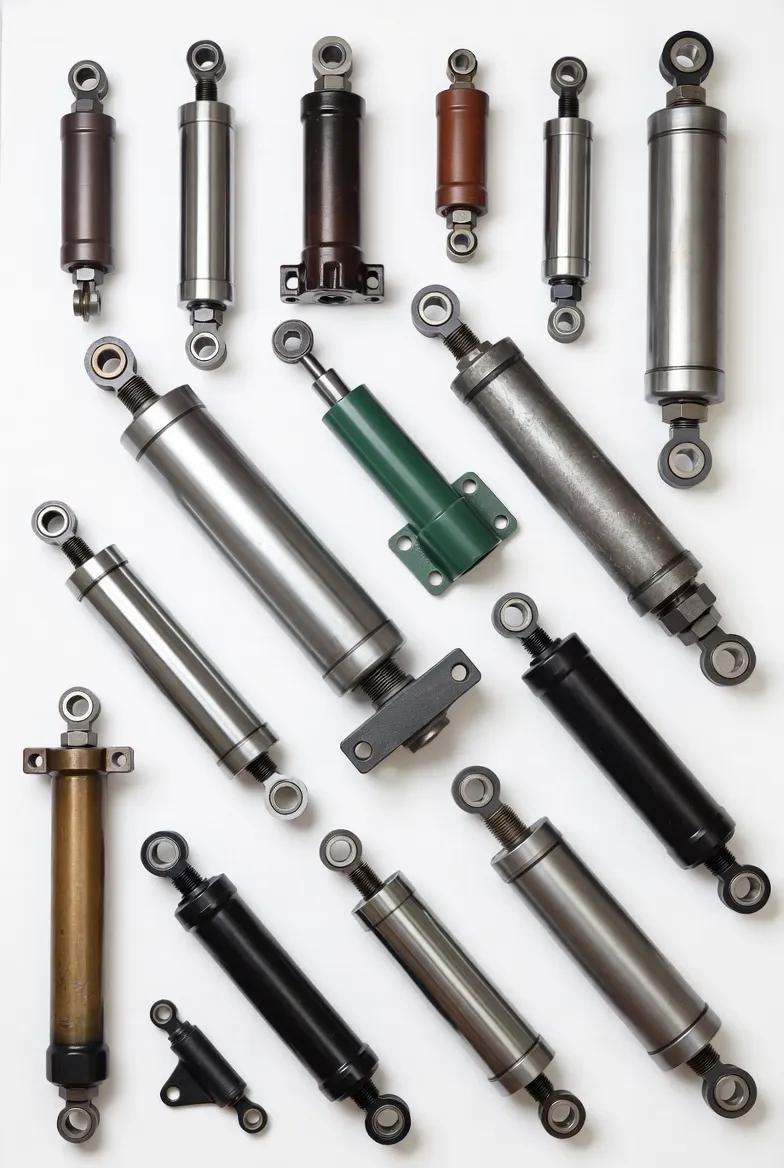
Diagnosing and Mitigating Hydraulic Cylinder Stick-Slip
Systematic diagnosis and targeted mitigation strategies can effectively eliminate or significantly reduce hydraulic cylinder stiction in most applications.
- ?
Diagnosing Stick-Slip Through Motion Observation and Measurement: The first step in addressing hydraulic cylinder stiction is confirming its presence and quantifying its severity. Visual observation of jerky, intermittent cylinder motion, particularly at low operating speeds, provides the most direct indication of stick-slip. The characteristic sound of stick-slip motion, often described as chattering, squealing, or groaning, results from the vibration of mechanical components excited by the alternating stick and slip phases. For quantitative diagnosis, instrument the cylinder with a linear position transducer or accelerometer to record the position or acceleration versus time profile. Stick-slip manifests as a characteristic sawtooth pattern in the velocity profile, with periods of near zero velocity alternating with velocity spikes during slip events. Frequency analysis of the acceleration signal reveals the stick-slip frequency and its harmonics. Measuring the pressure differential across the piston during low speed operation also provides diagnostic information: stick-slip produces pressure fluctuations corresponding to the stick and slip phases. Comparing the measured stick-slip severity to baseline data from properly functioning cylinders of the same type helps distinguish between inherent low level friction variation and problematic stick-slip requiring intervention.
- ?
Seal Material Upgrades for Stick-Slip Reduction: The single most effective intervention for reducing hydraulic cylinder stiction in most applications is upgrading the dynamic seals to materials and designs optimized for low friction and minimal static to dynamic friction differential. PTFE based piston seals and rod seals, energized by O-rings or canted coil springs, can reduce breakaway friction by fifty to eighty percent compared to conventional nitrile or polyurethane lip seals, while virtually eliminating the stick-slip behavior that plagues elastomeric seals at low speeds. When converting a cylinder to PTFE seals, it is essential to verify that the seal gland dimensions are compatible with the replacement seal design, as PTFE seals often require different groove geometries than the elastomeric seals they replace. The cylinder bore and rod surface finishes must be in good condition, as PTFE seals are less tolerant of surface damage than elastomeric seals that can conform to minor imperfections. For cylinders that cannot be easily converted to PTFE seals due to dimensional constraints or other factors, the use of specialized low friction polyurethane compounds or the application of friction reducing coatings to existing seal surfaces may provide partial stick-slip improvement.
- ?
Dither Signals and Pressure Superposition Techniques: For electrohydraulic servo or proportional valve controlled cylinders, the application of a high frequency, low amplitude dither signal superimposed on the control signal represents an effective electronic countermeasure against stick-slip. The dither signal causes the valve spool to oscillate slightly, producing small amplitude pressure and flow pulsations at the cylinder. These pulsations effectively prevent the piston from dwelling in a stationary stick condition long enough for static friction to fully develop, maintaining the seal interfaces in a state of continuous micro motion that avoids the transition to static friction. The dither frequency is typically selected to be above the mechanical response bandwidth of the load to avoid imparting perceptible vibration, usually in the range of 50 to 200 Hz, with amplitude just sufficient to suppress stick-slip without causing excessive valve wear or energy consumption. Properly tuned dither can dramatically improve the low speed smoothness of electrohydraulic positioning systems, enabling precision motion control that would be unattainable without this technique.

Advanced Mitigation Strategies and System Level Solutions
For the most demanding applications where conventional mitigation measures prove insufficient, several advanced strategies address hydraulic cylinder stiction at the system level.
Hydrostatic Bearings for Ultra Low Friction Support
For the ultimate in low friction and stick-slip elimination, hydrostatic bearing systems replace conventional wear rings and bushings with externally pressurized fluid bearings that support the piston and rod on a continuous film of hydraulic fluid with no solid contact at any speed. Hydrostatic bearings require an external pressure source and precision flow control orifices to maintain the bearing film, adding complexity and cost compared to conventional bearings. However, the complete elimination of solid friction and wear makes hydrostatic bearing cylinders the preferred solution for ultra precision positioning systems, seismic simulators, and structural testing equipment where any stick-slip motion is unacceptable. The external pressurization also provides significant damping that further stabilizes system dynamics. While the complexity of hydrostatic bearing systems limits their application to high value, performance critical installations, they represent the state of the art in hydraulic cylinder motion smoothness.
Active Damping and Closed Loop Friction Compensation
Modern digital motion controllers employ sophisticated friction compensation algorithms that model the friction characteristics of the cylinder and apply feed forward commands to counteract friction forces before they cause motion errors. These algorithms typically include a Coulomb friction model for the velocity independent friction component, a viscous friction model proportional to velocity, and a Stribeck friction model that captures the negative slope region of the friction velocity curve responsible for stick-slip. By predicting and compensating for these friction components in real time, the controller can significantly improve low speed motion smoothness without requiring mechanical modifications to the cylinder. Active damping techniques that modulate valve opening in response to measured acceleration or pressure feedback further suppress the oscillations associated with stick-slip. The combination of advanced friction compensation and active damping in modern electrohydraulic control systems enables levels of motion precision and smoothness that were previously attainable only through complex and expensive mechanical solutions.
System Stiffness Enhancement and Compliance Reduction
Increasing the stiffness of the hydraulic cylinder system is a universally applicable strategy for suppressing stick-slip, as a stiffer system stores less elastic energy during the stick phase and releases it with smaller amplitude slip events. Practical stiffness enhancement measures include mounting the directional control valve directly on the cylinder or as close to the cylinder ports as physically possible, minimizing the fluid volume between the valve and cylinder that acts as a compliance. Replacing flexible hydraulic hoses with rigid steel tubing wherever motion allows reduces the volumetric expansion of conductors under pressure. Ensuring that cylinder mounting structures are rigid and well anchored minimizes the mechanical compliance that contributes to the springiness of the overall system. For applications where stick-slip remains problematic despite seal and fluid optimization, targeted stiffening of the system often provides the additional margin necessary to transition from intermittent stick-slip to smooth, continuous motion.
Understanding what causes hydraulic cylinder stiction and implementing the appropriate diagnostic and mitigation strategies empowers fluid power professionals to overcome this performance limiting phenomenon and achieve the smooth, precise, and reliable cylinder motion that modern industrial and mobile applications demand.

Conclusion: Mastering Stick-Slip for Precision Hydraulic Cylinder Motion
Hydraulic cylinder stick-slip is a complex tribological and dynamic phenomenon rooted in the fundamental friction characteristics of seal and bearing interfaces, amplified by the compliance of the hydraulic fluid and mechanical system. Its characteristic jerky, intermittent motion degrades process quality, accelerates component wear, and limits the achievable precision of fluid power positioning systems. Effective mitigation requires a multi faceted approach addressing the seal materials and geometries that determine the friction velocity relationship, the fluid properties that influence lubricating film formation, the mechanical alignment that prevents uneven seal loading, and the system stiffness and control strategies that suppress the dynamic instability. By systematically diagnosing the contributing factors in each specific application and applying the appropriate combination of seal upgrades, fluid optimization, alignment correction, and control enhancement, fluid power professionals can achieve the smooth, predictable, and precise cylinder motion essential for modern industrial performance requirements. The mastery of stick-slip fundamentals distinguishes the fluid power engineering expert from the general practitioner, enabling the resolution of some of the most challenging and persistent motion control problems encountered in hydraulic cylinder applications.