
Fluid Power Engineering Mastery
What Is a Double Acting Hydraulic Cylinder? The Complete Guide
An authoritative engineering analysis exploring the internal fluid dynamics, differential kinematics, load holding stability, and smart technology integration of double acting hydraulic actuators.

The Mechanical Muscle of Modern Industry
In the vast and highly complex world of mechanical engineering, automation, and heavy machinery, fluid power remains the undisputed champion of generating massive, meticulously controlled linear force. At the absolute core of this technological domain lies the hydraulic linear actuator. While there are several variations of these devices, the most prevalent, versatile, and powerful design utilized across global manufacturing and mobile equipment sectors is the double acting hydraulic cylinder. Understanding how a double acting hydraulic cylinder works is absolutely essential for any engineer, procurement specialist, or maintenance professional seeking to optimize heavy machinery performance.
To grasp the operational superiority of a double acting hydraulic cylinder, one must first understand its fundamental counterpart: the single acting cylinder. A single acting actuator features only one fluid port. It uses hydraulic pressure to extend the piston rod in one direction but must rely entirely on an external force such as gravity, a mechanical payload, or an internal heavy duty coil spring to retract the rod back to its starting position. While simple and effective for specific vertical lifting applications like material handling elevators, single acting designs are severely limited. They cannot actively pull a load, nor can they exert controlled hydraulic force in reverse.
This is exactly where the double acting hydraulic cylinder establishes its dominance. By incorporating a highly engineered dual port architecture, a double acting cylinder directs pressurized hydrostatic fluid to either side of the internal piston. This grants the machine the unparalleled ability to generate massive, active kinetic force in both the extension and retraction strokes. From the colossal articulated arms of construction excavators tearing through bedrock to the microscopic precision required in aerospace materials testing equipment, this comprehensive technical analysis will dissect the internal fluid dynamics, the structural architectures, and the advanced smart technologies that define world class double acting hydraulic actuators.
Core Mechanics and Fluid Dynamics
The operation of a double acting hydraulic cylinder is a masterpiece of fluid dynamics and mechanical sealing. It relies on a carefully orchestrated exchange of high pressure oil directed by sophisticated control valves.
The Extension Stroke Dynamics
During the extension phase, the hydraulic directional control valve routes pressurized fluid from the main pump into the cap end port also known as the blind end of the cylinder barrel. The fluid fills the chamber and pushes against the full circular surface area of the piston face. Because force equals pressure multiplied by area, the large surface area of the blind end allows the cylinder to generate its absolute maximum pushing force. Simultaneously, the fluid trapped in the rod end chamber is forced out through the secondary port and routed harmlessly back into the hydraulic reservoir.
The Retraction Stroke Dynamics
To reverse the motion, the directional control valve shifts, redirecting the high pressure fluid into the rod end port located near the cylinder head gland. The fluid fills the annular chamber surrounding the steel rod and pushes against the front face of the piston. As the piston is forced backward, it actively pulls the connected payload. The fluid residing in the cap end chamber is simultaneously exhausted back to the tank. This continuous, controlled exchange of pressurized oil grants the operator total command over the load in both directions.

Differential Architectures vs Double Rod Designs
When specifying a double acting hydraulic cylinder for a complex engineering project, one must understand that not all double acting actuators behave identically. The physical geometry of the piston rod within the cylinder barrel drastically alters the speed and force output of the machine. The two primary architectures within the double acting category are the differential cylinder and the double rod cylinder.
The Differential Double Acting Cylinder
This is the most common configuration found in mobile equipment and industrial presses. In a differential cylinder, the piston rod extends out of only one end of the barrel. This creates an inherent volumetric asymmetry inside the actuator. During retraction, the physical presence of the steel rod occupies space within the cylinder chamber, reducing the effective surface area that the hydraulic fluid can push against. Consequently, assuming a constant pump flow rate, a differential double acting hydraulic cylinder will extend slower but push with maximum force, and it will retract faster but pull with reduced force. This asymmetry is highly desirable for applications like an excavator boom, where massive power is needed to dig into the earth extension, but a rapid return stroke is preferred to speed up cycle times retraction.
The Symmetrical Double Rod Cylinder
Certain high precision mechanical applications cannot tolerate the unbalanced speed and force profiles of a differential cylinder. To solve this, engineers deploy double rod cylinders. In this design, a single central piston is connected to a continuous rod that protrudes through both the front and rear end caps of the cylinder barrel. Because the rod occupies identical volume in both the extension and retraction chambers, the effective fluid surface area is perfectly symmetrical. Therefore, a double rod cylinder delivers exactly identical force and exactly identical speed in both directions of travel. This balanced kinematic profile makes it the absolute gold standard for automotive hydrostatic steering systems and high frequency structural fatigue testing machines.

Global Industrial Applications
The versatility to actively push and pull massive loads makes the double acting hydraulic cylinder the cornerstone of automation across diverse and demanding global industries.
Heavy Construction Equipment
Earthmoving machinery depends entirely on double acting cylinders. An excavator utilizes these heavy duty actuators to forcefully drive the bucket into compacted soil extension and then aggressively curl the bucket inward to retain the heavy payload retraction. These environments require rugged welded body cylinder construction to withstand extreme shock loads and abrasive particulate contamination.
Industrial Manufacturing Presses
In metal stamping, injection molding, and heavy forging facilities, double acting cylinders power the massive hydraulic presses. The cylinder must exert hundreds of tons of downward force to shape raw steel or compress polymers. Once the pressing cycle is complete, the cylinder must actively retract the heavy steel platen upwards to allow operators or robotic arms to extract the finished manufactured component.
Aerospace and Flight Control
Commercial airliners and military jets utilize highly specialized, lightweight double acting servo cylinders for flight control surfaces. Whether adjusting the pitch of the elevators, manipulating the ailerons, or deploying the massive landing gear against severe aerodynamic wind resistance, these aerospace grade actuators must push and pull with absolute, flawless precision in sub zero stratospheric temperatures.
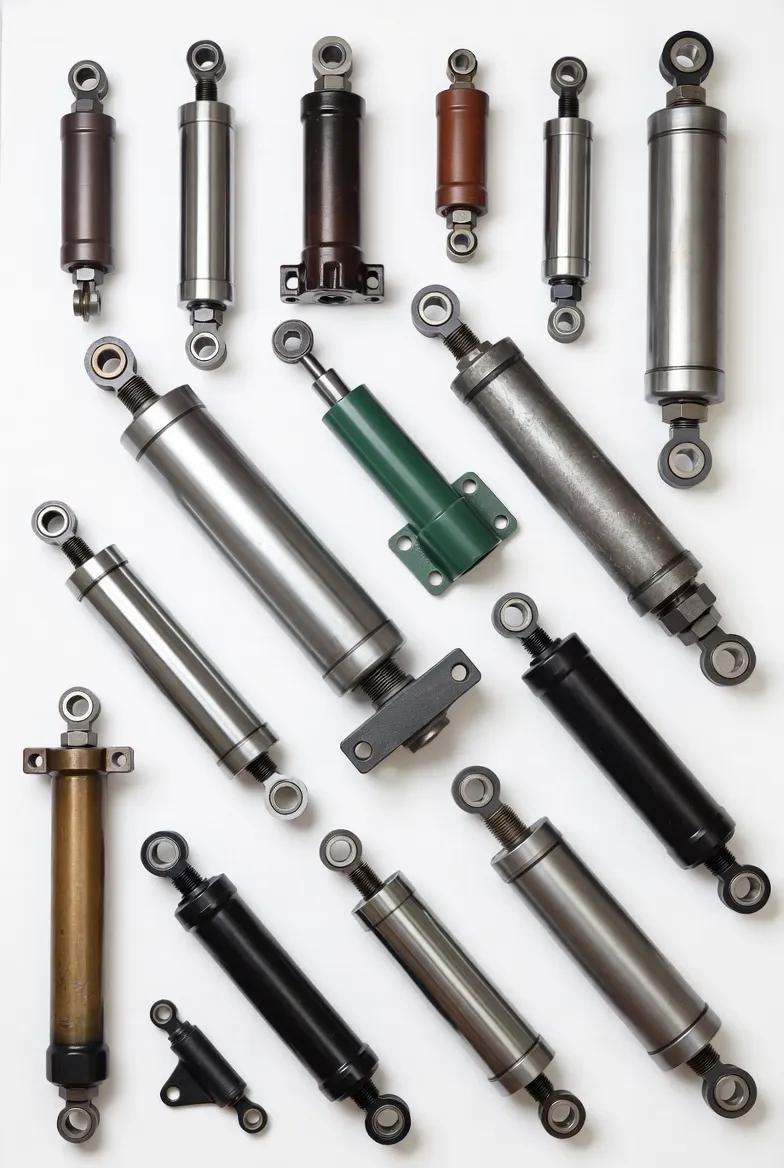
Engineering Advantages and Failsafe Integration
The widespread adoption of double acting hydraulic linear actuators is not merely a matter of convenience; it is driven by profound engineering advantages that dictate machine efficiency and operator safety. Unlike single acting systems that rely on unpredictable gravitational forces or fatiguing mechanical springs, double acting cylinders offer absolute, positive mechanical control throughout the entire stroke profile.
- ✔️
Absolute Load Control and Cushioning: Because fluid pressure is managed on both sides of the piston, double acting cylinders prevent heavy loads from freefalling. Engineers can integrate sophisticated progressive hydraulic cushioning into the end caps. As the piston nears the end of its stroke, fluid is forced through a restricting orifice, creating a hydrodynamic brake that gently and silently decelerates the heavy payload, preventing destructive metallic impacts.
- ✔️
Integration of Load Holding Valves: In critical safety applications such as crane booms or manlifts, suspending a load relies entirely on the integrity of the hydraulic circuit. Double acting cylinders allow for the direct flange mounting of pilot operated check valves or counterbalance valves on the cylinder ports. If a main hydraulic hose ruptures, these valves snap shut in milliseconds, trapping the fluid inside the cylinder and securely locking the suspended payload in mid air to prevent a catastrophic crash.
- ✔️
Multi Axis Articulation: Complex robotic arms and automated assembly lines require joints that can articulate aggressively in multiple directions. The dual port nature of these cylinders allows them to operate in sophisticated push pull synchronized arrays, granting automated machinery the dexterity and power required for modern manufacturing operations.

The Digital Horizon: Smart Hydraulics and Predictive Maintenance
The global fluid power industry is rapidly transitioning towards fully digital, highly automated Industry 4.0 environments. The traditional mechanical double acting hydraulic cylinder is evolving from a passive force generating component into a highly intelligent, sensor driven node integrated deeply into global facility management and telematics networks.
Next generation smart double acting cylinders are being equipped with embedded, extreme resolution linear position sensors hidden safely inside the hollow piston rod. These sensors feed real time stroke telemetry to the machine control unit, allowing for micrometer precision in automated assembly lines. Furthermore, integrated high resolution pressure transducers and vibration sensors can analyze the performance signature of the cylinder over millions of cycles. Artificial intelligence algorithms utilize this data to accurately predict internal seal wear, fluid degradation, or potential rod binding. This shift toward AI driven predictive maintenance allows plant managers to replace degrading fluid power components during scheduled downtime, eradicating the catastrophic financial costs associated with sudden, unexpected hydraulic failures on the factory floor.

Conclusion: The Ultimate Standard of Fluid Power Actuation
A double acting hydraulic cylinder is indisputably the most critical fluid power component in the realm of modern industrial machinery and automation. By perfectly combining extreme heavy duty metallurgical construction, uncompromising closed loop servo hydraulic precision, and the unparalleled ability to generate massive active force in both directions, these highly advanced actuators ensure that engineers can lift, push, pull, and shape the physical world with absolute, undeniable accuracy. For global equipment manufacturers and elite engineering firms, mastering top tier fluid power and smart localized actuation systems is the fundamental cornerstone to establishing mechanical excellence, ensuring operational safety, and securing maximum reliability in the highly demanding field of industrial automation.