
Fluid Power System Design & Sizing
Should You Oversize a Hydraulic Cylinder for Heavy Loads?
A definitive engineering analysis exploring the benefits and hidden penalties of oversizing, including frame stress, flow demand, energy waste, and the rigorous methodology for calculating the optimal cylinder size for heavy-load applications.

The Engineering Dilemma of Cylinder Oversizing for Heavy Loads
In the demanding discipline of hydraulic system design, the question of whether you should oversize a hydraulic cylinder for a heavy-load application is a classic engineering dilemma that pits a conservative safety instinct against the cold realities of physics and lifecycle cost. The intuitive logic is seductive: if a 4-inch bore cylinder generates 31,400 pounds of force, why not specify a 6-inch bore and generate a massively over-capable 70,600 pounds? The perceived benefit is an abundant safety margin, a hedge against unforeseen load spikes, and the peace of mind that the cylinder is operating well below its maximum capacity. However, this decision to oversize is not free. It triggers a cascade of predictable, costly consequences that ripple through the entire hydraulic system and the machine’s physical structure, often creating new problems that are more expensive than the perceived safety is worth.
Oversizing a cylinder means selecting a bore diameter significantly larger than what is required to generate the static and dynamic break-out force for the known load at the available system pressure. This is a fundamentally different engineering strategy than simply designing with a 1.5:1 or 2:1 safety factor on the cylinder’s rated pressure, which is a standard and sound practice. Oversizing the bore, however, changes the core dynamics of the machine. A larger bore requires a proportionally larger volume of hydraulic fluid to achieve the same stroke speed. This directly increases the required pump flow rate, driving up the cost and energy consumption of the power unit. More critically, the larger cylinder generates a higher absolute end-of-stroke impact force on the machine structure, potentially overloading the frame even while operating at the “normal” system pressure. The decision to oversize must therefore be a calculated, system-level trade-off analysis, not a casual act of conservative over-design. This is the kind of rigorous analysis provided by an engineering-driven manufacturer like EverPower-Huachang HYDRAULIC.
This comprehensive technical guide will provide a definitive analysis of the benefits, but most importantly, the hidden penalties of oversizing a hydraulic cylinder for heavy loads. We will examine the mathematical relationship between bore size, flow demand, and system efficiency, as detailed in our guide on how to size a hydraulic cylinder for load and speed requirements. We will explore the structural risks of transmitting excessive force into a machine frame and detail the correct alternative: specifying a cylinder with a verified, higher rated pressure and robust structural components, rather than an oversized piston. The ultimate goal is to replace the guesswork of “making it bigger” with the precision of a correctly engineered solution.
The Hidden Costs of an Oversized Piston Area
A larger-than-necessary bore diameter triggers immediate and long-term penalties in flow demand, energy consumption, and total cost of ownership.
Explosion of Flow Demand and Pump Size
The primary penalty of an oversized bore is the dramatic increase in required hydraulic flow. The volume of oil required to move a piston a given distance is directly proportional to its area, which scales with the square of the diameter. Moving from a 4-inch bore (12.57 sq. in.) to a 6-inch bore (28.27 sq. in.) requires 225% more fluid to achieve the same stroke distance. If the machine’s required cycle time is fixed, this means the pump’s output flow must also increase by 225%. This triggers a cascade of component upsizing: a larger pump with a higher initial cost, a larger electric motor to drive it, and larger, more expensive directional and flow control valves. The physical size and cost of the entire hydraulic power unit (HPU) escalate dramatically. In a mobile application, the weight penalty of these larger components affects vehicle stability and fuel consumption. A correctly sized cylinder, operating at a higher but safe pressure, achieves the same force with a smaller, more efficient, and lower-cost power unit.
Parasitic Energy Waste and Thermal Loading
A cylinder that is oversized for its load operates at a chronically lower system pressure than its design rating. While this seems safe, it is energy-inefficient. The pump is still delivering a high flow rate, and this large volume of oil is being circulated through the system’s valves and conductors, generating a continuous pressure drop and heating the fluid. The lost energy is dissipated as heat, which must be removed by a larger, more costly heat exchanger. Furthermore, an oversized cylinder has larger, heavier internal components. The friction from its larger piston and rod seals is proportionally higher, wasting even more energy with every stroke. Over the lifetime of a high-duty-cycle machine, the cumulative energy cost of this parasitic loss can dwarf the initial purchase price of the cylinder itself. Our guide on how to improve the efficiency of a hydraulic cylinder system explores these efficiency dynamics in comprehensive detail.

Structural Risks: Transmitting Excessive Force into the Machine
A cylinder does not exist in isolation; its output force is transmitted directly into the machine’s structural frame and the driven mechanism.
?️The Danger of Frame Overloading and Fatigue
An oversized cylinder is, by definition, capable of generating a much higher maximum force than the machine structure was originally designed to withstand. Consider a heavy-duty press. An engineer might specify a large safety factor on the cylinder to ensure it never stalls under load, but the press frame itself is designed for a specific tonnage. If a larger cylinder is installed and operated at the full system relief pressure, it can generate a force that permanently deforms the machine’s frame, cracks its welds, or fatigues its critical bolted joints. Even if the system relief valve is adjusted down, the potential for a future, inadvertent pressure adjustment to cause structural damage is a latent safety risk. The cylinder’s maximum possible force output at the system’s maximum pressure should always be the reference point for structural analysis, and oversizing the cylinder for the sole purpose of a “feeling of safety” can catastrophically compromise the machine’s structural integrity.
⚙️The Control Penalty: Slower, Less Precise Motion
An oversized cylinder is also a sluggish cylinder. For a given pump flow, the larger the piston area, the slower the extension speed. This is a direct consequence of the fundamental hydraulic relationship. If the pump flow is not also proportionally increased, the machine’s cycle time will increase, directly impacting productivity. Even if the flow is increased, the large volume of oil in the cylinder and the connecting lines acts as a compressible fluid spring, reducing the natural frequency and stiffness of the actuation system. This degrades the precision and responsiveness of the cylinder in a servo or proportional control application. The cylinder becomes less responsive to small valve commands, and its positioning accuracy suffers from the larger volume of oil that must be precisely compressed and decompressed. This sluggishness is a direct penalty of an unnecessarily large bore.

The Correct Engineering Strategy for Heavy-Load Applications
The professional alternative to oversizing the bore is to correctly size the cylinder and then engineer the route to a safe, robust margin of force.
Calculate the Exact Required Force, Then Apply a Proper Safety Factor
The correct design methodology begins not with a guess, but with a precise, multi-component calculation of the required break-out force. This force must be the sum of the static weight of the load, the estimated dynamic inertial load during acceleration (F=ma), and any other parallel resisting forces, such as guide friction. This is the bare minimum force required to move the load. To this, a rational safety factor is applied—typically 1.5:1 to 2:1 for a heavy industrial application. The cylinder’s bore diameter is then selected from a standard catalog table such that at the system’s available nominal operating pressure, its theoretical force output equals or slightly exceeds this factored requirement. This methodology transforms the problem from an undefined “oversize” decision into a precise, defensible engineering calculation. Our guide on how to calculate hydraulic cylinder flow rate requirements provides the foundational area and velocity math for this process.
Specify a Higher Pressure Rating, Not a Larger Bore
The most efficient way to achieve a high force in a compact package is not to increase the bore, but to increase the system pressure. The force is the product of pressure and area. If a standard industrial cylinder is rated for 3000 PSI, the designer has the option to specify a high-pressure, heavy-duty cylinder rated for 5000 PSI or even higher. This cylinder will have the same compact mounting footprint as its standard counterpart, avoiding all the flow and weight penalties of an oversized bore. The piston and barrel of this high-pressure cylinder will be manufactured from higher-strength materials, and its seals will be specifically engineered for the elevated pressure. The power unit for this system will use a high-pressure pump. This is a highly efficient, energy-conscious strategy for heavy-lift applications, and it is a specialty of advanced manufacturers. This approach concentrates the engineering margin into the pressure containment of a compact component, rather than into the volumetric inefficiency of an oversized component.
Reinforce the Rod and Bearings for Column Strength
In a heavy-load application, the real failure risk is often not the cylinder’s tensile force, but the buckling of its extended piston rod under the compressive load. For a long-stroke cylinder pushing a heavy load, the correct design response is not to increase the bore, but to increase the rod diameter and to use a correctly sized stop tube. The stop tube dramatically reduces the unsupported rod length, increasing the cylinder’s resistance to column buckling and rod whip. The rod end mount should also be a robust, high-strength steel component. This strategy directly addresses the fundamental mechanical risk without incurring the hydraulic penalties of an oversized bore. An expert application engineer will perform an Euler column buckling analysis for the specific mounting condition and recommended a rod, stop tube, and support system that provides absolute structural safety. This engineering service is a core part of a quality manufacturer’s design process.
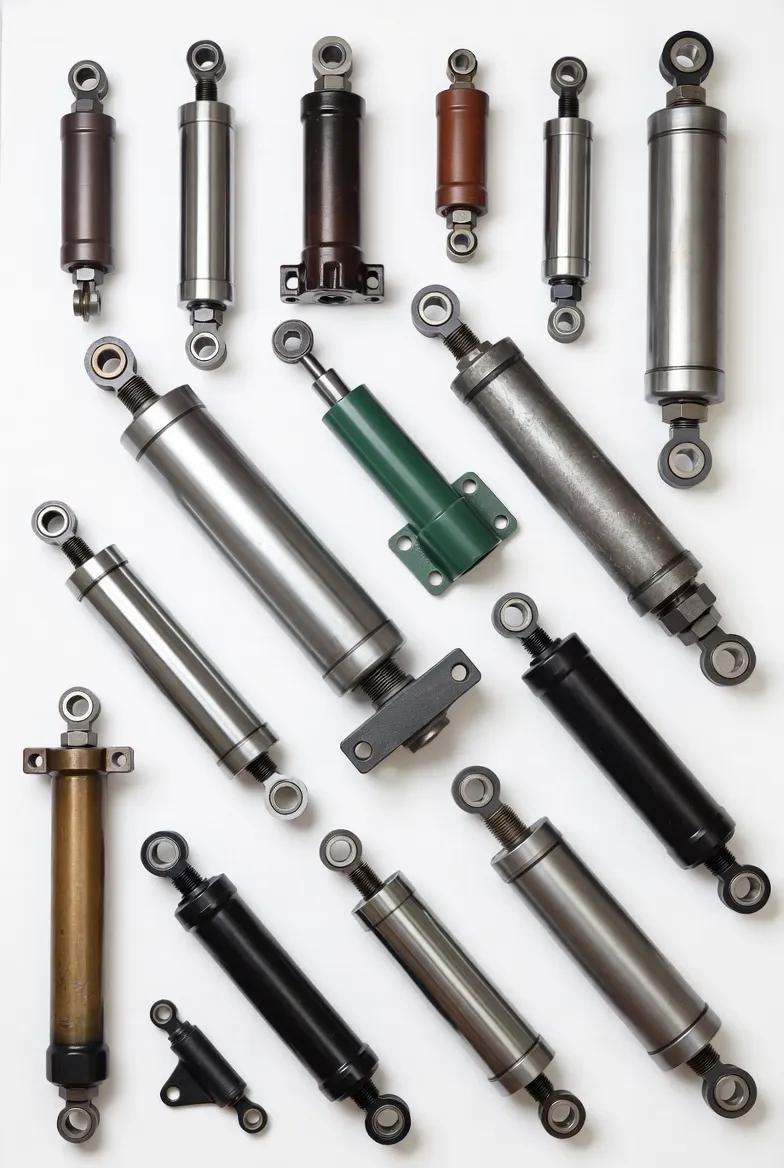
Practical Scenarios: When a Larger Bore *Is* the Right Answer
While intentional oversizing is often a mistake, there are specific operational scenarios where a larger bore is the correct, calculated engineering decision.
- ?
Operating at a Reduced Pressure for Extreme Fluid Life: In a hot, continuous-duty application like a die-casting machine, the primary failure risk might not be a lack of force, but the thermal degradation of the hydraulic fluid. In this specific case, an engineer may deliberately specify a larger bore cylinder so that the required working force can be achieved at a much lower system pressure. Operating a hydraulic system continuously at 1200 PSI instead of 2500 PSI dramatically reduces the rate of fluid shearing and oxidation, extending the fluid’s service life and reducing heat generation. This is a calculated, life-cycle-cost decision where the increased flow demand is a known and accepted penalty that is traded for a substantial reduction in thermal stress and maintenance fluid cost. It is a system-level optimization.
- ?
Standardization Across a Machine Platform: A machine OEM may intentionally use a larger bore cylinder on a family of machines to standardize on a single cylinder part number across multiple models. The cost of managing a unique, precisely-sized cylinder for each model variant—including the engineering, inventory, spare parts, and service training—is a real economic cost. It may be more profitable for the OEM to use a slightly oversized cylinder on a lower-force model and a correctly-sized cylinder on a higher-force model, allowing the entire product line to use a single, common actuator. The cost of the increased flow demand on the one smaller model is outweighed by the massive simplification of the supply chain and aftermarket support. This is a sound business decision, not an engineering oversight.
- ?
Uncertainty in the Load Profile: There are applications where the true dynamic load is genuinely difficult to predict. A log grapple on a forestry harvester, for example, handles a load whose weight is highly variable and which is subject to massive, unpredictable shock loads from snagging a buried stump. In this case, a larger bore, combined with a correctly set pressure-compensated pump and a robust structural frame, is a practical strategy for surviving continuous overloads. The difference here is that the “oversizing” is not for a static, known load, but is a deliberate design strategy to build a system that is functionally indestructible against a violently chaotic dynamic load, accepting the flow penalty as the price of operational survivability.

The Strategic Value of Precision Engineered Sizing
The most valuable asset in a heavy-load cylinder application is not an oversized component, but a precision-engineered sizing calculation that is validated by the manufacturer’s application expertise and quality system.
Partnering for Application-Specific Design
The decision to oversize should never be made in an engineering vacuum. It is a decision that should be challenged and validated through a collaborative review with the cylinder manufacturer’s application engineering department. A quality manufacturer like EverPower-Huachang HYDRAULIC has the engineering staff to review your load data, your duty cycle, and your machine structure, and provide a formal sizing recommendation. They will perform the column buckling calculations, evaluate the rod whip potential, and recommend the correct stop tube and rod diameter. They can also analyze the system and suggest a high-pressure cylinder solution if it is more efficient. This partnership ensures that the final specification is not a habitual oversize, but a rigorously justified, application-optimized design.
Validated Force Through Certified Pressure Testing
The safety of a cylinder is not in its theoretical force calculation; it is in a verified proof test. Every cylinder should be hydrostatically tested at 1.5 times its rated working pressure, providing a certified proof that it can safely withstand the stress. An advanced testing center, as found in a state-of-the-art facility, provides this objective, documented evidence. By sourcing a cylinder with a certified pressure test and full material traceability, you are building your heavy-load system not on hope, but on documented, verifiable proof. This is the ultimate alternative to the unverified “oversized” guess, and it is the standard of a professional, safety-conscious fluid power system.
The Discipline of a System-Level Cost-Benefit Analysis
Finally, the decision to oversize a cylinder must be the result of a documented, system-level cost-benefit analysis. The total cost of the larger pump, motor, valves, heat exchanger, and the energy to run them over 10,000 operational hours must be calculated and compared to the cost of a precisely-sized high-pressure cylinder. In virtually all fixed-load industrial applications, this analysis will prove that the precisely-sized, higher-pressure solution is significantly more economical over the machine’s life. Making this analysis a standard part of the design process is a mark of a mature engineering organization, one that consistently delivers both technical reliability and economic competitiveness.
The question of whether to oversize a hydraulic cylinder is a test of engineering discipline. The intuitive answer is “yes, for safety,” but the correct, systems-engineered answer is almost always “no, size it precisely and engineer the safety into the component’s pressure rating, rod strength, and verified testing.” The move from an oversized guess to a precisely calculated, correctly engineered specification is the mark of a true fluid power professional.

Conclusion: Replacing Oversizing with Precision Engineering
Oversizing a hydraulic cylinder for a heavy load is a strategy rooted in intuition, but it is one that often fails the tests of physics, economics, and lifecycle efficiency. The hidden penalties are severe: an exponential increase in required pump flow and energy cost, a heavier and more sluggish machine, and the latent structural risk of transmitting an unnecessarily high maximum force into the machine’s frame. The correct engineering path is one of precision, not excess. It involves calculating the exact required force with a defined safety factor, specifying a higher-pressure cylinder where needed to achieve a compact, efficient design, and engineering the rod and stop tube for absolute stability. The true margin of safety is not an oversized bore; it is the documented proof of a certified pressure test and the application analysis from a trusted manufacturing partner like EverPower-Huachang HYDRAULIC. The disciplined engineer, faced with a heavy load, reaches not for a larger catalog, but for a precise calculation and a properly engineered specification.