
Fluid Power Kinematics Engineering
What Are the Different Hydraulic Cylinder Mounting Styles? A Definitive Guide
An authoritative technical analysis exploring pivot mounts, fixed mounts, NFPA standardization, Euler buckling physics, and expert criteria for selecting the optimal fluid power actuator connection.

The Structural Anchor of Hydrostatic Power
In the highly rigorous disciplines of heavy equipment manufacturing, automated industrial fabrication, marine engineering, and commercial agriculture, fluid power systems are relied upon to deliver massive, unyielding kinetic force. Hydraulic cylinders act as the fundamental mechanical muscles of this machinery, converting the hydrostatic energy of pressurized fluid into precise linear motion capable of lifting hundreds of thousands of pounds. However, an actuator cannot operate in isolation. The entirety of the massive force generated by a hydraulic cylinder must be safely, efficiently, and rigidly transferred to the surrounding equipment chassis. This transfer of power is entirely dependent upon the mechanical interface connecting the cylinder to the machine. Understanding what are the different hydraulic cylinder mounting styles is arguably the most critical structural decision an engineer will make during the fluid power design phase.
Selecting the correct hydraulic cylinder mounting types is not merely a matter of mechanical convenience or spatial availability; it is a profound matter of operational physics and structural survival. A hydraulic cylinder is designed to exert force in a perfectly straight, linear axis. If the mounting style is improperly specified for the application, it introduces devastating lateral forces known as side loading. Side loading forces the rigid steel piston rod to aggressively grind against the internal brass bearing guides, shattering the polyurethane seals, scoring the mirror finished barrel, and ultimately resulting in catastrophic mechanical failure or a lethal bent piston rod. The mount must either hold the cylinder perfectly rigid to prevent deflection or pivot flawlessly to absorb the natural arc of a swinging payload.
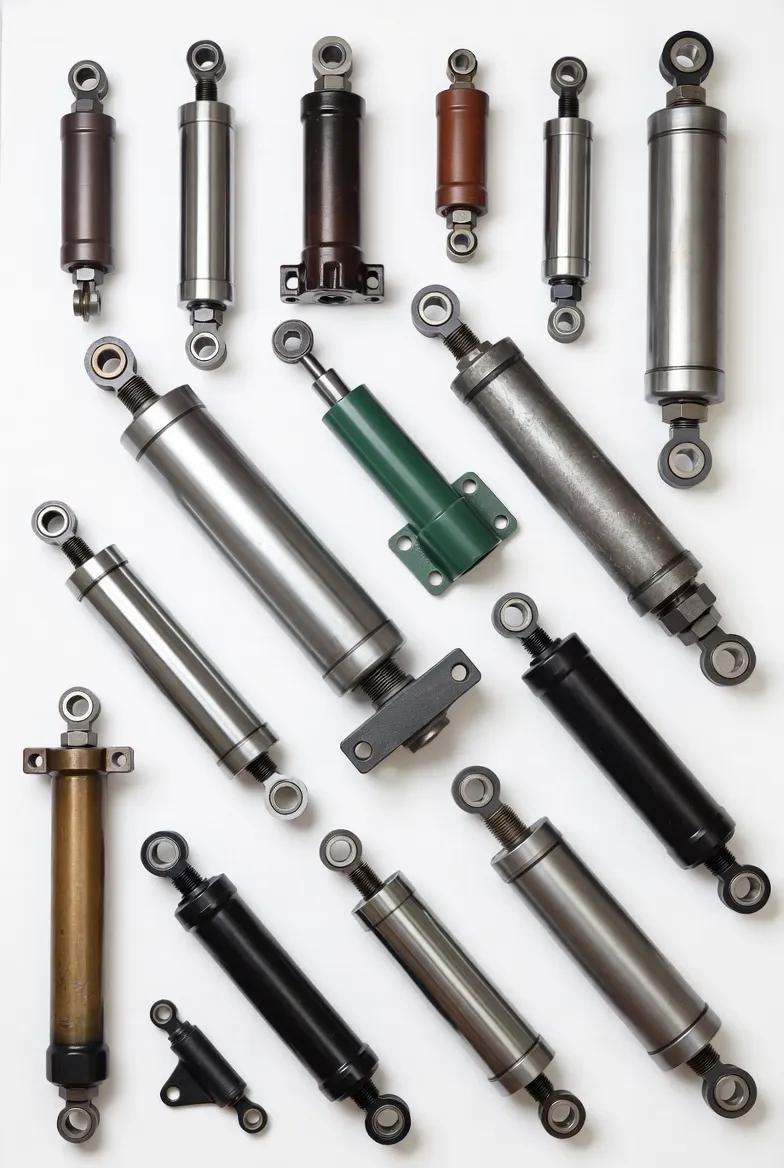
From an authoritative engineering perspective evaluated against international manufacturing standards, hydraulic cylinder mounts are broadly classified into two distinct kinematic categories: Pivot Mounts which allow the cylinder to swing and absorb misalignment, and Fixed Mounts which rigidly lock the actuator to the machine frame to absorb thrust strictly along its centerline. This comprehensive technical engineering manual will meticulously dissect the physics, the load dynamics, and the specific industrial applications associated with each unique hydraulic cylinder mounting configuration, ensuring flawless equipment reliability and maximum operational safety.
Category 1: Pivot Mount Hydraulic Cylinders
Pivot mounts, also known as articulated or centerline mounts, are designed to absorb dynamic radial motion. When a machine load travels in an arc such as an excavator boom or a dump truck bed the cylinder must be allowed to pivot smoothly to prevent the rod from bending. Pivot mounts ensure the force remains centered along the longitudinal axis of the actuator.
Clevis Mounts
The clevis mount is arguably the most universally deployed pivot style in the mobile equipment sector. A clevis is a U shaped bracket welded or threaded onto the base cap of the cylinder barrel, and correspondingly onto the tip of the piston rod. A hardened steel pivot pin is driven through the clevis and the mating machine bracket, allowing the entire cylinder to swing in a single plane. Clevis mounts are exceptionally robust and are the absolute standard for heavy duty applications like tractor loaders, forestry logging equipment, and massive agricultural implements. However, because they only pivot in a two dimensional plane, they are highly intolerant of lateral side loading; if the machine frame twists, the clevis pin will bind and shear.
Spherical Bearing Mounts
To combat the severe dangers of lateral frame twisting, engineers upgrade the standard clevis to a spherical bearing mount. Instead of a rigid pin hole, the rod eye and base cap are fitted with a swiveling, hardened steel spherical bearing. This advanced ball and socket geometry allows the cylinder to not only pivot in its primary plane but also tilt and articulate slightly in multiple directions. Spherical bearing mounts are mandatory on heavy off road equipment that articulates aggressively over uneven terrain, as they effortlessly absorb severe structural misalignment without transmitting destructive side loads into the delicate internal cylinder seals.

The Trunnion Mount: Balancing Extreme Tonnage
When evaluating clevis vs trunnion mount configurations, engineers must account for the physical length of the actuator and the maximum compressive load. The trunnion mount is an incredibly specialized and mathematically brilliant pivot style designed to solve complex structural dilemmas in exceptionally long stroke applications.
A trunnion mount consists of two massive, hardened steel cylindrical pins welded directly to the exterior of the cylinder barrel. These pins rest inside heavy duty pillow block bearings bolted to the machine chassis. Like a clevis, the trunnion allows the cylinder to pivot and swing. However, the distinct engineering advantage of a trunnion is its positional flexibility. Engineers can place the trunnion pins at the head of the cylinder, the base of the cylinder, or most crucially, exactly in the middle of the barrel.
The Intermediate Trunnion Advantage
In long stroke cylinders, the extended piston rod acts as a slender column. If the cylinder is mounted from the absolute rear base utilizing a standard clevis, the total column length includes the entire barrel plus the extended rod. Under massive pressure, this long column is highly susceptible to catastrophic Euler buckling snapping in half.
By specifying an intermediate trunnion mount and positioning the pivot pins exactly in the center of the barrel, engineers effectively cut the unsupported column length of the cylinder entirely in half. This drastically increases the structural column strength of the actuator, allowing it to push significantly heavier payloads over incredibly long distances without buckling, while still retaining the ability to pivot and absorb machine arc motion. Intermediate trunnions are the undisputed standard for massive dump truck hoists and heavy duty scissor lifts.

Category 2: Fixed Mount Hydraulic Cylinders
Unlike pivot mounts designed for swinging arcs, fixed mounts permanently bolt the hydraulic cylinder rigidly to the equipment frame. These mounts are deployed exclusively when the payload is guided by strict mechanical rails, such as automated factory presses, injection molding machines, and industrial machine tools.
Flange Mount Hydraulic Cylinders
A flange mount hydraulic cylinder utilizes a thick, heavy steel plate a flange welded or machined directly into the end cap of the cylinder. This flange features four or more bolt holes, allowing it to be bolted flush against a solid bulkhead on the machine. Flange mounts represent the absolute strongest, most rigid centerline mounting option available in fluid power engineering. They absorb extreme thrust forces perfectly along the cylinder centerline, making them immune to the sheer forces that can snap pivot pins. A Head Flange is bolted at the rod end, ideal for pulling operations, while a Base Flange is bolted at the rear, perfectly optimized for massive pushing and crushing operations.
Extended Tie-Rod Mounts
Unique to tie rod style cylinders, this mounting architecture utilizes the actual high strength clamping rods to mount the actuator. The manufacturer simply leaves the threaded tie rods extending several inches past the front or rear end cap. The technician slips these extended rods through precision drilled holes in the machine bulkhead and secures them with heavy duty nuts. Extended tie rod mounts are highly economical, symmetrical, and absorb load perfectly along the centerline. They are the absolute default standard for thousands of automated pneumatic and hydraulic systems inside modern manufacturing facilities.
Foot Mounts and Side Lugs
Foot mounts, also called side lug mounts, utilize heavy steel brackets bolted or welded to the sides of the cylinder caps, allowing the cylinder to be bolted down flat against an underlying structural plate. While incredibly easy to install and service, foot mounts present a severe engineering vulnerability: they do not absorb force along the cylinder centerline. The pushing force occurs high up on the rod, but the restraining force is located down at the mounting bolts. This offset creates a massive bending moment, introducing dangerous overturning torque into the cylinder frame. Foot mounts should only be deployed in low pressure, short stroke applications, and must be secured with high tensile dowel pins to prevent the cylinder from ripping the mounting bolts out of the chassis.
The Critical Role of NFPA Standardization
When exploring the different types of hydraulic cylinder mounts, one cannot ignore the massive impact of the National Fluid Power Association (NFPA). Prior to standardization, if a factory experienced a cylinder failure, they had to order a replacement from the exact original manufacturer, waiting weeks for a proprietary part with unique mounting hole dimensions. This caused unacceptable, highly expensive machine downtime.
The NFPA revolutionized industrial fluid power by establishing universal dimensional standards for NFPA standardized cylinder mounts. Under the NFPA system, every mounting style is assigned a specific alphanumeric code. For example, a rear clevis mount is designated as “MP1”, a rectangular head flange is “ME5”, and a basic foot mount is “MS2”. If an engineer specifies a 4-inch bore, 12-inch stroke, ME5 head flange cylinder, it will have the exact same mounting bolt pattern, rod thread size, and overall length regardless of whether it was manufactured by Parker, Bosch Rexroth, or an independent fabricator. This absolute dimensional interchangeability allows plant managers to immediately source drop-in replacement cylinders from local distributors, maximizing operational uptime.

Preventing Failure: Selecting the Optimal Mount
Choosing the correct mount is a complex engineering calculus balancing load trajectory, thrust tonnage, stroke length, and spatial availability. Specifying the incorrect mount is the leading cause of premature actuator destruction.
If you are designing a piece of mobile earthmoving equipment where the arm must swing through a dynamic arc, rigid flange mounts will instantly bend the cylinder rod; you must deploy heavy duty spherical bearing mounts to absorb the mechanical misalignment. If you are engineering a high speed metal stamping press requiring 50,000 pounds of perfectly linear thrust, a clevis mount will vibrate and shear the pin; you must mandate a rigid base flange mount to perfectly transfer the centerline force directly into the steel bulkhead. Furthermore, anytime the stroke length exceeds forty inches under heavy compression, engineers must abandon rear clevis mounts and deploy intermediate trunnions to cut the Euler column length in half and prevent the hardened chrome rod from buckling under pressure.

Conclusion: Securing the Foundation of Force
Understanding the intricacies of hydraulic cylinder mounting styles is the fundamental bedrock of designing and maintaining safe, unyielding fluid power systems. The mount is the critical physical bridge between hydrostatic pressure and usable kinetic energy. By mastering the distinct differences between pivot mounts and fixed mounts, identifying the severe dangers of side loading and lateral deflection, and leveraging the immense logistical benefits of NFPA standardization, engineering professionals can specify the exact mechanical interface required. Selecting the optimal mounting architecture ensures the hydraulic actuator will deliver uncompromising force, preserve the integrity of the high pressure seals, and guarantee decades of safe, relentless reliability across the global industrial landscape.