
Fluid Power Mechanical Engineering
What Is Rod End Thread Size and How to Choose It?
A comprehensive engineering guide to piston rod thread specifications, tensile strength calculations, thread standards, and selection criteria for reliable fluid power actuator connections.

The Critical Importance of Rod End Thread Selection in Hydraulic Cylinder Design
In the precision oriented discipline of fluid power engineering, the question of what rod end thread size to specify and how to choose it represents a fundamental mechanical design decision that directly impacts structural integrity, load transfer capability, and long term operational reliability. The threaded end of a hydraulic cylinder piston rod serves as the primary mechanical interface between the actuator and the driven load, transmitting the full force generated by hydraulic pressure to the attached tooling, linkage, or machine structure. An improperly specified rod end thread size can lead to catastrophic thread stripping under tensile overload, fatigue crack initiation at the thread root, or loosening of the attachment due to inadequate preload or vibration resistance.
Hydraulic cylinder rod end thread specifications encompass multiple interrelated parameters including nominal thread diameter, thread pitch or threads per inch, thread form standard, thread engagement length, and material strength grade. Each of these factors contributes to the overall load carrying capacity and fatigue performance of the threaded connection. The selection process requires careful consideration of the maximum tensile and compressive forces the cylinder will experience, the nature of the loading including static versus dynamic conditions, the presence of bending moments or side loads, and the environmental conditions that may influence thread corrosion or galling behavior.
This authoritative technical guide provides a comprehensive methodology for selecting appropriate rod end thread sizes for hydraulic cylinder applications. We will explore the fundamental mechanics of threaded connections, examine standard thread specifications including UNF, UNC, and metric ISO profiles, calculate thread strength and required engagement lengths, and address practical considerations such as thread relief undercuts, locking features, and corrosion protection. Whether designing a new cylinder from first principles or selecting a replacement actuator for an existing application, mastering rod end thread selection ensures robust, reliable, and safe mechanical connections throughout the service life of the fluid power system.
Fundamentals of Threaded Connections on Hydraulic Cylinder Rod Ends
A clear understanding of thread terminology, standards, and mechanical behavior is essential for proper rod end thread size selection.
Thread Terminology and Geometric Parameters
Hydraulic cylinder rod end threads are characterized by several defining geometric parameters. The major diameter is the largest diameter of the external thread, measured across the crests. The minor diameter is the smallest diameter, measured at the thread roots. The pitch diameter is an intermediate diameter that theoretically bisects the thread profile and is critical for determining thread fit and strength. The thread pitch, expressed as threads per inch for inch series threads or as the linear distance between adjacent thread crests for metric threads, determines the axial advancement per revolution. The thread flank angle, typically sixty degrees for standard unified and metric thread forms, influences stress concentration and fatigue sensitivity. A thorough understanding of these parameters enables accurate calculation of thread strength and proper specification of mating components.
Standard Thread Series for Hydraulic Cylinder Rods
Hydraulic cylinder piston rods typically employ one of several standardized thread series. In North American applications, Unified National Fine thread series is widely preferred due to its superior fatigue resistance and vibration resistance compared to coarser Unified National Coarse threads. The finer pitch of UNF threads provides a larger tensile stress area for a given nominal diameter and reduces the stress concentration factor at the thread root. Metric ISO threads, designated by the nominal diameter in millimeters followed by the pitch in millimeters, are standard in international applications and increasingly common in global equipment designs. Fine pitch metric threads are similarly preferred for high strength hydraulic cylinder rod end applications. Some specialty cylinders may employ Acme or buttress threads for applications requiring exceptional axial load capacity or frequent disassembly.

Calculating Thread Strength and Required Engagement Length
The selection of an appropriate rod end thread size must be validated through rigorous strength calculations to ensure the threaded connection can safely withstand the maximum anticipated service loads.
?Tensile Stress Area and Axial Load Capacity
The tensile load capacity of a threaded rod end is determined by the tensile stress area of the thread and the material yield strength. The tensile stress area represents the effective cross sectional area that resists axial tension and is calculated based on the mean of the pitch diameter and minor diameter. For unified inch series threads, the tensile stress area formula is Area equals pi divided by four multiplied by the square of the basic pitch diameter minus a factor accounting for thread truncation. The allowable tensile load is then the product of the tensile stress area and the allowable stress, which is typically limited to sixty to seventy five percent of the material yield strength to provide an adequate safety factor against yielding and to account for stress concentrations at the thread root. For example, a three quarter inch diameter UNF rod end thread fabricated from high strength steel with a yield strength of 100000 PSI provides a safe working tensile load exceeding 20000 pounds.
?Thread Shear Strength and Minimum Engagement Length
While the rod end thread itself must possess adequate tensile strength, the mating internal thread in the attached component must provide sufficient thread shear area to prevent stripping failure. The required thread engagement length is calculated by equating the shear strength of the engaged threads to the tensile strength of the rod end. For a properly designed connection with the rod end material strength comparable to the mating component material, an engagement length of approximately one to one and a half times the nominal thread diameter is typically sufficient. The exact minimum engagement length depends upon the relative shear strengths of the external and internal thread materials. If the attached component is fabricated from a lower strength material such as aluminum or cast iron, longer thread engagement or the use of threaded inserts may be necessary to prevent internal thread stripping under maximum tensile loading conditions.

Critical Factors Influencing Rod End Thread Size Selection
Beyond basic tensile strength calculations, several additional engineering considerations guide the optimal selection of hydraulic cylinder rod end thread size.
Fatigue Loading and Thread Root Stress Concentration
Hydraulic cylinders subjected to cyclic pressure loading experience fluctuating tensile stresses in the piston rod and rod end threads. The thread root represents a significant stress concentration feature with a theoretical stress concentration factor typically ranging from two to four depending upon thread form and root radius. Under fatigue loading conditions, this stress concentration can initiate fatigue cracks that propagate through the rod cross section, ultimately leading to catastrophic fracture. Selecting a fine pitch thread series reduces the stress concentration factor compared to coarse pitch threads. Additionally, thread rolling processes that cold work the thread root material induce beneficial compressive residual stresses that significantly enhance fatigue resistance compared to cut threads. For critical applications involving high cycle fatigue loading, thread rolling followed by post heat treatment is the preferred manufacturing method.
Bending and Side Load Considerations
While hydraulic cylinders are ideally loaded purely in tension and compression along the rod axis, practical applications frequently impose some degree of misalignment or side loading. These bending moments superimposed on the axial tensile load significantly increase the stress at the thread root on the tension side of the rod. The rod end thread size must be selected to accommodate these combined stresses with an adequate margin of safety. Spherical rod end bearings or clevis attachments with spherical bushings should be employed to minimize the transmission of bending moments into the threaded connection. When bending loads cannot be completely eliminated, a larger rod end thread diameter or a higher strength rod material may be required to maintain acceptable stress levels. Finite element analysis of the threaded connection under combined loading provides valuable insight into local stress distributions and identifies potential failure locations.
Corrosion Protection and Thread Galling Prevention
Hydraulic cylinder rod end threads exposed to corrosive environments or subjected to frequent assembly and disassembly require special consideration to prevent corrosion damage and thread galling. Stainless steel piston rods provide inherent corrosion resistance but typically exhibit lower yield strength than heat treated alloy steels, necessitating larger thread diameters to achieve equivalent load capacity. Thread galling, a form of adhesive wear that occurs when stainless steel or titanium threads are assembled under high contact pressure, can be mitigated through the application of anti seize compounds containing solid lubricants such as molybdenum disulfide or graphite. For highly corrosive marine and offshore applications, rod end threads may be protected with sacrificial zinc anodes, specialized coating systems, or enclosed within protective bellows to exclude corrosive media.
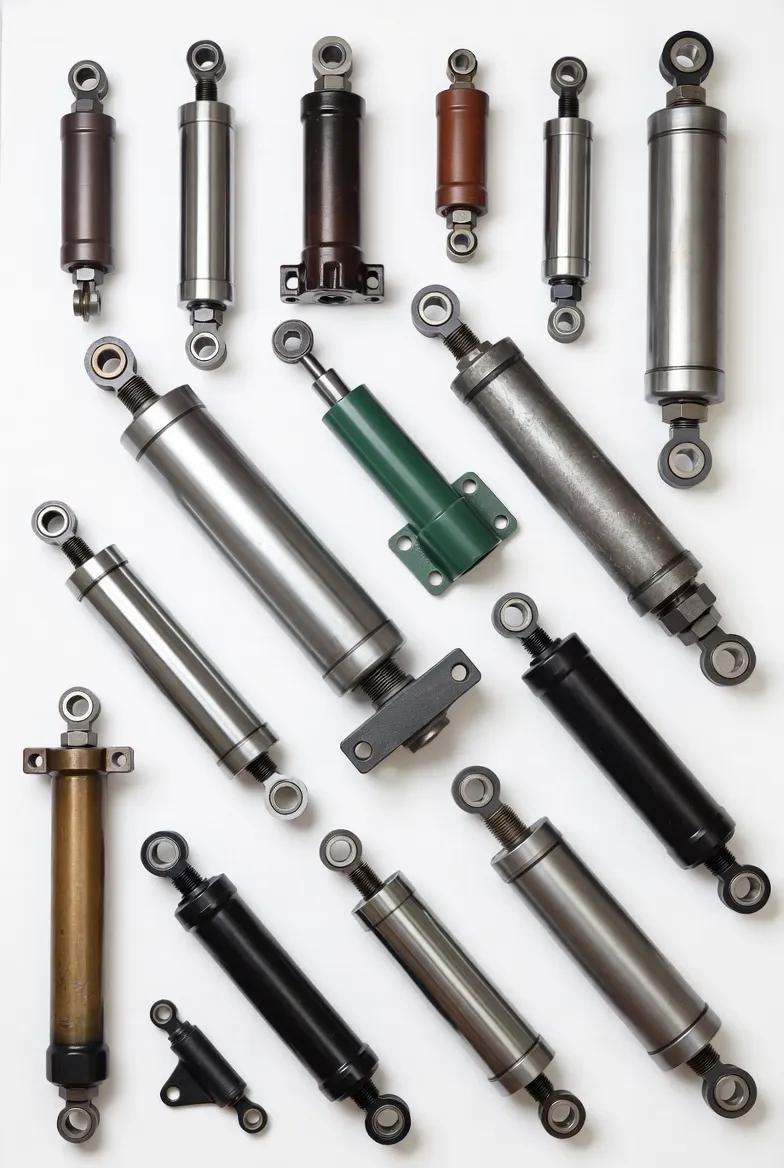
Practical Guidelines for Rod End Thread Size Selection
A systematic approach to selecting hydraulic cylinder rod end thread size ensures that all relevant design considerations are properly addressed.
- 1️⃣
Determine Maximum Service Loads: Begin by establishing the maximum tensile and compressive forces the cylinder will experience during normal operation and under any foreseeable overload conditions. Consider both static weight and dynamic inertial forces, and apply an appropriate safety factor typically ranging from 3 to 5 for critical load bearing threaded connections. This maximum design load becomes the basis for all subsequent strength calculations.
- 2️⃣
Calculate Minimum Tensile Stress Area: Divide the maximum design tensile load by the allowable tensile stress for the selected rod material. The allowable stress should be a fraction of the material yield strength, typically sixty percent for steady loads and forty percent for fatigue dominated applications. The resulting minimum tensile stress area dictates the smallest acceptable thread size from a pure tensile strength perspective.
- 3️⃣
Select Standard Thread Size and Verify Engagement: From standard thread tables, select the next larger standard thread size that meets or exceeds the minimum tensile stress area requirement. For the selected thread size, calculate the required minimum engagement length in the mating component based on the relative material strengths. Ensure that the available engagement length in the attachment is sufficient. If not, consider a larger thread diameter, a finer pitch thread providing greater tensile stress area, or the use of a threaded insert to increase effective shear area.
- 4️⃣
Consider Standardization and Interchangeability: Whenever possible, select rod end thread sizes that conform to established industry standards or match existing tooling and attachment hardware within the facility. Standardization simplifies spare parts inventory, reduces the likelihood of assembly errors, and facilitates rapid cylinder replacement in the event of failure. Many cylinder manufacturers publish standard rod end thread size charts that correlate bore diameter and rod diameter to recommended thread specifications based on decades of application experience.
- 5️⃣
Specify Thread Relief and Locking Features: Include appropriate thread relief undercuts at the thread termination to minimize stress concentration at the junction between the threaded portion and the full rod diameter. A generous radius at the thread runout is essential for fatigue resistance. Specify thread locking features such as nylon insert lock nuts, jam nuts, thread locking compounds, or mechanical locking devices to prevent loosening under vibration and cyclic loading. The selection of locking method should consider the need for future disassembly and the environmental conditions that may affect locking compound performance.

Specialty Thread Configurations and Attachment Options
Beyond standard threaded rod ends, various specialty configurations address specific application requirements for hydraulic cylinder attachments.
Female Threaded Rod Ends
While male threaded rod ends are most common, some applications benefit from female threaded rod ends where the thread is machined into a bore in the end of the piston rod. This configuration provides a more compact overall length and protects the threads from impact damage. Female threads require careful consideration of wall thickness to ensure adequate hoop strength and resistance to bursting under radial pressure from the mating male thread. The calculation of required engagement length and thread strength follows similar principles but must account for the different stress distribution in the internally threaded component.
Integral Rod End Attachments
Many hydraulic cylinders eliminate the threaded connection entirely by incorporating the attachment feature directly into the piston rod forging or machining. Common integral attachments include clevises with cross drilled pin holes, spherical rod eyes, and flat tangs. While these configurations eliminate concerns regarding thread size selection and potential loosening, they reduce flexibility for field modifications and may complicate cylinder replacement if the attachment geometry is non standard. The load capacity of integral attachments must be verified through appropriate strength of materials calculations accounting for the specific geometry and loading conditions.
Threaded Rod Ends with Wrench Flats
To facilitate assembly and proper torque application, hydraulic cylinder rod ends frequently incorporate machined wrench flats immediately behind the threaded portion. These flats provide a secure gripping surface for open end or adjustable wrenches, enabling the rod to be restrained from rotation while the attachment nut or mating component is tightened. The presence of wrench flats reduces the cross sectional area of the rod at that location, creating a potential weak point that must be evaluated for adequate strength. The transition from the full rod diameter to the reduced section across the wrench flats should incorporate generous fillet radii to minimize stress concentration.
A comprehensive understanding of what rod end thread size to choose and the engineering principles underlying that selection empowers fluid power professionals to design reliable, durable, and safe threaded connections for hydraulic cylinder applications. Proper attention to thread geometry, material strength, fatigue considerations, and installation practices ensures that this critical mechanical interface performs flawlessly throughout the intended service life of the actuator.

Conclusion: Precision in Hydraulic Cylinder Rod End Thread Specification
The selection of appropriate rod end thread size for hydraulic cylinders represents far more than a simple dimensional specification it embodies a comprehensive engineering assessment of tensile strength, fatigue resistance, thread engagement, and long term reliability under demanding service conditions. Proper thread size selection requires rigorous calculation of tensile stress area, careful consideration of material properties including yield strength and fatigue endurance limit, verification of adequate thread engagement length to prevent stripping failures, and attention to secondary factors such as stress concentration mitigation, corrosion protection, and vibration resistant locking features. By applying the systematic methodology and engineering principles detailed in this guide, fluid power professionals can confidently specify rod end thread sizes that ensure robust, reliable, and safe mechanical connections between hydraulic cylinders and their driven loads. This disciplined approach to thread specification safeguards against catastrophic connection failures, minimizes unscheduled downtime, and contributes to the overall safety and productivity of hydraulic machinery across the full spectrum of industrial and mobile applications.