

Armcylinder för John Deere E140LC
Som en av tillverkarna, leverantörerna och exportörerna av mekaniska produkter erbjuder vi hydraulcylindrar och många andra produkter.
Vänligen kontakta oss för mer information.
E-post:sales@hydraulic-cylinders.net
Tillverkare, leverantör och exportör av hydraulcylindrar.
Armcylinder för John Deere E140LC
Introduktion
The Arm Cylinder for John Deere E140LC is a specially designed hydraulic cylinder that provides linear motion and power to the arm of various types of machinery such as excavators, cranes, and robotic arms. The arm cylinder plays a crucial role in hydraulic systems, allowing for the effective movement and control of additional tools or attachments. These cylinders not only enable smooth motion but also withstand heavy loads, ensuring efficient operation and reliability of the machinery in various working conditions.
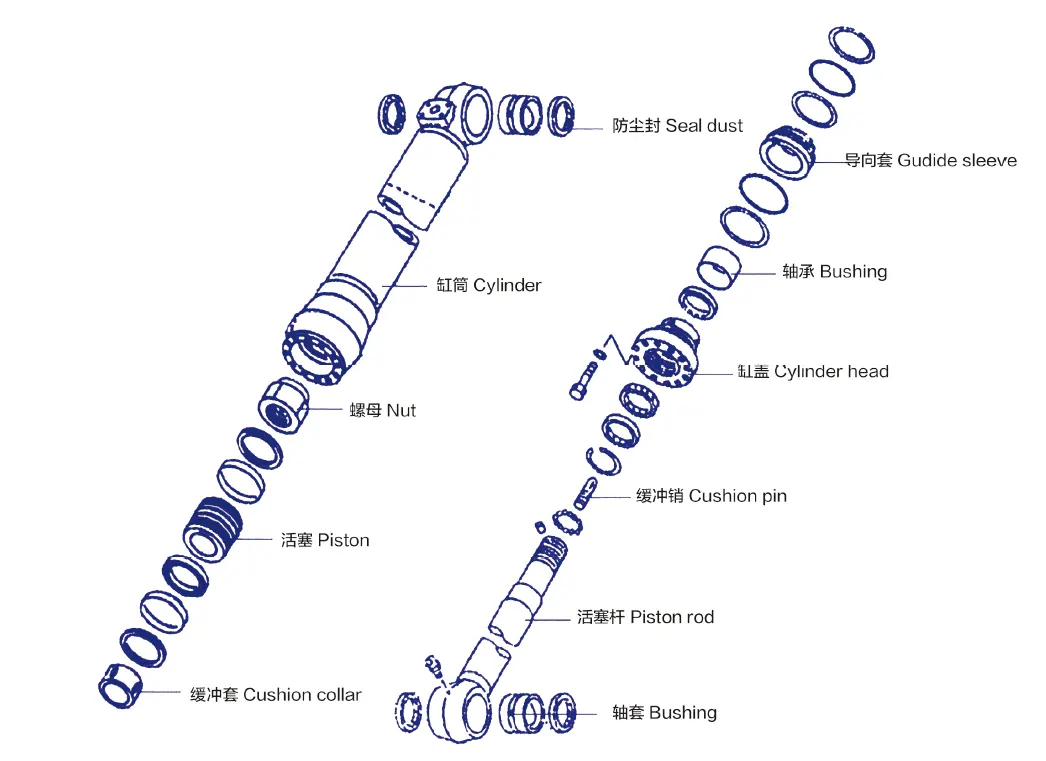
Drag
- Högeffektiv transmission: Armcylindern ger kraftfull linjär rörelse och kraft, vilket säkerställer högpresterande kapacitet hos den mekaniska armen i olika operationer.
- Exakt kontroll: Through the hydraulic system, the arm cylinder enables accurate motion control, making the operation of attached tools more flexible and precise.
- Varaktighet: Armcylindrar är vanligtvis tillverkade av höghållfasta material, vilket ger utmärkt slitage- och korrosionsbeständighet och är lämpliga för långvarig användning i tuffa miljöer.
- Mångsidig anpassningsförmåga: Dessa cylindrar kan användas i stor utsträckning på olika typer av maskiner, såsom grävmaskiner, kranar och robotarmar, och anpassas till olika arbetskrav.
- Enkelt underhåll: Designed with easy maintenance and replacement in mind, the arm cylinders facilitate convenient regular inspections and maintenance, reducing equipment downtime.

Applikationer
Arm cylinders find extensive use in the following industries and applications:
1. Byggteknik
In excavators and cranes, arm cylinders control the movement of the bucket or boom, facilitating earthwork operations, material handling, and structural installation.
2. Tillverkning
I automatiserade produktionslinjer möjliggör armcylindrar rörelsen av robotarmar för montering, svetsning och materialhanteringsprocesser, vilket förbättrar produktionseffektiviteten och precisionen.
3. Jordbruksmaskiner
In agricultural machinery such as harvesters and seeders, arm cylinders control the movement of operating arms to perform tasks such as seeding, fertilizing, and harvesting.
4. Gruvdrift
In mining equipment, arm cylinders are used to control the arm movement of mining devices, facilitating ore extraction and transportation.
5. Logistics and Transport
I gaffeltruckar och hanteringsrobotar styr armcylindrar lyftningen och rörelsen av gafflarna, vilket möjliggör materialhantering och stapling.

Designöverväganden och urvalskriterier
When it comes to the design of arm cylinders, there are several key considerations and selection criteria:
1. Bärförmåga
The arm cylinder should be designed to handle the specific load requirements of the machinery it will be used in, ensuring optimal performance and safety.
2. Tätning
Various sealing components, such as piston seals and rod seals, should be used to maintain the integrity of the hydraulic system. These seals are typically made from wear-resistant materials such as polyurethane and nitrile rubber.
3. Hållbarhet
The arm cylinder should be constructed with high-strength materials and undergo precise surface treatments to enhance wear resistance, ensuring a long service life even in demanding conditions.
4. Säkerhet
Emphasis should be placed on the design of the arm cylinder to ensure safe operation, minimizing the risk of accidents or malfunctions.
5. Underhållbarhet
The design should consider ease of maintenance and repair, allowing for convenient inspections, replacements, and reducing downtime.

Tätning och smörjning
The arm cylinder utilizes various sealing components, such as piston seals and rod seals, which are made from wear-resistant materials like polyurethane and nitrile rubber. The cylinder body and threaded ends undergo meticulous surface treatments to enhance wear resistance. Regular lubrication with the appropriate amount of hydraulic oil is required to ensure smooth operation and longevity.
Regelbunden inspektion och förebyggande underhåll
Regular inspection and preventive maintenance measures are essential for ensuring the optimal performance and longevity of the arm cylinder:
1. Inspection:
Regularly inspect the arm cylinder for any signs of damage, leakage, or abnormal wear. Check the condition of the seals, cylinder body, and threaded ends. Lubricate as needed.
2. Preventive Maintenance:
Follow the manufacturer’s recommended maintenance schedule. Replace seals and other components as necessary. Ensure proper lubrication and monitor hydraulic system performance.
Produktinstallationsguide
Proper installation of the arm cylinder is crucial for its performance and longevity. Follow these guidelines:
1. Preparation:
Ensure that the hydraulic system is depressurized and the machinery is safely secured. Assemble any necessary brackets or mounting hardware.
2. Cylinder Installation:
Carefully position the arm cylinder in the desired location, aligning the mounting holes. Attach the cylinder to the machinery using the appropriate bolts and hardware. Ensure proper alignment and secure tightening.
3. Hydraulic Connections:
Connect the hydraulic hoses to the designated ports on the arm cylinder, following the hydraulic system diagram or manufacturer’s instructions. Use appropriate fittings and ensure tight connections.

Säkerhetsaspekter och miljöfaktorer
When using arm cylinders, it is essential to prioritize safety measures to prevent accidents and ensure the well-being of operators. Consider the following safety aspects:
- Provide appropriate operator training on the safe use and maintenance of the machinery.
- Implement proper lockout/tagout procedures to prevent accidental operation during maintenance or repair.
- Follow all relevant safety regulations and guidelines specific to the industry and machinery.
- Regularly inspect and maintain safety features such as safety valves and pressure relief devices.
- Consider environmental factors such as temperature, humidity, and exposure to corrosive substances that may affect the performance and longevity of the arm cylinder.
Feldiagnos och vanliga problem
Understanding potential faults and common issues with arm cylinders can help in diagnosing and resolving problems effectively. Here are a few examples:
1. Läckage:
Inspect the seals for damage or wear. Replace faulty seals or tighten connections as necessary.
2. Slow or Inconsistent Movement:
Check the hydraulic fluid level and condition. Ensure proper lubrication and inspect the hydraulic system for any blockages or malfunctions.
3. Excessive Noise or Vibration:
Inspect the arm cylinder and surrounding components for any loose or damaged parts. Tighten connections or replace worn-out components as necessary.
4. Loss of Power or Force:
Check the hydraulic system pressure and flow rate. Inspect the arm cylinder for any internal damage or wear. Consult a professional if needed.
Felsökningstips och lösningar
Here are some troubleshooting tips and solutions to help readers diagnose and resolve issues effectively:
- Refer to the machinery’s operating manual and follow the troubleshooting guidelines provided.
- Consult a qualified technician or the manufacturer’s technical support for guidance
Hydraulcylinderapplikation:

 SV
SV  EN
EN  PT
PT  ES
ES  DE
DE  FR
FR  IT
IT  AR
AR  ZH
ZH  RU
RU  KO
KO  KA
KA  BG
BG  CS
CS  DA
DA  EL
EL  ET
ET  FI
FI  HU
HU  ID
ID  LT
LT  LV
LV  NB
NB  NL
NL  PL
PL  RO
RO  SK
SK  SL
SL  TR
TR  UK
UK